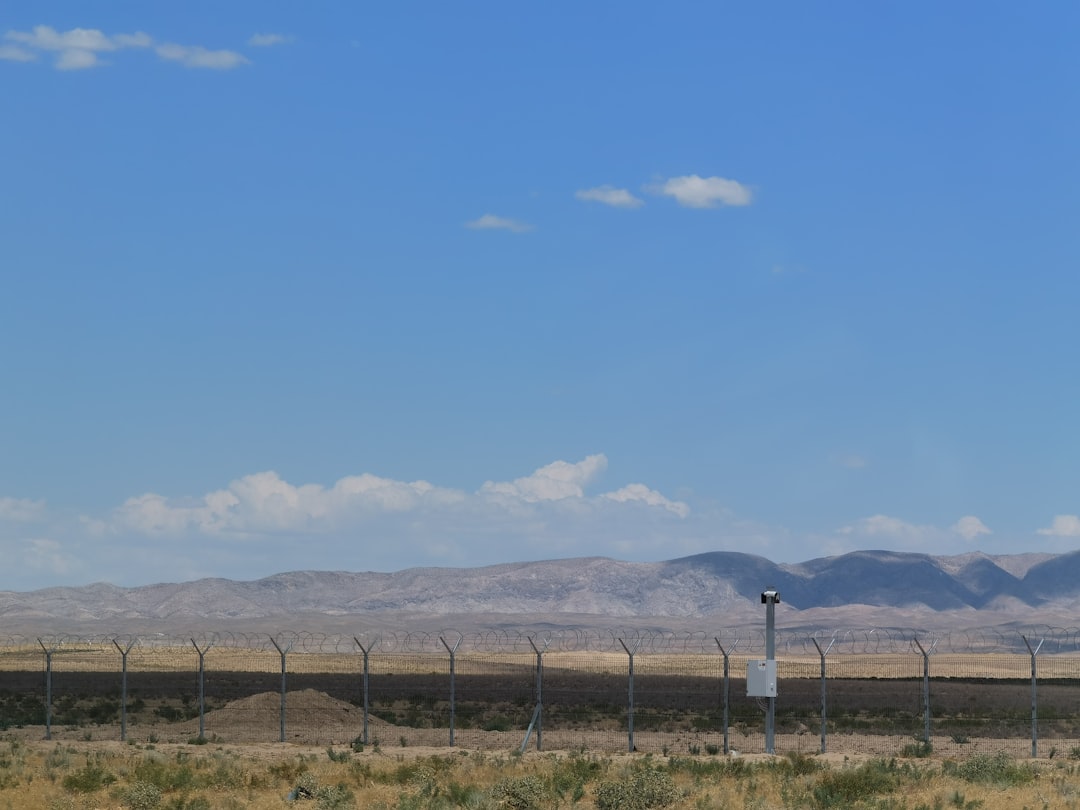
The concept of a Solar System Power Plant Grid represents a significant paradigm shift in how humanity might harness energy and potentially sustain its presence beyond Earth. This ambitious undertaking involves the conceptualization and eventual implementation of power generation facilities deployed throughout the solar system, interconnected to form a vast, distributed energy network. The primary objective is to leverage the abundant solar radiation available across various celestial bodies, mitigating the limitations of terrestrial solar power while opening new frontiers for space exploration and resource utilization.
Terrestrial Limitations as a Catalyst
The energy demands of the 21st century, driven by technological advancement and a growing global population, have placed an unprecedented strain on conventional energy sources. While renewable energy, particularly solar, has made substantial strides on Earth, inherent limitations persist. These include diurnal cycles and seasonal variations that interrupt consistent power supply, geographical constraints on optimal panel placement, and the aforementioned finite land and resource availability. Beyond Earth, these limitations are either exponentially amplified or, conversely, completely circumvented. The Sun, a perpetual powerhouse burning for billions of years, offers an inexhaustible wellspring of energy, far exceeding the needs of any terrestrial civilization, and its radiation is remarkably consistent once above an atmosphere or planetary shadow. The challenge transitions from finding energy to capturing, transmitting, and utilizing it effectively on an interplanetary scale.
The Sun as an Unparalleled Source
The Sun’s output is staggering. Every second, it converts approximately four million tons of matter into energy. While the intensity of solar radiation decreases with distance from the Sun, even at the outer reaches of the solar system, the availability of energy remains substantial enough for robust power generation. For instance, Mars receives roughly 40% of the solar flux experienced by Earth, still a significant amount. The asteroid belt, a vast expanse between Mars and Jupiter, presents numerous celestial bodies with ample solar exposure, unhindered by atmospheric interference. The sheer scale of this energy reservoir dwarfs any terrestrial consideration, presenting an almost limitless fuel source for a future off-world economy. This is akin to moving from a small garden plot to an entire continent for cultivation.
Material and Technological Requirements
Developing a Solar System Power Plant Grid necessitates advancements in several key areas. Photovoltaic technology must be refined for greater efficiency, durability in harsh space environments (including radiation and extreme temperatures), and deployability on a massive scale. Energy storage solutions are paramount, not only for local grid stability but also for bridging the vast distances and potential communication delays inherent in an interplanetary network. Advanced materials science will be crucial for constructing lightweight, robust, and radiation-resistant solar arrays and power transmission infrastructure. Furthermore, sophisticated robotics and autonomous systems will be indispensable for construction, maintenance, and potentially even operation with minimal direct human intervention in hazardous or remote locations.
In recent discussions about sustainable energy solutions, the concept of solar system power plants integrated into the grid has gained significant attention. A related article that explores the advancements and challenges in this field can be found at this link. The article delves into how solar power plants can enhance grid reliability and efficiency, while also addressing the potential for energy storage and distribution innovations.
Architectural Concepts: Designing the Grid
Decentralized versus Centralized Models
The architectural design of a Solar System Power Plant Grid can be approached through various models. A decentralized model would feature numerous smaller power generation units distributed across various locations, each serving local needs and capable of independent operation. This offers resilience; the failure of one unit would not cripple the entire system. Interconnections between these units would allow for energy sharing and load balancing. Conversely, a centralized model might involve massive, high-capacity power plants located at optimal positions, beaming energy to multiple destinations. This could offer economies of scale but carries higher risks associated with single points of failure and the complexity of long-distance energy transmission. A hybrid approach, combining elements of both, is also a strong possibility, leveraging the strengths of each.
Orbital Power Stations
One prominent conceptual design involves orbital power stations. These would be large facilities in orbit around planets, moons, or even in solar orbits. Their advantage lies in consistent solar exposure, free from atmospheric scattering and diurnal cycles. They could be positioned in geostationary or heliosynchronous orbits for maximal energy capture. Think of them as gargantuan, perpetually sun-drenched mirrors, collecting light and transforming it into usable energy. These stations would also serve as hubs for energy distribution, potentially utilizing beams of microwave or laser energy to transmit power to surface installations or other off-world assets.
Surface-Based Solar Farms
Another critical component would be surface-based solar farms deployed on planetary surfaces and the regolith of moons and asteroids. These could be terrestrial planets like Mars, or even large asteroids with suitable surface areas. The primary challenge here is atmospheric interference (if present), dust accumulation, and the need for robust structures capable of withstanding unique environmental conditions. However, proximity to surface-based operations, such as mining or colonization efforts, makes these farms highly practical for localized power generation. They act as anchors, providing reliable power directly where it is needed on the ground.
Inter-Celestial Transmission Technologies
The very heart of a Solar System Power Plant Grid lies in its ability to transmit power across vast stretches of space. This necessitates groundbreaking advancements in inter-celestial transmission technologies. Microwave power transmission is a leading contender, involving the conversion of electricity into microwaves and beaming them to receiving stations. Laser power transmission is another possibility, offering higher directionality and potentially greater efficiency over long distances, though it requires precise targeting. The challenge is not just transmitting the energy but doing so efficiently, minimizing losses over millions or even billions of kilometers. This is akin to trying to shout across an ocean and having your voice still be clearly understood. Research into efficient rectennas (receiving antennas for microwaves) and advanced optics for laser transmission is crucial.
Energy Collection and Conversion Mechanisms

Advanced Photovoltaic Technologies
The efficiency and robustness of photovoltaic (PV) cells are paramount. While silicon-based solar cells are well-understood, the demands of space require further innovation. This includes developing PV materials that are highly resistant to radiation damage, can operate effectively across a wider range of temperatures, and are lightweight and flexible for ease of deployment. Perovskite solar cells, for instance, show promise for their high efficiency and potential for low-cost manufacturing, but their long-term stability in space needs extensive validation. Multi-junction solar cells, which stack different semiconductor materials to capture a broader spectrum of sunlight, are already in use in space but could be further optimized for cost and scalability. The goal is to wring every possible electron out of every photon.
Concentrated Solar Power (CSP) in Space
Beyond direct PV conversion, Concentrated Solar Power (CSP) offers an alternative. This involves using mirrors or lenses to focus sunlight onto a receiver, heating a fluid that then drives a turbine to generate electricity. In space, this system could be particularly effective, as the focused beam is unhindered by atmospheric distortion or dust. Large-scale CSP arrays could be deployed in solar orbits, where they can maintain constant solar exposure. The heat generated could also be used directly for industrial processes or to generate reaction mass for propulsion. Imagine a massive magnifying glass, concentrating the sun’s power to boil water and turn a steam engine, but on an astronomical scale.
Novel Energy Conversion Concepts
The quest for efficient energy collection may also lead to unconventional methods. Thermophotovoltaic (TPV) cells, for instance, convert heat directly into electricity. In a CSP system, the heated fluid could energize a TPV emitter, which then radiates infrared light onto a specialized PV cell. This could offer higher efficiencies at very high temperatures. Furthermore, research into quantum dot solar cells and organic photovoltaics for specific applications, such as integration into structural components or for flexible deployments, is ongoing. The principle is to explore any and all avenues for efficiently turning light into usable electrical energy.
Energy Storage: The Crucial Intermediary
Consistent power delivery is not solely about generation; it is also about storage. Energy storage becomes even more critical in an interplanetary grid. For orbital power stations, batteries or advanced flywheel systems could store excess energy generated during peak sunlight for when the station passes through a planet’s shadow or when demand surges. For surface-based operations, large-scale battery banks, potentially using exotic chemistries optimized for space, would be essential. Beyond batteries, technologies like hydrogen fuel cells could offer a high-density storage solution, with hydrogen produced via electrolysis powered by solar energy. The storage systems are the reservoirs that ensure the flow of power never falters, even when the primary source is momentarily obscured.
Navigating the Challenges: Technical and Logistical Hurdles

The Tyranny of Distance and Light Speed
One of the most significant challenges facing a Solar System Power Plant Grid is the tyranny of distance and light speed. Communication and control signals, even at the speed of light, take minutes to traverse interplanetary distances. This creates a lag that complicates real-time control, troubleshooting, and immediate responses to system failures. Autonomous systems and pre-programmed operational parameters will be crucial to mitigate this. Imagine trying to play a real-time video game with a several-minute lag; remote operation becomes a complex dance of prediction.
Radiation and Environmental Extremes
Space is not a benign environment. Radiation levels can be orders of magnitude higher than on Earth, degrading electronic components and PV cells. Extreme temperature fluctuations, vacuum conditions, and the potential for micrometeoroid impacts all pose significant threats to the integrity and longevity of power infrastructure. Materials and designs must be incredibly robust and radiation-hardened. This requires a deep understanding of material science and engineering principles tailored to the unforgiving vacuum of space.
Construction and Maintenance in Situ
The sheer scale of such an undertaking implies massive construction efforts. Transporting materials from Earth is prohibitively expensive and inefficient. Therefore, construction and maintenance in situ – utilizing resources found within the solar system – becomes paramount. This involves developing advanced mining, refining, and manufacturing capabilities on the Moon, Mars, and asteroids. Asteroid mining for metals and other essential materials could provide the building blocks for power station components, reducing the reliance on Earth-supplied resources. Robotics and AI will play a pivotal role in these processes, performing tasks that are too dangerous or labor-intensive for humans.
Debris and Orbital Congestion
As human activity in space increases, so does the risk of orbital debris. A distributed network of power plants and transmission infrastructure would need to be carefully planned and maintained to avoid collisions. Redundant systems, maneuverability capabilities, and active debris removal strategies would be necessary to ensure the long-term safety and operational viability of the grid. Preventing the space environment from becoming a junkyard is as critical as building the power plants themselves.
Economic Viability and Justification
The upfront investment required for a Solar System Power Plant Grid would be astronomical. The economic viability and the clear justification for such an undertaking are crucial. The primary drivers will likely be the escalating energy needs of future space-based industries, such as asteroid mining, off-world manufacturing, and interplanetary transit hubs. The grid would also enable the expansion of human settlements beyond Earth, providing the foundational energy infrastructure for a multi-planetary species. Without a compelling economic or existential need, the immense resources required would be difficult to marshal.
As the demand for renewable energy sources continues to grow, the development of solar system power plant grids has become increasingly important. A recent article discusses innovative approaches to integrating solar power into existing energy infrastructures, highlighting the potential for enhanced efficiency and sustainability. For more insights on this topic, you can read the article here: solar system power plant grids and explore how these advancements could shape the future of energy generation.
Applications and Benefits: Powering the Future
| Metric | Value | Unit | Description |
|---|---|---|---|
| Installed Capacity | 150 | MW | Total power generation capacity of the solar power plant |
| Annual Energy Production | 270,000 | MWh | Estimated yearly electricity output |
| Capacity Factor | 20 | % | Ratio of actual output over maximum possible output |
| Grid Voltage | 33 | kV | Voltage level at which power is fed into the grid |
| Inverter Efficiency | 98 | % | Efficiency of converting DC to AC power |
| Transmission Losses | 3 | % | Percentage of power lost during transmission to the grid |
| Grid Frequency | 50 | Hz | Frequency of the electrical grid |
| Power Factor | 0.98 | Unitless | Ratio of real power to apparent power in the grid connection |
Enabling Interplanetary Colonization and Exploration
The most profound benefit of a Solar System Power Plant Grid would be its role in enabling interplanetary colonization and exploration. Establishing self-sustaining human settlements on Mars, the Moon, or other celestial bodies requires a reliable and abundant energy source. A distributed grid would provide this, powering life support systems, industrial processes, transportation, and scientific research. It would act as the lifeblood of any off-world civilization, the invisible force that makes existence possible. Without power, all other aspirations remain purely theoretical.
Supporting Space-Based Industries
Beyond colonization, the grid would be instrumental in supporting a burgeoning space-based economy. Asteroid mining operations would require substantial energy for extraction, processing, and transport. Lunar bases could leverage the grid for power-intensive manufacturing and resource utilization. Space-based solar power itself, transmitted back to Earth or to orbital facilities, could become a significant energy export. This would unlock a new era of economic activity, with the solar system becoming a vast industrial frontier.
Resource Extraction and Processing
The ability to cleanly and efficiently extract and process resources from other celestial bodies is central to reducing humanity’s footprint on Earth and enabling sustainable expansion. A Solar System Power Plant Grid would provide the necessary energy for these operations. For example, water ice on the Moon or Mars could be electrolyzed to produce hydrogen and oxygen, crucial for life support and rocket fuel, all powered by the grid’s energy. The grid would be the engine that drives the acquisition and transformation of raw materials into usable goods and services.
Scientific Research and Discovery
Dedicated scientific outposts in remote regions of the solar system, free from the constraints of terrestrial power limitations, would become feasible. This would accelerate scientific research and discovery, allowing for more ambitious and long-term experiments in fields like astrophysics, planetary science, and astrobiology. Imagine telescopes placed in deep space, unhindered by Earth’s atmosphere or light pollution, powered by this immense grid, looking further and deeper into the cosmos.
Terrestrial Energy Augmentation
While the primary focus is on space-based applications, the technologies developed for a Solar System Power Plant Grid could have significant spin-off benefits for terrestrial energy systems. Advancements in PV efficiency, energy storage, and wireless power transmission could be adapted to improve renewable energy solutions on Earth, contributing to a cleaner and more sustainable future for the planet. It’s the classic tale of pushing the boundaries of possibility in one arena leading to unexpected breakthroughs in another.
Future Prospects and Gradual Implementation
Phased Development and Scalability
The realization of a Solar System Power Plant Grid will undoubtedly be a phased development and gradual implementation. It is unlikely to appear as a fully formed entity overnight. Initial phases might focus on establishing localized power generation capabilities on the Moon and Mars, gradually expanding to orbital platforms and then to more ambitious inter-body transmission networks. Each stage will build upon the technological and logistical successes of the previous one, allowing for refinement and adaptation.
International Collaboration and Standardization
Given the scale and complexity, international collaboration and standardization will be vital. No single nation or entity will possess the resources or expertise to undertake such a monumental project alone. A global effort, pooling scientific talent, technological capabilities, and financial investment, will be necessary. Establishing common technical standards for power generation, transmission, and grid interface will ensure interoperability and seamless integration of different components and systems. This is akin to building a global highway system; everyone needs to agree on the road width and traffic rules.
Advancements in AI and Robotics
The increasing sophistication of Artificial Intelligence (AI) and robotics will be a critical enabler. Autonomous systems will be essential for construction, maintenance, and even operational oversight of power plants in remote and hazardous environments. AI can optimize energy distribution, predict and prevent failures, and manage the complex interactions within a vast, distributed network. This allows for operations to continue even when direct human supervision is impossible or impractical.
The Long-Term Vision: A Truly Interconnected Solar Civilization
The ultimate vision is a truly interconnected solar civilization, where energy flows freely and reliably across the entire solar system. This would not only sustain human endeavors but also fundamentally alter humanity’s relationship with space. It would move us from being visitors to being inhabitants, capable of not just surviving but thriving amongst the stars. A Solar System Power Plant Grid represents more than just an energy infrastructure; it is a foundational pillar for a future where humanity’s reach extends far beyond the cradle of Earth.
STOP: The Neptune Lie Ends Now
FAQs
What is a solar system power plant grid?
A solar system power plant grid refers to a network of solar power plants connected to the electrical grid, allowing the generated solar energy to be distributed and used across a wide area.
How does a solar power plant connect to the grid?
A solar power plant connects to the grid through inverters that convert the direct current (DC) produced by solar panels into alternating current (AC), which is compatible with the grid. The plant is then linked to the grid via transformers and transmission lines.
What are the benefits of integrating solar power plants into the grid?
Integrating solar power plants into the grid reduces reliance on fossil fuels, lowers greenhouse gas emissions, provides renewable energy, enhances energy security, and can reduce electricity costs over time.
What challenges are associated with solar power plants on the grid?
Challenges include variability in solar energy production due to weather and daylight hours, the need for energy storage or backup systems, grid stability management, and infrastructure costs for integration.
Can solar power plants supply electricity continuously through the grid?
Solar power plants generate electricity only when sunlight is available. To supply continuous electricity, they often rely on energy storage systems like batteries or are supplemented by other power sources connected to the grid.