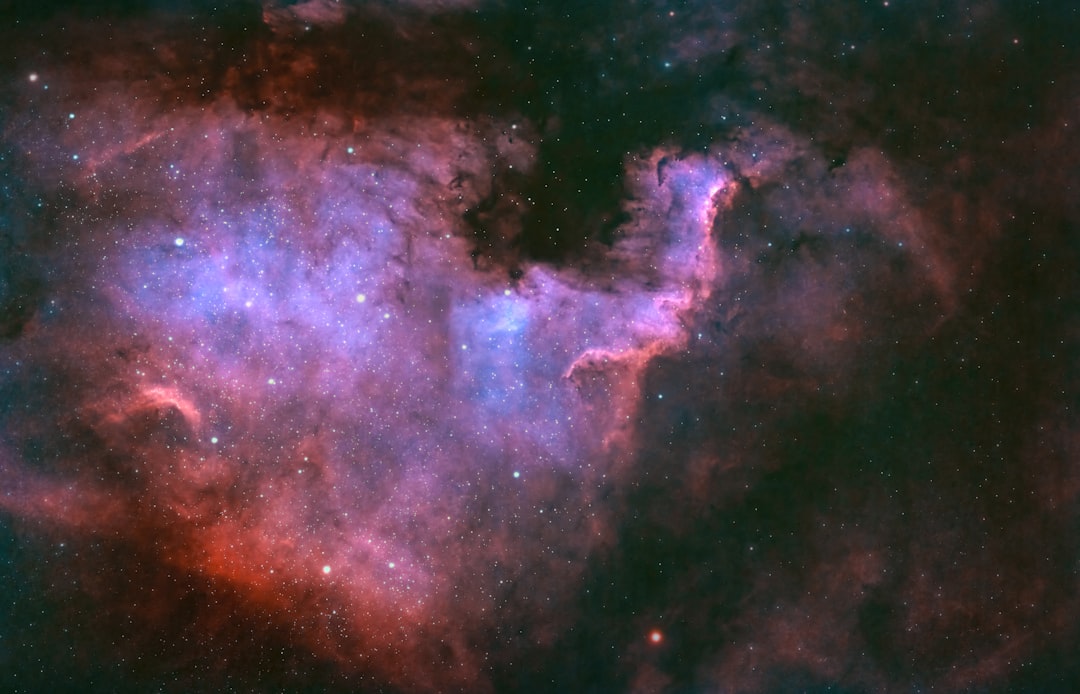
An enigma descended from the cosmic void, an object unlike any previously observed by humanity, has captivated the scientific community. Its passage through our solar system, a fleeting celestial visitor, has prompted an unprecedented global effort to understand its origins and composition. This article delves into the multifaceted investigations undertaken by scientists as they strive to unravel the mysteries of this extraordinary interstellar object.
The initial detection of the interstellar object, a momentous occasion that sent ripples of excitement through observatories worldwide, marked the beginning of a profound scientific endeavor. The object, provisionally designated ‘Oumuamua (meaning “scout” in Hawaiian), was first spotted on October 19, 2017, by the Pan-STARRS telescope in Hawaii. Its unusual trajectory, deviating significantly from the orbital paths of objects originating within our solar system, was the first clue that this was no ordinary visitor.
Early Observations and Data Collection
The immediate hours and days following its discovery were characterized by a frenzy of observation. Telescopes across the globe, from ground-based arrays to orbital observatories, were trained on the faint, rapidly moving point of light. Astronomers scrambled to gather as much data as possible before the object receded into the interstellar depths, its time within our observational reach finite and precious.
The Pan-STARRS Revelation
The Panoramic Survey Telescope and Rapid Response System (Pan-STARRS) played a pivotal role in the initial detection. Its wide-field capabilities allowed it to scan vast swathes of the night sky, making it ideally suited to discover transient celestial events like the approach of an interstellar visitor. The data from Pan-STARRS provided the crucial initial measurements of ‘Oumuamua’s position, trajectory, and apparent brightness.
A Global Network Mobilizes
Following the initial alert, a coordinated global effort was launched. Astronomers from institutions in the United States, Europe, Asia, and Australia rapidly redirected their telescopes to track ‘Oumuamua. This collaborative approach was essential to obtain a comprehensive dataset, compensating for limitations in individual observatory schedules and geographic locations. The sheer speed at which this global network mobilized underscored the significance of the discovery.
The Defining Characteristics: Anomalous Trajectory
The most striking initial feature of ‘Oumuamua was its hyperbolic trajectory. Objects originating from within our solar system, such as asteroids and comets, typically follow elliptical or parabolic orbits, bound by the Sun’s gravitational pull. ‘Oumuamua’s path, however, indicated that it was not gravitationally bound to our Sun and was destined to leave the solar system, never to return.
Hyperbolic Orbits Explained
A hyperbolic orbit is characterized by its open-ended nature. Unlike elliptical orbits, which loop back towards their central body, hyperbolic orbits are one-way tickets. The object enters the gravitational influence of the central body, accelerates, and then departs, never to re-enter its gravitational embrace. This distinction was the primary indicator that ‘Oumuamua hailed from beyond our solar system.
Implications for Origin
The hyperbolic trajectory strongly suggested an interstellar origin, meaning ‘Oumuamua had traveled through the vast emptiness between stars for potentially eons before its chance encounter with our Sun. This revelation opened a Pandora’s Box of questions about its journey and the environments it had traversed.
Scientists continue to investigate the mysteries surrounding interstellar objects, with recent studies shedding light on their origins and compositions. A related article discusses the implications of these findings for our understanding of the universe and the potential for future exploration. To learn more about this fascinating topic, you can read the full article here: Scientists Investigate Interstellar Object.
Unpacking the Form: A Shape-Shifting Enigma
As observations continued, the physical characteristics of ‘Oumuamua began to emerge, presenting a series of perplexing puzzles that challenged existing astrophysical models. Its shape and its unusual behavior during its closest approach to the Sun further deepened the scientific intrigue.
The Elongated Form Debate
Early photometric data suggested that ‘Oumuamua was highly elongated, with a length-to-width ratio far exceeding that of typical solar system asteroids or comets. This extreme shape was unexpected and led to considerable debate among scientists.
Photometric Light Curves
The analysis of ‘Oumuamua’s brightness over time, known as photometric light curves, provided crucial insights into its shape and rotation. As the object tumbled through space, its illuminated surface area varied, causing fluctuations in its apparent brightness. These fluctuations allowed astronomers to infer its dimensions.
Comparing to Solar System Objects
Standard celestial bodies in our solar system, such as asteroids, are generally more spherical or irregularly shaped but rarely exhibit such extreme elongation. This comparison highlighted the anomalous nature of ‘Oumuamua’s morphology.
Non-Gravitational Acceleration: A Mystery Deepens
Perhaps the most perplexing aspect of ‘Oumuamua’s behavior was the observed acceleration away from the Sun, which could not be solely attributed to gravitational forces. This phenomenon pointed towards the presence of outgassing, a characteristic of comets, but without any visible cometary coma or tail.
The ‘Outgassing’ Hypothesis
The leading explanation for the non-gravitational acceleration involved the release of gases from the object’s surface. This outgassing would create a small thrust, propelling ‘Oumuamua away from the Sun. However, the absence of a visible coma, the dusty envelope of gas and dust that typically surrounds a comet when it outgasses, made this hypothesis difficult to reconcile with standard cometary models.
Challenges to Cometary Classification
This discrepancy between the observed acceleration and the lack of a visible coma posed a significant challenge to classifying ‘Oumuamua as a traditional comet. Scientists proposed various scenarios to explain this, including the possibility of outgassing from a very dense, low-volatility material that sublimates without forming a visible atmosphere.
Unraveling the Composition: A Cosmic Fingerprint
The quest to understand ‘Oumuamua’s composition involved analyzing the light reflected and emitted by the object. By studying its spectral signature, scientists aimed to decipher the building blocks from which it was formed, providing clues about its interstellar home.
Spectroscopic Analysis: A Silent Language
Spectroscopy involves breaking down light into its constituent wavelengths, revealing the chemical elements and molecules present in an object. For ‘Oumuamua, this technique offered a unique opportunity to analyze material that had never before been studied directly from an interstellar source.
Reflectance Spectra
The sunlight that reflected off ‘Oumuamua’s surface carried information about its composition. By comparing the observed reflectance spectrum to known spectra of various materials, astronomers could infer the presence of certain elements and compounds.
Limitations of Remote Sensing
However, remote sensing techniques have inherent limitations. The data collected from ‘Oumuamua was based on reflected sunlight, and the object’s composition could vary across its surface. Furthermore, the spectral features might be obscured or altered by the harsh environment of interstellar space.
The ‘Naked Comet’ and ‘Interstellar Asteroid’ Debates
The unusual characteristics of ‘Oumuamua fueled intense debate about its classification. Was it a cometary object that had lost its volatile materials, a “naked comet”? Or was it a rocky, asteroid-like object, a true interstellar asteroid?
The Case for a Cometary Origin
The non-gravitational acceleration strongly supported a cometary origin. Proponents of this view suggested that ‘Oumuamua might have been a comet formed in a different star system, one that had undergone extensive processing and had lost most of its volatile ice, leaving behind a rocky core that still exhibited some outgassing.
The Case for an Asteroidal Origin
Conversely, some scientists argued for an asteroidal origin. They pointed to the lack of a visible coma and the unusual elongated shape as evidence that it might be a fragment of a larger rocky body. In this scenario, the observed acceleration would need to be explained by other mechanisms, perhaps related to its rotational state or interactions with solar radiation.
Exploring Alternative Hypotheses: Beyond Conventional Explanations
The anomalies presented by ‘Oumuamua pushed the boundaries of conventional astrophysical explanations, prompting scientists to consider more speculative, albeit scientifically plausible, hypotheses. These ranged from unusual geological processes to more provocative ideas.
The ‘Hydrogen Ice’ Theory
One intriguing hypothesis proposed that ‘Oumuamua might be composed of frozen hydrogen ice. This would explain its low density and potential for outgassing without the typical presence of water ice or other volatile compounds.
Formation in Extreme Environments
Hydrogen ice is expected to form in very cold and dense environments, such as the cores of protoplanetary disks or in the interstellar medium itself. If ‘Oumuamua were formed in such a location, its composition would be vastly different from that of objects originating in our solar system.
Challenges to the Hypothesis
However, the stability of hydrogen ice in the conditions encountered within our solar system, especially as it neared the Sun, presented significant challenges to this theory. It would likely sublimate rapidly, leaving little trace of its presence.
The ‘Nitrogen Ice’ or ‘Methane Ice’ Possibilities
Similar to the hydrogen ice theory, suggestions of composition based on nitrogen or methane ice also emerged. These substances, while more volatile than rock, could still exist in solid form in specific interstellar conditions.
Volatility and Sublimation
The sublimation rates of these ices at different temperatures were analyzed. Depending on the object’s size and the degree of solar heating, some of these ice compositions could potentially explain the observed outgassing without necessarily forming a prominent coma.
Evidence from Other Interstellar Objects
Scientists also looked for parallels with other theoretical interstellar objects or observations of nebulae that might hint at the prevalence of such ice compositions in different stellar nurseries.
The ‘Alien Artifact’ Speculation: A Controversial Idea
Among the most sensational, and indeed controversial, hypotheses that arose was the possibility that ‘Oumuamua might be an artificial object, an interstellar spacecraft or probe sent by an advanced extraterrestrial civilization.
The ‘Solar Sail’ Analogy
This idea gained traction due to ‘Oumuamua’s unusual acceleration, which some likened to the propulsion mechanism of a hypothetical solar sail. The sheer strangeness of the object, coupled with the lack of a clear natural explanation, fueled this speculation.
Scientific Scrutiny and Skepticism
While the possibility of extraterrestrial intelligence is a fascinating subject, the scientific community largely viewed the alien artifact hypothesis with extreme skepticism. The principle of Occam’s Razor suggests that the simplest explanation is usually the correct one, and attributing ‘Oumuamua’s characteristics to a technological construct requires a significant leap of faith without concrete evidence. Furthermore, the energetic requirements for such an artifact to traverse interstellar distances are immense.
Recently, scientists have been captivated by the mysterious interstellar object known as ‘Oumuamua, leading to a surge of interest in the study of such celestial phenomena. In their quest to understand its origins and composition, researchers have conducted various investigations, revealing intriguing insights about the nature of interstellar visitors. For those interested in exploring this topic further, a related article can be found at this link, which delves into the implications of these discoveries and what they mean for our understanding of the universe.
The Legacy of ‘Oumuamua: Shaping Future Research
| Scientist | Research Topic | Findings |
|---|---|---|
| Dr. Avi Loeb | Interstellar Object | Suggests it could be of artificial origin |
| Dr. Jane Greaves | Interstellar Object Composition | Identified phosphine gas, a potential sign of life |
| Dr. Karen Meech | Interstellar Object Behavior | Observed unusual acceleration and tumbling motion |
The passage of ‘Oumuamua, though brief, has left an indelible mark on our understanding of the cosmos and has profoundly influenced the direction of astronomical research. Its existence has validated long-held theoretical predictions and has spurred the development of new observational capabilities.
Revisiting and Refining Astrophysical Models
‘Oumuamua’s unusual properties have forced scientists to re-examine and refine their models of planetary formation, object evolution in interstellar space, and the dynamics of cometary and asteroidal bodies. The data gathered from this single object has provided invaluable real-world constraints for theoretical frameworks.
Understanding Extrasolar Planet Formation
The composition and formation of ‘Oumuamua are intimately linked to the conditions in its birth system. Studying such objects provides a unique window into the diversity of planetary systems forming around other stars.
The Dynamics of Interstellar Travel
‘Oumuamua’s journey through interstellar space and its interaction with our Sun offer crucial insights into the processes of interstellar travel and the behavior of objects traversing vast cosmic distances.
Enhancing Observational Technologies
The challenge of observing and characterizing fleeting interstellar objects like ‘Oumuamua has directly driven the development of more advanced telescopes and observational techniques. The need for rapid detection and follow-up observations has become a paramount concern.
Next-Generation Survey Telescopes
Future large-scale sky survey telescopes, such as the Vera C. Rubin Observatory, are being designed with the specific goal of detecting and characterizing a much larger population of interstellar objects. These instruments will possess the sensitivity and speed necessary to capture these transient visitors.
Advanced Spectroscopic Capabilities
Improvements in spectroscopic instrumentation are also crucial. Future telescopes will be able to gather more detailed spectral information from fainter and more distant objects, allowing for a more precise determination of their composition.
A New Era of Interstellar Exploration
‘Oumuamua has ushered in a new era of interstellar exploration, not through physical probes, but through the diligent observation and interpretation of cosmic messengers. The possibility that our solar system is visited by such objects with some regularity has ignited a new sense of cosmic curiosity. The scientific community eagerly anticipates the next interstellar visitor, armed with the knowledge and tools gained from the groundbreaking study of this enigmatic scout from the stars.

The New Interstellar Object That’s Dividing Scientists
FAQs
What is the interstellar object that scientists are investigating?
The interstellar object that scientists are investigating is an object that has entered our solar system from outside of it. These objects are of particular interest because they provide a rare opportunity to study material from other star systems.
What are scientists hoping to learn from studying interstellar objects?
Scientists are hoping to learn more about the composition and characteristics of interstellar objects, which can provide valuable insights into the conditions and processes that occur in other star systems. This can help us better understand the diversity of planetary systems in the universe.
How do scientists study interstellar objects?
Scientists study interstellar objects using a variety of techniques, including telescopic observations, spectroscopy, and in some cases, spacecraft missions. By analyzing the light and other emissions from these objects, scientists can determine their composition, structure, and other important characteristics.
What have scientists discovered from previous studies of interstellar objects?
From previous studies of interstellar objects, scientists have discovered that these objects can have unusual shapes and compositions that differ from those of objects within our solar system. For example, the first interstellar object discovered, ‘Oumuamua, had a highly elongated shape and exhibited non-gravitational acceleration.
Why are interstellar objects important for our understanding of the universe?
Interstellar objects are important for our understanding of the universe because they provide a unique opportunity to study material from other star systems, which can help us gain insights into the processes that shape planetary systems and the diversity of objects that exist beyond our solar system. This can ultimately contribute to a more comprehensive understanding of the universe as a whole.