
The Genesis of a Phenomenon: How the SCU Report Came to Be
The recent publication of a detailed report by the Spanish Center for Ufological Studies (SCU) concerning a mysterious sighting over Aguadilla, Puerto Rico, has reignited public interest in the unexplained aerial phenomena (UAP) that have captivated humanity for decades. This report, meticulously compiled and rigorously analyzed, represents a significant step forward in the scientific investigation of anomalous aerial events. Its origins lie in a confluence of factors: persistent eyewitness testimony, advancements in investigative methodologies, and a growing recognition within official circles that such phenomena warrant serious, unbiased examination. The SCU, a venerable institution dedicated to the study of UAPs, has long been a proponent of evidence-based analysis, rejecting sensationalism in favor of empirical data. This particular case, involving multiple credible witnesses and compelling visual evidence, presented an ideal opportunity to showcase their commitment to this approach. The initial reports, surfacing in the latter half of last year, described a series of unusual aerial maneuvers observed over the coastal city of Aguadilla. These accounts, initially fragmented and circulating through informal channels, soon caught the attention of SCU researchers who recognized the potential for a significant case. The SCU’s mandate is to collect, verify, and analyze all available data pertaining to UAP sightings. This often involves extensive fieldwork, interviews with witnesses, consultation with experts in various scientific disciplines, and the careful examination of any photographic or video evidence. The Aguadilla incident, with its multiple independent accounts and the promise of tangible evidence, demanded such a comprehensive investigation. The report itself is not merely a compilation of anecdotes; it is the culmination of a rigorous process designed to eliminate conventional explanations before considering more extraordinary possibilities. This methodical approach is crucial for maintaining the credibility of Ufology as a field of serious inquiry, a goal that the SCU has consistently pursued. The decision to focus on the Aguadilla sighting was driven by the sheer volume and consistency of the witness statements. Unlike isolated incidents, this event was observed by a number of individuals from different vantage points, lending credence to their shared observations. Furthermore, the nature of the reported object’s behavior – its speed, agility, and lack of conventional aerodynamic features – immediately set it apart from known aircraft. The SCU understood that a thorough investigation of such a case could contribute significantly to the broader understanding of UAP.
The Foundation of Credibility: SCU’s Methodology and Mission
The Spanish Center for Ufological Studies (SCU) operates with a distinct and unwavering commitment to scientific rigor. For decades, the SCU has been at the forefront of UAP research, not as purveyors of conspiracy theories, but as dedicated investigators seeking to apply scientific principles to phenomena that often elude conventional explanation. Their mission is clear: to collect, analyze, and understand unexplained aerial phenomena through objective observation, meticulous data collection, and collaborative scientific inquiry. The SCU’s methodology is built on a foundation of auditable processes and verifiable evidence. They do not rely on hearsay or anecdotal accounts alone. Instead, their investigations begin with the thorough documentation of every sighting, meticulously recording details such as the date, time, location, duration, and the precise descriptions provided by witnesses. A critical aspect of their work involves the vetting of witnesses themselves. The SCU prioritizes individuals with no prior history of unfounded claims, those who demonstrate a clear understanding of their observations, and those whose accounts are corroborated by other independent sources. This rigorous screening process ensures that the data collected is as reliable as possible, forming a solid basis for further analysis.
Witness Corroboration and the Aguadilla Case
In the case of the Aguadilla sighting, the SCU’s commitment to witness corroboration proved particularly vital. Multiple individuals, situated in different locations around the coastal city, reported observing the same unusual aerial object. These witnesses, spanning various professions and backgrounds, provided remarkably consistent descriptions of the object’s appearance, its silent operation, and its extraordinary flight characteristics. The SCU conducted extensive interviews with each witness, employing standardized questionnaires and in-depth probing to elicit the most precise details. The consistency across these independent accounts, despite the differing perspectives, served as a powerful initial indicator of the event’s significance. The SCU team actively sought out any visual evidence that might have been captured. This included appeals to the public for photographs or videos and diligent review of publicly available footage from the period in question. The SCU’s analytical framework is designed to systematically eliminate all known terrestrial explanations for a sighting. This process involves consulting with experts in aviation, meteorology, astronomy, and other relevant fields to rule out misidentifications of conventional aircraft, weather phenomena, satellites, drones, or even unusual atmospheric conditions. Only after all plausible conventional explanations have been thoroughly exhausted does the SCU consider the possibility of more unconventional origins for the observed phenomena. This methodical approach is what lends weight and credibility to their conclusions, including the recent report on the Aguadilla sighting.
The recent SCU UFO report on the Aguadilla incident has sparked significant interest in the field of ufology, highlighting the need for thorough investigations into unexplained aerial phenomena. For those looking to delve deeper into similar cases and analyses, a related article can be found at this link: XFile Findings, which offers a comprehensive overview of various UFO sightings and their implications.
The Aguadilla Event: A Detailed Examination of the Phenomenon

The SCU’s report on the mysterious sighting over Aguadilla, Puerto Rico, details an event that unfolded over a period of several days, characterized by a series of perplexing aerial observations. The phenomenon was not a single, fleeting glimpse but rather a pattern of activity that caught the attention of numerous observers, from casual onlookers to individuals with a more vested interest in aerial phenomena. The initial reports described an object or objects exhibiting characteristics that defied conventional explanation. Witnesses consistently reported a silent, luminous entity that moved with incredible speed and agility. Its ability to hover, accelerate instantaneously, and change direction without any apparent control surfaces or visible means of propulsion set it apart from any known aircraft or natural phenomenon. The SCU’s investigation focused on piecing together a coherent narrative from these disparate accounts, cross-referencing details and identifying commonalities to construct a comprehensive picture of the event.
Eyewitness Accounts: A Tapestry of Shared Observations
The cornerstone of the SCU’s report on the Aguadilla sighting lies in the collective testimony of its witnesses. The report meticulously details the interviews conducted with individuals who observed the phenomenon from various locations. These witnesses were not limited to a single demographic or profession; their ranks included fishermen, local residents, and even individuals with some familiarity with aviation. A striking aspect of these accounts is their remarkable consistency. Despite the varied perspectives and the potential for individual misinterpretation, a shared narrative emerged. Many described a disc-shaped or oval object, often emitting a soft, pulsating light that varied in intensity and color. Crucially, a recurring theme was the complete absence of sound. Traditional aircraft, even those operating at high altitudes, produce discernible engine noise. The silence reported by multiple witnesses strongly suggests that the observed object was not a conventional aircraft. Furthermore, the reported maneuvers were nothing short of extraordinary. Witnesses described the object as capable of rapid ascent, descent, and lateral movement at speeds far exceeding the capabilities of current human technology. It was observed to hover motionless for extended periods before suddenly accelerating to seemingly impossible velocities, often changing direction instantaneously without any visible deceleration or banking. This type of maneuverability is a hallmark of many UAP reports and is a significant factor that challenges conventional explanations. The SCU’s report emphasizes that these observations were not fleeting glimpses but often extended periods of visual contact, allowing witnesses ample time to observe and process what they were seeing. The report also addresses the psychological aspects of witnessing such an event, acknowledging the potential for fear or awe, but highlighting the consistent and rational descriptions provided by the witnesses.
Technical Analysis of Visual Evidence
While the SCU report places significant emphasis on witness testimony, it also delves into the analysis of any available visual evidence. This includes scrutinizing photographic and video recordings submitted by witnesses or obtained through public sources. The SCU employs advanced techniques to assess the authenticity and reliability of such media. This often involves analyzing frame rates, identifying potential digital manipulation, and comparing the observed object’s characteristics with known optical illusions or atmospheric phenomena. In the Aguadilla case, the SCU meticulously examined several photographic and video fragments that purported to depict the phenomenon. Their analysis focused on the object’s apparent size, shape, luminosity, and trajectory as captured in the images. The report details the process of eliminating potential misidentifications. For instance, they would compare the observed light source with known celestial bodies or aircraft lights and analyze the movement patterns within the video footage against known flight dynamics. The SCU’s technical experts are adept at identifying anomalies that are not easily explained by conventional means. The report highlights specific instances where the visual data, when analyzed in conjunction with witness testimony, reinforced the anomalous nature of the sighting. For example, if a video shows an object performing maneuvers that are physically impossible for known aircraft, and this is corroborated by multiple witnesses describing the same impossible maneuvers, it significantly strengthens the case for an unexplained phenomenon. The SCU’s approach is not to immediately conclude that the object is extraterrestrial, but rather to establish that it is something demonstrably anomalous and not readily explainable by current human knowledge or technology.
Eliminating the Mundane: Exhaustive Conventional Explanations

A fundamental principle of rigorous UAP investigation, and one that the SCU adheres to with unwavering dedication, is the exhaustive process of eliminating all plausible conventional explanations. The SCU understands that the extraordinary claims demand extraordinary evidence, and this begins by systematically ruling out all mundane possibilities. Before any consideration can be given to more speculative hypotheses, every sighting must be subjected to a thorough analysis to determine if it can be explained by known atmospheric phenomena, man-made objects, or optical illusions. This process is not about disproving witness accounts but about understanding them within the framework of established scientific understanding. The SCU’s approach is one of critical thinking and scientific skepticism, ensuring that every avenue is explored to provide the most accurate and grounded explanation.
Atmospheric Phenomena and Natural Illusions
The natural world offers a plethora of phenomena that can, at times, be mistaken for something more. The SCU’s analysis of the Aguadilla sighting, like all its investigations, began with a comprehensive review of potential atmospheric explanations. This includes phenomena such as lenticular clouds, which can adopt unusual shapes and appear stationary, or atmospheric refraction, which can distort the appearance of distant objects, making them seem to float or change position. Ball lightning, a rare but documented atmospheric electrical phenomenon, can also manifest as luminous spheres, though its behavior and typical duration differ from many UAP reports. The SCU consults meteorological data and expert opinions to ascertain if any known weather patterns or atmospheric conditions could have contributed to the observed visual discrepancies. Furthermore, they consider the psychological aspects of perception. The human eye and brain can be prone to misinterpretation, especially in conditions of low light, high speed, or when faced with unfamiliar stimuli. Optical illusions, pareidolia (the tendency to perceive familiar patterns in random data), and the effects of suggestion can all play a role in how individuals perceive and report aerial events. The SCU’s investigators are trained to identify these potential pitfalls, often by comparing witness descriptions with known optical effects or by looking for inconsistencies that might suggest misperception rather than an actual object. The report on Aguadilla details the specific atmospheric conditions present during the period of the sightings and whether any known phenomena could have mimicked the reported characteristics of the object.
Identification of Known Aircraft and Man-Made Objects
A significant portion of UAP investigations involves identifying whether the observed phenomenon could be a misidentification of a conventional aircraft, satellite, drone, or other man-made object. The SCU meticulously cross-references witness reports with flight tracking data, military exercise schedules, and civil aviation logs for the relevant time and location. They also consider the possibility of experimental aircraft or advanced drone technology, which may not be widely known to the public. The Aguadilla report specifically addresses the presence and flight paths of known aircraft in the region during the period of the sightings. The SCU’s analysis aims to determine if the reported object’s speed, altitude, trajectory, and visual characteristics align with any known conventional flying machines. The lack of sound, for instance, is a critical differentiator. If an object is described as silent, it immediately moves away from conventional propeller-driven or jet aircraft. Similarly, the extreme maneuverability reported over Aguadilla often falls outside the known performance envelopes of even the most advanced military aircraft. The SCU also considers the possibility of clandestine military testing or advanced drone technology that might not be publicly disclosed. However, even in such scenarios, the SCU seeks to establish if the reported characteristics are consistent with the capabilities of such clandestine projects. The report on Aguadilla outlines the thorough efforts undertaken to rule out these possibilities, demonstrating that the phenomenon observed possessed characteristics that could not be accounted for by any known aircraft or publicly acknowledged man-made technology.
Unanswered Questions and Future Avenues of Inquiry
Despite the SCU’s meticulous analysis and their commitment to providing the most comprehensive explanation possible, the report on the mysterious sighting over Aguadilla leaves certain questions tantalizingly unanswered. This is the nature of Ufology; while progress can be made in eliminating conventional explanations, the very essence of an “unexplained” phenomenon means that definitive answers may remain elusive. The SCU’s report does not shy away from acknowledging these uncertainties. Instead, it frames them as opportunities for further research and exploration, emphasizing that the pursuit of knowledge is an ongoing process. The AGUADILLA report, in its conclusions, clearly delineates the boundaries of current understanding, highlighting the aspects of the phenomenon that continue to defy conventional explanation.
The Anomalous Nature of the Phenomenon
The central mystery surrounding the Aguadilla sighting, as detailed in the SCU report, lies in the object’s inexplicable performance. The combination of silent operation, extreme acceleration, instantaneous changes in direction, and prolonged periods of hovering at high altitudes presents a formidable challenge to conventional physics and engineering. The SCU’s report, after exhausting all known terrestrial explanations, concludes that the observed phenomena exhibited characteristics that are inconsistent with current understanding of aerodynamics and propulsion systems. This does not automatically imply an extraterrestrial origin, but it does firmly place the sighting within the realm of the unexplained. The report highlights specific aspects of the object’s behavior that remain particularly perplexing. For example, the instantaneous acceleration from a stationary position to hypersonic speeds, without any discernible G-forces affecting the object, is a concept that currently defies known physical principles. Similarly, the ability to achieve such high velocities and then seemingly disappear or change direction without any visible deceleration or banking suggests a level of control and propulsion that is beyond our current technological capabilities. The SCU report carefully avoids definitive pronouncements on the nature of the object, instead focusing on the observable facts and the implications of those facts.
The SCU’s Recommendations for Further Investigation
The SCU report on the Aguadilla sighting is not merely a record of past events but also a roadmap for future inquiry. Recognizing that the investigation has raised more questions than it has definitively answered, the SCU offers several recommendations for how to proceed. These recommendations are rooted in their commitment to a scientific and open-minded approach. One key recommendation is the continued collection and analysis of similar UAP reports from the region and globally. The SCU advocates for the establishment of more standardized protocols for reporting and documenting UAP sightings, encouraging the use of advanced recording equipment and data analysis tools by both amateur enthusiasts and professional researchers. The report also emphasizes the importance of interdisciplinary collaboration. The SCU suggests that future investigations should involve a broader range of scientific experts, including astrophysicists, aerospace engineers, materials scientists, and cognitive psychologists, to bring diverse perspectives to the analysis of anomalous phenomena. Furthermore, the SCU calls for greater transparency and cooperation between governmental agencies and independent research organizations. They believe that the sharing of relevant data, where security permits, could significantly accelerate the understanding of UAP. The SCU also stresses the need for continued public education on the scientific study of UAP, aiming to foster a more informed and rational discourse, moving away from sensationalism and towards evidence-based analysis. The report concludes by reiterating that the Aguadilla sighting, while perplexing, represents a valuable data point in the ongoing quest to understand the mysteries of our skies, a quest that the SCU remains dedicated to pursuing with scientific integrity and intellectual curiosity.
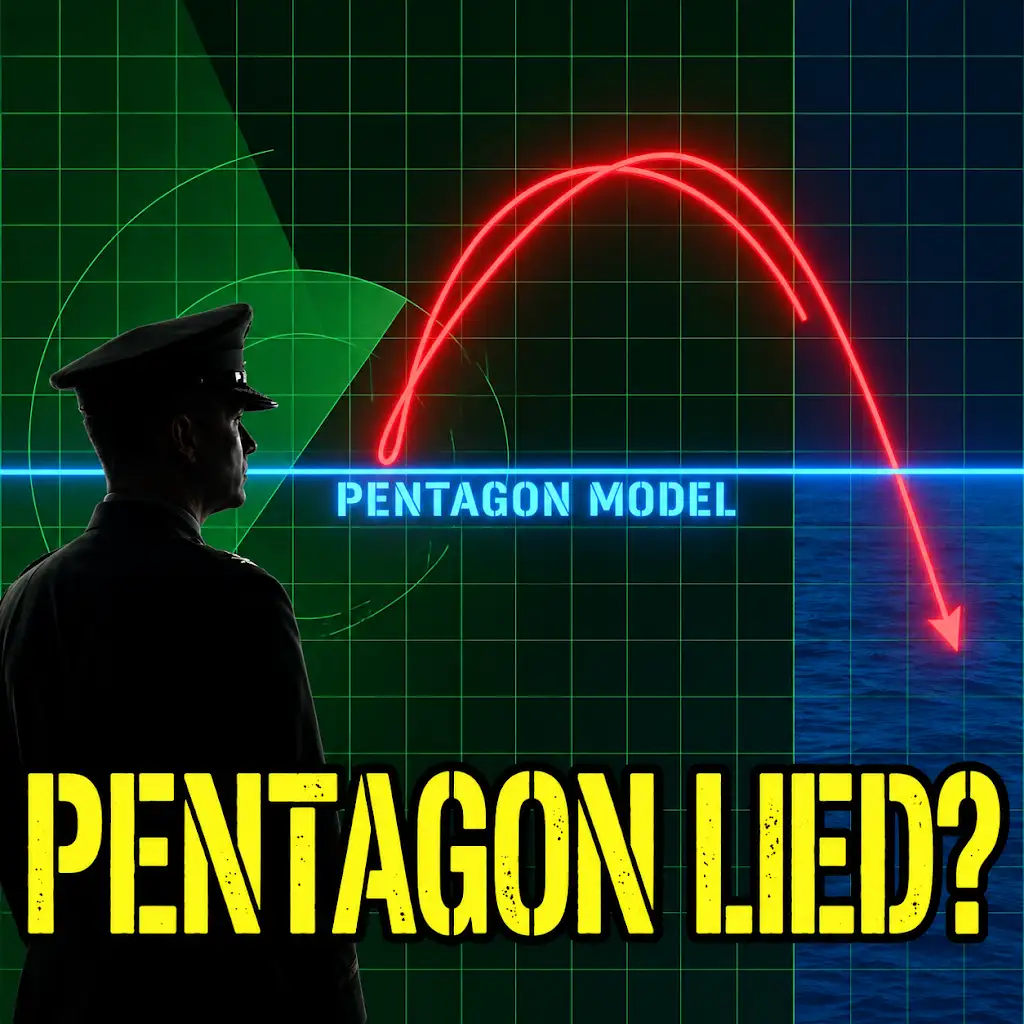
Aguadilla UFO Video: What the Pentagon Got Wrong.
FAQs
What is the Aguadilla UFO report?
The Aguadilla UFO report refers to an incident that occurred on April 25, 2013, when a UFO was sighted by US Customs and Border Protection agents near Aguadilla, Puerto Rico.
What did the UFO sighting involve?
The UFO sighting involved a mysterious object flying low over the ocean, then disappearing into the water without any wreckage or debris being found.
Was the Aguadilla UFO report investigated?
Yes, the Aguadilla UFO report was investigated by the Department of Homeland Security’s Office of Inspector General, but the results of the investigation have not been publicly released.
What theories have been proposed to explain the Aguadilla UFO incident?
Some theories proposed to explain the Aguadilla UFO incident include the possibility of a drone, a weather balloon, or even extraterrestrial activity.
Has the Aguadilla UFO incident been officially explained?
No, as of now, the Aguadilla UFO incident remains unexplained, and the true nature of the object sighted near Aguadilla, Puerto Rico, remains a mystery.