Secret Black Ops Aerospace Programs: The Future of Military Technology
The landscape of military technology has consistently been a crucible for innovation, often under cloaks of secrecy. While the public eye typically focuses on announced procurements and established military platforms, a deeper, less visible stratum of aerospace development exists. This realm, frequently dubbed “black ops” programs, represents the vanguard of military technology, pushing the boundaries of what is conventionally considered possible. It is within these highly classified initiatives that the seeds of future air and space dominance are sown, cultivating technologies that may remain hidden for decades, or perhaps never fully emerge into the public domain. Readers should consider that confirmed disclosures of active secret black ops aerospace programs are exceedingly rare, with much information drawing from historical precedents, persistent rumors, and the logical evolution of openly discussed strategic defense initiatives.
The very concept of “black ops” aerospace programs is rooted in a long history of military secrecy, designed to preserve tactical advantages and prevent adversaries from gaining insight into technological advancements. This operational opacity is not a modern phenomenon but rather an enduring facet of national security.
Black Budgets and Unconventional Funding
The financial lifeline for these clandestine endeavors often flows through “black budgets,” congressional appropriations that are intentionally obscured within broader defense spending. These funds are notoriously difficult to track, offering a degree of deniability and flexibility essential for unconventional projects. The financial mechanisms employed for black budget programs are analogous to a complex subterranean river system, where the true flow of resources is known only to a select few. Consider, for instance, ongoing speculation regarding classified U.S. triangular aircraft, such as the enigmatic TR-3A. These rumors are often accompanied by the contention that black budgets are utilized to fund small-batch exotic aircraft, a process not dissimilar to earlier, self-funded projects like Boeing’s Bird of Prey, which reportedly cost $128 million in equivalent modern currency. Such funding pathways empower organizations to pursue high-risk, high-reward aerospace concepts, far from conventional oversight.
Project Aurora: Myth or Misdirection?
The “Aurora” program serves as a potent example of how public speculation and official statements can diverge, creating an enduring mythos around secret aircraft. A 1985 Department of Defense (DoD) budget request briefly surfaced, allocating $80 million in 1986 and a substantial $2.3 billion in 1987 under the designation “Aurora.” This brief appearance in public documents fueled intense speculation about a classified hypersonic reconnaissance aircraft. However, the budget request was ultimately cut, and subsequent analysis by various aviation historians and researchers has largely concluded that “Aurora” was not a separate hypersonic craft but rather a budgetary placeholder or a deliberate misdirection related to the development of the B-2 Spirit stealth bomber. The “Aurora” narrative functions as a cautionary tale: the truth behind classified programs can be far more mundane than the sensational stories that capture the public imagination, yet the allure of the unknown persists.
For those interested in the intricacies of Black Ops Aerospace Programs, a fascinating article can be found at X File Findings, which delves into the secretive world of advanced military aviation technology and its implications for national security. This resource provides insights into the development and operational capabilities of these classified programs, shedding light on the cutting-edge innovations that remain largely hidden from public view.
The Collaborative Combat Aircraft (CCA) and Autonomous Futures
In the contemporary military landscape, the drive towards autonomous and semi-autonomous systems represents a significant shift in strategic thinking. This paradigm shift, openly discussed and actively pursued, provides a fertile ground for the integration of classified technologies.
YFQ-48 Alpha: Paving the Way for Semi-Autonomous Platforms
A notable recent development in this field is the designation of Northrop Grumman’s Project Talon prototype as the YFQ-48 Alpha by the U.S. Air Force on February 2, 2026. This designation is not merely a bureaucratic formality; it marks a critical step forward in the Collaborative Combat Aircraft (CCA) program. The YFQ-48 Alpha is envisioned as a foundational element for the development of semi-autonomous aircraft designed for future missions. These CCAs are expected to operate as loyal wingmen, extending the reach and survivability of crewed aircraft, much like a force multiplier amplifying existing capabilities. The advent of such platforms necessitates robust, secure, and potentially classified communication protocols and AI systems to ensure seamless integration and operational effectiveness.
The Ecosystem of Uncrewed Systems
The YFQ-48 Alpha is but one piece of a much larger puzzle – the development of a comprehensive ecosystem of uncrewed military systems. This ecosystem will likely involve a spectrum of aircraft, from reconnaissance drones to attack platforms, all operating in a coordinated and increasingly autonomous manner. The evolution of these systems is not without its classified components, particularly in areas such as advanced artificial intelligence, stealth technology for smaller platforms, and secure mesh networking capabilities that can withstand sophisticated electronic warfare attacks. Readers should envision this technological evolution as a complex, interconnected web, where each thread, visible or hidden, contributes to the overall strength and resilience of the network.
Stealth and Vertical Take-Off and Landing (VTOL) Technologies
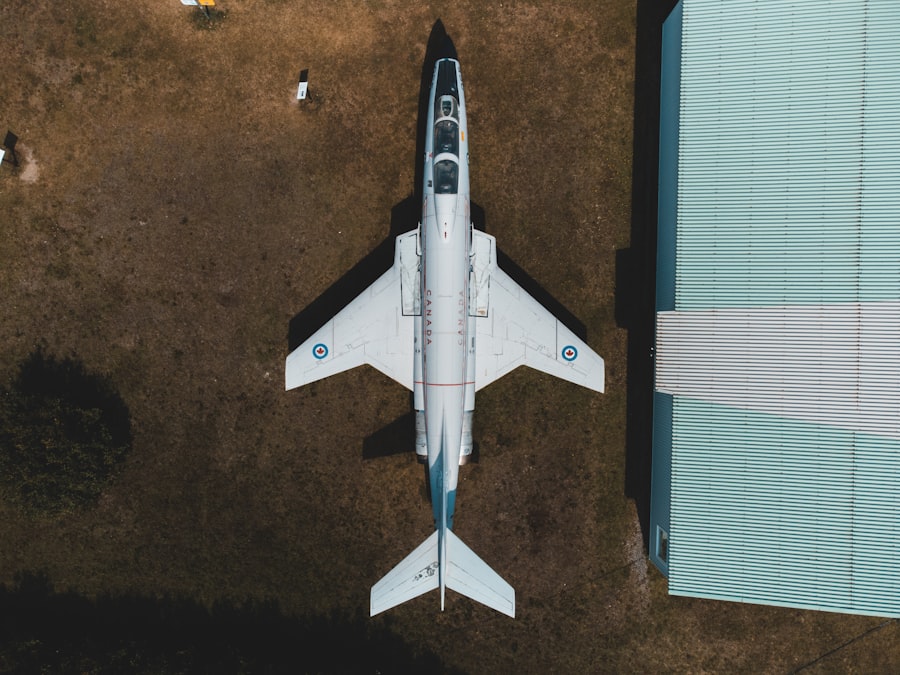
The pursuit of stealth and VTOL capabilities has consistently been a priority in classified aerospace programs, reflecting a desire for operational flexibility and survivability in contested environments.
Senior Citizen: A Glimpse into Classified VTOL Development
Historical accounts suggest deeply classified projects focused on combining stealth and VTOL capabilities. Reports indicate that in 1983, Boeing and Northrop were contracted for the development of stealthy VTOL transport aircraft under a program potentially codenamed “Senior Citizen.” The discretion surrounding such projects was absolute. Northrop, in particular, is believed to have delivered an operational platform by 1989, a mere six years after the contract initiation, with the entire endeavor executed under extreme secrecy. This accelerated timeline and profound secrecy underscore the strategic importance attributed to these capabilities. The development of such a platform, capable of both evading detection and operating from austere, forward locations, would grant significant tactical advantages, akin to a ghost appearing and disappearing at will across the battlefield.
The Ongoing Evolution of Stealth Technology
While the “Senior Citizen” program offers a historical benchmark, the advancements in stealth technology have undoubtedly continued, driven by evolving threats and the imperative for aerial superiority. Modern stealth programs likely focus on a multidisciplinary approach encompassing advanced materials, adaptive camouflage, signature management across multiple spectrums (radar, infrared, acoustic), and sophisticated electronic countermeasures. The integration of stealth into VTOL platforms presents unique engineering challenges, particularly in managing the thermal and acoustic signatures inherent in vertical flight. The solutions to these challenges often reside within the classified domain, where breakthroughs are carefully guarded as vital national assets.
Human Capital and Strategic Adaptation

Beyond the hardware and software, the human element remains paramount in the context of advanced aerospace programs. Training, adaptation, and organizational re-optimization are crucial for leveraging new technologies effectively.
AFSOC Program: Cultivating the Next Generation of Operators
The increasing complexity and demanding nature of modern special operations necessitate equally sophisticated training regimens. Recent insights into an Air Force Special Operations Command (AFSOC) program highlight this focus. A 12-week Modern Athlete Strength Systems program, specifically tailored for the Air Force Special Warfare pipeline, emphasizes demanding physical conditioning, including intensive lifting and lower body work. These programs, frequently highlighted in operational briefs, are designed to forge operators capable of enduring the immense physical and mental stresses associated with highly classified and technologically advanced missions. The readiness of these individuals serves as the vital link between cutting-edge technology and its successful deployment, much like the finely tuned engine that drives a high-performance vehicle.
Space Force Reoptimization: Adapting for Great Power Competition
The early 2024 reoptimization of the Space Force by the Department of the Air Force signifies a broad strategic realignment aimed at addressing the imperatives of great power competition. This comprehensive initiative, which continues to unfold, is intended to reshape both the Air Force and the Space Force for future challenges. Such large-scale organizational transformations inevitably involve a review and potential integration of classified aerospace efforts, particularly those pertaining to space-based assets, secure communication networks, and counter-space capabilities. The reoptimization acts as a strategic compass, guiding the trajectory of both open and classified programs towards a unified vision of national security dominance across the aerospace continuum. It is a recognition that the theater of operations extends beyond the atmosphere, into the realm where the lines between air and space become increasingly blurred.
The advancements in Black Ops Aerospace Programs have sparked considerable interest in the realm of classified military technology. For those looking to delve deeper into this intriguing subject, a related article can be found that explores the implications and developments of such programs. You can read more about these fascinating topics in the article available at this link. Understanding the complexities of these operations not only sheds light on national security but also on the future of aerospace innovation.
The Veil of Secrecy: Challenges and Implications
| Program Name | Agency | Purpose | Launch Year | Status | Key Metrics |
|---|---|---|---|---|---|
| Project Blackstar | US Air Force | Hypersonic reconnaissance and strike | 2001 | Classified/Unknown | Hypersonic speed, stealth capabilities |
| Raven | US Air Force | Spaceplane for rapid deployment | 2010 | Active | Reusable, suborbital flight, rapid turnaround |
| DarkStar | US Air Force | Stealth UAV reconnaissance | 1996 | Cancelled | High altitude, stealth, long endurance |
| Falcon Hypersonic Vehicle | US Air Force | Hypersonic strike and reconnaissance | 2015 | Development | Mach 5+, long range, stealth |
| Black Manta | US Navy | Underwater reconnaissance and strike | 2018 | Classified/Unknown | Stealth, autonomous operation, deep sea capability |
The secrecy inherent in black ops aerospace programs, while strategically necessary, also presents unique challenges and carries profound implications for accountability, public discourse, and the very nature of technological progress.
Maintaining the Operational Advantage
The primary rationale for secrecy is straightforward: to maintain an operational advantage over potential adversaries. By concealing breakthroughs in propulsion, stealth, or autonomous systems, military planners aim to introduce disruptive technologies that cannot be readily countered. This approach fosters a continuous arms race in the shadows, where each nation attempts to outmaneuver the other through technological surprise. However, this cloak-and-dagger approach also means that any revealed capabilities, when they eventually emerge, might be decades beyond what the public perceives as cutting-edge. The technological gap between the classified and unclassified worlds can be vast, akin to the difference between a rudimentary telescope and the James Webb Space Telescope.
Ethical Considerations and Oversight
The existence of highly classified programs inevitably raises questions about ethical considerations and oversight. Without public scrutiny, the potential for mission creep, unchecked spending, or the development of ethically ambiguous technologies becomes a concern. While internal oversight mechanisms are undoubtedly in place, the inherent nature of black programs limits external accountability. This delicate balance between national security and democratic principles is a constant tension within defense policy. Readers should appreciate that this tension is not easily resolved and remains a perennial challenge for policymakers and citizens alike.
The Inevitable Leakage and Rumor Mill
Despite the most stringent security measures, information, or at least fragments of it, can sometimes leak, or persistent rumors can take root and propagate. The allure of the unknown fuels public fascination, leading to a constant stream of speculation about advanced craft sighted in restricted airspace or unexplainable phenomena. While many of these rumors are unfounded, some may contain grains of truth derived from incomplete information or deliberate disinformation campaigns. The existence of persistent rumors, such as those surrounding the TR-3A, underscores the difficulty, if not impossibility, of maintaining absolute secrecy across decades, particularly when eyewitness accounts or unexplained aerial phenomena contribute to the narrative. The rumor mill acts as a diffuse, unreliable sensor network, sometimes detecting faint echoes from the classified world.
Conclusion
The realm of secret black ops aerospace programs represents the cutting edge of military technological development. From historical precedents of black budgets and rumored craft to the modern push for collaborative combat aircraft and the reoptimization of global forces, these programs operate in the shadows, shaping the future of warfare in ways often unseen. While formal disclosures are rare, the progression of known programs like the YFQ-48 Alpha, intertwined with historical insights into projects like “Senior Citizen,” provides glimpses into this hidden world. The strategic imperative for secrecy, coupled with the relentless pursuit of technological superiority, ensures that this domain will continue to be a crucible of innovation, constantly pushing the boundaries of what is possible in the air and in space. Readers should understand that the future of military technology is not only being developed in plain sight but also in the clandestine laboratories and test sites that remain veiled from public view, acting as the silent architects of tomorrow’s defense landscape.
FAQs
What are Black Ops Aerospace Programs?
Black Ops Aerospace Programs refer to highly classified military and government projects focused on developing advanced aerospace technologies, often involving stealth, reconnaissance, and experimental aircraft or spacecraft.
Who typically manages Black Ops Aerospace Programs?
These programs are usually managed by national defense agencies, such as the Department of Defense (DoD) in the United States, and may involve collaboration with intelligence agencies and private aerospace contractors.
Why are Black Ops Aerospace Programs kept secret?
The secrecy is maintained to protect national security interests, prevent adversaries from gaining knowledge of advanced technologies, and maintain a strategic advantage in aerospace capabilities.
What types of technologies are developed in Black Ops Aerospace Programs?
Technologies can include stealth aircraft, advanced propulsion systems, surveillance satellites, hypersonic vehicles, and experimental space vehicles, often pushing the boundaries of current aerospace engineering.
Can the public access information about Black Ops Aerospace Programs?
Information is generally classified and not available to the public. Occasionally, declassified documents or leaks may provide limited insights, but most details remain confidential to safeguard security.