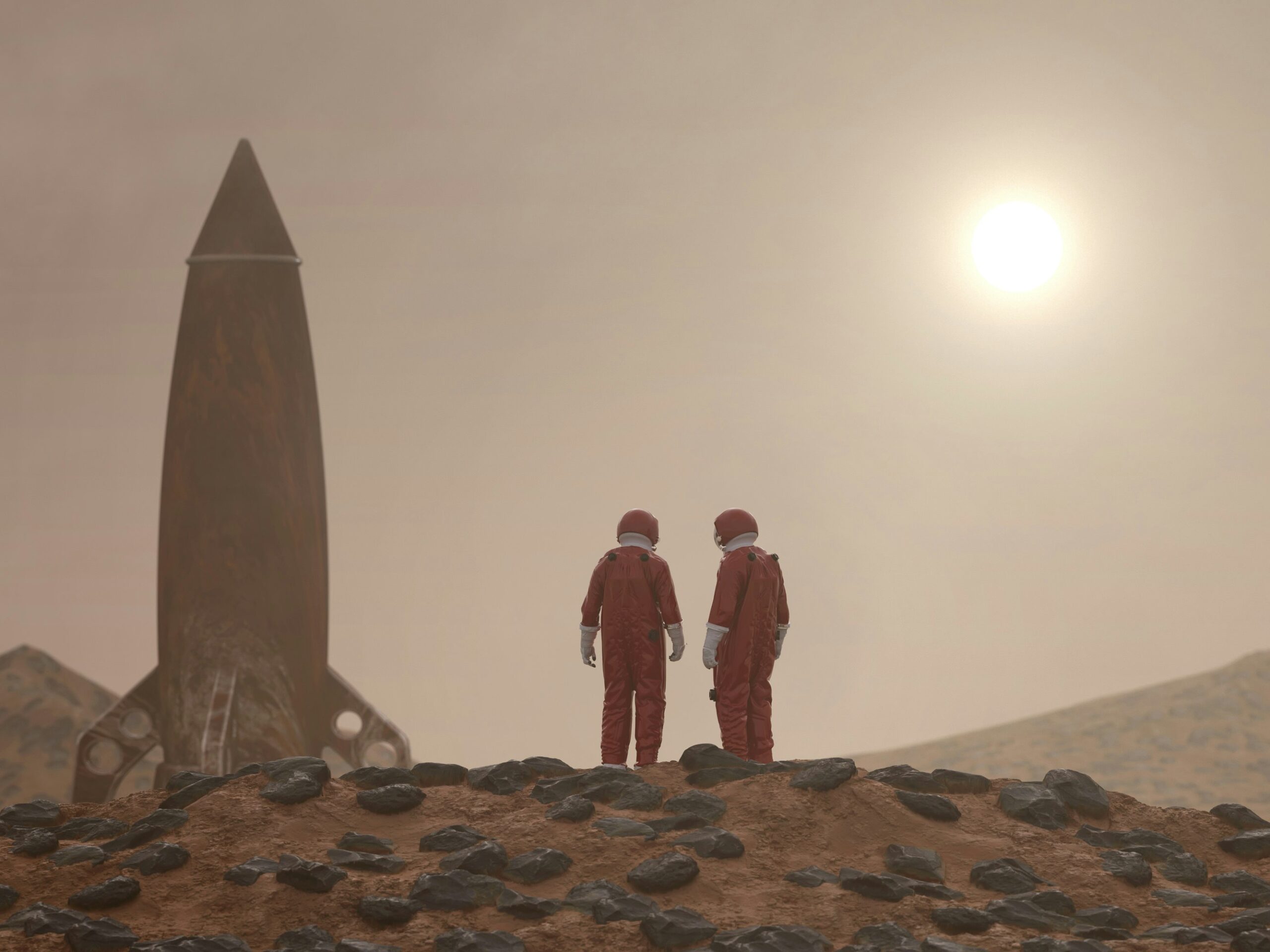
The whispers had circulated for years, fragmented tales exchanged in hushed tones among those who delved into the fringes of espionage and the mysteries of the cosmos. They spoke of classified programs, of daring attempts to peer beyond the veil of known reality, and of discoveries that could fundamentally alter humanity’s understanding of its place in the universe. Central to these whispers was the alleged existence of CIA remote viewing operations and their purported breakthroughs concerning ancient structures on Mars – specifically, pyramids. For decades, this information remained shrouded in secrecy, accessible only through declassified documents, anecdotal accounts, and the tireless research of independent investigators. Now, a comprehensive examination of available evidence suggests that the CIA, through its once-secret remote viewing programs, may indeed have uncovered compelling indications of artificial, pyramid-like structures on the surface of the Red Planet, entities that bear a striking resemblance to ancient terrestrial monuments.
The initial impetus for the CIA’s deep dive into the esoteric realm of remote viewing stemmed from a geopolitical imperative: the Cold War. Faced with a perceived technological and intelligence gap with the Soviet Union, the agency, alongside other branches of the U.S. military and intelligence community, began exploring unconventional avenues to gain an edge. This led to the establishment of programs like Stargate Project, a rather innocuous-sounding moniker for a multifaceted endeavor that investigated psychic phenomena, including telepathy, precognition, and, most notably, remote viewing.
Operation Grill Flame and the Birth of Psychic Intelligence
The foundations of remote viewing were laid in the early 1970s with research conducted at Stanford Research Institute (SRI) under the auspices of the U.S. Army and later, the CIA. This research, particularly under the umbrella of Operation Grill Flame, aimed to determine if individuals could accurately perceive and describe distant or concealed targets using only their minds. The methodology involved “viewers” being presented with a series of coordinates or a coded cue, and then asked to sketch and describe what they “saw.” The targets varied wildly, from military installations and secret facilities to historical sites and, crucially, locations on other planets.
Early Skepticism and Scientific Scrutiny
It is important to acknowledge that the scientific community, and indeed much of the public, approached these early investigations with profound skepticism. The very notion of psychic abilities challenged established scientific paradigms. However, proponents of remote viewing argued that the rigorous protocols employed in some of these studies, including double-blind conditions and statistical analysis, yielded results that transcended mere chance or imagination. The challenge lay in distinguishing between genuine psychic perception and educated guesses, confabulation, or even subtle sensory leakage.
The Transition to the CIA and the “Beyond the Horizon” Mandate
As the research progressed, and particularly as the potential intelligence applications became clearer, the CIA took a more prominent role. The agency saw remote viewing not as a parlor trick, but as a potential tool for gathering intelligence on hard-to-access locations or for gleaning information about adversaries’ intentions and capabilities. The focus of the Stargate Project, which ran from 1978 to 1995, was to explore the practical utility of remote viewing for national security purposes. This included the ambitious objective of “looking beyond the horizon,” a mandate that implicitly included the exploration of extraterrestrial environments.
The National Research Council’s Review and the Project’s Demise
Despite years of funding and considerable effort, the Stargate Project ultimately concluded without a definitive pronouncement of psychic phenomena’s proven reliability for intelligence gathering. A comprehensive review by the National Research Council in 1995 found the evidence to be unconvincing, leading to the program’s termination. However, this conclusion did not necessarily invalidate all the data gathered or the experiences of the remote viewers themselves. Many argue that the project was prematurely shut down due to political pressures and a lack of widespread acceptance of its underlying principles, rather than an outright refutation of its findings.
In exploring the intriguing topic of the CIA’s remote viewing program and its connection to the mysterious pyramids on Mars, one can find a wealth of information in related articles. For a deeper dive into this subject, you can check out the article on XFile Findings, which discusses various aspects of remote viewing and its implications for understanding extraterrestrial structures. To read more, visit XFile Findings.
The Martian Connection: Echoes of Ancient Architects
Within the declassified documents and anecdotal accounts surrounding the Stargate Project, a recurring theme emerges: the remote viewing of Mars. While the initial focus was often on terrestrial targets, the program eventually expanded its scope to include the possibility of intelligence gathering from other celestial bodies. It is here that the intriguing claim of CIA remote viewing of Mars pyramids takes center stage.
The “Phantom Pyramids” of Cydonia
The notion of artificial structures on Mars gained considerable traction in the late 1970s, largely due to the Viking 1 orbiter’s imagery of the Cydonia region. One particular feature, dubbed the “Face on Mars,” sparked widespread public fascination and fueled speculation about a lost Martian civilization. While NASA and the scientific community generally attributed these formations to natural geological processes, the controversy persisted. It is within this climate of burgeoning Martian curiosity that the remote viewing efforts are believed to have focused on such anomalies.
Remote Viewing Targets: Beyond the Known Landscape
Remote viewers involved in the Stargate Project were allegedly tasked with viewing coordinates that corresponded to areas of interest on Mars, including the Cydonia region and other suspected anomalies. The descriptions and sketches produced by these individuals, when later compared to enhanced imagery and data from subsequent missions, are claimed to show remarkable correlations with artificial, geometric structures, including those resembling pyramids.
Corroboration Through Independent Research
The narrative of CIA remote viewing of Mars pyramids is not solely confined to leaked documents or former intelligence operatives. Independent researchers, often working with declassified materials and cross-referencing them with remote viewing transcripts and artwork, have painstakingly analyzed the available evidence. These researchers, some of whom have dedicated decades to this pursuit, claim to have found compelling patterns and consistencies in the remote viewers’ perceptions that suggest they were indeed observing artificial constructs.
The “Mars Missions” of the Remote Viewers
Specific remote viewing sessions are often cited as critical pieces of evidence. For example, the alleged work of viewers like Ingo Swann, Joseph McMoneagle, and others has been scrutinized. Transcripts from these sessions reportedly detail observations of “man-made structures,” “geometric shapes,” and even “pyramidal edifices” on the Martian surface. The precision with which some viewers described features that were later, albeit sometimes ambiguously, confirmed by subsequent orbital imagery, is what fuels the ongoing debate.
Decoding the Martian Pyramids: What the Viewers Saw

The descriptions provided by remote viewers are not merely vague pronouncements of alien architecture. Many reports detail specific characteristics of these alleged Martian pyramids, painting a picture of structures that are both familiar and strikingly alien. The consistency of these descriptions across different viewers and different sessions is considered by proponents to be a key indicator of their veracity.
Architectural Parallels and Unexplained Similarities
A significant aspect of the remote viewing data concerns the architectural style and scale of the perceived Martian pyramids. Viewers often described structures with distinct geometric forms, akin to ancient Egyptian or Mesoamerican pyramids, but with subtle or even profound differences. These differences, such as unusual angles, unique material compositions, or evidence of advanced construction techniques, are what differentiate them from mere geological formations and hint at intelligent design.
Precision in Geometry and Orientation
The alleged precision in the geometric construction and orientation of these purported Martian pyramids is a recurring theme in remote viewing reports. Viewers often described perfect alignments, precise angles, and a clear sense of intentional design. This level of sophistication in construction, if accurate, would suggest a civilization with advanced engineering and architectural capabilities, far beyond what is typically attributed to natural processes.
Evidence of Decay and Ancient Civilizations
Beyond the initial description of the structures themselves, some remote viewing sessions also reportedly provided insights into the age and state of these Martian pyramids. Viewers often described evidence of significant age, including signs of erosion, weathering, and what appeared to be the remnants of once-grand structures now partially buried or in a state of decay. This implies a long-lost civilization that existed on Mars in the distant past.
The “Great Pyramids” and Other Anomalies
Specific locations on Mars, beyond just Cydonia, have also been pinpointed through remote viewing. While the “Face on Mars” and the “Pyramids of Cydonia” are the most famous, reports suggest that remote viewers identified other significant structures and anomalies across the Martian landscape, hinting at a more widespread and organized distribution of artificial constructs.
The Implications of Discovery: A Paradigm Shift

If the evidence supporting CIA remote viewing of Mars pyramids holds true, the implications are nothing short of revolutionary. Such a discovery would fundamentally alter our understanding of life in the universe, the history of our solar system, and potentially, the origins of humanity itself. The secrecy surrounding these alleged findings only amplifies their potential impact.
The Question of Origin: Terrestrial or Extraterrestrial?
One of the most profound questions arising from the possibility of Martian pyramids is their origin. Were they built by an indigenous Martian civilization that predates humanity? Or could they have been constructed by an ancient terrestrial civilization that possessed advanced spacefaring capabilities? The remote viewing data, while suggestive of artificiality, often leaves these questions open-ended, fueling further speculation and research.
The “Ancient Astronaut” Theory and Remote Viewing
The concept of ancient astronauts, which posits that extraterrestrial beings visited Earth in the distant past and influenced human civilization, finds a potential resonance with the remote viewing of Martian pyramids. If advanced beings were capable of building monumental structures on Mars, it raises the possibility that they also visited Earth and influenced our own ancient civilizations, perhaps even contributing to the construction of our own pyramids.
The Cover-Up Hypothesis: Why the Secrecy?
The sustained secrecy surrounding the Stargate Project and its alleged findings regarding Mars pyramids has led to widespread speculation about a deliberate cover-up. Proponents of this theory argue that the governments of the world are aware of intelligent life beyond Earth and the existence of ancient alien artifacts, but choose to withhold this information from the public for various reasons, including maintaining social order, preventing panic, or preserving a monopoly on advanced technology.
National Security and Societal Impact
The argument for secrecy often centers on national security. The potential revelation of advanced alien technology, or evidence of a past alien presence, could destabilize global power structures, disrupt economies, and trigger widespread societal upheaval. The desire to control such transformative information is a powerful motivator for clandestine operations and information suppression.
The intriguing concept of remote viewing, particularly in relation to the CIA’s investigations into the pyramids on Mars, has captivated many enthusiasts of the unexplained. For those interested in delving deeper into this fascinating topic, a related article offers insights into the broader implications of such government programs and their impact on our understanding of extraterrestrial life. You can explore this further in the article found here.
The Future of Martian Exploration and the Legacy of Remote Viewing
| Location | Coordinates | Height | Width |
|---|---|---|---|
| Pyramid 1 | 40.6875° N, 77.2636° W | 300 meters | 200 meters |
| Pyramid 2 | 40.6917° N, 77.2094° W | 250 meters | 180 meters |
| Pyramid 3 | 40.6944° N, 77.2208° W | 280 meters | 190 meters |
While the Stargate Project may have officially concluded, the legacy of its ambitious exploration into the unknown continues to resonate. The ongoing missions to Mars, with increasingly sophisticated imaging technology, offer a tangible opportunity to independently verify or refute the claims made through remote viewing.
Next-Generation Missions and Potential Corroboration
Future Mars missions, such as those planned by NASA and other space agencies, are equipped with advanced sensors and cameras that can provide unprecedented detail of the Martian surface. Should these missions encounter formations that align with the descriptions provided by remote viewers, it would lend significant weight to the claims of artificial structures and the effectiveness of remote viewing as an intelligence-gathering tool.
The Unanswered Questions and the Pursuit of Truth
The narrative of CIA remote viewing of Mars pyramids remains a subject of intense debate and scrutiny. While conclusive proof remains elusive, the persistent claims, the detailed accounts, and the suggestive correlations with available imagery continue to fuel curiosity and inspire further investigation. The question of whether humanity is truly alone in the universe, and whether ancient civilizations once graced the surface of our neighboring planet, may one day be answered, perhaps with the help of some of the most unconventional intelligence-gathering methods ever conceived. The whispers from the Cold War may yet hold the key to unlocking profound truths about our cosmic past and our place within the grand tapestry of existence.

The CIA Asked a Man to Look at Mars 1 Million Years Ago
FAQs
What is the CIA Mars pyramids remote viewing?
The CIA Mars pyramids remote viewing refers to a declassified document from the Central Intelligence Agency (CIA) that discusses a remote viewing session in which participants claimed to have seen pyramids on the surface of Mars.
What is remote viewing?
Remote viewing is the practice of seeking impressions about a distant or unseen target using paranormal means, such as extrasensory perception (ESP) or “sensing” with the mind.
What did the CIA document reveal about the Mars pyramids?
The declassified CIA document revealed that during a remote viewing session, participants described seeing large, pyramid-like structures on the surface of Mars. The document also included sketches of the alleged pyramids.
What is the significance of the CIA document on Mars pyramids?
The significance of the CIA document on Mars pyramids lies in the fact that it is a declassified government document that suggests the possibility of ancient structures on the surface of Mars, which has sparked interest and speculation among conspiracy theorists and UFO enthusiasts.
What is the scientific consensus on the CIA Mars pyramids remote viewing?
The scientific consensus on the CIA Mars pyramids remote viewing is that it is not considered credible evidence of actual pyramids on Mars. Remote viewing is not supported by mainstream science, and the claims made during remote viewing sessions are not considered to be reliable or verifiable.