
The whispers began long before the crackle of Apollo 11’s transmissions filled the air. They weren’t the fevered dreams of science fiction writers or the outlandish claims of fringe theorists. Instead, these were hushed conversations within the dimly lit corridors of power, the clandestine discussions of men and women tasked with safeguarding national interests in a world teetering on the brink of unimaginable conflict. The idea of a secret military moon base, a concept that would later become a staple of speculative fiction, was, in the pre-Apollo era, a tangible, albeit audacious, strategic objective.
The Cold War, that ideological crucible that forged so much of the 20th century’s geopolitical landscape, provided the fertile ground for such a radical concept. The Soviet Union’s early successes in the space race – Sputnik’s defiant beep, Gagarin’s orbital triumph – instilled a deep sense of urgency, bordering on panic, within the United States’ military and intelligence communities. It was not just about prestige; it was about perceived technological superiority, about strategic advantage, and, most critically, about deterrence.
The sheer audacity of the Soviet Union’s achievements forced American strategists to think beyond conventional battlefields. The moon, once a celestial body of poetic inspiration, was rapidly transforming into a potential theater of operations. The concept of “space dominance” began to take root, and with it, the chilling realization that if one nation could establish a permanent presence on the moon, it could wield an unprecedented level of influence and potentially project power in ways previously unimaginable.
The Sputnik Shockwave and the Dawn of Space Anxiety
The launch of Sputnik 1 in October 1957 was a seismic event. It wasn’t just a technological marvel; it was a psychological blow. The seemingly effortless deployment of a man-made object into Earth orbit by the Soviets shattered the perception of American technological infallibility. This event triggered a cascade of reassessments across various sectors of American society, most notably within the military establishment. The fear was not simply that the Soviets could launch a satellite, but what else they might be capable of. This anxiety fueled a desperate search for any conceivable advantage, and the moon, as the closest extraterrestrial body, became a focal point of this strategic rethinking.
Intelligence Gaps and the Lunar Imagination
While official pronouncements focused on scientific exploration and peaceful uses of space, a parallel stream of intelligence analysis was grappling with the darker possibilities. Were the Soviets developing anti-satellite weapons? Could they use lunar installations for surveillance or even offensive purposes? The lack of concrete intelligence regarding Soviet lunar ambitions, coupled with their undeniable lead in rocketry, created a vacuum that the imagination, often fueled by fear, was all too eager to fill. This fertile ground of uncertainty allowed for the germination of truly ambitious, and highly classified, proposals.
Beyond Earth Orbit: The Strategic Value of the Moon
The moon offered a unique set of strategic advantages. Its proximity, relative to other celestial bodies, made it a more attainable target. Its surface provided a stable platform for observation, potentially offering unparalleled views of Earth and its surrounding space. Furthermore, its perceived remoteness could offer a secure location for clandestine operations or a fallback position in the event of a terrestrial conflict. The moon was, in essence, the ultimate high ground.
Surveillance and Reconnaissance: An Unblinking Eye on the World
The possibility of establishing a permanent surveillance outpost on the moon was a significant driver. Imagine a platform that could observe vast swathes of the Earth without the limitations of atmospheric distortion or orbital decay. Such a base could monitor troop movements, missile deployments, and industrial activities with an unprecedented level of detail and persistence. This would offer a decisive intelligence advantage, allowing for early detection of threats and the formulation of preemptive strategies. The moon, in this context, was not just a destination; it was a celestial listening post.
Communication and Early Warning Systems: Bridging the Void
The moon could also serve as a vital hub for advanced communication and early warning systems. The establishment of lunar relays could facilitate secure and instantaneous communication across vast distances, bypassing terrestrial jamming or disruption. More critically, a lunar presence could house sophisticated early warning systems capable of detecting missile launches or other emergent threats with greater lead time than any terrestrial counterpart. This capability was paramount in a world facing the constant specter of nuclear annihilation.
Before the Apollo missions, the concept of a military moon base was a topic of significant interest and speculation. An intriguing article that delves into the early ideas and plans surrounding this concept can be found at XFile Findings. This piece explores the strategic implications and technological advancements that were considered in the pursuit of establishing a military presence on the lunar surface, highlighting the intersection of space exploration and national security during the Cold War era.
The Unseen Architects: Budgets, Black Ops, and the Birth of “Project Selene”
The realization of such a monumental undertaking would require resources on an unimaginable scale. Yet, in the shadow of the burgeoning space race and the immense defense budgets of the Cold War, the necessary funding, however opaque, was likely secured. The development of a secret military moon base would not have been announced through public congressional hearings. Instead, it would have been a clandestine operation, funded through black budgets, advanced research projects, and perhaps even reallocated resources from other, less ambitious, defense initiatives.
Black Budgets and Deniable Assets: Funding the Impossible
The Cold War was characterized by a parallel universe of classified projects, often referred to as “black projects.” These were initiatives so sensitive that their existence was actively concealed, even from most of the government itself. Funding for such endeavors typically came from dedicated black budgets, often hidden within larger appropriations or siphoned off from seemingly unrelated programs. The development of a secret military moon base would have fit perfectly into this paradigm, allowing for the procurement of specialized materials, the recruitment of top-tier scientists and engineers, and the construction of covert facilities without public scrutiny or the risk of technological intelligence leaks to adversaries.
The Defense Intelligence Agency and the Shadows of Lunar Ambition
Organizations like the Defense Intelligence Agency (DIA), and its predecessors, would have been instrumental in conceptualizing and overseeing such a project. Their mandate was to gather intelligence, assess threats, and advise on national security strategies. Within their purview, the moon represented a frontier of immense strategic potential, and the DIA would have been responsible for exploring the feasibility and implications of a lunar military presence. The development of “Project Selene,” a hypothetical codename for such an endeavor, would have been a testament to their forward-thinking, albeit covert, strategic planning.
Recruitment of Elite Minds: The Unsung Heroes of the Lunar Frontier
The construction and operation of a moon base would have required an unparalleled level of expertise. This would have necessitated the recruitment of the brightest minds in fields ranging from aerospace engineering and astrophysics to robotics, materials science, and even psychology – for the unique challenges of long-duration extraterrestrial habitation. These individuals, handpicked for their exceptional skills and their ability to maintain absolute discretion, would have formed the backbone of this clandestine endeavor.
The Phantom Engineers and the Silent Scientists
These were not the scientists whose names graced public accolades for Apollo. These were the phantom engineers who devised revolutionary propulsion systems in secret, the silent scientists who developed life-support technologies under extreme secrecy, and the brilliant minds who conceptualized lunar construction methods in hushed laboratories. Their contributions, though vital, would remain largely unknown, their achievements buried within classified reports and forgotten archives. Their work, however, laid the groundwork for what was to come, pushing the boundaries of human ingenuity in the service of a secret agenda.
The Technological Hurdles: A Leap of Faith and Ingenuity
The pre-Apollo era, while possessing advanced rocketry, was still in its infancy regarding the complexities of lunar operations. The challenges of reaching the moon, landing safely, establishing a sustainable habitat, and maintaining operations in an utterly alien environment were immense. Overcoming these hurdles would have required groundbreaking technological advancements, many of which might have been developed in secret, anticipating the needs of a lunar military presence.
Early Rocketry and the Path to the Moon: Beyond Sputnik
While Sputnik showcased Soviet capability, the United States was actively developing its own powerful rocket programs. The Redstone, Jupiter, and ultimately the Saturn series were born out of a desperate need to catch up and, more importantly, to surpass Soviet capabilities. It is conceivable that some of these programs, or parallel, more clandestine, rocket developments, were specifically geared towards achieving lunar reach for strategic purposes, not just for scientific exploration.
The “Secret Serpents” and the Lunar Launch Platforms
Imagine the development of specialized launch vehicles, perhaps with enhanced payload capacity or unique orbital insertion capabilities, designed for clandestine lunar missions. These “secret serpents” would have been built and tested in remote locations, their launches unannounced and their purposes veiled in secrecy. The success of reaching the moon would have been a critical precursor to any base establishment.
Lunar Habitation and Life Support: Surviving the Void
The moon presents a hostile environment: a vacuum, extreme temperature fluctuations, and a lack of atmosphere. Establishing a habitable base would have required the development of robust life-support systems, advanced radiation shielding, and innovative construction techniques. These were not challenges easily overcome with off-the-shelf technology.
Closed-Loop Ecosystems and the Artificial Biosphere
The development of truly closed-loop life-support systems, capable of recycling air, water, and waste with near-perfect efficiency, would have been a critical necessity. This might have involved research into artificial biospheres, advanced atmospheric processors, and highly efficient water purification systems. The success of such systems would have been vital for the long-term sustainability of a lunar outpost, minimizing reliance on resupply missions, which are inherently vulnerable and detectable.
Power Generation and Resource Utilization: Fueling the Lunar Outpost
Sustaining a military base on the moon would demand a reliable and substantial power source. Solar power, while feasible, would have been limited by lunar night cycles. Nuclear power, with its inherent dangers and detection risks, would have been a complex consideration. The research into alternative power generation, or more likely, the development of compact, highly efficient nuclear reactors, would have been a crucial aspect of any secret lunar endeavor.
Miniature Fission Reactors and Lunar Geothermal Potential
The possibility of developing miniature fission reactors, specifically designed for deployment in harsh extraterrestrial environments, could have been a critical breakthrough. Furthermore, investigation into lunar geothermal energy, if any significant potential existed, would have been a highly valuable area of research. The ability to generate ample power independently would have been the lifeblood of any lunar base.
The Unseen Construction: Prefabricated Modules and Covert Operations
The physical construction of a moon base would have been an undertaking of unparalleled complexity. The immense distances, the hostile environment, and the need for absolute secrecy would have necessitated novel approaches to engineering and deployment. It is likely that prefabricated modules, designed for modular assembly, would have been the cornerstone of such construction.
Prefabricated Modules: The Building Blocks of Lunar Presence
The concept of building large structures in space or on other celestial bodies often relies on the transport and assembly of prefabricated components. For a secret moon base, this would have involved the construction of highly specialized modules on Earth, capable of withstanding the rigors of launch, space travel, and lunar impact. These modules would likely have been designed for rapid deployment and assembly, minimizing astronaut extravehicular activity in the initial stages.
Robotic Assembly and the Unmanned Construction Crews
It is highly probable that robotic systems would have played a pivotal role in the construction of any secret moon base. Remote-controlled excavators, specialized cranes, and automated assembly units could have performed the most dangerous and laborious tasks, minimizing human exposure. This would have allowed for construction to proceed even in the absence of a fully operational, human-occupied base, further enhancing secrecy.
Stealth and Camouflage: Hiding in Plain Sight
Maintaining the secrecy of a lunar base would have been an ongoing challenge. Sophisticated camouflage techniques, designed to blend in with the lunar terrain, would have been essential. Furthermore, minimizing any detectable heat signatures or radio emissions would have been paramount.
Lunar Dust and Reflective Surfaces: A Natural and Engineered Disguise
The natural lunar dust itself could have been a key element in camouflage, helping to obscure structures and blend them into the surrounding landscape. Beyond natural defenses, the development of specialized reflective coatings and advanced materials that could mimic the appearance of the lunar surface would have been crucial for visual concealment.
Minimal Emission Signatures: The Silent Sentinel
Any electronic equipment or operational activity would have needed to be meticulously shielded to minimize detectable emissions. This would have involved the development of advanced Faraday cages, sophisticated signal jamming technologies, and a carefully managed operational schedule to avoid overlapping with periods of heightened terrestrial surveillance.
Before the Apollo missions, the concept of a military moon base was already being explored, reflecting the strategic interests of the United States during the Cold War. An intriguing article discusses these early plans and the implications they had for space exploration and national security. The idea of establishing a lunar outpost was not just about scientific advancement but also about maintaining a competitive edge in the space race. For more insights on this topic, you can read the article here.
The Pre-Apollo Era Legacy: Whispers in the Stardust
| Metrics | Data |
|---|---|
| Year of Proposal | 1959 |
| Estimated Cost | 6 billion |
| Location | Earth’s orbit or lunar surface |
| Purpose | Strategic military advantage |
| Proposed by | US Air Force |
While the public narrative of the pre-Apollo era is dominated by the race to the moon for scientific discovery, the possibility of a secret military moon base remains a compelling, albeit unproven, hypothesis. The sheer intensity of the Cold War, the rapid advancements in rocketry, and the strategic implications of lunar presence all suggest that such an ambitious undertaking, shrouded in secrecy, could have been a tangible consideration.
Declassified Documents and Cryptic Clues: The Search for Evidence
The eventual declassification of historical documents, while often revealing, can also be frustratingly incomplete. Cryptic references in intelligence reports, budget allocations to unexplained research projects, or even unexplained anomalies in early lunar imagery could, if pieced together, offer tantalizing hints of a clandestine lunar endeavor. The ongoing quest for definitive proof continues, fueled by the enduring allure of the unknown.
Unidentified Lunar Anomalies and the Persistent Questions
Throughout the history of lunar exploration, both robotic and human, there have been persistent questions about unexplained anomalies. While most are eventually explained by natural phenomena or instrument error, the sheer volume and sometimes unsettling nature of these anomalies continue to fuel speculation. Could some of these observations be the residual evidence of pre-Apollo lunar activity?
The Psychological Impact: Inspiring the Imagination
The very idea of a secret military moon base, regardless of its veracity, has had a profound impact on popular culture and the collective imagination. It speaks to our deepest desires for exploration, our fears of unknown threats, and our fascination with the mysteries of space. Whether a reality or a potent myth, the concept of a pre-Apollo lunar base continues to inspire awe and wonder.
From Classified Briefings to Science Fiction: A Continuum of Lunar Dreams
The transition from potential classified briefings to the realm of science fiction is a natural one. The narratives that emerge from speculative fiction often echo the anxieties and aspirations that drive real-world endeavors. The secret military moon base, born from the geopolitical pressures of the Cold War, has become a powerful archetype in our ongoing dialogue about humanity’s place in the cosmos. The whispers of that era, though faint, continue to resonate, reminding us that the exploration of space has always been a multifaceted endeavor, driven by both the pursuit of knowledge and the imperatives of power.
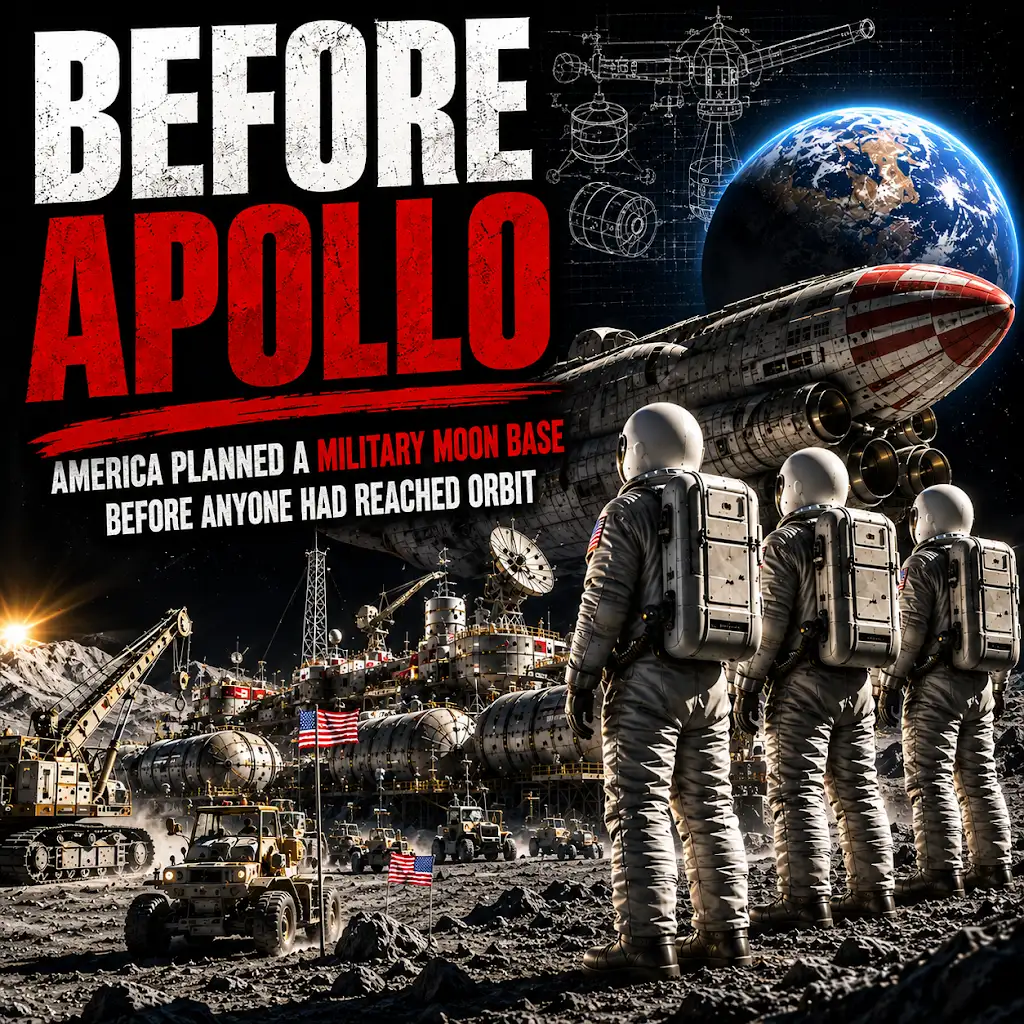
America Planned a Military Moon Base Before Anyone Had Reached Orbit
FAQs
1. What was the purpose of the military moon base before Apollo?
The purpose of the military moon base before Apollo was to establish a strategic presence on the moon for potential military operations and surveillance during the Cold War.
2. When was the concept of a military moon base first proposed?
The concept of a military moon base was first proposed in the late 1950s and early 1960s, during the height of the space race between the United States and the Soviet Union.
3. Was there any serious planning or development for a military moon base before Apollo?
Yes, there were serious discussions and planning for a military moon base before Apollo. The United States Air Force and other military branches conducted studies and research into the feasibility and potential benefits of such a base.
4. Why was the idea of a military moon base eventually abandoned?
The idea of a military moon base was eventually abandoned due to a shift in priorities, budget constraints, and the focus on the Apollo program for peaceful exploration and scientific research.
5. Did any of the research or planning for a military moon base contribute to the later Apollo missions?
Some of the research and planning for a military moon base did contribute to the later Apollo missions, particularly in terms of understanding lunar geography, potential landing sites, and the development of lunar exploration technologies.