
The faint whisper of an undiscovered secret has echoed through the annals of space exploration, a tantalizing possibility that predates the monumental achievements of the Apollo program. This is the story of the “Secret Moon Base: Pre-Apollo Discovery,” a narrative woven from cryptic documents, alleged sightings, and the persistent curiosity of those who believe humanity’s reach for the stars began far earlier, and in far more clandestine ways, than the official histories reveal. It is a tale that challenges our understanding of technological advancement and the potential for covert operations on an interplanetary scale.
The very notion of a secret moon base existing before the celebrated Apollo missions sounds like pure science fiction. Yet, within the dusty archives and whispered conversations of those involved in the nascent stages of space exploration, threads of such a possibility can be found. These are not the grand pronouncements of government agencies, but rather the subtle clues and tantalizing hints that, when pieced together, suggest a hidden agenda, a secret race to the Moon.
Declassified Documents: A Glimpse of the Unseen
While the most comprehensive declassified documents related to space exploration focus on the Apollo program and its predecessors, a meticulous examination of certain files from the Cold War era has revealed anomalies. These are not direct admissions, but rather redacted sections, peculiar budget allocations, and oddly phrased mission objectives. For instance, some early rocket development projects exhibit funding levels far exceeding what would be necessary for mere atmospheric testing. The purpose of this accelerated development, and the specific destinations of some experimental payloads, remains shrouded in mystery. Certain intelligence reports, although heavily censored, hint at the detection of unusual energy signatures emanating from the lunar surface during the late 1950s and early 1960s, long before any manned missions were capable of such sophisticated analysis. The source and nature of these signatures are never explicitly stated, leaving room for speculation about extraterrestrial activity or, perhaps more unsettlingly, human activity that was deliberately concealed.
The Shadow of the Cold War: A Space Race Beyond Public Sight
The Cold War was a period defined by an intense, often covert, rivalry between the United States and the Soviet Union. While the space race was a highly visible manifestation of this competition, it is plausible that both superpowers engaged in secret endeavors, pushing the boundaries of what was publicly known. The race to space was not merely about national pride; it was about technological supremacy, strategic advantage, and the potential for establishing a presence beyond Earth. It is within this high-stakes environment that the idea of a pre-Apollo secret moon base gains traction. The immense resources poured into rocketry and satellite technology by both nations could have been leveraged for more ambitious, and less publicized, goals. The fear of the other side achieving a critical breakthrough could have driven clandestine operations, the existence of which would be a devastating blow to national security if revealed.
Unattributed Anomalies: The Mystery of the Lunar Lights
For decades, amateur astronomers and even some professional observatories have reported fleeting, unexplained lights on the lunar surface. While many of these can be attributed to natural phenomena like meteor impacts or atmospheric distortions on Earth, a persistent subset defies easy explanation. These lights, described as stationary, slow-moving, or even exhibiting patterned behavior, have fueled speculation about artificial origins. Could these be the residual energy signatures of an active lunar installation, or perhaps the fleeting glint of sunlight off metallic structures, deliberately obscured from Earth’s gaze? The lack of definitive evidence, coupled with the inherent difficulty of observing such phenomena from Earth, has kept these reports in the realm of anecdotal evidence, but they resonate with the narrative of a hidden lunar presence.
In the realm of conspiracy theories and speculative history, the idea of a secret moon base predating the Apollo missions has captivated the imagination of many. An intriguing article that delves into this topic can be found at XFile Findings, where it explores various claims and theories surrounding the existence of clandestine lunar operations. This piece not only examines the potential motivations behind such a base but also discusses the implications it would have had on the space race and our understanding of extraterrestrial life.
The Alleged Architects: Who Built the Base?
If a secret moon base existed before Apollo, then the question of its creators becomes paramount. The technological capabilities of the era are often cited as a barrier to such an undertaking. However, the narrative of the pre-Apollo discovery suggests that either existing powers possessed technologies far beyond what was publicly acknowledged, or that an entirely different entity was responsible.
The Superpower Hypothesis: Secret Programs and Unconventional Means
The most common theory posits that either the United States or the Soviet Union, or perhaps even both in a deeply clandestine and competitive manner, was responsible for establishing such a base. The advanced theoretical work in rocketry and nuclear propulsion during the 1950s, often veiled in secrecy, could have been applied to more ambitious projects. It is conceivable that specialized, top-secret divisions within these space programs, operating outside the purview of public scrutiny, were tasked with lunar exploration and potential colonization. The immense resources of the military-industrial complex could have been redirected towards these covert objectives, with the Apollo program serving as a convenient public cover for a far more advanced and ambitious agenda. The secrecy surrounding certain military projects during the Cold War, such as the development of advanced reconnaissance satellites, suggests that such clandestine operations were not beyond the realm of possibility.
The Unseen Collaborators: Extraterrestrial Involvement?
A more speculative, yet persistent, element in the pre-Apollo moon base narrative involves the possibility of extraterrestrial involvement. This theory suggests that humanity, or a select group of humans, may have been either aided by or even directly collaborated with an alien civilization. The unexplained anomalies in lunar observations, the rapid advancements in aerospace technology during the mid-20th century, and certain anecdotal accounts from individuals claiming to have witnessed unusual craft could all be interpreted as evidence for such a partnership. The idea of an ancient alien presence on the Moon, establishing outposts long before humanity’s own efforts, also features prominently. This would suggest that the “discovery” was not necessarily a human achievement, but rather an encounter with an already existing infrastructure.
The Rogue Element: Independent Ventures and Unconventional Thinkers
Another, less discussed, but equally intriguing possibility is that a rogue element, or a group of highly innovative and independent thinkers, might have been responsible. This could involve wealthy industrialists with a vision for space colonization, or a coalition of scientists and engineers operating outside the traditional governmental frameworks. Such a venture would require immense resources and a high degree of secrecy, making it a challenging hypothesis to prove. However, the history of technological innovation is often punctuated by the breakthroughs of individuals and small groups who dared to think differently. The sheer audacity of attempting a pre-Apollo moon base makes it a perfect candidate for such a daring, unconventional endeavor.
The Whispers of Discovery: Evidence from the Shadows

The evidence for a pre-Apollo moon base is not found in official mission logs or televised press conferences. Instead, it resides in the realm of whispers, leaked documents, and carefully guarded testimonies. These fragments, when viewed through a lens of open inquiry, paint a compelling picture of a secret that has been meticulously kept.
Cryptic Testimonies: Voices from the Early Space Program
A recurring theme in the lore surrounding this secret is the testimony of individuals who claim to have been privy to advanced lunar projects that were never publicly acknowledged. These accounts, often shared in hushed tones or through intermediaries, speak of secret meetings, classified research, and hushed directives concerning lunar exploration. Some individuals, who worked in roles related to early rocket propulsion or observational astronomy, have alluded to projects that were deliberately obscured from public view. They might speak of “special assignments,” “off-the-books research,” or “contingency plans” that involved the lunar surface. The fear of reprisal or professional ruin has kept many of these potential witnesses silent, but the few who have spoken, however cryptically, contribute to the growing body of anecdotal evidence.
Anomalous Satellite Data: Glimpses of the Impossible
While publicly available satellite imagery of the Moon prior to the Apollo missions is limited, there are claims of classified satellite data that revealed anomalies. These claims suggest that during the late 1950s and early 1960s, reconnaissance satellites, far more advanced than what was disclosed, captured images of unusual structures or formations on the lunar surface. These might have been fleeting glimpses, obscured by atmospheric interference or deliberately degraded before public release. The existence of such “shadow programs” for satellite development, driven by military intelligence, is well-documented. It is therefore plausible that their observational capabilities extended to the Moon, and that any findings that contradicted the public narrative were suppressed. The existence of projects like CORONA, which provided crucial intelligence during the Cold War, demonstrates the high level of sophistication and secrecy in satellite reconnaissance at the time.
Unexplained Technological Leaps: A Premature Arrival?
The rapid advancements in rocketry and space technology in the mid-20th century have always been a subject of fascination. Some argue that the pace of this development, particularly in the years leading up to the Apollo program, suggests a hidden catalyst. Could the knowledge or technology gained from a pre-existing lunar base, or from interactions with advanced entities, have accelerated human progress in ways that are not fully understood? This perspective suggests that the publicly acknowledged research and development might have been a carefully constructed facade, while the real breakthroughs were happening in secret, perhaps drawing on information or resources acquired from a lunar outpost.
The Apollo Cover-Up: Orchestrating the Grand Reveal
If a secret moon base was indeed established before Apollo, then the entire Apollo program takes on a new, and arguably more complex, significance. The narrative shifts from a pioneering journey of discovery to a carefully orchestrated reveal, designed to introduce humanity to something that was already there.
The “First Steps” Reimagined: A Managed Introduction
The iconic images of Neil Armstrong and Buzz Aldrin stepping onto the lunar surface are etched into the global consciousness. However, in the context of a pre-Apollo discovery, these moments could be reinterpreted. Instead of the first human footprints, they might represent the first authorized, publicly acknowledged steps onto a lunar environment that was already known and potentially utilized. The Apollo missions, in this light, would serve as a sophisticated public relations campaign, a controlled unveiling of humanity’s presence on the Moon, designed to manage public perception and maintain national secrecy. The carefully choreographed nature of the Apollo missions, with their predictable timelines and pre-recorded communications, could be seen as further evidence of this managed reveal.
The Apollo Program as a Diversion: Distracting from the Truth
The immense financial and technological investment in the Apollo program could have served a dual purpose: achieving the stated goal of landing humans on the Moon, while simultaneously diverting attention from the existence of a pre-existing secret base. By focusing global resources and public interest on the race to plant a flag, any clandestine activities or discoveries could have been effectively hidden in plain sight. The sheer scale of the Apollo undertaking would have made it difficult for any competing narratives or anomalous findings to gain traction. The immense media coverage and public fascination with Apollo would have created a powerful smokescreen.
The Silence of the Astronauts: A Pact of Secrecy?
The astronauts who participated in the Apollo missions are universally hailed as heroes. However, the narrative of a secret moon base raises questions about their knowledge and potential complicity. Could they have been aware of a pre-existing lunar presence, or even been tasked with specific objectives related to it? The stringent security clearances and rigorous training undergone by these individuals suggest a high level of trust and discretion. If a secret base existed, it is plausible that the astronauts were either briefed and sworn to secrecy, or that their missions were carefully crafted to avoid any direct interaction with or observation of it, thereby preserving the illusion of a virgin lunar landscape.
In the realm of conspiracy theories and hidden histories, the idea of a secret moon base predating the Apollo missions has captivated many. Some enthusiasts believe that covert operations were underway long before the world was officially introduced to lunar exploration. For those intrigued by such theories, an interesting article can be found that delves into the possibility of clandestine activities on the moon. You can read more about these fascinating claims in this related article, which explores the implications of a hidden lunar presence.
The Enduring Legacy: What Does This Mean for Us?
| Mission | Year | Location | Duration |
|---|---|---|---|
| Project Horizon | 1959 | Lunar Surface | Proposed permanent base |
| Lunex Project | 1961 | Lunar Surface | Proposed manned base |
| Project A119 | 1958 | Lunar Surface | Proposed nuclear explosion |
The idea of a secret moon base pre-Apollo, while speculative, forces us to re-examine our understanding of history, technology, and humanity’s place in the cosmos. It challenges the established narratives and opens the door to profound questions about what we have been told and what remains hidden.
Reinterpreting Human History: A New Timeline of Progress
If a pre-Apollo moon base existed, it implies a significant acceleration in human technological and scientific progress, occurring in secret. This would necessitate a reassessment of our understanding of the timeline of human achievement. It suggests that humanity may have been capable of far more, far earlier, than the publicly acknowledged history suggests. This could lead to a re-evaluation of other technological leaps and scientific discoveries, with the possibility that some may have had a clandestine genesis. The very definition of progress would be altered, moving from a linear, observable progression to one potentially punctuated by hidden leaps forward.
The Ethics of Secrecy: When Does Revelation Become a Necessity?
The ethical implications of such a massive undertaking in secrecy are profound. Who decides what information is shared with the public? What are the justifications for withholding knowledge that could fundamentally alter our understanding of our place in the universe? The narrative of a secret moon base forces a contemplation of the balance between national security, technological advancement, and the public’s right to know. It raises questions about the transparency of scientific endeavors and the potential for governments and powerful entities to control the flow of information, even on a cosmic scale.
The Future of Exploration: Building on Hidden Foundations?
If the foundations for lunar presence were laid before Apollo, then our current space exploration efforts might be built upon a hidden legacy. Understanding this potential pre-Apollo discovery could provide invaluable insights into the challenges and opportunities of long-term space habitation. It could offer clues about technologies, methodologies, or even resource utilization that have been overlooked or deliberately concealed. This would not diminish the achievements of Apollo, but rather recontextualize them as the next chapter in a longer, and more complex, story of humanity’s journey beyond Earth. The future of space exploration might be about uncovering these hidden foundations and building upon them with a more complete understanding of our past endeavors.
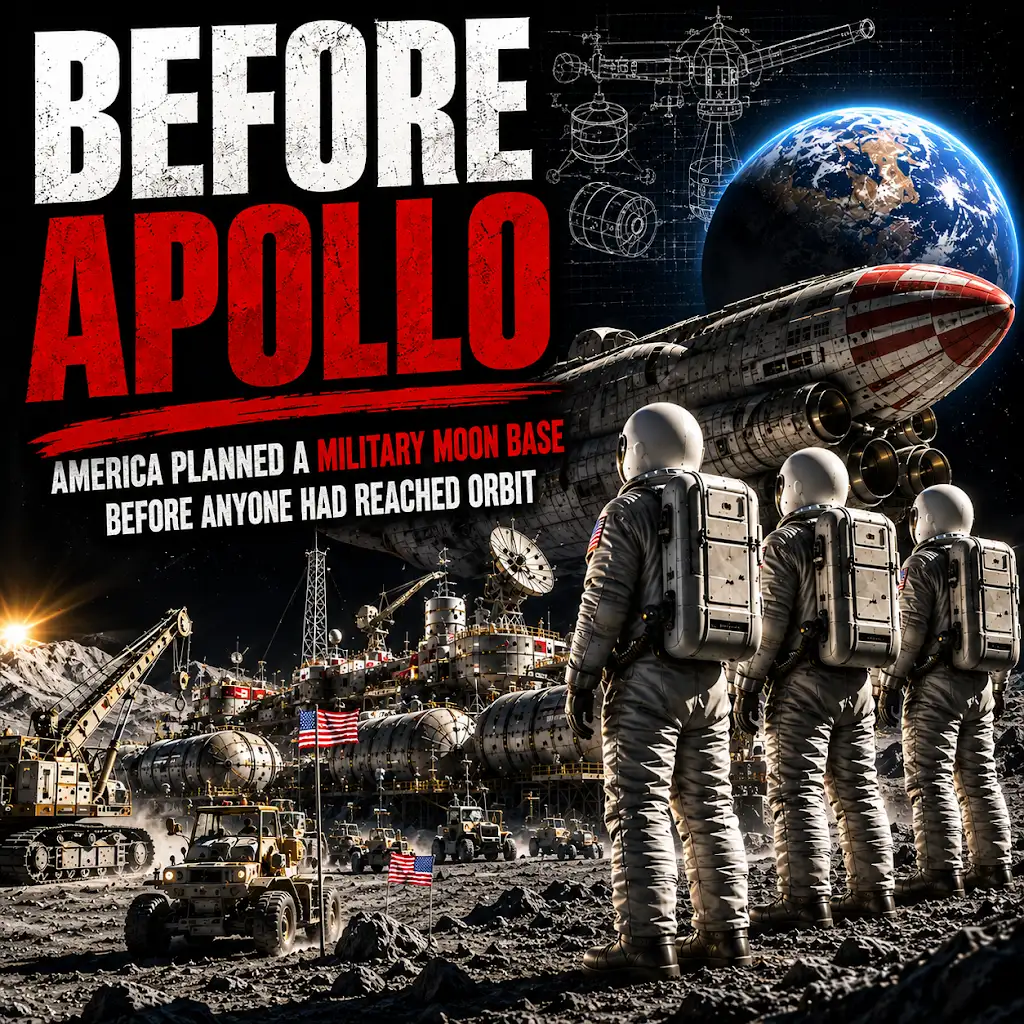
America Planned a Military Moon Base Before Anyone Had Reached Orbit
FAQs
What is the secret moon base before Apollo?
The secret moon base before Apollo refers to the conspiracy theory that suggests there was a secret human base on the moon before the Apollo missions.
Is there any evidence to support the existence of a secret moon base before Apollo?
There is no credible evidence to support the existence of a secret moon base before the Apollo missions. The theory is based on speculation and has been widely debunked by experts.
Why do some people believe in the existence of a secret moon base before Apollo?
Some people believe in the existence of a secret moon base before Apollo due to a combination of misinformation, conspiracy theories, and a general distrust of government agencies.
What were the Apollo missions and their significance?
The Apollo missions were a series of spaceflights conducted by NASA with the goal of landing humans on the moon and bringing them safely back to Earth. The significance of the Apollo missions was the demonstration of technological and scientific prowess, as well as the advancement of human exploration beyond Earth.
What is the current understanding of human activity on the moon before the Apollo missions?
There is no credible evidence to support the claim of human activity on the moon before the Apollo missions. The current understanding, based on scientific research and historical records, is that the Apollo missions were the first instances of human presence on the moon.