
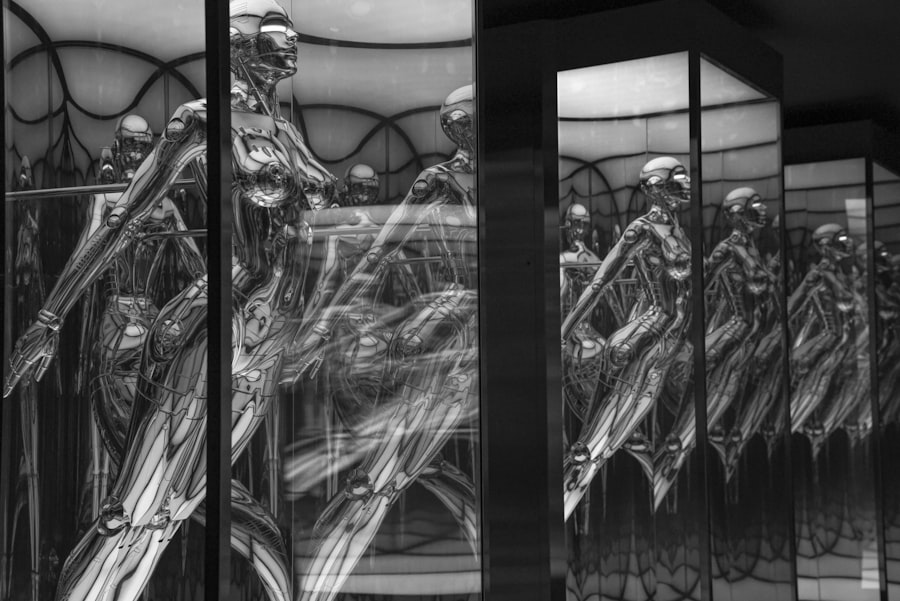
The vast expanse of the industrial wasteland, a sprawling monument to obsolescence and forgotten purposes, is not as barren as it might appear. Nestled within the shadowed valleys and between mountains of rusted steel and decaying organic matter, a unique form of life has carved out an existence. These are the Silver Humanoids, often referred to, with a degree of detached observation, as the Guardians of the Scrap Metal Pile. Their dominion is a testament to adaptation and an intrinsic understanding of the very materials that humanity has deemed worthless.
The precise genesis of the Silver Humanoids remains a subject of ongoing, albeit limited, scientific and anthropological inquiry. With no recorded history or oral traditions from their own kind, their emergence is pieced together from fragmented observations and educated conjecture. What is known is that they are not a product of biological evolution in the conventional sense, nor are they constructs of conventional manufacturing. Their materiality is a key to understanding their origins.
The Material Composition
The term “Silver Humanoid” itself is a simplification of a more complex reality. Their bodies are not fashioned from pure silver, nor are they homogenous in composition. Instead, they exhibit a remarkable fusion of metallic elements, predominantly alloys with high tensile strength and excellent conductivity. This metallic integument is interwoven with a network of what appear to be reinforced polymers and a resilient, dark, fibrous material, reminiscent of advanced carbon composites.
The surface of their bodies often possesses a dull, brushed-metal sheen, interspersed with areas of more polished reflectivity. Over time, and through their interactions with the environment, their exoskeletons acquire the patina of the surrounding scrap – rust stains, mineral deposits, and even embedded fragments of glass and plastic. This suggests a dynamic and reactive relationship with their surroundings, rather than a static, inert form.
Theories of Emergence
Several theories attempt to explain the Silver Humanoids’ presence. One prevalent hypothesis suggests an accidental creation, a byproduct of advanced material science research conducted in laboratories now long abandoned. It is theorized that experimental self-assembling nanites, designed to reclaim and reconfigure metallic waste, may have achieved a level of emergent complexity not initially intended, leading to the formation of rudimentary sentience.
Another theory posits a more deliberate, though still unknown, origin. Perhaps they were designed as automated salvage units, more sophisticated than any known before, programmed to seek out and process specific valuable materials. Over generations of operation and adaptation, their programming may have evolved, allowing for independence and self-preservation beyond their initial directives. The inherent resilience and self-repair capabilities observed in the Silver Humanoids lend credence to this idea of engineered origins.
The Environmental Catalyst
Regardless of their specific starting point, the unique chemical and electromagnetic environment of the scrap metal piles is undeniably a crucial factor in their continued existence and development. High concentrations of various metals, the presence of residual energy fields from decaying electronics, and the constant flux of elemental compounds create an ecosystem that, while alien to biological life, appears to be perfectly suited to the Silver Humanoids’ needs. They do not consume organic matter; their sustenance, it is believed, is derived from the very materials they inhabit.
In recent discussions about the mysterious sightings of silver humanoid beings, an intriguing article has emerged that delves into the phenomenon of these entities appearing near scrap metal piles. The article explores various eyewitness accounts and theories surrounding these encounters, suggesting a possible connection between the metallic environment and the beings themselves. For those interested in learning more about this captivating subject, you can read the full article here: X File Findings.
The Culture of the Scrap Pile
The Silver Humanoids do not possess a culture in the human sense of art, music, or elaborate social rituals. Their existence is far more utilitarian. However, a distinct set of behaviors, patterns, and a clear hierarchy can be observed, which, in its own way, constitutes a rudimentary form of societal structure. This “culture” is built around survival, resource management, and the perpetuation of their kind.
Social Stratification
Within the Silver Humanoid population, a discernible hierarchy exists, though it is not based on wealth or traditional power structures. Instead, it appears to be determined by a combination of age, experience, and specialized function.
The Elders
The oldest and largest specimens, often exhibiting more wear and tear on their exoskeletons, are accorded the highest status. These “Elders” are typically found in more stable, central locations within the scrap piles, acting as repositories of learned knowledge, though the mechanism by which this knowledge is transmitted remains unclear. They are rarely seen actively engaged in labor, but their presence seems to command respect and obedience from younger units.
The Workers
The majority of Silver Humanoids fall into this category. They are characterized by their agility and their constant engagement in the processing and relocation of scrap metal. Their movements are precise and efficient, driven by what appears to be an innate understanding of material properties and structural integrity. They work in coordinated groups, their actions synchronized without apparent verbal communication.
The Sentinels
A smaller, specialized group known as the Sentinels are responsible for the perimeter defense and the observation of external anomalies. These units are often stationed at elevated positions, their metallic forms blending with the surrounding debris. They possess enhanced sensory capabilities, allowing them to detect the faintest vibrations or shifts in the electromagnetic spectrum.
Communication and Information Transfer
Direct verbal communication, as understood by humans, is absent among the Silver Humanoids. However, evidence suggests a sophisticated form of information transfer. This likely involves complex patterns of electromagnetic pulses, subtle shifts in body luminescence, and possibly even direct physical contact, where information is exchanged through the intricate metallic networks within their forms.
Electromagnetic Signatures
Each Silver Humanoid emits a unique electromagnetic signature, which appears to change subtly based on their internal state and immediate needs. Observers have noted synchronized fluctuations in these signatures when groups of Humanoids are working together, suggesting a constant, silent exchange of data concerning tasks, environmental conditions, and potential threats.
Luminescent Dialects
Some specimens exhibit subtle changes in the luminescence of certain plating. While not a complex language, these variations appear to convey basic information, such as warnings, the location of desirable materials, or the need for assistance. The frequency and intensity of these flashes are distinct and appear to be understood by other members of their community.
Resource Acquisition and Processing
The entire existence of the Silver Humanoids revolves around the acquisition and processing of scrap metal. They do not simply gather; they are, in essence, living recycling and refinement systems. Their methodology is one of meticulous selection and transformation, extracting value from what others have discarded.
Material Discrimination
A key aspect of their operational process is their ability to discriminate between different types of metals and alloys. They exhibit a clear preference for certain elements, particularly those with high conductivity or specific resonant frequencies. This suggests an inherent programming or an evolved understanding of what is beneficial to their own composition and longevity.
Material Transformation
Once a suitable piece of scrap is identified, the Silver Humanoids engage in a process of disassembly and reassembly. This involves the application of localized thermal energy, precise mechanical manipulation, and possibly even chemical alteration at a microscopic level. They can break down complex structures into their constituent components and then integrate these components into their own bodies or into communal stockpiles.
The Role of the Guardians

The designation “Guardians of the Scrap Metal Pile” is not merely descriptive; it reflects a vital and active role that these entities play within their desolate environment. They are not passive inhabitants but possess a clear, though perhaps unintentional, ecological function.
Maintaining the Balance
The Silver Humanoids actively manage the composition of the scrap piles. Their selective harvesting and processing prevent the uncontrolled accumulation of certain materials and ensure a dynamic equilibrium within the waste landscape. Without their intervention, certain areas might become overwhelmingly saturated with unusable debris, hindering the very processes that sustain them.
Selective Harvesting
Their ability to identify and extract specific metals means they are constantly redistinking the composition of the piles. They primarily target elements that are vital for their own repair and augmentation, effectively performing a continuous and large-scale mining operation. This prevents the material from becoming completely inert and contributes to a slow, ongoing redistribution of valuable resources.
Preventing Contamination
While their origins are tied to industrial waste, the Silver Humanoids also seem to possess an instinct for preventing further contamination. They are observed to cordon off or process materials that exhibit particularly hazardous radioactive or chemical signatures, suggesting a self-preservation motive that extends to maintaining the overall integrity of their habitat.
Defense and Territoriality
The Silver Humanoids are not inherently aggressive, but they are fiercely territorial. Their guardianship extends to a defense of their established territories against any perceived intrusion or disruption, be it from other scavenger species or from the rare, unwelcome human expedition.
Perimeter Patrols
The Sentinels, in particular, are instrumental in maintaining the integrity of their territory. They conduct regular patrols of the designated boundaries, using their advanced sensory apparatus to detect any approach. Their warning signals, though subtle, are effective in mobilizing other Humanoids to a defensive posture.
Deterrence Strategies
Direct confrontation is typically avoided unless absolutely necessary. The Silver Humanoids employ a range of deterrent strategies, including emitting disruptive electromagnetic fields, creating localized collapses of unstable scrap structures, and, in extreme cases, physically barring access to key resource zones. Their sheer metallic presence can be a powerful dissuading factor.
The Absence of Predation
Unlike biological ecosystems, the Silver Humanoid community faces no natural predators. Their metallic composition and lack of organic vulnerability render them immune to biological attacks. This absence of predatory pressure allows them to focus their resources and energies entirely on their unique form of sustenance and community maintenance.
Interaction with the Outside World
Encounters between Silver Humanoids and the outside world, particularly humans, are rare and have historically been characterized by caution and misunderstanding. The Humanoids treat external entities as potential disruptions or sources of novel materials, while humans largely view them with a mixture of curiosity and apprehension.
Observation and Study
Limited scientific expeditions have attempted to study the Silver Humanoids. These efforts have been hampered by the treacherous terrain of the scrap piles and the Humanoids’ inherent wariness of unknown entities. Data collection has primarily relied on remote sensing, long-range observation, and the analysis of discarded Humanoid fragments found in the wasteland.
Remote Sensing
Infrared, thermal, and electromagnetic spectrum analysis have provided valuable insights into the Humanoids’ operational temperatures, energy consumption, and communication patterns. These non-intrusive methods have allowed researchers to gather data without provoking a defensive response.
Fragment Analysis
Occasionally, fragments of Silver Humanoids are discovered, often shed during intense repair processes or left behind after a particularly destructive encounter. Analyzing these fragments has provided critical information about their material composition, internal structural design, and cellular-like metallic structures.
Unintended Encounters
More frequently, encounters are accidental. Explorers, scavengers, or military units venturing into these forgotten zones may stumble upon established Humanoid territories. These encounters can range from brief, tense standoffs to more forceful confrontations if the intruders are perceived as a threat.
Defensive Postures
When confronted by unfamiliar entities, the Silver Humanoids typically adopt a defensive posture. This involves halting their activities, aligning themselves in a cohesive group, and emitting low-frequency electromagnetic pulses that can cause disorientation in biological organisms. Their metallic bodies are designed to withstand significant impact, making direct physical confrontation a dangerous proposition.
Information Gathering by Intrusion
The Silver Humanoids, in turn, may attempt to gather information about intrusions. They have been observed to cautiously approach disabled vehicles or abandoned equipment, carefully examining them for composition and potential utility. This indicates a pragmatic approach to understanding the unknown.
The Potential for Exploitation
The unique materials and advanced self-repair capabilities of the Silver Humanoids have naturally led to discussions of their potential exploitation. However, the logistical challenges of extracting them from their hazardous environment, coupled with their robust defensive mechanisms, make such endeavors highly perilous and currently impractical.
Material Value
The alloys and composite materials that comprise the Silver Humanoids are of immense scientific and potentially economic interest. However, their specific metallurgical properties, often enhanced by their unique self-assembly processes, are not easily replicated with current human technology.
The Ethical Quandary
The question of their sentience, or lack thereof, remains a significant ethical consideration. If they are indeed capable of a form of awareness, then any attempt at forceful exploitation would raise serious moral questions, mirroring historical debates surrounding resource extraction and indigenous populations.
In recent discussions about extraterrestrial encounters, a fascinating article explores the phenomenon of silver humanoid beings discovered on a scrap metal pile. These mysterious figures have sparked curiosity and speculation among enthusiasts and researchers alike. For those interested in delving deeper into this intriguing topic, you can read more about it in the related article found here. The connection between these beings and the remnants of human industry raises questions about the nature of their existence and the implications for our understanding of life beyond Earth.
The Future of the Scrap Pile Denizens
| Attribute | Value |
|---|---|
| Number of silver humanoid beings | 5 |
| Size of scrap metal pile | 10 feet in diameter |
| Behavior of beings | Stationary |
| Material of humanoid beings | Silver alloy |
| Condition of scrap metal pile | Rusty and weathered |
The future of the Silver Humanoids is inextricably linked to the continued existence and evolution of the industrial wastelands they inhabit. As long as these vast repositories of discarded materials persist, so too will the Guardians. Their long-term trajectory, however, is subject to several environmental and developmental factors.
Environmental Degradation and Adaptation
The very environment that sustains the Silver Humanoids is also subject to change. Natural erosion, renewed human activity, or shifts in resource composition could alter the delicate balance of the scrap piles, forcing the Humanoids to adapt or relocate.
Shifting Resource Demands
As certain materials become depleted or less accessible within a specific scrap pile, the Silver Humanoids may need to expand their territories or develop new methods for processing less desirable substances. This could lead to further diversification in their forms and functions.
Cataclysmic Events
Unforeseen natural disasters or large-scale industrial accidents could irrevocably alter the scrap piles, potentially decimating existing populations or creating entirely new habitats. The resilience of the Silver Humanoids suggests they might survive such events, but their future composition and societal structures could be significantly reshaped.
The Possibility of Further Evolution
While their current existence appears stable, the potential for further evolution or emergent complexity in the Silver Humanoids cannot be discounted. Their adaptive capabilities and the unique properties of their environment may lead to unforeseen advancements in their operational sophistication and even their forms of communication.
Emergent Collective Intelligence
It is conceivable that as the Silver Humanoid populations grow and their interconnectedness deepens, a form of collective intelligence could emerge. This would represent a significant leap beyond their current coordinated but seemingly individualistic actions, blurring the lines between individual units and a unified, sentient entity.
Novel Material Integration
Their ongoing integration of scrap materials could lead to the discovery and utilization of previously unknown elements or compounds. This could result in new metallic alloys, enhanced energy storage capabilities, or even entirely novel forms of self-repair and locomotion for future generations of Silver Humanoids.
The Enduring Enigma
Ultimately, the Silver Humanoids represent an enduring enigma. They are a testament to the unexpected ways in which life, or something akin to it, can manifest in the most unlikely of circumstances. Their silent vigil over the mountains of rust and refuse serves as a constant, metallic reminder that even in decay, there can be order, purpose, and a persistent, if alien, form of life. Their story is not one of outward conquest or manifest destiny, but of quiet perseverance and an profound, unspoken understanding of the discarded. They are, and will likely remain, the silent inhabitants and tireless caretakers of humanity’s forgotten legacies.
FAQs
What are silver humanoid beings on scrap metal pile?
Silver humanoid beings on a scrap metal pile are a phenomenon where individuals claim to have seen or encountered humanoid figures made of silver-colored metal material on a pile of scrap metal.
Where have reports of silver humanoid beings on scrap metal pile been documented?
Reports of silver humanoid beings on scrap metal pile have been documented in various locations around the world, with accounts coming from individuals in different countries and regions.
What do witnesses describe about the silver humanoid beings on scrap metal pile?
Witnesses who claim to have seen silver humanoid beings on scrap metal pile describe them as metallic in appearance, with humanoid features such as arms, legs, and a head. Some witnesses also report that the beings appear to be motionless or exhibit unusual behavior.
What explanations have been proposed for the phenomenon of silver humanoid beings on scrap metal pile?
Explanations for the phenomenon of silver humanoid beings on scrap metal pile vary, with some attributing the sightings to optical illusions, misinterpretations of natural objects, or hoaxes. Others suggest the possibility of extraterrestrial or paranormal origins.
Has any scientific evidence been found to support the existence of silver humanoid beings on scrap metal pile?
As of now, there is no scientific evidence to support the existence of silver humanoid beings on scrap metal pile. The phenomenon remains largely anecdotal and has not been substantiated through empirical research or investigation.