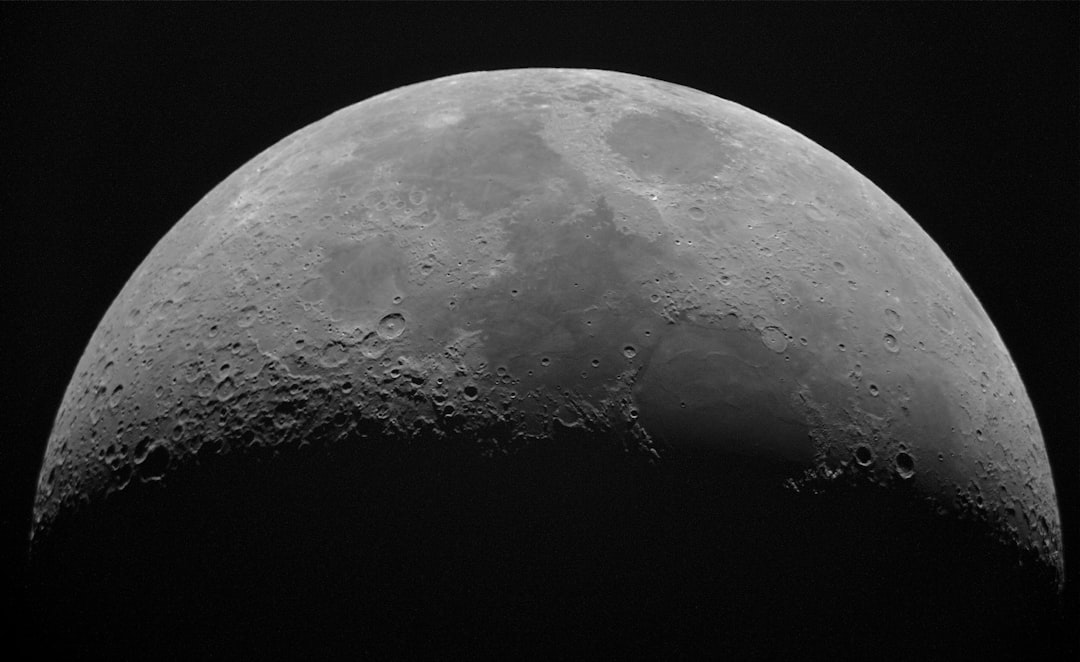
You’ve always looked up at the night sky with a sense of wonder. The moon, that luminous orb, has been a constant, a silent companion to humanity’s grandest adventures and its most intimate moments. It’s graced poetry, inspired scientific inquiry, and served as a beacon for navigators for millennia. But what if that familiar glow, that reassuring presence, isn’t quite what you’ve been led to believe? What if the moon, this celestial constant, is actually… artificial?
Welcome to the burgeoning, and frankly, mind-bending, realm of the Artificial Moon Theory. It’s a concept that’s quietly gaining traction in online forums, speculative science circles, and whispered conversations, challenging the very foundations of our understanding of Earth’s closest celestial neighbor. It’s not just a fringe idea anymore; it’s a burgeoning controversy, a celestial debate that’s forcing us to re-examine everything we thought we knew.
The seeds of the Artificial Moon Theory aren’t sown in a sudden revelation, but rather in a slow accumulation of observations and perceived inconsistencies that, when woven together, paint a picture far stranger than the standard narrative. You might initially dismiss these as mere quirks of astronomical observation, but for proponents of the theory, they become tantalizing clues pointing towards a deliberate design.
A Moon Too Perfect?
One of the most frequently cited points of contention is the moon’s seemingly improbable existence. Consider the sheer improbability of a celestial body as large as our moon forming in such a precise orbit around Earth. The prevailing scientific explanation, the Giant Impact Hypothesis, suggests a Mars-sized object collided with early Earth, ejecting material that coalesced into our moon. While scientifically plausible, the theory’s elegance is sometimes overshadowed by the sheer luck involved in producing an object with a diameter exactly one-quarter that of Earth and a near-perfect circular orbit.
- The Size Enigma: You might wonder, why is our moon that specific size and distance? It’s a size that perfectly eclipses the sun during a solar eclipse, a phenomenon so rare and spectacular that it feels almost staged. Compare this to other planets and their moons; these alignments are far less common, or far less dramatic.
- Orbital Precision: The moon’s orbit is remarkably stable and circular. While physics dictates orbital mechanics, the degree of stability and the lack of significant perturbations over billions of years are, to some, suspiciously precise. Is it truly a natural occurrence, or the result of active stabilization?
The Composition Conundrum
Further fueling the doubts are certain aspects of the moon’s composition. When astronauts collected lunar samples during the Apollo missions, the data that returned wasn’t always straightforward. Certain elements and isotopic ratios found on the moon have been difficult to reconcile with Earth-based materials alone, or even with the expected byproducts of a single giant impact event.
- Isotopic Signatures: You may have heard whispers about isotopic ratios. Some researchers point to anomalies in the isotopic composition of lunar rocks, particularly concerning oxygen and titanium, which show a surprising similarity to Earth’s mantle. While proponents of the Giant Impact Hypothesis argue this is evidence of a shared origin, others see it as too perfect, suggesting a deliberate blending or even construction.
- Rare Earth Elements: The presence and distribution of certain rare earth elements on the moon have also been a subject of debate. Their abundance and specific locations have led some to speculate about a highly selective formation process, one that might not be entirely attributable to random accretion.
The Unexplained Phenomena
Beyond the inherent characteristics of the moon, there are also a number of unexplained phenomena that proponents of the Artificial Moon Theory often highlight. These are the events that defy easy categorization within conventional astronomical models, making them fertile ground for alternative explanations.
- Lunar Seismicity: You might not be aware that the moon isn’t entirely geologically dead. It experiences “moonquakes.” While these are much weaker than Earthquakes, their patterns and origins have been perplexing. Some moonquakes seem to originate from deep within the moon, at depths that are difficult to explain with current models of lunar interior structure.
- The “Y” Pattern: Have you ever seen images of the moon’s surface? Some observers have claimed to detect unusual geometric patterns, including a recurring “Y” shape, etched into the lunar landscape. While these are often dismissed as pareidolia or tricks of light and shadow, for believers, they are potential signs of deliberate markings.
The concept of the Artificial Moon theory has sparked interest among researchers and enthusiasts alike, leading to various discussions about its implications and origins. For a deeper exploration of this intriguing topic, you can read a related article that delves into the mysteries surrounding artificial celestial bodies and their potential purposes. Check it out here: Artificial Moon Theory Insights.
The “Why” Behind the Artificiality: Motivations and Theories
If the moon is artificial, then the next, and perhaps more profound, question is: why? What purpose would such an undertaking serve? This is where the Artificial Moon Theory truly branches out into a multitude of speculative, and often ambitious, hypotheses. The motivations attributed to the hypothetical creators are as varied as the theories themselves, ranging from benevolent observation to pragmatic resource management.
A Cosmic Observatory
One of the most compelling arguments for an artificial moon centers on its unparalleled vantage point. From its orbit, it offers a stable, unobstructed view of Earth and the solar system, making it an ideal platform for observation.
- Surveillance and Study: Imagine a civilization wanting to study another planet – its development, its inhabitants, its resources. What better place to establish a permanent, undetectable monitoring station than in orbit? The moon provides an ideal, unchanging platform for long-term observation without the need for constant repositioning or atmospheric interference.
- Unveiling Cosmic Secrets: Beyond Earth, the moon is also positioned perfectly to observe the wider cosmos. Its lack of a significant atmosphere means an unhindered view of stars, nebulae, and distant galaxies. Could it be a cosmic observatory, built by an advanced civilization to catalog and understand the universe?
The concept of an Artificial Moon has intrigued scientists and enthusiasts alike, sparking discussions about its potential implications for Earth and beyond. For those interested in exploring this fascinating theory further, you can read a related article that delves into the possibilities and challenges of such a project. This article provides insights into the technological advancements required and the ethical considerations that come into play. To learn more about this captivating topic, visit this link.
A Planetary Stabilizer and Regulator
The sheer impact of the moon on Earth’s habitability is undeniable. Its gravitational pull stabilizes our planet’s axial tilt, preventing extreme climate swings that would make life as we know it impossible. The theory suggests this stabilization might not be a happy accident.
- Tidal Influence: The moon’s gravitational pull is responsible for Earth’s tides. These tidal forces have played a crucial role in the evolution of life on Earth, creating intertidal zones teeming with biodiversity and influencing ocean currents. Could this precise level of tidal influence be deliberately engineered?
- Axial Tilt Control: The moon’s mass is key to maintaining Earth’s relatively stable axial tilt. Without it, our planet’s tilt could fluctuate wildly over long periods, leading to catastrophic climate changes. The theory posits that the moon was placed, or perhaps even modified, to ensure this crucial planetary stability.
A Resource Hub or a Repository?
Another avenue of speculation suggests the moon might have served or still serves as a celestial resource. Its composition, while debated, could hold valuable materials for an advanced civilization.
- Mining and Extraction: The presence of certain elements, particularly helium-3 (a potential fuel for fusion reactors), has led some to theorize that the moon could be a celestial mine. An artificial moon might

The Moon’s Soul Trap: John Lear’s Chilling Revelation

FAQs
What is the Artificial Moon theory?
The Artificial Moon theory suggests that an artificial satellite, resembling a moon, has been placed in orbit around the Earth by a technologically advanced civilization.
Is there any evidence to support the Artificial Moon theory?
There is currently no scientific evidence to support the existence of an artificial moon orbiting the Earth. The theory is largely considered to be a conspiracy theory and has not been substantiated by credible sources.
What are the origins of the Artificial Moon theory?
The origins of the Artificial Moon theory can be traced back to various conspiracy theories and pseudoscientific claims. It has been perpetuated by individuals and groups who believe in the existence of extraterrestrial civilizations and advanced technology.
How does the scientific community view the Artificial Moon theory?
The scientific community largely dismisses the Artificial Moon theory as unfounded and lacking in empirical evidence. The theory is not supported by mainstream scientific research and is considered to be a fringe belief.
Are there any alternative explanations for the phenomena that the Artificial Moon theory seeks to explain?
The phenomena that the Artificial Moon theory seeks to explain, such as unusual lunar observations or unexplained celestial events, can often be attributed to natural phenomena, optical illusions, or misinterpretations. Scientists continue to study and research these phenomena using established scientific methods and principles.