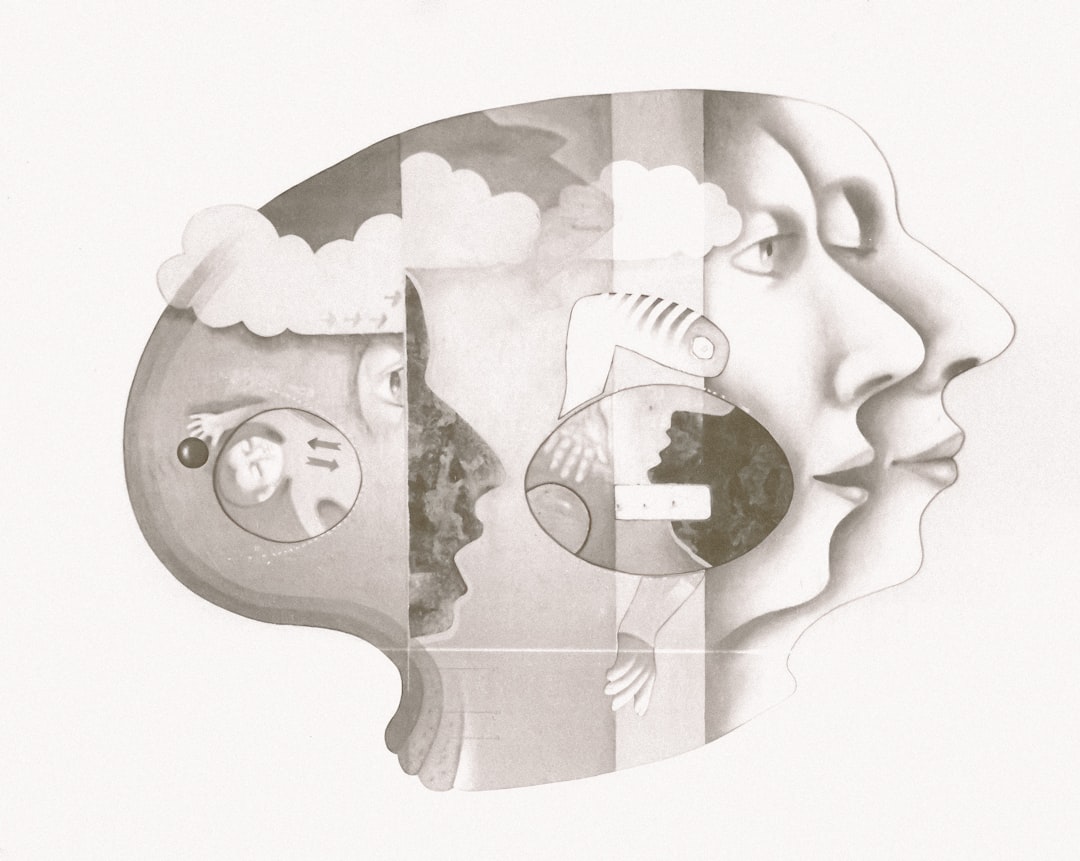
You stand on the precipice of a profound question, one that has echoed through human history, whispered in hushed tones around campfires and debated in grand philosophical halls: what happens to your consciousness after death? The very notion of an afterlife, a continuation of your unique essence beyond the physical realm, is both terrifying and exhilarating. You’re drawn to it, aren’t you? You crave the comfort of a promise that your experiences, your loves, your very being, don’t simply vanish into oblivion. The “Consciousness After Death Theory” offers a framework, a speculative exploration into this most fundamental of human mysteries. It’s not about dogma or blind faith; it’s about inviting your curiosity to engage with the possibilities, to ponder what might lie beyond the veil of mortality.
You might be wondering, what exactly is the Consciousness After Death Theory? At its heart, it proposes that your consciousness – that intangible spark of awareness, selfhood, and subjective experience – is not solely a product of your physical brain. While you understand that your brain is the conductor of your current existence, this theory suggests that consciousness might possess an independent or at least a partially independent nature. It’s the idea that the “you” that experiences the world, the “you” that remembers your childhood, the “you” that feels love and sorrow, is more than just a complex electrochemical process.
The Mind-Body Dualism Revisited
You’ve likely encountered the concept of dualism before, perhaps in philosophical or religious contexts. The Consciousness After Death Theory often draws upon a nuanced form of mind-body dualism. It doesn’t necessarily insist on a completely separate, ethereal soul floating around, but rather suggests that the relationship between consciousness and the physical body is not one of absolute dependence. Think of it like this: your brain might be the radio receiver, capable of tuning into the broadcast of consciousness. When the receiver breaks, does the broadcast cease to exist? Or does it continue, waiting for another receiver to pick it up? This is the fundamental question that fuels the theory.
Cartesian Dualism and its Modern Interpretations
René Descartes famously proposed substance dualism, arguing that the mind (res cogitans, thinking substance) and the body (res extensa, extended substance) were distinct entities. While his specific formulations have been challenged, the underlying intuition – that there’s something about our inner experience that feels qualitatively different from mere physical matter – resonates with many. The Consciousness After Death Theory often takes this intuition and extrapolates it, suggesting that the “thinking substance” might be capable of existing independently of its initial “extended substance.”
Property Dualism and Emergence
Another perspective you might consider is property dualism. This view suggests that while there may only be one fundamental substance (physical matter), it possesses different types of properties. There are physical properties (mass, charge, etc.) and mental properties (consciousness, qualia – the subjective experience of things like redness or the taste of chocolate). The theory posits that these mental properties, once they emerge from complex physical systems like brains, might not be entirely reducible to or dependent on the physical system for their continued existence. They could be emergent properties that, in a sense, “transcend” their physical substrate.
The Nature of Consciousness: More Than Just Neurons?
You experience consciousness every moment of your waking life. You know you’re you, and you know the world around you. But what is this awareness? Is it simply the firing of neurons, a symphony of electrical and chemical signals? The Consciousness After Death Theory suggests that this might be an oversimplification. It invites you to consider that consciousness might be a more fundamental aspect of reality, perhaps even a field or a fundamental force that our brains are capable of interacting with and manifesting.
The Hard Problem of Consciousness
Philosopher David Chalmers coined the term “the hard problem of consciousness.” It’s the challenge of explaining why and how physical processes in the brain give rise to subjective experience – the feeling of what it’s like to be you. Even if we fully map every neural pathway, we still don’t know why those pathways create the sensation of seeing the color blue, or feeling pain. The Consciousness After Death Theory often suggests that if consciousness is not solely a product of the brain, then the hard problem might be less of a problem and more of a misunderstanding of consciousness’s fundamental nature.
Information and Consciousness
Some contemporary theories explore the idea that consciousness is intimately linked to information. Your brain processes vast amounts of information, and perhaps consciousness is an emergent property of this complex informational processing. The question then becomes: can information exist and be processed independently of a biological substrate? This opens the door to possibilities where consciousness might be encoded or transferred in ways we don’t yet comprehend.
The exploration of consciousness after death has intrigued both scientists and philosophers for centuries, leading to various theories and discussions. A related article that delves into this fascinating topic is available at Xfile Findings, where researchers examine near-death experiences and their implications for understanding consciousness beyond the physical realm. This article presents compelling evidence and personal accounts that challenge conventional views on life and death, inviting readers to ponder the mysteries that lie beyond our current understanding.
Evidence and Anecdotal Accounts: Glimpses Beyond the Veil
While the Consciousness After Death Theory is largely speculative, it’s often bolstered by various forms of evidence, particularly anecdotal accounts and studies that seem to defy conventional scientific explanations. You might approach these with a critical eye, but acknowledging them is crucial to understanding the breadth of the discussion.
Near-Death Experiences (NDEs)
You’ve probably heard stories of people who have had NDEs. These are profound psychological events experienced by individuals who were close to death, or who had been clinically dead. Common elements include a sense of leaving one’s body, moving through a tunnel towards a light, encountering deceased loved ones or spiritual beings, and experiencing a review of one’s life. These experiences are often described as incredibly vivid and transformative, leading believers to see them as evidence of consciousness persisting beyond bodily death.
The OBE Phenomenon
One of the most striking aspects of NDEs is the out-of-body experience (OBE). Individuals report observing their own physical bodies from a detached perspective, sometimes even seeing details of their surroundings that they shouldn’t have been able to perceive. The Consciousness After Death Theory suggests that these OBEs could be direct evidence of consciousness detaching from the physical form.
The Feeling of Peace and Transcendence
Many NDErs report an overwhelming sense of peace, love, and acceptance. This is often contrasted with the fear and pain associated with their near-death state. The theory posits that this profound emotional shift might indicate a transition into a realm where negative earthly emotions are no longer relevant or experienced.
Out-of-Body Experiences (OBEs) and Astral Projection
Beyond NDEs, you might encounter discussions of voluntary OBEs or astral projection. These are experiences where individuals claim to intentionally project their consciousness outside of their physical bodies. While skepticism is high, proponents describe vivid journeys and interactions with what they perceive as other realms or consciousnesses. The Consciousness After Death Theory views these as further potential indicators that consciousness is not strictly bound to the physical form.
Methods and Reported Experiences
Practitioners of astral projection often employ specific meditation techniques or lucid dreaming strategies to achieve these states. Their reported experiences can range from observing their physical surroundings to traveling to distant locations or even interacting with what they believe to be non-physical entities.
Mediumship and Channeling
You’ve likely encountered the concepts of mediumship and channeling. Mediums claim to communicate with the consciousness of deceased individuals, relaying messages or information to the living. Channeling involves a person acting as a conduit for the consciousness of another entity, which may be a deceased person, a spirit guide, or an extraterrestrial intelligence. The Consciousness After Death Theory sees these phenomena as potential points of contact, where surviving consciousnesses might be able to interact with the living.
Skepticism and Scientific Scrutiny
It’s important to acknowledge that these claims are heavily debated and often met with significant skepticism. Critics point to the potential for fraud, misinterpretation, and psychological suggestion. However, proponents argue that the consistency of certain information and the emotional impact on those who receive messages warrant serious consideration.
Philosophical and Spiritual Implications: What Does It Mean for You?

If you entertain the possibility that your consciousness can survive death, the implications for your life are profound. It shifts your perspective on existence, mortality, and the meaning you ascribe to your experiences.
Re-evaluating Life’s Purpose and Meaning
If death is not an absolute end, then your life takes on a different dimension. The struggles, the joys, the lessons learned – they might not be ephemeral. The Consciousness After Death Theory suggests that your earthly journey is but a chapter, a formative period for a consciousness that continues to evolve. This can lead you to re-evaluate what truly matters, prompting you to live a life aligned with enduring values rather than fleeting material pursuits.
The Concept of Soul Growth and Evolution
Many iterations of the afterlife theory incorporate the idea of soul growth and evolution. Your experiences, both positive and negative, are seen as opportunities for learning and spiritual development. The Consciousness After Death Theory proposes that this growth continues beyond the physical life, with future experiences or states of being shaped by the lessons learned in this life.
The Karmic Connection
For some, the idea of continued consciousness is intertwined with concepts like karma. Your actions in this life might have consequences that extend beyond your physical death, influencing your future experiences or the nature of your continued existence. This adds a layer of personal responsibility and ethical consideration to your current actions.
Addressing the Fear of Death
The fear of death is a primal human emotion. The unknown, the cessation of existence – it’s a daunting prospect. The Consciousness After Death Theory offers a potential antidote to this fear by providing a framework for a continued existence. If you believe that death is not an ending but a transition, the anxiety surrounding it can be significantly diminished, allowing you to live more fully in the present.
Legacy and Continuity
Even if you don’t fully embrace a spiritual afterlife, the theory can inform your understanding of legacy. Your impact on the world, the memories you leave behind, the love you share – these are forms of continuity that resonate with the idea of consciousness persisting in some way.
The Ethics of Living and the Afterlife
If there is an afterlife, it raises questions about how you should live your life. The potential for judgment, for continued learning, or for experiencing the consequences of your actions can create a powerful ethical framework. This can encourage you to act with greater compassion, integrity, and awareness of your impact on others.
Personal Responsibility and Accountability
The idea of accountability, whether to a higher power, universal law, or simply to your own evolving consciousness, can be a strong motivator for ethical behavior. If your actions have repercussions that extend beyond your physical life, you are more likely to consider their impact.
Scientific and Skeptical Perspectives: The Counterarguments

While the Consciousness After Death Theory is compelling for many, it’s crucial to acknowledge the rigorous scientific and skeptical perspectives that challenge its premises. Science, by its very nature, relies on empirical evidence and testable hypotheses, and the nature of consciousness and the afterlife presents significant hurdles to such investigation.
The Brain as the Seat of Consciousness
The prevailing scientific view is that consciousness is an emergent property of the brain. Neuroscience has made incredible strides in understanding how different brain regions and neural activities correlate with various conscious states. From this perspective, when the brain ceases to function, consciousness, as we understand it, ceases to exist.
The Materialist Viewpoint
The materialist or physicalist worldview posits that everything that exists is fundamentally physical. In this framework, consciousness is a complex phenomenon arising from the material interactions within the brain. There is no room for a non-physical consciousness to exist independently.
Evidence from Brain Damage and Altered States
You can observe how damage to specific areas of the brain can profoundly alter personality, memory, and consciousness. Similarly, the effects of drugs or anesthesia demonstrate how manipulating the physical brain can dramatically change subjective experience. Skeptics argue that this intimate link between brain state and conscious experience strongly suggests that consciousness is entirely dependent on the brain.
The Challenge of Verifiability and Reproducibility
One of the biggest challenges for the Consciousness After Death Theory is the lack of verifiable and reproducible evidence. Anecdotal accounts, while often moving, are subjective and prone to misinterpretation, memory biases, and psychological factors. Scientific claims require objective measurement and the ability for experiments to be repeated by independent researchers with similar results.
The Problem of Subjectivity
Consciousness is inherently subjective. Your experience of seeing red is yours alone, and it’s incredibly difficult, if not impossible, to objectively measure or compare it to someone else’s experience. This makes it challenging to gather data that definitively proves the existence of consciousness independent of a physical observer.
Explanations for NDEs within Conventional Psychology and Physiology
Skeptics often propose physiological and psychological explanations for NDEs. These include oxygen deprivation (hypoxia), the release of endorphins or other neurochemicals during trauma, temporal lobe seizures, or the brain’s attempt to make sense of a disorienting and overwhelming experience. These explanations, while not universally accepted by those who have had NDEs, offer alternative frameworks that do not require a supernatural afterlife.
The Limits of Current Scientific Understanding
You should also acknowledge that science is an ongoing process of discovery. While current scientific understanding points towards the brain as the source of consciousness, it doesn’t necessarily mean that our understanding is complete. There are still many mysteries surrounding consciousness itself, and future scientific advancements might reveal new perspectives.
The Mystery of Qualia
As mentioned with the hard problem, the subjective quality of experience – qualia – remains a significant enigma for neuroscience. While we can map neural activity, the bridge between that activity and the raw feeling of experience is not yet understood. This gap leaves room for speculation, but it doesn’t automatically validate claims of post-mortem consciousness.
Potential for Future Scientific Exploration
While currently untestable, some scientists are exploring new avenues of research that might indirectly shed light on these questions. This could involve exploring the nature of information, quantum entanglement, or even consciousness in non-biological systems.
The exploration of consciousness after death has intrigued many researchers and philosophers, leading to various theories about what happens to our awareness beyond this life. A particularly interesting article discusses the implications of near-death experiences and their potential connections to consciousness persisting after physical demise. For those interested in delving deeper into this fascinating topic, you can read more about it in this related article. This piece highlights the ongoing debates and scientific inquiries that seek to unravel the mysteries surrounding life after death.
Pathways to Exploration: How You Can Engage with the Theory
| Theory | Supporting Evidence | Counterarguments |
|---|---|---|
| Consciousness after death | Near-death experiences, anecdotal accounts, spiritual beliefs | Lack of scientific proof, potential for hallucinations or delusions |
If the Consciousness After Death Theory resonates with you, you’re not alone. There are many ways you can engage with these ideas, deepen your understanding, and explore your own perspectives. It’s about inviting curiosity and thoughtful consideration, not necessarily about arriving at definitive answers.
Personal Reflection and Introspection
The most accessible pathway to exploring the Consciousness After Death Theory is through personal reflection. Take time to contemplate your own experiences, your beliefs, and your fears surrounding death. What does consciousness mean to you? What are your intuitive feelings about what happens after physical life ends?
Journaling Your Thoughts and Feelings
Keeping a journal can be an excellent tool for this. Write down your questions, your reflections on NDEs or other phenomena, and any insights that arise. Over time, you may notice patterns or develop a clearer understanding of your own evolving perspective.
Meditation and Mindfulness Practices
Meditation and mindfulness can help you become more attuned to your inner experience and the nature of your own consciousness. By observing your thoughts and feelings without judgment, you can gain a deeper appreciation for the subjective nature of your awareness, which is central to the theory.
Engaging with Literature and Research
The field of consciousness and the afterlife is rich with literature, from philosophical treatises to scientific studies and anecdotal accounts. You can delve into books, articles, and documentaries that explore these topics from various angles.
Exploring Different Philosophical Frameworks
Familiarize yourself with different philosophical positions on mind-body problems, dualism, and the nature of reality. Understanding these frameworks can provide a solid grounding for your own explorations.
Reading Accounts of NDEs and OBEs
Seek out firsthand accounts of Near-Death Experiences and Out-of-Body Experiences. Look for books and research that analyze these phenomena critically while also acknowledging the profound impact they have on individuals.
Open-Minded Dialogue and Discussion
Sharing your thoughts and questions with others who are interested in these topics can be incredibly enriching. Engage in respectful conversations, listen to different viewpoints, and be open to having your own perspectives challenged and refined.
Joining Discussion Groups or Forums
Online forums and local discussion groups can provide a space to connect with like-minded individuals. These communities can offer support, introduce you to new ideas, and provide opportunities for lively debate.
Attending Lectures and Workshops
Keep an eye out for lectures, workshops, or conferences that focus on consciousness, spirituality, and the nature of reality. These events can offer valuable insights from experts and provide opportunities for networking.
Cultivating a Sense of Wonder and Openness
Ultimately, the most important aspect of exploring the Consciousness After Death Theory is to cultivate a sense of wonder and openness. Approach these profound questions with humility, recognizing the vastness of what we don’t yet understand. Embrace the possibility that the universe might be far stranger and more wondrous than our current paradigms allow. Your journey of exploration is an ongoing one, a testament to your inherent curiosity and your enduring quest for meaning.

The Moon’s Soul Trap: John Lear’s Chilling Revelation
FAQs
What is the consciousness after death theory?
The consciousness after death theory suggests that consciousness or the mind continues to exist after the physical body dies. This theory is often associated with beliefs in an afterlife or reincarnation.
What are some common beliefs about consciousness after death?
Common beliefs about consciousness after death include the idea that the soul or consciousness moves on to another realm or plane of existence, that it reunites with loved ones who have also passed away, or that it undergoes a process of judgment or purification.
What scientific evidence supports the consciousness after death theory?
There is currently no scientific evidence that conclusively proves the existence of consciousness after death. While some individuals report near-death experiences or claim to have memories of past lives, these experiences are not universally accepted as proof of an afterlife.
What are some criticisms of the consciousness after death theory?
Critics of the consciousness after death theory argue that it is based on faith or personal beliefs rather than empirical evidence. They also point out that the brain, which is responsible for consciousness, ceases to function at the time of death, raising questions about how consciousness could continue without it.
How does the consciousness after death theory impact different cultures and religions?
The consciousness after death theory has a significant impact on various cultures and religions, influencing beliefs about the nature of existence, morality, and the afterlife. Different cultures and religions have their own interpretations of what happens to consciousness after death, leading to a wide range of beliefs and practices.