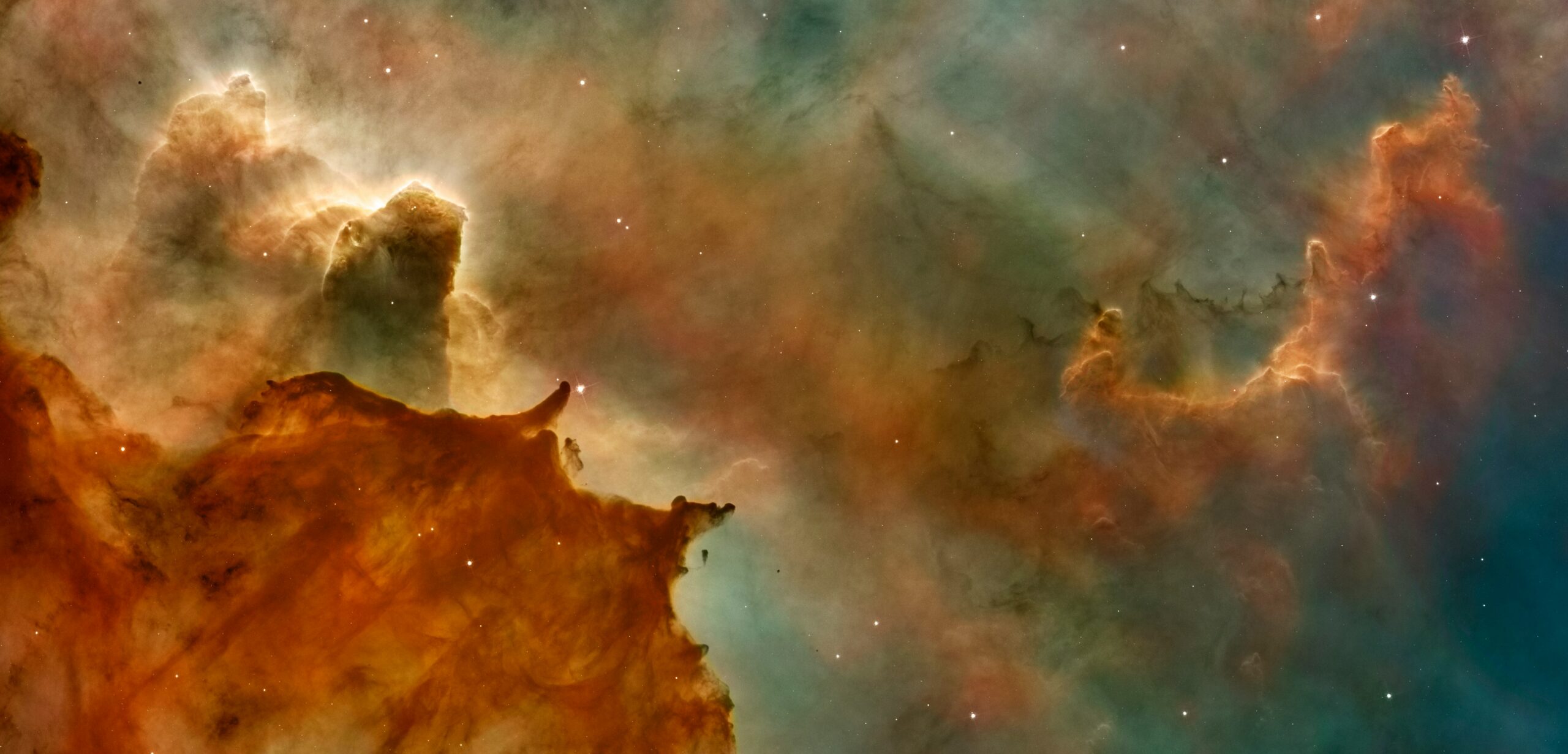
The flickering light of the screen bathed the dimly lit room in a celestial glow, mirroring the vast expanse of creation that the documentary, “The Enigma of the Universe: A Scientific Mysteries,” promised to explore. This ambitious cinematic endeavor, released to critical acclaim, doesn’t just present facts; it weaves a narrative of cosmic wonder, venturing into the uncharted territories of what humanity still doesn’t know about the universe. It is a journey for the curious mind, a testament to our enduring fascination with the cosmos, and a stark reminder of the profound mysteries that lie at the heart of existence.
The documentary begins by grounding its audience in the familiar, yet still awe-inspiring, processes of stars. It delves into the intricate dance of gravity and gas that orchestrates the birth of stars, from the colossal molecular clouds to the fusion furnaces that ignite within their cores. However, what truly captivates is the exploration of the unresolved puzzles surrounding these processes.
The Elusive Nature of Protostellar Disks
While astronomers have made significant strides in understanding how stars form from collapsing nebulae, the initial stages remain shrouded in a degree of uncertainty. The documentary highlights the crucial role of protostellar disks – the swirling, flattened structures of gas and dust that surround nascent stars and are the nurseries for planets. Yet, the precise mechanisms governing their accretion, angular momentum transfer, and eventual dispersal are still subjects of intense debate.
The Challenge of Observational Constraints
One of the primary hurdles in unraveling these mysteries is the sheer difficulty of observation. Protostars are enshrouded in thick layers of dust, obscuring them from visible light telescopes. The documentary showcases the ingenious use of infrared and submillimeter telescopes, which can pierce through these dusty veils, but even then, the resolution and sensitivity required to capture the fine details of disk evolution are often pushing the limits of current technology. Scientists are faced with the formidable task of interpreting indirect evidence, building sophisticated computer simulations, and waiting for the next generation of telescopes to unlock these secrets.
The Role of Magnetic Fields and Turbulence
The documentary also emphasizes the complex interplay of magnetic fields and turbulence within protostellar disks. These forces, often poorly understood, are believed to play a significant role in regulating the flow of material, enabling the central star to grow, and potentially influencing the early formation of planetary embryos. The precise strength and configuration of these magnetic fields, and how they interact with the turbulent gas, are areas where our knowledge is still nascent.
The Violent Spectacle of Supernovae
The dramatic death of stars, particularly the cataclysmic explosions known as supernovae, is another focal point. The documentary paints a vivid picture of these cosmic fireworks, explaining their crucial role in forging and distributing heavy elements throughout the universe, essential for the formation of planets and life. However, the underlying physics of these explosions is far from fully understood.
The Mystery of Neutrino Emission
A significant enigma discussed is the precise neutrino emission from core-collapse supernovae. Neutrinos are notoriously elusive particles, interacting only weakly with matter, yet they carry away the vast majority of the energy released during a supernova. While current models can predict the general neutrino flux, the detailed energy spectra and spatial distribution remain challenging to accurately model, hindering a complete understanding of the explosion’s dynamics. The documentary features interviews with researchers working on massive neutrino detectors deep underground, laboring to capture these ghost-like particles and extract clues about the heart of stellar explosions.
The Impact on Stellar Remnants
Furthermore, the documentary touches upon the perplexing diversity of stellar remnants left behind after a supernova. While some explosions leave behind neutron stars, others result in black holes. The exact conditions that determine which remnant forms are still being investigated, with theories involving the precise mass of the progenitor star, the explosion’s energetics, and the role of complex nuclear processes within the star’s core. Understanding this transition is fundamental to our comprehension of the universe’s most extreme objects.
For those intrigued by the enigmatic world of scientific mysteries, a fascinating article can be found at XFile Findings. This resource delves into various unsolved phenomena and the latest research efforts aimed at uncovering the truth behind them. Whether you’re a science enthusiast or simply curious about the unknown, this article offers a captivating exploration of the mysteries that continue to baffle researchers and ignite the imagination.
The Dark Matter and Dark Energy Conundrums
Perhaps the most profound enigmas presented in “The Enigma of the Universe” are the pervasive forces of dark matter and dark energy. These invisible entities, inferred from their gravitational effects, constitute the overwhelming majority of the universe’s mass-energy content, yet their true nature remains entirely unknown.
The Gravitational Evidence for Dark Matter
The documentary meticulously lays out the compelling evidence for dark matter’s existence. From the rotation curves of galaxies, which show that stars orbit faster than visible matter alone can account for, to the gravitational lensing effects observed around galaxy clusters, the gravitational influence of unseen matter is undeniable. The documentary skillfully uses animations to illustrate these phenomena, making complex astrophysical concepts accessible.
The Search for Candidate Particles
The central question posed is: what is dark matter made of? The film explores the leading theoretical candidates, such as WIMPs (Weakly Interacting Massive Particles) and axions, and the ambitious experiments designed to detect them. These experiments, often located in shielded laboratories deep underground or in space, aim to catch the faint signal of a dark matter particle interacting with ordinary matter. The lack of a definitive detection so far, despite decades of searching, fuels the enigma.
Alternative Theories and Cosmological Models
The documentary also acknowledges that the dark matter paradigm might not be the only explanation. It briefly touches upon alternative theories that propose modifications to gravity itself, suggesting that our understanding of gravity might be incomplete on cosmic scales, negating the need for dark matter. These alternative models, while less favored by the mainstream scientific community, are presented to highlight the open-ended nature of scientific inquiry.
The Accelerating Expansion and Dark Energy
The discovery of the accelerating expansion of the universe, a Nobel Prize-winning finding, introduced another colossal puzzle: dark energy. This mysterious force, acting in opposition to gravity, is pushing galaxies further apart at an ever-increasing rate. The documentary explains how observations of distant supernovae provided the initial evidence, painting a picture of a universe that is not only expanding but doing so at a faster pace than anticipated.
The Cosmological Constant and Beyond
The simplest explanation for dark energy, according to Einstein’s theory of general relativity, is the cosmological constant – an intrinsic energy density of empty space. However, the theoretical value of this constant derived from quantum physics is vastly larger than what is observed, creating a profound discrepancy. The documentary explores this “fine-tuning problem,” questioning why the universe’s fundamental constants seem so precisely set for the existence of structure and life.
The Nature of Vacuum Energy
The nature of vacuum energy itself is a deep philosophical and scientific question. The documentary delves into theories that propose dark energy might be a dynamic force, evolving over time, or perhaps a consequence of extra dimensions or a quantum field not yet fully understood. The ongoing efforts to measure the equation of state of dark energy, which describes how its density changes with expansion, are crucial for distinguishing between these possibilities.
The Genesis of Life: A Cosmic Accident or Inevitable Process?

Beyond the physical composition and evolution of the universe, “The Enigma of the Universe” bravely tackles the question of life itself. It ventures into the realm of astrobiology, exploring the conditions necessary for life and the possibility of its existence beyond Earth.
The Search for Exoplanets and Habitable Zones
The documentary highlights the breathtaking revolution in exoplanet detection. From the first confirmed discoveries to the thousands of planets now identified orbiting distant stars, the sheer abundance of potential worlds is staggering. The concept of the habitable zone – the region around a star where liquid water could exist on a planet’s surface – is explained as a primary target in the search for alien life.
The Promise of Future Telescopes
The film showcases the capabilities of current and upcoming telescopes like the James Webb Space Telescope and the planned Thirty Meter Telescope, which are designed not only to detect exoplanets but also to analyze their atmospheres for biosignatures – chemical indicators of life. The prospect of finding evidence of life beyond Earth, even microbial, is presented as one of the most profound scientific quests of our time.
The Challenges of Detecting Life
However, the documentary doesn’t shy away from the immense challenges. The vast distances involved, the faintness of exoplanet signals, and the difficulty of interpreting atmospheric data all present significant obstacles. The possibility of “false positives” – abiotic processes mimicking biosignatures – adds another layer of complexity to the search.
The Origin of Life on Earth
The documentary also revisits the origin of life on Earth, the only place where we know it exists. It discusses the classic Miller-Urey experiment and subsequent research into abiogenesis – the process by which non-living matter gives rise to life. It explores the role of organic molecules, hydrothermal vents, and RNA as potential precursors to the first self-replicating entities.
The Panspermia Hypothesis
The film briefly touches upon the panspermia hypothesis, the idea that life itself, or its basic building blocks, might have originated elsewhere in the universe and been transported to Earth, perhaps via meteorites. This hypothesis, while intriguing, doesn’t solve the ultimate question of life’s origin but rather shifts the location of that event. The documentary emphasizes that understanding the origin of life on Earth is crucial for assessing the likelihood of life arising elsewhere.
The Frontier of Consciousness and the Universe

In a particularly thought-provoking segment, “The Enigma of the Universe” extends its scope to the intriguing connection between consciousness and the cosmos. While this might seem outside the traditional realm of empirical science, the documentary frames it as a frontier of scientific inquiry at the intersection of physics, neuroscience, and philosophy.
The Quantum Enigma and Observation
The documentary revisits the peculiarities of quantum mechanics, particularly the role of the observer in collapsing wave functions. It questions whether consciousness, in some fundamental way, plays a role in shaping reality at the quantum level. While this is a highly debated topic, the film presents the arguments and counter-arguments, acknowledging the profound implications if such a link were to exist.
Interpretation of Quantum Phenomena
The documentary explores different interpretations of quantum mechanics, such as the Copenhagen interpretation, the many-worlds interpretation, and others, highlighting how they grapple with the observer problem. It emphasizes that our current understanding of quantum entanglement and superposition raises profound questions about the nature of reality itself and our place within it.
The Search for a Unified Theory
The quest for a unified theory of everything, one that reconciles quantum mechanics with general relativity, is also presented. The documentary suggests that such a theory might hold clues to the fundamental nature of consciousness and its potential relationship with the fabric of the universe.
The Nature of Reality and Perception
The film delves into the philosophical implications of the universe’s mysteries, questioning what constitutes “reality” when so much of it is unseen or indirectly inferred. It explores how our perception is shaped by our senses and our scientific instruments, and how these limitations might be preventing us from fully grasping the true nature of the cosmos.
The Role of Mathematics in Describing the Universe
The documentary underscores the indispensable role of mathematics in describing the universe. It highlights how abstract mathematical concepts, developed purely through logic and imagination, often find profound correspondence with the physical world, hinting at a deep underlying order. The question remains: is this order inherent, or is it a reflection of our own cognitive structures projected onto the universe?
In the realm of scientific mysteries, many intriguing questions remain unanswered, captivating the minds of researchers and enthusiasts alike. A fascinating exploration of these enigmas can be found in a related article that delves into the latest discoveries and theories surrounding unexplained phenomena. For those interested in expanding their knowledge, this article offers a comprehensive overview of various scientific mysteries that continue to baffle experts. You can read more about these intriguing topics in the article available at this link.
The Future of Cosmic Exploration and Human Ingenuity
| Documentary Title | Release Year | Duration | Scientific Mysteries Explored |
|---|---|---|---|
| The Universe: Ancient Mysteries Solved | 2015 | 60 minutes | Ancient astronomical mysteries, such as the construction of Stonehenge and the Pyramids |
| Into the Unknown: Exploring the Mysteries of the Universe | 2018 | 90 minutes | Dark matter, black holes, and the origins of the universe |
| Unsolved Mysteries of the Ocean | 2020 | 45 minutes | Deep sea creatures, unexplained underwater phenomena, and lost shipwrecks |
“The Enigma of the Universe” concludes on a note of optimistic wonder, celebrating human curiosity and the relentless drive to explore the unknown. It looks ahead to the next generation of scientific endeavors that promise to shed light on these enduring mysteries.
Next-Generation Telescopes and Observatories
The documentary showcases the ambitious plans for upcoming observatories, both on Earth and in space. These instruments, with unprecedented sensitivity and resolution, are poised to push the boundaries of our knowledge in areas like exoplanet characterization, dark matter detection, and the study of the early universe. The film conveys the excitement within the scientific community for the discoveries these new tools will undoubtedly bring.
The Ingenuity of Scientific Design
It’s not just about building bigger telescopes; it’s about the ingenious engineering and technological advancements that make them possible. The documentary highlights the collaborative efforts of scientists, engineers, and technicians from around the globe, working together to overcome seemingly insurmountable challenges and to build the instruments that will help us unravel the universe’s secrets.
The Philosophical Implications of Discovery
As the documentary reaches its end, it leaves the audience with a sense of profound awe and humility. The very act of contemplating these cosmic enigmas, it suggests, transforms our understanding of ourselves and our place in the grand tapestry of existence. The ongoing quest for answers, even if they lead to more questions, is a testament to the indomitable spirit of scientific inquiry. “The Enigma of the Universe: A Scientific Mysteries” does more than just inform; it inspires, beckoning viewers to look up at the night sky with a renewed sense of wonder and a deeper appreciation for the breathtaking, and often baffling, universe we inhabit.

They Reopened the Wow! Signal After 48 Years—Here’s What Changed
FAQs
What is a scientific mysteries documentary?
A scientific mysteries documentary is a film or television program that explores unexplained phenomena, unanswered questions, and unsolved mysteries in the fields of science, technology, and the natural world.
What topics are typically covered in a scientific mysteries documentary?
Topics covered in a scientific mysteries documentary can include the origins of the universe, the nature of consciousness, the existence of extraterrestrial life, the mysteries of the human brain, and other enigmatic scientific phenomena.
How are scientific mysteries documentaries created?
Scientific mysteries documentaries are typically created by a team of filmmakers, researchers, and scientists who collaborate to investigate and present compelling evidence and theories related to the chosen scientific mysteries.
What is the purpose of a scientific mysteries documentary?
The purpose of a scientific mysteries documentary is to educate and entertain audiences by delving into the unknown and sparking curiosity about the mysteries of the universe and the natural world.
Where can one watch scientific mysteries documentaries?
Scientific mysteries documentaries can be found on streaming platforms, television networks, and online video channels dedicated to science and educational programming. They may also be available for purchase or rental through various digital platforms.