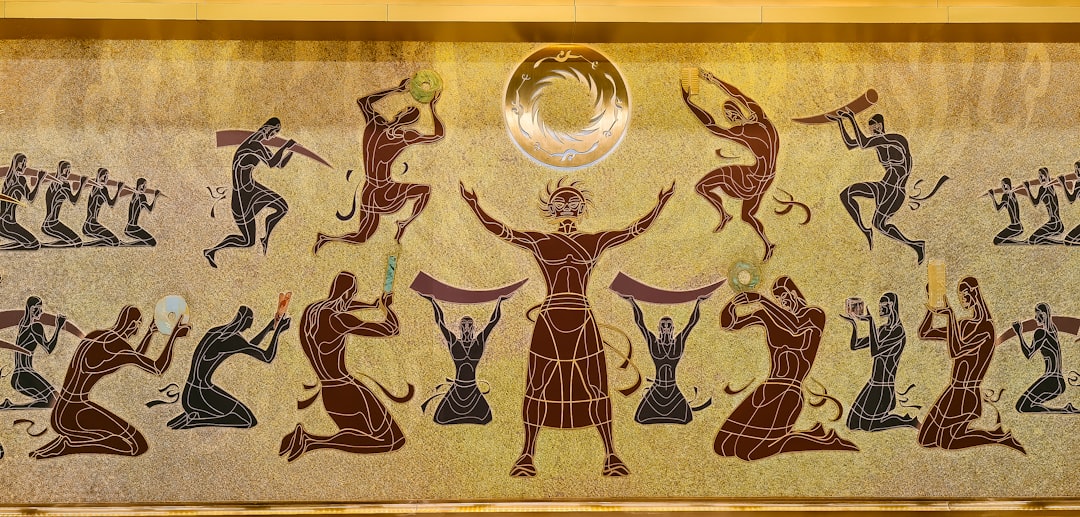
The cradle of civilization, Mesopotamia, birthed a pantheon of deities and heroic tales that continue to fascinate scholars and enthusiasts alike. Sumerian mythology, a foundational ancient narrative system, offers a window into the cosmological and societal understandings of a people who pioneered writing, urban centers, and complex social structures. This article delves into the enigmatic world of Sumerian mythology, exploring its core tenets, prominent figures, and enduring influence.
The Sumerians, inhabiting the southern region of Mesopotamia from the 4th to the 3rd millennia BCE, developed a sophisticated understanding of creation and divine order. Their cosmogony, the theory of the origin of the universe, articulated a progression from primordial chaos to an ordered cosmos ruled by powerful deities.
Primordial Waters and the Cosmic Mountain
Sumerian creation myths often begin with a state of undifferentiated primary matter, typically conceptualized as a vast watery abyss. From this formless expanse, a self-existent being or principle emerged, setting in motion the process of creation. A central concept is that of the An-Ki, the cosmic mountain. This entity was envisioned as a single, inseparable unit of heaven (An) and earth (Ki), representing the entirety of existence before their separation.
The separation of An and Ki was a crucial event, often attributed to the wind god Enlil. Imagine, if you will, a vast, undifferentiated mass slowly being pried apart, like two colossal tectonic plates. This primal separation allowed for the emergence of distinct elements and the ordering of the world as the Sumerians understood it. An became the sphere of the sky, home to the celestial deities, while Ki became the earth, the realm of humanity and its earthly gods.
The Pantheon’s Genesis: From An to Enlil
The initial pantheon of Sumerian gods emerged from these primordial principles. An, as the god of the heavens, held ultimate authority, though his direct involvement in earthly affairs often diminished over time. He was seen as the distant, venerable patriarch, the original source of divine power.
From An and Ki (or later, from a pairing involving An), other primary deities were born. The most prominent among these was Enlil, the god of wind, air, storms, and ultimately, kingship. Enlil’s role was paramount, often seen as the active ruler of the pantheon, responsible for dispensing fates and decrees. Think of him as the active manager of a grand celestial corporation, making the day-to-day decisions.
Another crucial deity was Enki (Ea in Akkadian), the god of water, wisdom, magic, crafts, and creation. He was benevolent, often acting as humanity’s protector and advocate, a divine problem-solver who frequently intervened to assist mortals. Enki’s domain was the Abzu, the fresh water depths beneath the earth, a source of life and potent magical energies.
Sumerian mythology is a fascinating subject that delves into the rich tapestry of ancient beliefs and deities that shaped early civilization. For those interested in exploring this topic further, a related article can be found at this link, which provides insights into the myths, gods, and cultural significance of the Sumerians.
The Hierarchy of Sumerian Gods and Their Domains
The Sumerian pantheon was complex and hierarchical, mirroring the societal structures of their burgeoning city-states. Each god or goddess had specific domains, responsibilities, and connections to natural phenomena or human activities.
Major Deities and Their Attributes
- An (Anu): The supreme sky god, often depicted with a horned cap, signifying divinity. He presided over the assembly of gods but was more of a distant authority figure. His name simply means “sky” or “heaven.”
- Enlil: Lord of the air and storms, a powerful and sometimes capricious deity. He was responsible for the destinies of kings and nations, and his pronouncements were considered irrevocable. His temple in Nippur, the Ekur, was considered a cosmic anchor between heaven and earth.
- Enki (Ea): The god of wisdom, magic, fresh water, and craftsmanship. He was known for his cleverness and often outwitted other gods. His realm, the Abzu, was a sacred place of power and knowledge. He was often depicted wearing a fish-skin cloak or with streams of water flowing from his shoulders.
- Nanna (Sin): The moon god, patron of Ur. He illuminated the night and was associated with fertility and wisdom.
- Utu (Shamash): The sun god, divine judge, and bringer of justice. He traversed the heavens daily, overseeing the world.
- Inanna (Ishtar): The goddess of love, beauty, war, and fertility. She was a powerful and multifaceted deity, often depicted with a lion. Her cult was widespread, and her narratives, particularly The Descent of Inanna, are among the most famous Sumerian myths.
- Ninhursag (Ninmah, Nintu): The mother goddess, associated with creation, fertility, and the mountains. She was one of the oldest Sumerian deities and played a pivotal role in the creation of humanity.
Minor Deities and Their Functions
Beyond the major gods, a vast array of minor deities, often linked to specific cities, professions, or natural features, populated the Sumerian divine landscape. These included gods of grain, brick-making, cattle, and even disease. Each city traditionally had its patron deity, whose temple served as the economic and spiritual heart of the community. For example, Ningirsu was the patron god of Lagash, while Nabu was associated with scribal arts. This intricate web of divine oversight imbued every aspect of Sumerian life with religious significance, underscoring the deep interwoven nature of their spiritual and material existence.
Humanity’s Place in the Divine Scheme
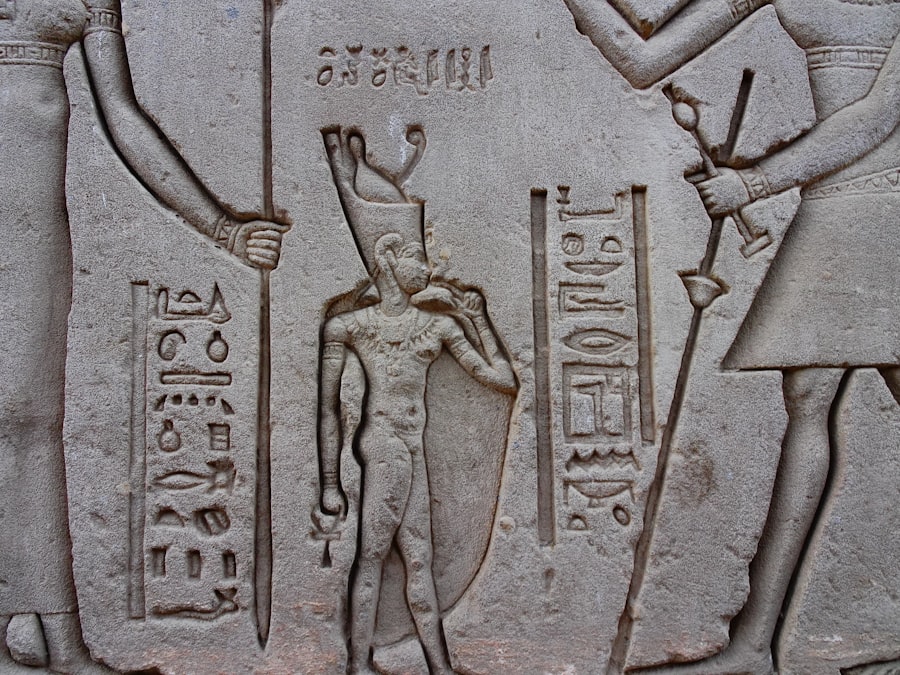
Unlike some later mythologies where humanity is created as a direct act of divine love or for companionship, Sumerian myths often portray humanity’s creation as a utilitarian act. We were, in essence, created to serve the gods.
The Creation of Man: A Burden Shared
The most prevalent account of human creation, found in texts like the Atrahasis Epic, suggests that humanity was fashioned from clay and divine blood (or, in some versions, the blood of a slain rebellious god) to relieve the gods of the laborious task of maintaining the cosmos. Imagine, if you will, the gods as cosmic engineers, exhausted by the never-ending work of digging canals, cultivating fields, and building temples. Humanity was their labor force, their earthly stewards. This concept of humanity as servants to the gods instilled a pervasive sense of duty and dependence, shaping their religious practices and societal values.
The burden of work was not a metaphor; it was a literal interpretation of humanity’s purpose. Mortals were responsible for providing food, drink, and sacrifices to the gods, thus sustaining the divine order. In return, the gods were expected to ensure the well-being of their human attendants, providing bountiful harvests, protection from natural disasters, and victory in warfare.
Free Will and Divine Intervention
While created for service, Sumerian mythology also hints at elements of human agency and the gods’ occasional interventions in human affairs. While our general purpose was to serve, individuals and kings often sought divine favor for specific endeavors. Omens, dreams, and priestly interpretations were essential tools for understanding the gods’ will and navigating the unpredictable world.
However, the gods were not always benevolent. Their decisions could be harsh, as seen in the great flood narratives where humanity was nearly wiped out. These narratives serve as stark reminders of divine power and the precariousness of human existence in a world governed by supernatural forces. The gods, like powerful rulers, could be generous or wrathful, and mortals were generally at their mercy.
Key Sumerian Myths and Their Significance
Sumerian mythology is rich with narrative cycles, epic poems, and hymns that provide invaluable insights into their worldview. These stories, often preserved on clay tablets, explore universal themes of creation, death, heroism, and the eternal struggle between order and chaos.
The Epic of Gilgamesh: Mortality and the Search for Immortality
Perhaps the most famous work of Sumerian literature, later significantly adapted by the Akkadians, is The Epic of Gilgamesh. This epic poem narrates the adventures of Gilgamesh, the powerful and initially tyrannical king of Uruk, and his journey of self-discovery.
Gilgamesh’s transformation begins with his friendship with Enkidu, a wild man created by the gods to challenge Gilgamesh’s arrogance. Their bond symbolizes the taming of savagery and the power of human connection. The pivotal moment arrives with Enkidu’s death, which profoundly impacts Gilgamesh, forcing him to confront his own mortality. Like a sudden, cold gust of wind on a summer’s day, Enkidu’s death shatters Gilgamesh’s complacency, igniting a desperate quest for eternal life.
His arduous journey takes him to the ends of the earth, encountering legendary figures and facing immense trials. He seeks out Utnapishtim, the only mortal to have been granted immortality after surviving the Great Flood. However, Gilgamesh fails to attain eternal life, ultimately accepting the inevitability of death. The epic concludes with Gilgamesh returning to Uruk, a changed man who now understands that his legacy lies in the lasting accomplishments of his city and his wise rule, rather than in an escape from mortality. It’s a poignant meditation on the human condition, the fleeting nature of life, and the enduring power of human achievement.
The Descent of Inanna: Death, Rebirth, and the Cycle of Life
Another profoundly significant myth is The Descent of Inanna (or Ishtar in Akkadian). This narrative recounts the goddess Inanna’s journey into the Underworld, often called the “Land of No Return,” the domain of her jealous sister, Ereshkigal.
Inanna’s motives for descending vary in different versions, but they often involve asserting her power, attempting to rescue her lover, or simply investigating the realm of the dead. Her journey is fraught with challenges, as she must pass through seven gates, surrendering an article of clothing or jewelry at each, symbolizing a shedding of her worldly power and status. By the time she reaches Ereshkigal, she is stripped bare, vulnerable, and ultimately killed.
Her death and subsequent resurrection, facilitated by Enki (who sends two sexless beings to revive her), establish a powerful mythological framework for concepts of death, sacrifice, and rebirth. Upon returning to the world, however, she must provide a substitute to remain in the Underworld in her stead. Her husband, Dumuzid, is chosen, leading to the annual cycle of his descent and return, which is often interpreted as a myth explaining the seasonal cycles of vegetation, growth, and decay. This myth served as a profound explanation for the fundamental cycles of nature and life itself within Sumerian society.
Other Notable Narratives
- Enki and Ninhursag: This myth details Enki’s various sexual encounters and the birth of several deities, highlighting his creative powers and sometimes his mischievous nature. It eventually leads to Ninhursag curing Enki of various ailments, establishing her as a powerful healing goddess.
- The Myth of Adapa: This narrative tells of a wise human, Adapa, who accidentally offends the god An and is summoned to the heavens. Enki advises him not to eat or drink anything offered by the gods, fearing it will lead to his death. However, this advice inadvertently prevents Adapa from gaining immortality, presenting a tragic tale of missed opportunity and divine misunderstanding.
Sumerian mythology is a fascinating subject that delves into the rich tapestry of ancient beliefs and deities. For those interested in exploring this topic further, you might find a related article on the significance of the Epic of Gilgamesh particularly enlightening. This epic not only highlights the cultural values of the Sumerians but also offers insights into their views on mortality and friendship. To read more about it, check out this insightful piece at Xfile Findings.
The Enduring Legacy of Sumerian Mythology
| Aspect | Description | Notable Figures | Significance |
|---|---|---|---|
| Creation Myth | Describes the origin of the world and gods, involving primordial waters and the separation of heaven and earth. | Tiamat, Apsu, Anu | Foundation of Sumerian cosmology and religious beliefs. |
| Main Deities | Key gods worshipped in Sumerian culture. | Enlil (god of air), Enki (god of water and wisdom), Inanna (goddess of love and war) | Central figures in myths, rituals, and governance of the cosmos. |
| Epic of Gilgamesh | One of the oldest known literary works, telling the story of King Gilgamesh’s quest for immortality. | Gilgamesh, Enkidu, Utnapishtim | Explores themes of friendship, mortality, and human nature. |
| Underworld | Realm of the dead ruled by the goddess Ereshkigal. | Ereshkigal, Nergal | Concept of afterlife and death in Sumerian belief. |
| Mythological Creatures | Various beings featured in myths, often symbolic. | Lamassu (protective spirits), Anzu (storm bird) | Represent protection, chaos, and divine intervention. |
Despite the disappearance of the Sumerian language as a spoken tongue and the eventual decline of their civilization, their mythological narratives and religious concepts continued to exert profound influence on subsequent Mesopotamian cultures and, arguably, on broader Western civilization.
Influence on Later Mesopotamian Cultures
The Akkadians, Babylonians, and Assyrians, who succeeded the Sumerians as dominant powers in Mesopotamia, adopted and adapted many Sumerian myths and deities. For instance, the Sumerian goddess Inanna became the powerful Akkadian/Babylonian Ishtar, and Enki became Ea. The structure of their pantheons, the roles of their gods, and even specific narratives like The Epic of Gilgamesh were largely inherited and reinterpreted.
The Akkadian creation epic, Enuma Elish, while distinct, draws upon Sumerian cosmogonic themes, reorganizing the divine hierarchy and placing the Babylonian god Marduk at the apex. This cultural continuity demonstrates the foundational nature of Sumerian religious thought, acting as a deep well from which later Mesopotamian traditions drew sustenance.
Traces in Abrahamic Religions and Western Thought
While direct causal links are complex and often debated, scholars have identified striking similarities between Sumerian myths and narratives found in later Abrahamic traditions. The most prominent example is the Great Flood narrative. The flood story in The Epic of Gilgamesh shares significant parallels with the biblical account of Noah’s Ark, suggesting a common oral or written tradition that pre-dates both. Both narratives feature a divine warning, the construction of an ark, the saving of animals and a select few people, and a new beginning after the deluge.
Beyond the flood, themes of a primordial garden (Dilmun in Sumerian mythology), a tree of knowledge (though with different implications), and the creation of humanity from earth are also present in both Sumerian and later traditions. These parallels are not necessarily indicative of direct copying but rather suggest a shared cultural milieu and a common reservoir of archetypal stories that resonated across different societies.
Sumerian mythology, with its rich tapestry of gods, heroes, and cosmic dramas, offers humanity a glimpse into the earliest systematic attempts to understand the universe, define human purpose, and grapple with the fundamental questions of life and death. Its narratives, etched in clay thousands of years ago, continue to echo in the corridors of history, inviting us to ponder the enduring power of myth and the foundational questions that have shaped human civilization. The enigmatic world of Sumerian mythology remains a fertile ground for discovery, continually offering new insights into the human spirit and our collective cultural heritage.
FAQs
What is Sumerian mythology?
Sumerian mythology refers to the collection of myths, legends, and religious beliefs of the ancient Sumerians, who lived in Mesopotamia (modern-day Iraq) around 4500 to 1900 BCE. These myths explain the origins of the world, gods, humans, and natural phenomena.
Who were the main gods in Sumerian mythology?
The main gods in Sumerian mythology include An (the sky god), Enlil (god of air and storms), Enki (god of water and wisdom), Inanna (goddess of love and war), and Ninhursag (mother goddess). These deities played central roles in creation stories and daily life.
What is the significance of the Epic of Gilgamesh in Sumerian mythology?
The Epic of Gilgamesh is one of the oldest known literary works and a key piece of Sumerian mythology. It tells the story of King Gilgamesh’s adventures, his quest for immortality, and explores themes of friendship, mortality, and the human condition.
How did Sumerian mythology influence later cultures?
Sumerian mythology significantly influenced later Mesopotamian cultures such as the Akkadians, Babylonians, and Assyrians. Many myths, gods, and religious practices were adapted and integrated into their own belief systems, shaping the mythology of the ancient Near East.
What role did mythology play in Sumerian society?
Mythology was central to Sumerian society, guiding religious rituals, governance, and social order. Myths explained natural events, justified the authority of kings, and were used in temple worship to maintain harmony between humans and the divine.