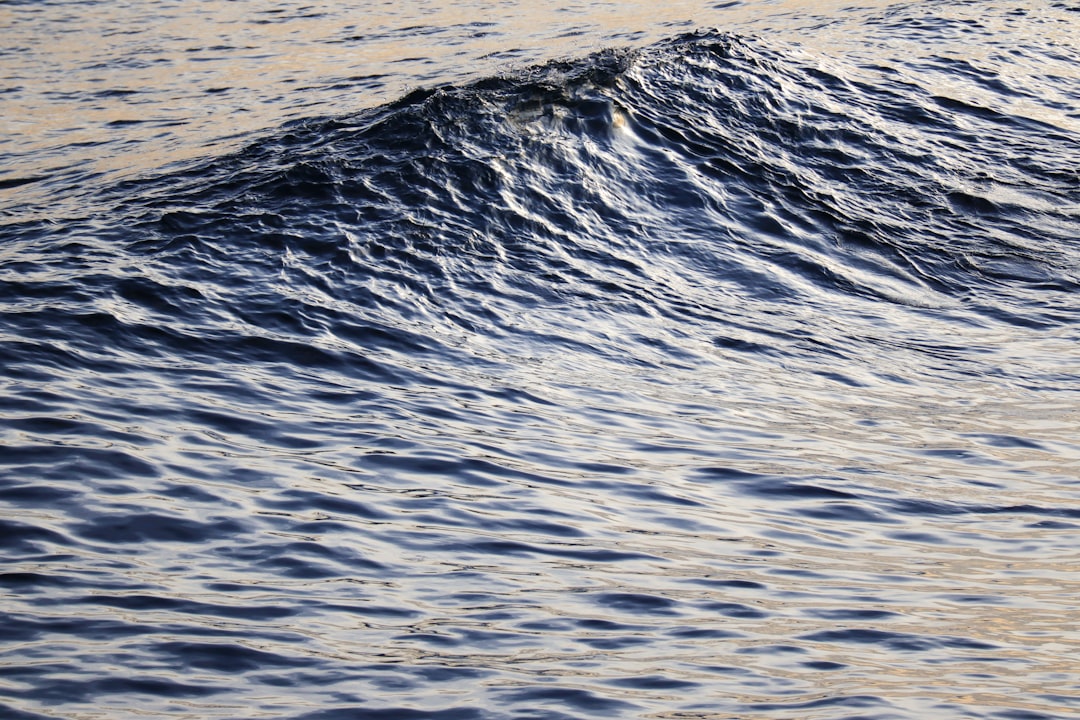
The peculiar behavior of water beneath vessels moving at high velocities has long presented an enigma to naval architects and fluid dynamicists. While the hydrodynamic principles governing slow-speed displacement are well-understood, the phenomena that emerge as speeds increase, particularly the transition into planing or semi-planing regimes, introduce a layer of complexity that defies simple theoretical extrapolation. This article delves into the mystery of the hydrodynamic wake at high speeds, exploring the contributing factors, observed characteristics, and the ongoing challenges in its accurate prediction and manipulation.
At low speeds, a displacement hull pushes water aside, creating a bow wave and a stern wave that are characteristic of the vessel’s displacement and hull form. The energy required to generate these waves is a significant component of the total drag. However, as speed increases, the hull begins to lift out of the water. This transition is not a continuous refinement of low-speed dynamics but rather a fundamental shift in the primary mode of interaction between the hull and the fluid. The buoyant forces that dominate at rest become less significant, and the hydrodynamic lift generated by the flow over the hull surfaces takes precedence. This lift allows the vessel to rise, reducing the wetted surface area and consequently the drag associated with skin friction and wave-making at lower speeds.
The Elusive Nature of Planing
The transition to planing is a critical juncture. It is not a single, precisely defined speed but rather a range where the hull begins to skim across the surface rather than push through it. This regime is characterized by a significant reduction in hull-body immersion and a substantial contribution from dynamic lift. However, the exact point at which planing commences and the stability of this state are highly dependent on a complex interplay of factors, including hull shape, weight distribution, and forward speed. Small variations in these parameters can lead to significant differences in the planing characteristics, making it difficult to establish universal predictive models.
The Role of Dynamic Lift
Dynamic lift is the primary driver of planing. As the hull moves forward, water flows over its submerged surfaces, creating a pressure difference that generates an upward force. This force counteracts gravity, causing the vessel to rise. The shape of the hull, particularly the angles of the sections and the presence of chines, plays a crucial role in generating and maintaining this lift. Understanding the precise distribution of pressure over the hull surface is paramount to predicting the planing behavior and the associated wake formation.
In the study of fluid dynamics, the phenomenon of hydrodynamic wake is crucial for understanding how objects move through fluids. An interesting article that delves into the conditions under which hydrodynamic wake is absent at certain velocities can be found at this link: Hydrodynamic Wake Absence at Velocity. This article explores the theoretical frameworks and experimental observations that illustrate the absence of wake under specific flow conditions, providing valuable insights for researchers and engineers alike.
Manifestations of the High-Speed Wake
The visual and energetic signature of a vessel moving at high speed is dramatically different from its displacement counterpart. The expansive, turbulent wake, often characterized by spray and white water, is a testament to the complex fluid dynamics at play. This wake is not merely a passive byproduct of motion but an active indicator of the energy being transferred from the vessel to the surrounding fluid.
The Transition from Bow Wave to Spray
As the hull begins to lift, the dominant bow wave that is characteristic of displacement vessels transforms. The crest of the bow wave can break, generating significant amounts of spray and foam that are expelled outwards and backwards. This spray is not just visually striking; it represents a substantial loss of energy as water is atomized and propelled. Accurately quantifying this energy dissipation through spray generation is a significant challenge in hydrodynamic modeling.
The Stern Wave and Transom Effects
At the stern, the situation is equally complex. As the hull lifts, the stern often clears the water to a considerable extent, with only the transom remaining in contact with the fluid. The interaction of the high-speed flow with the transom generates a distinct stern wave. Crucially, the transom’s shape and its angle relative to the water surface dictate the nature of this wave and the associated velocities and pressures behind the vessel. A flat, perpendicular transom can lead to the formation of a powerful vortex system and significant turbulence as water separates from the surface.
The Formation of Vortices and Turbulence
The high-speed flow around the hull, particularly at the chines and the transom, is prone to separation. This separation leads to the formation of complex, three-dimensional vortex structures. These vortices are highly energetic and contribute significantly to the overall drag and the visual characteristics of the wake. The interaction and breakdown of these vortices in the turbulent wake are areas of ongoing research, as they are intimately linked to energy dissipation and noise generation.
Key Factors Influencing Wake Dynamics

The intricate nature of the high-speed wake is not attributable to a single variable. Rather, it is the consequence of a synergistic interaction between numerous parameters, each contributing to the overall hydrodynamic picture. Understanding these factors is crucial for both predictive modeling and for the design of vessels that operate efficiently and predictably at high speeds.
Hull Form and Geometry
The fundamental shape of the hull is perhaps the most influential factor. The length-to-beam ratio, the deadrise angle (the angle of the hull sections relative to the horizontal), the presence and sharpness of chines, and the transom design all profoundly affect the way the hull interacts with the water at speed. A finer hull form with sharper chines may achieve planing more readily, while a broader hull might exhibit different planing characteristics and a more substantial wake. The curvature and twist of the hull sections also play a vital role in managing the flow and minimizing energy losses.
Deadrise Angle and its Impact
The deadrise angle is particularly important. A higher deadrise angle generally leads to a softer ride in choppy seas and can help shed water more effectively. However, it can also increase parasitic drag when planing. The optimal deadrise angle is often a compromise between seakeeping ability and performance. The wake generated by a hull with significant deadrise will differ from that of a flatter-bottomed hull, with variations in spray patterns and the intensity of stern turbulence.
Chine Design and Spray Generation
Chines, the sharp edges where the hull sides meet the bottom, are critical for generating hydrodynamic lift during planing. Their sharpness, angle, and whether they extend purely to the transom or are partially relieved can significantly influence the amount of spray generated. Sharp chines can effectively “cut” through the water, reducing wetted surface area and promoting a cleaner lift, but can also lead to increased spray if not carefully designed.
Speed and Froude Number
The speed of the vessel, often expressed in terms of the Froude number (Fr = v / sqrt(gL), where v is velocity, g is acceleration due to gravity, and L is a characteristic length), is a primary determinant of the hydrodynamic regime. At low Froude numbers, displacement effects dominate. As the Froude number increases into the planing range, dynamic lift becomes the primary force. The Froude number also correlates with the relative significance of wave-making versus frictional drag. At high Froude numbers, wave-making drag, while still present, becomes less dominant compared to lift-induced drag and frictional drag on the reduced wetted surface.
Weight Distribution and Trim
The distribution of weight within the vessel, and thus its trim (the angle of the vessel relative to the horizontal), has a profound impact on how the hull interacts with the water at speed. A vessel that is bow-heavy will have a different planing attitude and wake pattern than one that is stern-heavy. Achieving and maintaining optimal trim is essential not only for efficiency but also for avoiding undesirable phenomena such as porpoising (an oscillation in pitch) or chine-walking (where the chines break free of the water).
Challenges in Hydrodynamic Modeling

Despite advancements in computational fluid dynamics (CFD) and experimental techniques, the accurate prediction of high-speed hydrodynamic wakes remains a significant challenge for researchers and engineers. The inherent complexity and non-linear nature of the fluid behavior at these velocities introduce uncertainties that are difficult to fully resolve.
The Turbulence Modeling Problem
Turbulence, the chaotic and irregular motion of fluids, is a ubiquitous feature of high-speed flows. Modeling turbulence accurately is notoriously difficult. Current turbulence models, while offering useful approximations, often struggle to capture the fine-scale structures and energy transfer mechanisms present in the highly turbulent wakes behind planing hulls. This can lead to inaccuracies in drag prediction, wake velocity field estimations, and the prediction of phenomena such as spray formation and water impact.
Free Surface Complexity
The interface between water and air, the free surface, introduces a significant challenge. The dynamic and often rapidly changing shape of this surface, influenced by waves, spray, and the hull’s motion, is crucial to the fluid dynamics. Accurately simulating the evolution of the free surface and its interaction with the hull and wake requires sophisticated numerical schemes that can handle sharp gradients and potentially extreme deformations.
The Role of Incomplete Data
While wind tunnels and towing tanks provide valuable experimental data, the precise measurement of all relevant parameters within a high-speed wake is difficult. Capturing the full three-dimensional velocity field, the detailed pressure distribution on the hull, and the precise nature of spray generation requires advanced instrumentation and measurement techniques. Furthermore, extrapolating results from scaled-down models to full-size vessels can introduce uncertainties due to scaling effects in turbulence and wave phenomena.
In the study of fluid dynamics, the phenomenon of hydrodynamic wake can be quite intriguing, especially when considering its absence at certain velocities. This concept is explored in depth in a related article that discusses the implications of velocity on wake formation and its significance in various applications. For more insights into this topic, you can read the full article here. Understanding these dynamics can lead to advancements in engineering and environmental science, highlighting the importance of velocity in fluid behavior.
Towards Improved Understanding and Prediction
| Velocity | Hydrodynamic Wake |
|---|---|
| 0 m/s | Absent |
| 1 m/s | Absent |
| 2 m/s | Absent |
| 3 m/s | Absent |
Ongoing research and technological advancements are gradually chipping away at the mysteries surrounding high-speed hydrodynamic wakes. A multi-faceted approach, combining theoretical advancements, sophisticated numerical simulations, and comprehensive experimental investigations, is leading to a more nuanced understanding.
Advancements in Computational Fluid Dynamics (CFD)
Modern CFD techniques are becoming increasingly powerful. High-fidelity simulations, such as Large Eddy Simulation (LES) and Direct Numerical Simulation (DNS), are being employed to capture more of the turbulent structures. Advances in mesh generation and adaptive meshing allow for finer resolution in critical areas, such as near the hull surface and in the turbulent wake. The development of more robust free-surface models is also improving the accuracy of simulations.
Experimental Techniques and Instrumentation
The development of sophisticated experimental techniques is crucial. Particle Image Velocimetry (PIV) and Laser Doppler Velocimetry (LDV) allow for detailed, non-intrusive measurements of water velocities within the wake. High-speed cameras and specialized imaging techniques are used to analyze spray generation and breaking wave phenomena. Careful design of experimental setups to accurately replicate full-scale conditions, considering factors such as density and surface tension, is also vital.
The Development of Empirical and Semi-Empirical Models
While CFD offers detailed insight, empirical and semi-empirical models, derived from extensive experimental data, still play a crucial role in preliminary design and rapid estimation. These models often employ dimensionless parameters and regression analysis to predict key performance characteristics, including drag and wake parameters. Ongoing efforts focus on refining these models by incorporating more detailed physical understanding and by updating them with new experimental data. The ongoing dialogue between the theoretical, computational, and experimental realms is essential for progress.
FAQs
What is a hydrodynamic wake?
A hydrodynamic wake is the pattern of disturbance left behind an object moving through a fluid, such as water or air. It is characterized by a decrease in pressure and an increase in velocity behind the object.
What does it mean for a hydrodynamic wake to be absent at velocity?
When a hydrodynamic wake is absent at velocity, it means that there is no visible or measurable disturbance left behind an object moving through a fluid at a certain speed. This phenomenon is often observed in certain conditions and with specific objects.
What are the factors that can lead to the absence of a hydrodynamic wake at velocity?
The absence of a hydrodynamic wake at velocity can be influenced by various factors, including the shape and size of the object, the viscosity of the fluid, and the speed at which the object is moving through the fluid.
What are the potential applications or implications of the absence of a hydrodynamic wake at velocity?
The absence of a hydrodynamic wake at velocity has potential applications in fields such as fluid dynamics, marine engineering, and aerodynamics. Understanding this phenomenon can lead to the development of more efficient and streamlined designs for objects moving through fluids.
How does the absence of a hydrodynamic wake at velocity impact the study of fluid dynamics?
The absence of a hydrodynamic wake at velocity challenges traditional understanding of fluid dynamics and prompts researchers to explore new theories and models to explain this phenomenon. It also opens up opportunities for further research and innovation in the field of fluid dynamics.