The Roswell Incident: A Deeper Dive into the Best Documented UFO Case
The Roswell Incident remains one of the most enduring and compelling mysteries of the 20th century, often cited as the best-documented UFO case in history. What began as a seemingly straightforward news report of a crashed flying saucer in the New Mexico desert, quickly transformed into a saga of government cover-ups, eyewitness testimonies, and a continuing debate that has captivated the public imagination for over seven decades. While the official explanation has evolved over time, the sheer volume of evidence, the consistent narratives from credible witnesses, and the persistent questions surrounding the event continue to fuel speculation and solidify Roswell’s status as a pivotal moment in the UFO phenomenon.
The events unfolded in early July 1947, near Roswell, New Mexico. A local rancher, W.W. Brazel, discovered unusual debris scattered across his property. This debris was described as metallic, lightweight yet incredibly strong, with strange hieroglyphic-like symbols. Brazel promptly reported his findings to the local sheriff, who in turn contacted the Roswell Army Air Field.
Brazel’s Discovery and the Sheriff’s Involvement
W.W. Brazel, a man known for his pragmatism and quiet demeanor, was not one to invent fantastical stories. His discovery of the unusual wreckage was a genuine and perplexing event. He meticulously gathered samples of the debris, recognizing its unusual nature. His decision to report it to Sheriff George Wilcox was a testament to his belief that the authorities should be aware of such an anomaly. The sheriff, upon seeing the wreckage himself, understood the potential significance and immediately notified the military.
The Army’s Initial Statement: A Crashed Flying Saucer
The Roswell Army Air Field, under the command of Major Jesse Marcel, a counterintelligence officer, quickly dispatched a team to the site. What they found was astonishing. The debris was systematically collected, and the military personnel were reportedly baffled by its composition and properties. On July 8, 1947, the Roswell Army Air Field issued a groundbreaking press release: “The Army Air Forces here yesterday announced that they had recovered a ‘flying disc.'” This statement, issued to the press, sent shockwaves across the nation.
The Swift and Decisive Retraction
The initial announcement generated immense public interest and media frenzy. However, this excitement was short-lived. Within a matter of hours, the military leadership, likely under pressure from higher echelons, issued a revised statement. This time, the “flying disc” was reclassified as a weather balloon. The narrative shifted abruptly from a sensational extraterrestrial encounter to a mundane meteorological device. This rapid and decisive retraction, coupled with the military’s subsequent efforts to control the narrative, sowed the first seeds of suspicion and conspiracy that would define the Roswell Incident for generations to come. The discrepancy between the initial excitement and the quick debunking left many questioning what had truly transpired.
One of the most compelling aspects of UFO phenomena is the extensive documentation surrounding certain cases, which has led to significant public interest and debate. A related article that delves deeper into the intricacies of one of the best-documented UFO cases can be found at this link: Best Documented UFO Case. This article explores the evidence, eyewitness accounts, and the implications of the sightings, providing readers with a comprehensive understanding of why this case stands out in the annals of UFO history.
Eyewitness Testimonies: A Chorus of Anomalies
While the official explanation deemed the incident a weather balloon, a significant number of individuals who were present at the time, or who had direct involvement in the recovery and handling of the debris, came forward over the years with accounts that contradicted the official narrative. These testimonies, often shared decades after the event, painted a picture far more complex and intriguing than a simple downed balloon.
Major Jesse Marcel’s Persistent Doubts
One of the most pivotal figures in the Roswell Incident is Major Jesse Marcel. As the intelligence officer involved in the initial recovery of the debris, his firsthand account holds considerable weight. In later interviews, long after his military service, Marcel expressed his profound conviction that what he saw was not terrestrial in origin. He described the material as unlike anything he had ever encountered, with properties that defied conventional explanation. He recounted seeing strange symbols etched onto the metal fragments, symbols that bore no resemblance to any known earthly language or design. Marcel’s unwavering belief that the government had deliberately suppressed the truth about the crash and recovery of an alien craft became a cornerstone of the Roswell narrative. His detailed descriptions of the debris, including its resilience and unusual composition, provided compelling evidence that challenged the weather balloon explanation.
The Testimony of Sheriff George Wilcox
Sheriff George Wilcox, who was among the first to be notified by W.W. Brazel, corroborated the unusual nature of the debris. He reportedly saw samples of the wreckage and was as perplexed as Brazel. His early involvement lends credibility to the idea that something genuinely extraordinary had been found. While Wilcox himself did not make numerous public statements, his initial actions and reported reactions to the debris indicated his recognition of its anomalous characteristics.
Accounts from Military Personnel and Involved Civilians
Over time, other individuals who were peripherally involved in the event began to speak out. These included individuals who worked at the Roswell Army Air Field, mechanics, and even children who claimed to have seen unusual aerial phenomena in the days leading up to the crash. While the details might vary, a recurring theme emerged: the presence of unusual, non-terrestrial debris and what appeared to be an organized, swift, and secretive military operation to secure and remove it. Some accounts mentioned seeing what looked like a “gull-wing” shaped craft, further diverging from the weather balloon hypothesis. The sheer number of these testimonies, often given independently and years apart, lent a cumulative weight to the anomaly.
The Whispers of a “Memory Holing” Operation
Many of these witnesses described a pervasive atmosphere of secrecy and intimidation. They spoke of being warned not to discuss what they had seen, and of their memories being systematically erased or suppressed by the government. This alleged “memory holing” operation further fueled the conspiracy theories surrounding Roswell, suggesting a deliberate effort to maintain public ignorance. The common thread of fear and silence among those who claimed to have direct knowledge of the event underscores the power and extent of the perceived government cover-up.
The Government’s Evolving Explanations: From Balloon to Stealth Aircraft

The official narrative surrounding the Roswell Incident has undergone significant evolution since that fateful July in 1947. Faced with persistent questions and the growing weight of eyewitness testimonies, the U.S. government has issued several reports aimed at explaining the event. However, these explanations have often been met with skepticism by those who believe the truth remains hidden.
The 1990s Reports: Project Mogul and Atmospheric Research
In the early 1990s, the U.S. Air Force released two major reports that attempted to provide a definitive explanation for the Roswell Incident. These reports identified the recovered debris as originating from Project Mogul, a top-secret military project involving high-altitude balloons designed to detect Soviet nuclear tests. The reports posited that the debris was a failed balloon train, and that the unusual symbols were likely remnants of radar reflectors or other experimental equipment.
Deconstructing Project Mogul
Project Mogul was indeed a classified undertaking during the Cold War, and its existence was not widely known to the public. The idea was to use balloons equipped with sensitive microphones to listen for sound waves generated by Soviet atomic bomb tests. The components of these balloons were indeed experimental and included radar reflectors and metallic foils, which could potentially explain the unusual appearance of discovered debris. The government argued that the intense secrecy surrounding Project Mogul led to confusion and the subsequent misinterpretation of the recovered materials. They suggested that witnesses, recalling the event years later, might have conflated memories from different events or been influenced by popular culture surrounding flying saucers.
Critiques of the Project Mogul Explanation
However, critics of the Project Mogul explanation point to several inconsistencies. Firstly, Major Jesse Marcel, who was personally involved in the debris recovery, consistently maintained that the material he examined was far more advanced and inexplicable than anything related to a weather balloon or Project Mogul components, as he understood them. He specifically described materials that could be bent and then return to their original shape, and metallic beams with incredibly fine details. Secondly, the descriptions of the retrieved craft in some witness testimonies, particularly those involving the recovery of intact or near-intact aerial vehicles, are not easily explained by the deployment of balloon trains. The sheer scale and nature of the military operation, involving extensive cordons and immediate suppression of information, also seem disproportionate for a downed weather balloon, even one associated with a classified project. The government’s initial explicit statement of recovering a “flying disc” also remains a significant hurdle for the debunking efforts.
The “Alien Autopsy” Film and its Discreditation
In 1995, a film purporting to show the autopsy of an alien retrieved from the Roswell crash site surfaced and gained widespread public attention. The film, presented by producer Ray Santilli, generated immense controversy and fueled the alien crash narrative. However, the film was later widely debunked as a hoax, with Santilli himself admitting that parts of it were staged or fabricated. This contributed to an increased skepticism towards extraordinary claims related to Roswell, but also highlighted the complex and often deceptive nature of information surrounding the case.
The Human Remains Hypothesis: Crashed Experimental Aircraft
A more recent explanation offered by some researchers and even former military intelligence personnel suggests that the Roswell debris might have originated from a highly experimental, top-secret aircraft being developed by the U.S. government. This aircraft, possibly utilizing advanced propulsion or stealth technology, could have crashed during a test flight. The urgency and secrecy surrounding the recovery would then be attributed to the highly classified nature of the technology, rather than an extraterrestrial origin. These explanations often involve the possibility of human remains being recovered, which would account for the government’s initial reticence and subsequent efforts to control the narrative.
However, the consistent testimonies regarding the truly alien nature of the recovered materials—the otherworldly symbols, the impossible metallurgy, and the unusual physical properties—continue to challenge these terrestrial explanations for many researchers and believers. The sheer volume and consistency of these anomalous descriptions, often given by individuals with no apparent motive to fabricate or embellish, remain central to the ongoing debate.
The Legacy of Roswell: Enduring Mysteries and Cultural Impact
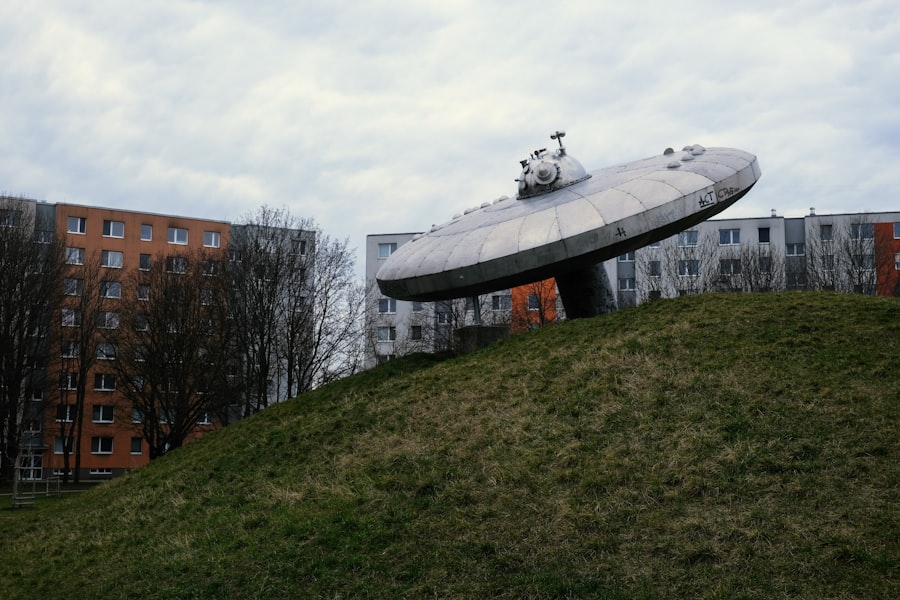
The Roswell Incident has transcended its immediate context to become a global cultural phenomenon. Its enduring mystery has inspired countless books, films, documentaries, and has become a touchstone for discussions about government transparency, the possibility of extraterrestrial life, and the nature of truth itself.
The Birth of Modern UFOlogy
Roswell is widely considered the genesis of modern UFOlogy. Before the Roswell Incident, sightings of “flying saucers” were relatively isolated occurrences. The widespread media attention and the subsequent debates surrounding Roswell ignited public fascination and spurred countless individuals to report their own unusual aerial observations. It created a framework for investigating and discussing UFO phenomena, establishing a lexicon and a set of underlying questions that continue to drive research and speculation today. The case provided a focal point for a burgeoning field of study dedicated to documenting and analyzing unexplained aerial phenomena.
The Concept of Government Cover-Up
The Roswell Incident is inextricably linked to the concept of a government cover-up. The swift retraction of the initial press release, coupled with the accounts of intimidation and secrecy from witnesses, cemented the idea that authorities were actively hiding the truth from the public. This narrative of suppression has become a powerful trope in popular culture and has influenced how people perceive government actions, particularly in areas of national security and unexplained phenomena. The case became a case study in how information can be controlled and how public trust can be eroded by perceived dishonesty.
Roswell as a Cultural Icon
The town of Roswell itself has fully embraced its UFO heritage, marketing itself as the “UFO Capital of the World.” The International UFO Museum and Research Center in Roswell attracts thousands of visitors annually, dedicated to preserving and presenting the history and evidence associated with the incident. The annual UFO Festival draws enthusiasts and researchers from around the globe, fostering a community of shared interest and ongoing inquiry. Roswell has become a pilgrimage site for UFO believers and a symbol of the enduring fascination with the unknown.
The Unanswered Questions and the Search for Truth
Despite decades of investigation and numerous official reports, the fundamental questions surrounding the Roswell Incident remain largely unanswered. Was it a downed weather balloon, a secret military project, or something genuinely extraterrestrial? The compelling eyewitness testimonies, the persistent inconsistencies in the official explanations, and the sheer cultural impact of the event ensure that Roswell will continue to be debated, investigated, and pondered for generations to come. The allure of the unknown, coupled with the compelling nature of the evidence presented by those who believe in an extraterrestrial origin, ensures that the Roswell Incident will continue to be a focal point in the search for truth.
One of the best documented UFO cases in history is the Phoenix Lights incident, which occurred in 1997 and has been the subject of extensive investigation and debate. For those interested in exploring more about this intriguing event and its implications, you can read a detailed analysis in a related article found at XFile Findings. This case continues to captivate both skeptics and believers alike, highlighting the ongoing mystery surrounding unidentified aerial phenomena.
The Unseen Influence of Alleged Extraterrestrial Technology
| Case Name | Date | Location | Witnesses | Description |
|---|---|---|---|---|
| Rendlesham Forest Incident | December 26-28, 1980 | Rendlesham Forest, Suffolk, England | Multiple military personnel | Unidentified lights and objects observed near RAF Woodbridge and RAF Bentwaters military bases. |
If the Roswell Incident indeed involved an extraterrestrial craft, then the materials and technology recovered would have had an immeasurable, albeit secret, influence on human technological development. This is a realm of speculation, but one that many believers consider to be a logical consequence of such an event.
Reverse Engineering and Technological Leaps
Proponents of the extraterrestrial hypothesis suggest that the U.S. government, upon recovering advanced alien technology, would have initiated clandestine reverse-engineering programs. The unique properties of the debris—its strength-to-weight ratio, its resistance to damage, and its potential for advanced propulsion systems—could have directly or indirectly led to significant technological advancements that were then attributed to terrestrial innovation. This could explain alleged leaps in materials science, aerodynamics, and even computing that began to emerge in the decades following 1947.
The Stealth Program and Beyond
Some theories propose that the development of stealth technology, first publicly acknowledged in the 1980s, could have roots in retrieved alien designs. The ability to manipulate electromagnetic waves for radar evasion, a hallmark of stealth aircraft, might have been inspired or even directly derived from the examination of alien materials. Similarly, advanced energy generation, propulsion systems, or even communication technologies could have been subjects of intense secret study.
Secrecy and the Justification for Classification
The extreme secrecy surrounding the Roswell recovery and subsequent government explanations is often seen as a direct consequence of the potential technological windfall. The fear of enemy nations acquiring such advanced knowledge, or the desire to maintain a unilateral military advantage, would have provided strong motivation for absolute classification. This secrecy, however, also serves to obscure any verifiable evidence of these technological advancements being directly linked to Roswell.
The Long Shadow of the Unknown
The tantalizing possibility that humanity has been benefiting from alien technology for decades, without public knowledge, adds another layer of intrigue to the Roswell Incident. It suggests that the visible technological progress of the 20th and 21st centuries might only be the tip of the iceberg, with a hidden foundation built upon secrets gleaned from the stars. This perspective transforms Roswell from a mere crash into a pivotal moment that fundamentally altered the trajectory of human civilization, albeit in ways that remain shrouded in mystery and informed speculation. The enduring power of the Roswell Incident lies not just in the questions it poses about the past, but in the profound implications it holds for our understanding of our present and future.

Why Manhattan Project Scientists Couldn’t Explain the Green Fireballs
FAQs
What is the best documented UFO case?
The best documented UFO case is widely considered to be the 1966 Westall UFO encounter in Melbourne, Australia. This case involved over 200 witnesses, including students and teachers at two different schools, who reported seeing a UFO land in a nearby field.
What evidence supports the Westall UFO encounter?
The evidence supporting the Westall UFO encounter includes eyewitness testimonies from over 200 individuals, as well as documented reports from government agencies and media outlets at the time. Additionally, there were physical traces found at the site, such as flattened grass and soil disturbances.
Has the Westall UFO encounter been investigated by official authorities?
Yes, the Westall UFO encounter was investigated by official authorities at the time, including the Royal Australian Air Force (RAAF) and Victoria Police. However, the results of these investigations have not been made public, leading to ongoing speculation and interest in the case.
Are there any alternative explanations for the Westall UFO encounter?
While some skeptics have proposed alternative explanations for the Westall UFO encounter, such as misidentified aircraft or natural phenomena, these explanations do not fully account for the multiple eyewitness testimonies and physical evidence associated with the case.
What impact has the Westall UFO encounter had on the study of UFOs?
The Westall UFO encounter has had a significant impact on the study of UFOs, as it remains one of the most well-documented and compelling cases in UFO history. It has sparked ongoing interest and research into the phenomenon of unidentified aerial phenomena (UAP) and has contributed to the broader conversation about the existence of extraterrestrial life.