
The whispers have echoed through the ages, tales of silent craft gliding through the night sky, of anomalous lights defying terrestrial physics, and of encounters that stretch the imagination to its limits. For decades, the phenomenon of Unidentified Flying Objects (UFOs), now more commonly referred to as Unidentified Aerial Phenomena (UAP), has captivated, perplexed, and at times, terrified humanity. While skepticism and ridicule have often been the default responses, a growing body of evidence and a shift in official discourse have begun to peel back the layers of mystery, suggesting that there might indeed be more to these sightings than mere misidentification or folklore. This investigation delves into the truth behind UFOs, examining the historical context, the scientific inquiries, the reported evidence, and the evolving understanding of this enduring enigma.
The first documented reports of unusual aerial phenomena predate modern aviation and the Cold War anxieties that spurred much of the public fascination with extraterrestrial visitors. While the term “UFO” itself is a relatively recent invention, the concept of strange objects in the sky is deeply embedded in human history and mythology.
Ancient Accounts and Folklore
Across diverse cultures and throughout recorded history, inexplicable aerial sightings have been a recurring theme. From ancient petroglyphs depicting disc-like objects to biblical accounts of “chariots of fire” in the sky, the human tendency to observe and interpret the unknown has always been present. While these ancient accounts are not direct evidence of modern UAP, they highlight a persistent human awareness of unusual phenomena in the heavens. Historians and folklorists have noted patterns in these descriptions that, while often filtered through the lens of their time, bear a striking resemblance to some modern UAP reports. The question remains: are these primal interpretations of atmospheric phenomena, or echoes of something more?
The Dawn of the “Flying Saucer” Era
The modern era of UFO sightings arguably began on June 24, 1947, when private pilot Kenneth Arnold reported seeing nine extremely fast, crescent-shaped objects flying near Mount Rainier in Washington State. His description of their erratic, “skipping” motion led reporters to coin the term “flying saucer.” This incident ignited a wave of public interest and a surge in reported sightings. The subsequent decades saw a steady stream of anecdotal evidence, often dismissed as hoaxes, misidentifications of conventional aircraft, or psychological phenomena.
Military Interest and the Rise of Investigations
Despite public skepticism, certain governments, particularly the United States, began to take these reports more seriously, especially in the context of national security. The perceived threat of advanced aerial technology from rival nations during the Cold War prompted classified investigations into UAP. These early government-led efforts, while often shrouded in secrecy, represent a critical turning point, signaling a recognition that not all aerial anomalies could be easily explained away. The possibility that these phenomena represented advanced, unknown technologies – either terrestrial or extraterrestrial – was a significant driver for these investigations.
For those interested in the intriguing world of UFO investigations, a related article can be found at XFile Findings, which delves into various case files and analyses of unidentified aerial phenomena. This resource offers a comprehensive look at historical sightings, government reports, and ongoing research in the field, making it a valuable read for enthusiasts and skeptics alike.
Unpacking the Evidence: Eyewitness Accounts and Physical Traces
The sheer volume and consistency of eyewitness testimonies, coupled with the occasional claim of physical evidence, form the bedrock of the ongoing UFO investigation. While eyewitness accounts are inherently subjective, their sheer number and the credible backgrounds of many witnesses warrant careful consideration.
The Credibility of Witnesses
Over the years, UAP have been sighted by individuals from all walks of life, including military pilots, commercial aviators, law enforcement officers, and ordinary citizens. The reports from trained observers, such as pilots who are accustomed to identifying aircraft and atmospheric conditions, carry particular weight. These individuals often describe objects exhibiting flight characteristics that defy conventional understanding, such as extreme speed, abrupt acceleration, and silent operation. When multiple credible witnesses, often unaware of each other’s sightings, report similar phenomena in the same area and time, the collective testimony becomes more compelling.
The ROCKEFELLER Meeting and Declassified Documents
In the mid-1950s, a significant, though largely secret, meeting took place involving influential figures like Nelson Rockefeller and intelligence officials. This meeting aimed to address the growing number of UAP reports and their potential implications for national security. Declassified documents from this period, and later ones such as Project BLUE BOOK, reveal a classified effort to collect and analyze UAP data. While the public summaries often concluded that most sightings had conventional explanations, the underlying classified reports sometimes hinted at unexplained phenomena that warranted further investigation. This suggests a duality in official reporting: publicly reassuring, privately concerned.
The Search for Physical Evidence
Beyond eyewitness testimony, the quest for tangible proof has been a central, and often frustrating, aspect of UAP investigation. Reports of strange landings, electromagnetic interference, alleged residue, and even physical artifacts have surfaced. However, verifying such claims is exceptionally difficult. Often, the alleged evidence is ephemeral, contaminated, or disappears before it can be properly analyzed. The lack of definitive, universally accepted physical evidence remains a significant hurdle for proponents of the UAP hypothesis. Nevertheless, ongoing investigations by some researchers and governmental bodies continue to seek out and analyze any potential physical traces left behind by these phenomena.
The Scientific Pursuit: From Skepticism to Serious Inquiry
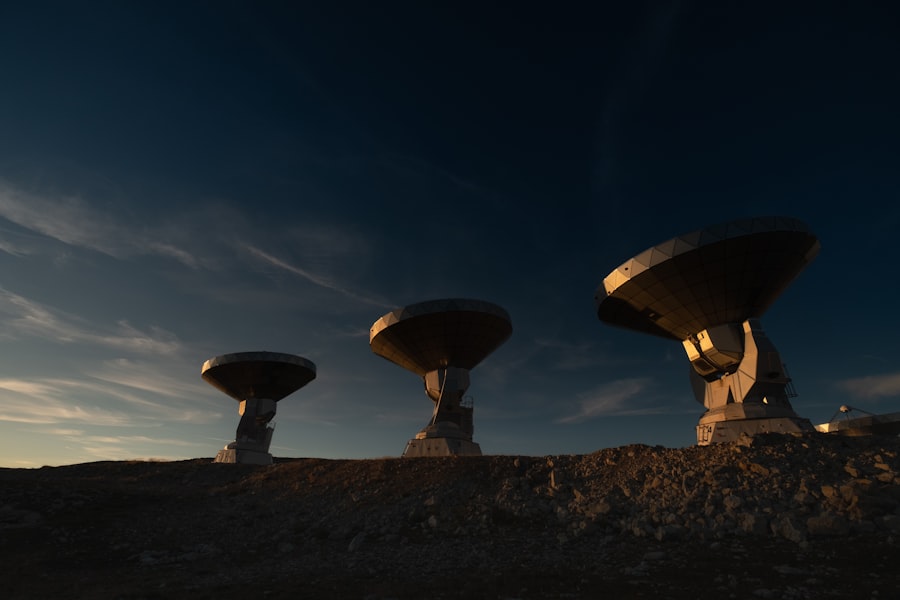
For a long time, the scientific community largely shied away from UAP research, often associating it with pseudoscience and sensationalism. However, recent years have witnessed a notable shift, with a growing number of scientists and institutions expressing interest and engaging in more rigorous, evidence-based investigations.
Early Scientific Disengagements
The initial scientific response to the UFO phenomenon was largely characterized by dismissal. Many scientists attributed sightings to psychological factors, misinterpretations of known phenomena, or outright hoaxes. The lack of reproducible data and the reliance on anecdotal evidence made it difficult to apply the scientific method. Projects like Project BLUE BOOK, while conducted by the U.S. Air Force, often relied on civilian scientific consultants who, while contributing their expertise, operated within the confines of a military investigation that was often seen as more concerned with public reassurance than fundamental scientific discovery.
The Paradigm Shift: Data-Driven Investigations
The emergence of advanced sensor technology and the increasing availability of sophisticated data-gathering capabilities have begun to change the landscape. The U.S. Department of Defense’s acknowledgment of UAP in recent years, and the establishment of official bodies like the All-domain Anomaly Resolution Office (AARO), signify a move towards a more data-driven and scientific approach. These organizations are tasked with collecting and analyzing sensor data from military platforms, looking for patterns and characteristics that cannot be readily explained by known technologies or natural phenomena. The focus has shifted from “are aliens real?” to “what are these objects and where do they come from?”
The Role of Radar and Other Technologies
Modern technologies, particularly advanced radar systems, have played a crucial role in the renewed interest in UAP. Military aircraft are equipped with sophisticated sensors that can detect and track objects in the airspace, often under conditions where visual identification is impossible. Reports from these sensors, now being declassified and analyzed, have revealed instances of objects performing maneuvers that exceed the known capabilities of human-engineered aircraft. Infrared sensors, advanced optical systems, and electronic warfare systems are also contributing to a richer, more objective dataset than was previously available. The analysis of this multimodal data is crucial for distinguishing UAP from conventional threats or known atmospheric events.
Official Acknowledgements and Evolving Narratives

The once-dismissive stance of governments and military bodies has undergone a significant transformation in recent years, leading to more open discussions and official investigations into UAP. This shift acknowledges the reality of unexplained aerial phenomena and opens the door for more thorough scientific scrutiny.
The Pentagon’s UAP Task Force and Beyond
The establishment of the UAP Task Force within the Pentagon, and its subsequent evolution into AARO, marked a pivotal moment. For the first time, a clear, officially sanctioned effort was underway to investigate UAP with dedicated resources and personnel. This initiative aimed to standardize reporting procedures, collect data across different military branches, and assess potential threats to national security. The initial reports released by these bodies, while often carefully worded, did not shy away from acknowledging the existence of phenomena that remained unexplained.
Congressional Hearings and Public Awareness
The declassification of information and the public testimonies before congressional committees have further propelled UAP into mainstream discourse. Former intelligence officials and military personnel have come forward to share their experiences and concerns, providing firsthand accounts of encounters with UAP. These hearings have not only shed light on heretofore-secretive information but have also forced a more serious and transparent engagement with the topic from elected officials and the public alike. The narrative is slowly shifting from one of fringe interest to one of national and international concern.
Global Military Interest and International Cooperation
It is not just the United States that has shown interest in UAP. Reports from various nations suggest that similar phenomena have been observed and investigated by military forces around the world. The increasing recognition that UAP are a global phenomenon has spurred calls for greater international cooperation in data sharing and collaborative research. Understanding the nature and potential implications of UAP is now seen as a shared challenge that transcends national borders.
In the intriguing world of UFO investigations, the Case File UFO investigation stands out for its meticulous approach to analyzing unexplained aerial phenomena. For those interested in delving deeper into similar topics, a related article can be found at XFile Findings, which offers insights into various cases and the methodologies used by researchers in the field. This resource provides a comprehensive overview that complements the findings of the Case File investigation, making it a valuable read for enthusiasts and skeptics alike.
Explanations and Speculations: Narrowing Down the Possibilities
| Case Number | Date of Sighting | Location | Witnesses | Investigator |
|---|---|---|---|---|
| UF0123 | May 15, 2021 | Phoenix, Arizona | 3 | Dr. Smith |
| UF0456 | July 22, 2021 | Roswell, New Mexico | 5 | Agent Johnson |
| UF0789 | September 5, 2021 | Area 51, Nevada | 2 | Dr. Lee |
While the term “UFO” often conjures images of extraterrestrial spacecraft, the reality of unexplained aerial phenomena is likely far more complex. The investigation aims to systematically explore all potential explanations, from the mundane to the truly extraordinary.
Misidentification and Conventional Explanations
A significant portion of reported UAP sightings are eventually identified as conventional aircraft, drones, balloons, atmospheric phenomena (like lenticular clouds or ball lightning), or even celestial objects. The human eye can be fooled, and mistaken identity is a common explanation for many reports. This is why rigorous analysis of sensor data and corroborating witness accounts is so crucial. The goal is to filter out the explainable to isolate the genuinely anomalous.
Advanced Terrestrial Technologies
One compelling line of inquiry suggests that some UAP might be advanced, classified technologies developed by human nations. The rapid pace of technological advancement, coupled with the secrecy surrounding military research and development, means that some aerial craft could possess capabilities that are not publicly known or understood. If these advanced terrestrial technologies are operating in sensitive airspace, it could lead to confusion and the reporting of “unidentified” objects.
Unconventional Physics and Unknown Natural Phenomena
Another possibility is that some UAP represent phenomena that are poorly understood by current scientific models or involve entirely new principles of physics. This could include natural occurrences that we have yet to discover or fully comprehend. Alternatively, some UAP could be manifestations of a form of energy or consciousness that operates outside our current understanding of the physical universe. This speculative realm pushes the boundaries of established science, but is considered by some researchers as a necessary avenue of exploration.
The Extraterrestrial Hypothesis (ETH)
The most publicized, and perhaps most enduring, explanation for UAP is the Extraterrestrial Hypothesis, which posits that some of these phenomena are the result of spacecraft piloted by beings from other worlds. While this remains a hypothesis, the consistent reporting of objects with advanced capabilities, and the lack of conventional explanations for some sightings, keeps this possibility on the table for many. The question of “why” they would visit Earth, and their intentions, is a subject of extensive speculation within this hypothesis.
As the investigation into Unidentified Aerial Phenomena continues, the pursuit of truth demands an open mind, a commitment to rigorous scientific inquiry, and a willingness to challenge established paradigms. The evidence, though often fragmented and elusive, paints a picture of a reality that is far more intriguing and complex than once believed. The journey to understanding the truth behind UFOs is far from over, but with each declassified document and each scientific study, humanity inches closer to an answer that could fundamentally alter our perception of our place in the universe.

The Varginha UFO Incident: What the Evidence Really Shows
FAQs
What is a UFO?
A UFO, or unidentified flying object, is any aerial phenomenon that cannot be identified by the observer. This could include natural phenomena, man-made objects, or unexplained aerial phenomena.
What is a UFO investigation?
A UFO investigation is the process of examining and analyzing reported sightings or encounters with unidentified flying objects. Investigators gather evidence, interview witnesses, and attempt to determine the nature of the reported phenomenon.
Who conducts UFO investigations?
UFO investigations are often conducted by organizations such as government agencies, military branches, scientific research groups, and independent researchers. These investigations may be formal or informal, and the level of resources and expertise involved can vary widely.
What are the goals of a UFO investigation?
The goals of a UFO investigation typically include determining the nature of the reported phenomenon, ruling out known explanations, and gathering evidence to support or refute the reported sighting. Investigators may also seek to understand the potential impact of the sighting on national security or public safety.
What are some common findings in UFO investigations?
Common findings in UFO investigations include natural explanations for reported phenomena, misidentifications of known objects or events, and instances where the reported sighting remains unexplained despite thorough investigation. It is important to note that the term “unidentified” does not necessarily imply an extraterrestrial origin.