Thomas Townsend Brown’s contributions to the field of electrogravitics and propulsion have long been subjects of both intense interest and considerable skepticism. His work, particularly his interactions with the United States Navy, forms a critical, albeit often obscure, chapter in the history of unconventional science and technology. This article delves into Brown’s Navy research, exploring the origins of his theories, the nature of his experiments, and the implications of his findings within the context of scientific inquiry and military interest.
Thomas Townsend Brown was born on March 18, 1905, in Zanesville, Ohio. From an early age, Brown exhibited a keen interest in electrical phenomena and the mysteries of the universe. His formative years were marked by self-directed experimentation and an insatiable curiosity that often transcended conventional scientific paradigms. This intellectual wanderlust would eventually lead him to develop concepts that challenged established physics, particularly in the realm of electromagnetism and gravity.
The “Biefeld-Brown Effect”
Brown’s most notable discovery, and the cornerstone of his later research, was what he termed the “Biefeld-Brown effect.” This phenomenon, observed during his collaboration with Professor Alfred Biefeld at Denison University in 1923, involved a capacitance charged to a high voltage. Brown found that when a capacitor with asymmetrical electrodes – one large, one small – was charged, it generated a force that propelled it in the direction of the smaller electrode. This force, while seemingly minute, was not attributable to conventional ionic wind or other known electrostatic effects, according to Brown’s interpretations.
Challenging Conventional Physics
The Biefeld-Brown effect, if accurately described and interpreted by Brown, presented a significant challenge to established Newtonian and Maxwellian physics. It suggested a direct coupling between electromagnetism and gravity, a concept that modern physics, particularly general relativity, describes as a much weaker interaction. Brown hypothesized that his capacitors were somehow interacting with the fabric of spacetime itself, producing a propulsive force without the need for ejecting mass. This was a bold claim, a whisper of a new mechanism in the noisy symphony of classical mechanics.
Thomas Townsend Brown’s research into electrogravitics has intrigued both scientists and enthusiasts alike, particularly regarding its potential applications in naval technology. For a deeper exploration of this topic, you can read a related article that discusses the implications of Brown’s work on modern naval research and its possible influence on future aerospace developments. For more information, visit this article.
Navy Engagement and Initial Investigations
Brown’s early work, though met with skepticism in academic circles, eventually captured the attention of military strategists, particularly within the United States Navy. The prospect of silent, fuel-efficient propulsion systems, unburdened by the limitations of conventional rockets or jet engines, was inherently appealing. In the mid-20th century, as the Cold War intensified, the Navy was a crucible of innovation, constantly seeking clandestine advantages.
Project Winterhaven
One of the more significant, albeit shrouded, collaborations between Brown and the Navy was reportedly under the codename “Project Winterhaven.” While concrete, declassified documentation is scarce, unofficial accounts and fragmented reports suggest that the Navy became interested in Brown’s work as early as the 1950s. The goal was to explore the practical applications of the Biefeld-Brown effect for propulsion systems, potentially leading to craft capable of defying gravity.
Early Demonstrations and Testing
During this period, Brown conducted numerous demonstrations for Navy personnel. These often involved relatively small, disc-shaped prototypes (sometimes referred to as “gravitators”) that would reportedly lift and move when subjected to high voltages. Eyewitness accounts, though unverified by official Navy reports, describe these demonstrations as compelling, leading some to believe in the effect’s potential. Imagine, if you will, miniature hummingbirds of metal, their flight powered by an unseen hand – electricity.
The Limits of Early Technology
It is important to acknowledge the technological constraints of the era. High-voltage power supplies were bulky, and materials science was not as advanced as it is today. Reproducibility of Brown’s experiments was also a persistent challenge. The minute forces generated by the Biefeld-Brown effect required extremely sensitive measurement techniques, and distinguishing these forces from environmental interference or known electrostatic phenomena proved difficult.
Classified Research and the Veil of Secrecy
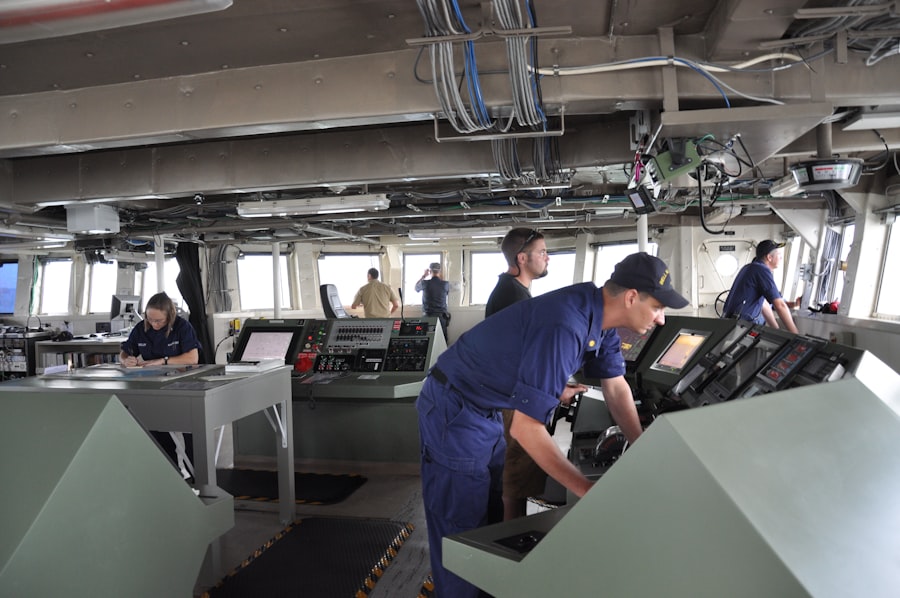
As is often the case with potentially revolutionary military technologies, Brown’s Navy research eventually disappeared behind a curtain of classification. The exact nature and extent of this work remain largely unknown to the public, fueling speculation and conspiracy theories.
The Inception of Navy-Funded Projects
While direct, declassified records detailing specific Navy projects solely dedicated to Brown’s theories are elusive for public scrutiny, historical accounts suggest that his work was integrated into broader research programs. The Navy, like other branches of the military, routinely explored unconventional propulsion and energy sources, and Brown’s concepts likely fit within this exploratory framework. This period can be seen as an underground stream, its flow hidden but its existence inferred from the lush growth above.
The Role of Top-Secret Facilities
It is speculated that some of Brown’s later, more advanced research may have been conducted at secretive military installations. These facilities, designed for advanced aerospace and defense research, offered the resources and security environment necessary to explore concepts that were far outside the scientific mainstream. The very secrecy, of course, becomes both a guardian of potential breakthroughs and a shroud for dismissed failures.
The Nature of Classified Experiments
While details are scarce, the classified experiments likely involved scaling up the Biefeld-Brown effect to larger prototypes, investigating different electrode configurations, and exploring the properties of dielectrics at extremely high voltages. The practical challenges of generating significant thrust from a phenomenon that, at its observed scale, produced only minute forces, would have been immense. It was the equivalent of trying to launch a spacecraft with the fanning of a hummingbird’s wings.
Controversies and Criticisms

Brown’s work, particularly his claims about electrogravitics, was consistently met with a diverse range of responses, from cautious optimism to outright derision. The lack of widely accepted theoretical explanations and independent verification fueled many of these criticisms.
Scientific Skepticism
The primary criticism leveled against Brown’s work concerned the lack of a robust theoretical framework within mainstream physics to explain the Biefeld-Brown effect as anything other than conventional electrostatic phenomena. Most physicists attributed the observed forces to ionic wind, corona discharge, or other known reactions of charged particles with air. Brown, however, maintained that his experiments were conducted in a vacuum and still produced an effect, though this claim was never independently verified under rigorously controlled vacuum conditions to the satisfaction of the scientific community.
Reproducibility Challenges
Reproducibility is the bedrock of scientific inquiry. Brown’s experiments, while compelling to some, often proved difficult for others to replicate consistently and with the same reported results. Variations in experimental setup, environmental conditions, and measurement techniques could all contribute to discrepancies, making it challenging to definitively confirm or refute the Biefeld-Brown effect as a novel propulsive phenomenon.
Lack of Peer Review and Independent Validation
Much of Brown’s work, particularly his later classified research, bypassed the traditional scientific process of peer review and independent validation. This is a common consequence of government-funded, classified research, but it also creates a significant hurdle for scientific acceptance. Without external scrutiny, claims — no matter how revolutionary — remain on the periphery of accepted knowledge. The academic gauntlet, though sometimes slow, is often the proving ground for scientific truth.
Thomas Townsend Brown’s groundbreaking research with the Navy has sparked considerable interest in the field of advanced propulsion systems. His work, which delves into the effects of electromagnetic fields on gravity, has led to various theories about anti-gravity technology. For those looking to explore more about the implications of such research, an insightful article can be found here, which discusses the broader context of Brown’s findings and their potential applications in modern aerospace engineering.
Legacy and Unanswered Questions
| Metric | Details |
|---|---|
| Researcher | Thomas Townsend Brown |
| Field | Electrogravitics / Electrokinetics |
| Affiliation | U.S. Navy (Research Contract) |
| Research Period | 1940s – 1950s |
| Primary Focus | Electrogravitic propulsion and anti-gravity effects |
| Key Experiment | High voltage capacitor thrusters (Biefeld-Brown effect) |
| Reported Thrust | Up to several grams-force under laboratory conditions |
| Research Outcome | Inconclusive for practical propulsion; controversial and debated |
| Legacy | Inspired further research in electrokinetic propulsion and alternative physics theories |
Thomas Townsend Brown passed away in 1985, leaving behind a legacy of both intriguing scientific claims and unresolved questions. His work continues to be a point of discussion among enthusiasts of unconventional physics and those interested in the history of aerospace research.
Influence on Subsequent Research
Despite the controversy, Brown’s ideas have inspired subsequent researchers to explore electrogravitics and alternative propulsion concepts. His work served as a catalyst for individuals and groups to investigate the potential interaction between electromagnetic fields and gravity, even if the primary scientific consensus remains skeptical. His work, like an ancient map, might seem inaccurate in places, but it still points to potentially undiscovered territories.
The Continued Search for Electrogravitics
The concept of electrogravitics – the idea of manipulating gravity through electromagnetic fields – continues to be a subject of fringe research and theoretical exploration. While no definitive breakthroughs have been publicly announced, the allure of propulsion systems that defy conventional limitations remains a powerful motivator for some. The promise of silent, efficient craft hovering through the air or soaring through space is a vision that persists, fueled in part by Brown’s pioneering, if controversial, work.
The Enduring Mystery of Brown’s Legacy
The full extent of Thomas Townsend Brown’s Navy research, and the ultimate conclusions drawn by the military from his experiments, may never be publicly known. The veil of secrecy woven around his work during the Cold War era ensures that many questions remain unanswered. Was his work genuinely on the cusp of an unprecedented technological breakthrough, or was it a captivating scientific dead end that absorbed resources before being quietly shelved? The answers, for now, remain locked within classified archives, leaving Brown’s legacy as a tantalizing enigma in the annals of scientific and military history. His story serves as a potent reminder of the boundary between established science and the uncharted territories of experimental inquiry, a boundary often patrolled by the watchful eyes of national defense.

WARNING: The 1956 Report NASA Doesn’t Want You To Read
FAQs
Who was Thomas Townsend Brown?
Thomas Townsend Brown was an American physicist and inventor known for his research into electrogravitics and the relationship between electricity and gravity. He conducted experiments that explored the possibility of using high-voltage electric fields to produce thrust.
What was the focus of Thomas Townsend Brown’s Navy research?
Brown’s Navy research primarily focused on electrogravitics, investigating whether electric fields could be used to create propulsion systems for aircraft or spacecraft. His work aimed to develop advanced propulsion technologies that might have military and aerospace applications.
Did Thomas Townsend Brown’s research lead to practical Navy applications?
While Brown’s experiments generated interest and some funding from the U.S. Navy and other military agencies, his electrogravitic propulsion concepts did not result in widely adopted or operational Navy technologies. His work remains largely experimental and controversial.
What is electrogravitics, as studied by Thomas Townsend Brown?
Electrogravitics is a proposed field of study that explores the interaction between electric fields and gravitational forces. Brown believed that by applying high-voltage electric charges to certain materials, it might be possible to create a force that counteracts gravity, potentially enabling new forms of propulsion.
Are Thomas Townsend Brown’s theories widely accepted in the scientific community?
No, Brown’s theories on electrogravitics and gravity control are considered speculative and have not been validated by mainstream physics. Most scientists regard his claims as unproven, and his research has not been integrated into conventional aerospace engineering or physics.