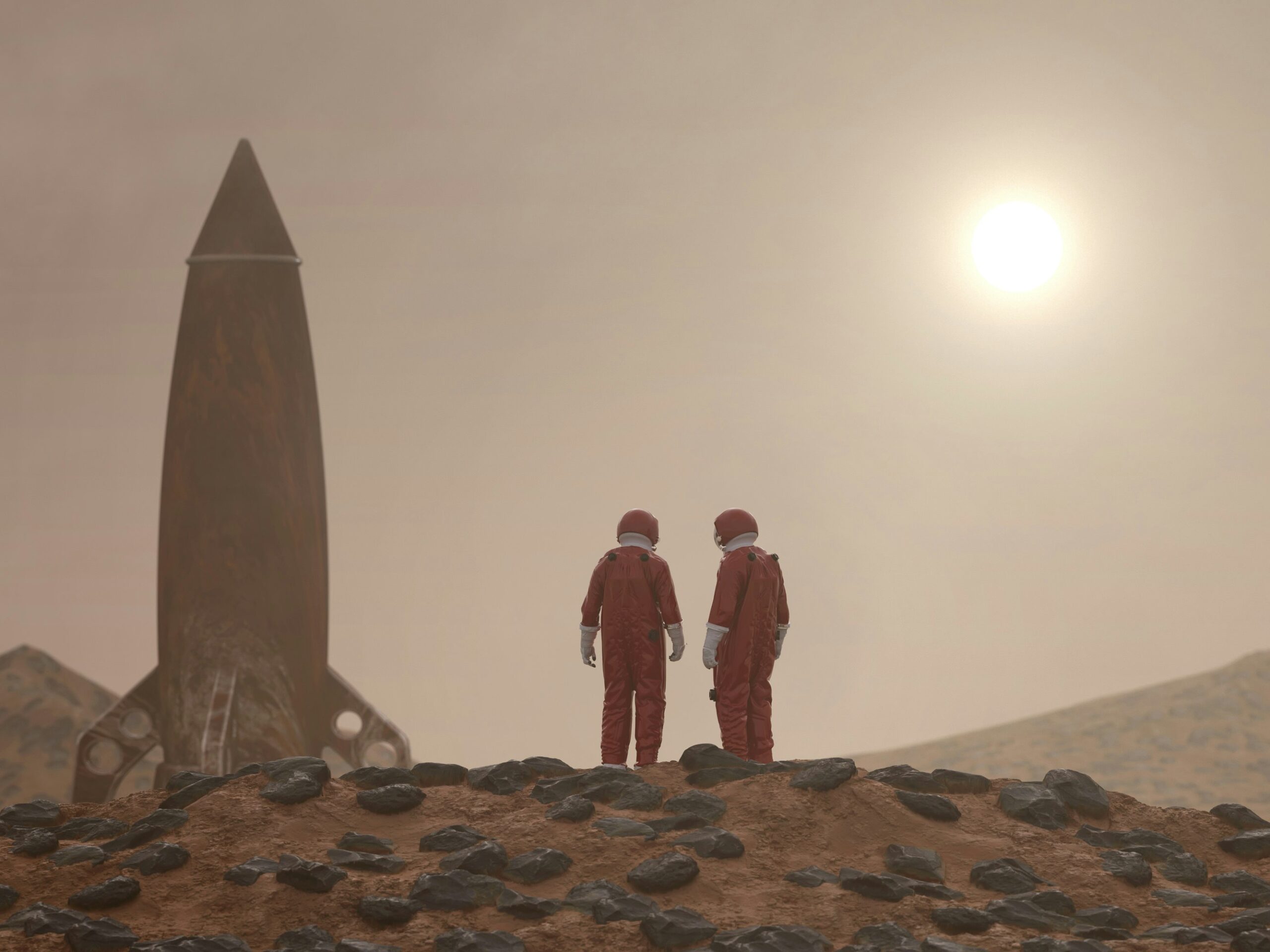
The crimson dust of Mars, long a subject of fascination and scientific inquiry, might hold secrets far grander than previously imagined. Beyond the geological formations and the persistent search for microbial life, a radical new paradigm is emerging, suggesting the planet may once have hosted a sophisticated, sentient civilization. This exploration delves into the unconventional yet compelling evidence offered by remote viewing, a practice that claims to access information about distant or unseen targets through psychic means. This article will examine the claims, the methodology, and the potential implications of uncovering evidence for an ancient Martian civilization through this controversial yet increasingly discussed modality.
For centuries, Mars has captivated the human imagination. Early telescopic observations, particularly those of Giovanni Schiaparelli, led to the interpretation of “canali” as canals, fueling speculation about intelligent life. While these were later debunked as optical illusions, the seed of an inhabited Mars was sown. Science fiction, from H.G. Wells’s The War of the Worlds to more recent cinematic portrayals, has continuously explored this theme, reflecting a deep-seated human desire to find cosmic companionship.
Early Scientific Speculation
The discovery of seasonal changes in Martian polar ice caps and the detection of a thin atmosphere, albeit predominantly carbon dioxide, initially bolstered the idea of a habitable planet. Scientists debated the potential for liquid water, a fundamental requirement for life as we know it. The Viking lander missions in the 1970s, while failing to find definitive evidence of current microbial life, did not entirely close the door on the possibility of past habitability.
The Modern Search for Life
In the late 20th and early 21st centuries, the search for Martian life intensified. Orbiters and rovers, equipped with advanced instruments, have meticulously analyzed the Martian surface and subsurface. Evidence for ancient riverbeds, lakebeds, and the presence of hydrated minerals strongly suggests that Mars was once a wetter, potentially more hospitable world. This scientific understanding forms the bedrock upon which the remote viewing hypotheses are being built.
Recent explorations into the possibility of ancient civilizations on Mars have sparked interest in the practice of remote viewing, a technique that some believe can provide insights into the planet’s past. An intriguing article discussing these concepts can be found at XFile Findings, where researchers delve into the implications of remote viewing in uncovering the mysteries of Mars. This exploration raises questions about the potential for life beyond Earth and the remnants of advanced societies that may have once thrived on our neighboring planet.
Introduction to Remote Viewing: A Paradigm Shift in Information Gathering
Remote viewing, at its core, is the purported ability of individuals to gain information about a remote or unseen target through extrasensory perception. Proponents claim that through focused mental effort, a remote viewer can perceive sensory data – sights, sounds, smells, and even tactile sensations – associated with the target, irrespective of geographical distance or physical barriers. While the scientific community largely remains skeptical, the methodology and alleged successes of remote viewing warrant an examination, especially when applied to enigmatic phenomena like the possibility of extraterrestrial civilizations.
The Principles of Remote Viewing
Remote viewing is often described as a mental process that bypasses normal sensory channels. It is typically practiced with a specific protocol, often involving a “monkier” or target number, to prevent conscious bias from influencing the viewer’s perceptions. The viewer then attempts to describe the target, focusing on sensory impressions and objective details. This process is often conducted under controlled conditions, with trained individuals aiming to achieve verifiable results.
Historical Context and Development
The origins of modern remote viewing can be traced back to experiments conducted by the Stanford Research Institute (SRI) in the 1970s, notably by Dr. Harold Puthoff and Russell Targ. These experiments, often funded by government agencies, sought to explore the potential of psychic abilities for intelligence gathering. While controversial and subject to rigorous scientific scrutiny, these early efforts laid the groundwork for subsequent research and practice in the field.
The Role of Intuition and Subjectivity
A significant challenge in evaluating remote viewing is its inherent reliance on subjective experience. Unlike empirical scientific methods, remote viewing outputs are often impressionistic and require interpretation. However, proponents argue that with consistent practice and rigorous analytical protocols, objective patterns and verifiable details can emerge, distinguishing genuine perception from mere imagination.
Remote Viewing and the Martian Hypothesis: Unveiling Anomalies

The application of remote viewing to Mars has yielded a remarkable body of data from a growing number of practitioners. These accounts, when analyzed collectively, begin to paint a cohesive picture of a planet that may have once been teeming with advanced life, a stark contrast to the barren, desolate world depicted by current scientific understanding. The consistency of certain reported details across different remote viewers, who are often unaware of each other’s findings, is considered a key indicator of the validity of their perceptions.
Recurring Themes in Martian Remote Viewing
Numerous remote viewers have independently reported perceiving aspects of a past Martian civilization. Common themes include the presence of vast, intricate structures, often described as cities or complexes, buried beneath the Martian surface. These structures are frequently characterized by advanced engineering, with mentions of crystalline materials, internal lighting systems, and complex energy conduits. There are also consistent reports of what appear to be transportation networks and areas dedicated to intellectual or spiritual pursuits.
Evidence of Subterranean Cities
One of the most prevalent descriptions is that of extensive subterranean cities or complexes. This aligns with the observation that much of the Martian surface has been subjected to extreme weathering and bombardment over eons, making surface structures unlikely to have survived. Remote viewers often describe these underground environments as being protected from the harsh Martian conditions, with controlled atmospheres and advanced life support systems. The idea of a civilization retreating underground as its planet’s atmosphere thinned is a compelling narrative that emerges from these reports.
The Nature of the Martian Inhabitants
Beyond the structures, remote viewing sessions have also provided insights into the nature of the beings who inhabited Mars. Descriptions vary, but often suggest a race that was highly intelligent, technologically advanced, and perhaps more spiritually or philosophically inclined than current human civilization. Some viewers report perceiving beings that were tall, slender, and possessed a different form of consciousness. There are also accounts of advanced bio-engineering and even interdimensional capabilities.
Analyzing the Evidence: Connecting Remote Viewing with Physical Anomalies

While the nature of remote viewing makes direct empirical validation challenging, researchers and proponents seek to correlate the information gleaned from these sessions with observable, albeit often misinterpreted, anomalies on Mars. This approach attempts to bridge the gap between psychic perception and tangible, albeit subtle, evidence. The goal is to identify patterns in remote viewing data that correspond with unusual geological formations or suspected artificial structures that might have been overlooked or misclassified by conventional scientific analysis.
Interpreting Unexplained Martian Features
Certain geological features on Mars, such as the “Face on Mars” in Cydonia, have long been subject to speculation about artificial origins. While mainstream science attributes these to natural geological processes, remote viewing accounts sometimes offer alternative interpretations, suggesting they may be remnants of ancient Martian constructions or markers. The detailed descriptions provided by remote viewers, when aligned with photographic evidence, can prompt a re-examination of these features from a different perspective.
The “Pyramids” of Elysium Planitia
Another area of interest has been the cluster of formations in Elysium Planitia, sometimes referred to as the “Martian Pyramids.” Remote viewers have described these as energy-generating or data-storage structures. The geometric regularity of these formations, when viewed in conjunction with remote viewing descriptions of their function, raises questions about purely natural explanations. The consistent reporting of specific geometric shapes and orientations by multiple viewers lends credence to the idea that these are not merely random geological occurrences.
The Search for Buried Artifacts
The possibility of buried artifacts is a significant focus for remote viewing investigations into Mars. Viewers often report the presence of underground repositories, libraries, or technological caches. The challenge lies in pinpointing the exact locations of these potential discoveries and developing methods to detect them without invasive excavation, which would be prohibitively expensive and complex on Mars. This drives research into non-invasive survey techniques that could be guided by remote viewing data.
Recent explorations into the possibility of an ancient civilization on Mars have sparked intriguing discussions among researchers and enthusiasts alike. One fascinating aspect of this topic is the practice of remote viewing, which some claim can provide insights into the planet’s distant past. For those interested in delving deeper into this subject, a related article can be found at XFile Findings, where various theories and findings about Mars and its potential inhabitants are explored. This intersection of science and speculative thought continues to captivate the imagination of many.
Implications and Future Directions: Reimagining Martian History
| Remote Viewing Metrics | Findings |
|---|---|
| Location | Ancient Mars civilization |
| Time Period | Ancient era |
| Structures | Pyramid-like structures, advanced architecture |
| Technology | Advanced technology, energy sources |
| Society | Highly organized, complex social structure |
The potential implications of a confirmed ancient Martian civilization, uncovered through remote viewing, are staggering. It would fundamentally rewrite our understanding of life in the universe, our planet’s own evolutionary trajectory, and humanity’s place in the cosmos. This paradigm shift would necessitate a re-evaluation of current scientific approaches and a renewed exploration of Mars with an entirely different set of questions.
A New Era of Martian Exploration
If remote viewing data proves to be a reliable source of information about Martian civilization, future Mars missions would need to be re-envisioned. Instead of solely searching for microbial life, exploration could shift towards locating and understanding the remnants of this advanced society. This would require the development of new technologies capable of detecting and analyzing subtle subsurface structures, energy signatures, and potentially even dormant artificial intelligences.
The Potential for Lost Knowledge
The discovery of an ancient Martian civilization could offer access to lost knowledge and advanced technologies. Remote viewing descriptions often hint at a profound understanding of physics, consciousness, and perhaps even the universe itself, far exceeding current human comprehension. The retrieval and decipherment of this information could have transformative effects on human civilization, offering solutions to pressing global challenges and opening up new avenues of scientific and philosophical inquiry.
The Ethical and Philosophical Considerations
The confirmation of a past extraterrestrial civilization on Mars would raise profound ethical and philosophical questions. It would challenge our anthropocentric worldview and force a re-evaluation of concepts like intelligence, consciousness, and our responsibility towards other life forms, even those long extinct. The lessons learned from the rise and fall of a Martian civilization could provide invaluable insights for the long-term survival and flourishing of humanity.
Bridging the Gap: Towards Scientific Acceptance
The primary hurdle for remote viewing to be widely accepted as a legitimate tool for uncovering ancient civilizations is its lack of mainstream scientific validation. Future research must focus on developing more rigorous protocols, objective analysis techniques, and methods for falsifiable predictions that can be independently verified by conventional science. Collaboration between remote viewers, scientists, and engineers will be crucial in forging a path towards understanding the extraordinary claims being made about Mars.
The crimson planet, Mars, may hold not just the echoes of past microbial life, but the whispers of a lost civilization. Remote viewing, a controversial yet persistent modality, offers a provocative glimpse into this potential past. While skepticism remains a necessary scientific stance, the consistent narratives emerging from remote viewers, when viewed against the backdrop of unexplained Martian anomalies, demand our attention. The journey to uncover the truth about Mars is far from over, and perhaps, just perhaps, the keys to its most profound secrets lie not only in the dust beneath our rovers but also in the uncharted territories of the human mind. The continued exploration, both physical and psychic, will undoubtedly shape our understanding of the cosmos and our place within it.

The CIA Asked a Man to Look at Mars 1 Million Years Ago
FAQs
What is remote viewing?
Remote viewing is the practice of seeking impressions about a distant or unseen target using paranormal means, such as extrasensory perception (ESP) or “sensing” with the mind.
What is the ancient Mars civilization remote viewing theory?
The ancient Mars civilization remote viewing theory suggests that there may have been a civilization on Mars in ancient times, and that this civilization may have left behind evidence of its existence that can be detected through remote viewing.
Is there any scientific evidence to support the ancient Mars civilization remote viewing theory?
There is currently no scientific evidence to support the ancient Mars civilization remote viewing theory. Remote viewing is not considered a scientifically validated practice, and claims of remote viewing ancient civilizations on Mars are not supported by mainstream scientific research.
What are some criticisms of the ancient Mars civilization remote viewing theory?
Critics of the ancient Mars civilization remote viewing theory argue that remote viewing is not a reliable method for gathering information, and that claims of remote viewing ancient civilizations on Mars are not supported by any tangible evidence.
What is the mainstream scientific view on the possibility of an ancient Mars civilization?
The mainstream scientific view is that there is currently no evidence to support the existence of an ancient civilization on Mars. While there is ongoing research into the possibility of past microbial life on Mars, there is no credible scientific evidence to support the existence of an advanced civilization on the planet.