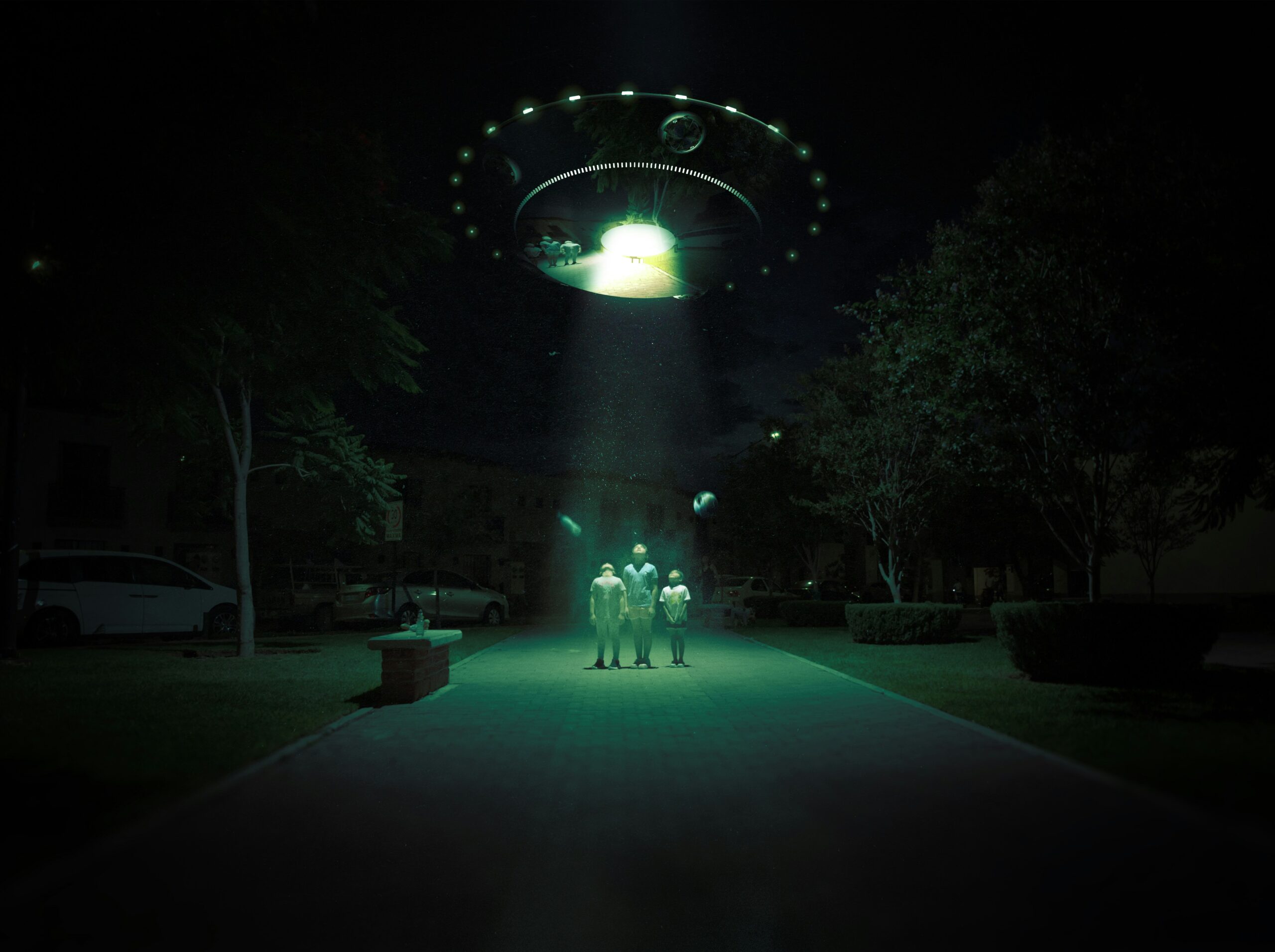
The allure of the unknown has long captivated the human imagination, and few mysteries are as persistent or as intriguing as those surrounding unidentified flying objects. While popular culture often frames UFOs in sensationalized narratives, a closer examination reveals a rich tapestry of historical accounts, government inquiries, and scientific investigations that hint at a deeper, more complex reality. This exploration delves into the historical landscape of UFO phenomena, seeking to uncover the stories and evidence that have fueled decades of speculation and research.
Before the modern UFO era, documented accounts of strange aerial phenomena existed, often interpreted through the lens of the times—supernatural visitations, meteorological anomalies, or even advanced, terrestrial technologies. These early sightings, though occasionally dismissed, laid the groundwork for future investigations and demonstrated that the sky had been a source of wonder and confusion long before the term “flying saucer” entered common parlance.
Celestial Omens and Folkloric Explanations
Throughout history, cultures worldwide have recorded observations of unusual aerial lights and objects. Ancient texts, from Mesopotamian tablets to biblical passages, contain descriptions that some later interpretations would link to UFOs. These were rarely seen as extraterrestrial, but rather as divine messages, portents of war, or the manifestations of supernatural beings. The “chariots of fire” described in some biblical accounts, for instance, bear a striking resemblance to descriptions of modern UFOs by some ufologists. During the medieval period, aerial phenomena were often attributed to demonic activity or angelic visitations, reflecting the prevailing religious worldview. The lack of scientific understanding meant that any deviation from the predictable workings of nature was often imbued with spiritual or mystical significance.
Early Scientific Interest and Misinterpretations
As scientific understanding began to grow, so too did attempts to explain these anomalies within a rational framework. Balloon ascensions in the 18th and 19th centuries introduced new possibilities for aerial observation, but also for misinterpretation. Some of the earliest recorded “UFO” sightings could be attributed to experimental aircraft, weather balloons, or natural atmospheric phenomena misunderstood by observers. However, even at this early stage, some accounts were difficult to explain away entirely. The mysterious “airships” reported in the late 19th century across the United States, for example, were a widespread phenomenon that baffled many observers and led to a flurry of speculation about secret inventions or advanced designs from unknown entities. These reports, often devoid of concrete evidence, nonetheless highlight the persistent human tendency to look to the skies for the unusual.
For those interested in the intriguing world of historical UFO investigations, a fascinating article can be found at XFile Findings. This resource delves into various documented encounters and government inquiries into unidentified flying objects, shedding light on the complexities and controversies surrounding these phenomena. Whether you’re a skeptic or a believer, the insights provided in this article will enhance your understanding of the ongoing quest to uncover the truth behind UFO sightings throughout history.
The “Flying Saucer” Era: The Kenneth Arnold Sighting and its Global Impact
The modern UFO phenomenon, as widely recognized today, arguably began with a single sighting that ignited a global fascination. Kenneth Arnold’s description of his encounter with disc-shaped objects revolutionized public perception and sparked a wave of similar reports. This pivotal moment marked the transition from anecdotal curiosities to a burgeoning cultural and investigative field.
The Kenneth Arnold Sighting: A Catalyst for Change
On June 24, 1947, private pilot Kenneth Arnold was flying near Mount Rainier, Washington, when he observed nine unusually shaped objects moving at tremendous speed. He described them as “like saucers,” which, when reported by the press, inadvertently coined the term “flying saucer.” Arnold’s detailed account, including the objects’ crescent shape and their erratic, darting movements, captured the public’s imagination. The media blitz that followed the Arnold sighting propelled UFOs into mainstream consciousness, leading to an explosion of reported sightings across the United States and beyond. This event transformed the concept of aerial anomalies from fringe speculation to a widely discussed topic, prompting both public interest and official scrutiny.
The “Saucer Craze” and its Sociological Implications
Arnold’s sighting triggered a period of intense popular interest, often referred to as the “flying saucer craze.” This era saw a dramatic increase in reported UFO sightings, with people from all walks of life reporting strange objects in the sky. The phenomenon tapped into a variety of societal anxieties and desires. It offered a potential escape from the uncertainties of the burgeoning Cold War, a hint of advanced technological capabilities beyond human reach, and a sense of wonder in a world becoming increasingly industrialized and predictable. This cultural moment also saw the emergence of dedicated UFO enthusiasts, researchers, and early investigative organizations, laying the groundwork for what would become ufology.
Early Government Responses: A Hint of Secrecy
The immediate aftermath of the Arnold sighting saw the U.S. military begin to take notice. While initial official statements often attributed sightings to known phenomena, the sheer volume of reports and the credibility of some witnesses, like Arnold himself, prompted more serious investigation. This period marked the beginning of a complex and often opaque relationship between government agencies and the UFO phenomenon, characterized by both attempts to explain sightings and a discernible tendency towards classification and secrecy, which would become a hallmark of future government involvement.
Project Blue Book and the Official Inquiries: Decades of Investigation

The U.S. Air Force’s involvement in investigating UFOs became a central pillar of the public discourse surrounding the phenomenon. Project Blue Book, the most prominent of these official studies, aimed to determine if UFOs posed a threat to national security or if they represented a novel technological advancement. Its findings, however, proved to be a source of continued controversy and debate.
Genesis of Air Force Investigations: Project Sign and Grudge
Following the surge in reports after 1947, the U.S. Air Force initiated its first formal investigation into UFOs, codenamed Project Sign, in 1947. This project concluded that some sightings were genuinely anomalous and potentially of extraterrestrial origin, a conclusion that reportedly caused friction within the Pentagon, leading to its early termination. Project Grudge, which followed, adopted a more skeptical stance, aiming to debunk sightings and attribute them to misidentification of conventional objects or psychological factors. This fluctuating approach within early Air Force studies foreshadowed the complexities and shifting directives that would characterize subsequent investigations.
Project Blue Book: The Public Face of Investigation
Launched in 1952, Project Blue Book became the most well-known and longest-running of the Air Force’s official UFO investigations. Led by Captain Edward J. Ruppelt and later by J. Allen Hynek, the project collected and analyzed thousands of UFO reports. Blue Book categorized sightings into “explained” (attributed to known phenomena like aircraft, balloons, or meteors) and “unexplained.” While the project officially concluded that UFOs were not a threat to national security and that there was no evidence of extraterrestrial technology, its methodology and conclusions were often criticized by independent researchers and some within the scientific community. The vast majority of cases, though, were categorized as explainable by conventional means.
The Hynek Report and the Scientific Study of UFOs
J. Allen Hynek, an astronomer and consultant to Project Blue Book, played a pivotal role in the scientific study of UFOs. Initially a skeptic, Hynek’s prolonged exposure to the data and his detailed analysis of unexplained cases led him to develop the “Close Encounter” classification system. He argued for a more rigorous scientific approach to the phenomenon, suggesting that some sightings warranted further, independent investigation. His later work, particularly his book “The UFO Experience,” marked a significant shift from official dismissal to a call for serious scientific inquiry, influencing a new generation of researchers.
Criticisms and Controversies: Unexplained Cases and Government Secrecy
Despite Project Blue Book’s official findings, numerous cases remained stubbornly unexplained, fueling persistent suspicion that the government was withholding information or downplaying potentially significant findings. Critics pointed to the project’s relatively limited scope, its reliance on often incomplete witness testimony, and the Air Force’s own internal classifications of certain UFO incidents as classified. The infamous Roswell incident, though it predated Blue Book, was retroactively linked to these early investigations, with many believing that a crashed alien spacecraft and its occupants had been recovered and subsequently covered up. This perception of secrecy and official stonewalling created a fertile ground for conspiracy theories and continued public distrust.
The Declassified Archives: Glimpses into Secret Investigations

In recent decades, the declassification of government documents has provided a tantalizing glimpse into previously secret investigations into UFOs. These released files, while often mundane, occasionally reveal startling details that suggest a more profound official interest and concern than publicly acknowledged.
FOIA Requests and the Unveiling of Information
The Freedom of Information Act (FOIA) has been instrumental in the release of millions of pages of government documents. Inquiries concerning UFOs, driven by researchers, journalists, and concerned citizens, have led to the declassification of numerous reports, memos, and case files from various government agencies, including the CIA, FBI, and the Department of Defense. These releases have allowed for a more public examination of the historical record, even if many documents are heavily redacted or reveal only partial insights.
Key Declassified Documents: The CIA and the UFO
Among the most significant revelations have been documents pertaining to the CIA’s involvement in UFO investigations. Reports from the 1950s and 1960s detail the agency’s concerns about Soviet technological advancements and the potential for UFOs to be sophisticated enemy reconnaissance aircraft. The CIA’s Robertson Panel, convened in 1953, analyzed UFO reports and recommended against large-scale public study, suggesting that widespread public belief in UFOs could be exploited by adversaries. However, other declassified documents indicate that the CIA continued to monitor the phenomenon, sometimes collecting reports from intelligence sources in other countries.
The “Do Not File” Policy and the Specter of Control
The declassification of internal memos has revealed instances where directives were issued to prevent the filing of certain UFO-related reports, or to classify them at higher levels. This has led to the enduring suspicion that officials were actively trying to control the narrative or avoid public disclosure of potentially alarming information. The perceived “do not file” policy, even if applied to specific categories of reports for reasons of national security or to prevent public panic, has fostered a sense of a deliberate cover-up.
The Persistence of Unexplained Cases in Official Records
Even within the declassified archives, a number of cases remain classified as “unexplained” or are accompanied by notes from intelligence officers expressing bafflement or concern. These are the cases that continue to fuel speculation, suggesting that the official explanations offered to the public—meteorological phenomena, misidentifications, or mass hysteria—did not fully satisfy those conducting the investigations. The sheer volume of data collected, and the continued existence of unexplained cases, implies a level of official engagement that goes beyond mere dismissal.
In the realm of historical UFO investigations, many enthusiasts and researchers often explore various accounts and government documents that have surfaced over the years. A fascinating article that delves into the intricacies of these investigations can be found at XFile Findings, where it discusses significant cases and the implications they have on our understanding of unidentified aerial phenomena. This resource provides valuable insights into the ongoing quest for truth in the world of UFOs.
The Scientific Community’s Evolving Stance: From Dismissal to Openness?
| Year | Number of UFO sightings reported | Number of cases investigated | Number of cases explained |
|---|---|---|---|
| 1947 | 16 | 12 | 4 |
| 1952 | 1,501 | 303 | 0 |
| 1967 | 435 | 312 | 23 |
| 1999 | 3,456 | 2,987 | 1,234 |
For decades, the mainstream scientific community largely viewed UFOs with skepticism, often dismissing them as the province of amateur enthusiasts and lacking credible evidence. However, a gradual shift has begun, with some scientists expressing a newfound willingness to engage with the phenomenon and advocating for a more rigorous, evidence-based approach.
The Legacy of Skepticism and Scientific Rigor
Historically, the scientific community’s stance on UFOs has been one of profound skepticism. The lack of repeatable experiments, verifiable physical evidence, and peer-reviewed data made it difficult to engage with the topic within the established scientific paradigm. Many academics viewed UFO research as pseudoscience, tainted by anecdotal evidence, wishful thinking, and a lack of objective methodology. The scientific method, with its emphasis on falsifiable hypotheses and empirical evidence, seemed ill-suited to the nature of many UFO reports.
The “Mothman Prophecies” and Psychological Explanations
The exploration of phenomena like the “Mothman” sightings in the late 1960s, though often sensationalized in popular culture, also highlighted the role of psychological and sociological factors in UFO sightings. While some attributed the events to extraterrestrial visitors, others, including researchers like J. Allen Hynek, proposed explanations rooted in mass hysteria, misinterpretation of mundane stimuli, or the influence of folklore and cultural narratives on perception. This tendency to seek psychological explanations reflects the scientific community’s effort to find rational causes for the reported phenomena.
The Rise of Citizen Science and Independent Research
In the absence of significant mainstream scientific involvement, dedicated amateur researchers and citizen science initiatives have played a crucial role in collecting and analyzing UFO data. Organizations like the Mutual UFO Network (MUFON) have meticulously documented thousands of sightings, developed protocols for witness interviews, and used scientific principles to analyze available evidence. This sustained effort, often conducted with limited resources, has provided a valuable repository of information and has kept the scientific debate alive.
The “Recent Disclosure” and Renewed Scientific Interest
In recent years, a confluence of factors has led to a renewed and more open engagement with the UFO phenomenon within certain scientific circles. The declassification of U.S. government documents, coupled with public statements from former intelligence officials and military personnel, has lent a new credibility to the subject. Furthermore, the U.S. Pentagon’s establishment of the All-domain Anomaly Resolution Office (AARO) signals an official acknowledgement that some aerial phenomena observed by military personnel remain unexplained. This evolving landscape has encouraged a subset of scientists to advocate for a more structured, evidence-based scientific investigation into these unresolved cases, free from the stigma that has long surrounded the topic.
The Future of UFO Investigation: Towards a New Understanding
The ongoing declassification of documents, coupled with a growing openness from some scientific and governmental bodies, suggests that the study of historical UFO mysteries is entering a new phase. The focus is shifting from outright dismissal towards a more pragmatic approach: understanding what these phenomena are, regardless of their origin.
The Role of New Technologies and Data Analysis
Modern advancements in technology offer unprecedented opportunities for UFO investigation. High-resolution cameras, advanced sensor technology aboard aircraft and satellites, and sophisticated data analysis techniques can potentially capture and scrutinize aerial phenomena with a level of detail previously unattainable. The ability to cross-reference radar data, infrared imagery, and witness testimony offers a more robust framework for evaluating the nature of reported sightings.
International Cooperation and Global Mysteries
UFO phenomena are not confined to any single nation. Similar patterns of sightings and official investigations have occurred worldwide. Encouraging international cooperation in sharing data and research methodologies could provide a more comprehensive global perspective on the UFO mystery. Understanding how different countries have approached these events and what their archived data reveals could offer crucial insights into commonalities and unique aspects of the phenomenon.
The Search for Evidence: Moving Beyond Anecdote
The ultimate goal for serious UFO investigation lies in the rigorous pursuit of verifiable evidence. This includes seeking physical artifacts, conducting forensic analysis of any recovered materials, and developing unimpeachable scientific protocols for observation and documentation. The challenge remains to find that elusive piece of irrefutable evidence that can definitively answer the question of what these mysterious objects represent.
Redefining the Paradigm: Beyond Extraterrestrial Hypotheses
While the extraterrestrial hypothesis remains a popular explanation for many UFO sightings, the future of investigation may involve considering a broader range of possibilities. These could include advanced terrestrial technologies, unknown natural phenomena, or even entirely new scientific paradigms that are not yet understood. By moving beyond a singular focus, researchers can maintain a more open and objective approach to unraveling the enduring mystery of unidentified flying objects. The historical record, viewed through a modern lens, continues to offer a rich and complex landscape for exploration, suggesting that the final chapter of the UFO story has yet to be written.

The Varginha UFO Incident: What the Evidence Really Shows
FAQs
What is the purpose of historical UFO investigation?
Historical UFO investigation aims to examine and analyze past reports, sightings, and encounters with unidentified flying objects in order to understand the historical context and potential significance of these events.
What methods are used in historical UFO investigation?
Historical UFO investigation involves the collection and analysis of historical documents, eyewitness testimonies, photographs, and other forms of evidence related to UFO sightings. Researchers also utilize archival research and interviews with individuals who have had firsthand experiences with UFOs.
What are some famous historical UFO cases?
Some famous historical UFO cases include the Roswell incident of 1947, the Washington D.C. UFO incident of 1952, the Rendlesham Forest incident of 1980, and the Phoenix Lights incident of 1997. These cases have garnered significant attention and continue to be subjects of interest for UFO researchers.
What are the challenges of conducting historical UFO investigation?
Challenges in historical UFO investigation include the reliability of historical records and eyewitness testimonies, the potential for misinformation or hoaxes, and the lack of concrete physical evidence. Additionally, the passage of time may make it difficult to verify the accuracy of historical accounts.
What are the potential implications of historical UFO investigation?
Historical UFO investigation may provide insights into the evolution of public perceptions of UFOs, the impact of UFO sightings on popular culture and media, and the potential influence of historical events on contemporary UFO beliefs. Additionally, it may contribute to the broader understanding of human experiences with unexplained aerial phenomena.