
Ingo Swann’s name is inextricably linked with the burgeoning field of remote viewing, a controversial yet fascinating area of parapsychology. While much of his legacy is tied to alleged governmental programs and the psychological exploration of consciousness, Swann’s contributions extend beyond the strictly mental. He was, in fact, a pioneer in applying remote viewing techniques to investigate anomalies far beyond Earth, particularly focusing on structures he claimed to perceive on the Moon. This article delves into Ingo Swann’s explorations of lunar structures, examining the methodologies he employed, the claims he made, and the enduring questions his work continues to provoke.
The concept of remote viewing, or the ability to perceive information about a distant or unseen target through extrasensory perception, gained significant traction in the mid-20th century. Early research often focused on terrestrial targets, attempting to prove the existence of psychic abilities in controlled laboratory settings. However, for some researchers and practitioners, the implications of remote viewing extended to the vastness of space and the potential for evidence of extraterrestrial intelligence. Ingo Swann, a key figure in this evolving landscape, brought a unique perspective to these investigations.
Early Experiments and the Scientific Mainstream
Swann’s initial involvement in remote viewing research often took place outside the strict confines of mainstream academia. However, his unique abilities and unconventional approach soon attracted the attention of individuals and organizations interested in exploring the boundaries of human perception. While early experiments focused on demonstrating the accuracy of remote viewing for everyday objects or locations, Swann’s imagination, fueled by a keen interest in science fiction and astronomy, naturally gravitated towards more extraordinary targets. The possibility of life, or at least the remnants of advanced civilizations, beyond Earth became a compelling frontier for his explorations.
The “Gateway” to Space Exploration
For Swann, remote viewing was not merely a parlor trick; it was a potential tool for scientific inquiry and a means to bypass the limitations of conventional exploration. He conceptualized remote viewing as a “gateway” that could unlock information inaccessible through traditional scientific methods. This philosophy was particularly potent when applied to celestial bodies, where direct human access is limited by vast distances and technological constraints. The Moon, our nearest celestial neighbor, presented an ideal initial target for this ambitious application of his abilities.
Ingo Swann’s intriguing claims about lunar structures have sparked considerable interest in the field of ufology and space exploration. For those looking to delve deeper into this topic, a related article can be found at X File Findings, which explores various aspects of unexplained phenomena and the implications of Swann’s experiences on our understanding of extraterrestrial life and lunar anomalies.
The Lunar Targets: Perceptions of Artificial Structures
Swann’s explorations of the Moon were not driven by a desire to simply scan for general information. He specifically focused on perceived anomalies, anomalies that suggested deliberate construction rather than natural geological formations. His detailed descriptions of these perceived structures paint a picture of a Moon that was not as inert and lifeless as the prevailing scientific consensus suggested.
The “Proximity” and the “Domes”
Among Swann’s most frequently cited lunar perceptions were those of artificial structures. He described seeing what he termed “proximity” – a sense of vast, engineered landscapes. More specifically, he claimed to perceive large, transparent or semi-transparent domes. These domes, in his accounts, were not mere geological formations but rather clear indicators of intelligent design and construction. He described them as housing environments, suggesting that they were protective coverings for something or someone.
Detailed Descriptions and Anomalous Features
Swann’s descriptions were often remarkably detailed. He spoke of the materials used, their properties, and the overall scale of these structures. He often reported seeing internal components, suggesting complex machinery or living spaces within the domes. The geometric precision and regularity of these perceived structures stood in stark contrast to the naturally occurring formations on the Moon. He also noted what he believed were signs of advanced technology, such as energy conduits or communication arrays, embedded within the lunar landscape.
The “Surface Anomalies” and “Excavations”
Beyond the domes, Swann also reported perceiving other anomalies on the lunar surface. These included what he described as “excavations” – deliberate alterations of the terrain that suggested mining operations or the construction of subterranean facilities. He depicted large, geometric trenches and what appeared to be abandoned construction sites, hinting at past activities that had long since ceased. These perceptions added another layer to his hypothesis of a once-inhabited or utilized Moon.
The Implication of Advanced Technology
The presence of what he interpreted as signs of advanced technology was a recurring theme in Swann’s lunar remote viewing sessions. He spoke of seeing conduits for energy transmission, hints of complex internal mechanisms, and structures that defied natural explanation. These interpretations were crucial in supporting his assertion that these were not natural formations but the deliberate work of intelligent beings.
Methodology and the “Controlled Anomaly”
Ingo Swann’s approach to remote viewing, especially for targets as sensitive as potential extraterrestrial structures, was characterized by a meticulous and often unconventional methodology. He aimed to move beyond mere impressions and to achieve what he termed “controlled anomaly,” where the remote viewer could achieve a higher degree of accuracy and detail.
The “Perceptual Displacement” Technique
A key technique employed by Swann involved what he referred to as “perceptual displacement.” This involved deliberately disengaging from the immediate, obvious sensory input and allowing deeper, more subconscious perceptions to surface. For lunar targets, this meant transcending the visual of the barren, cratered surface and accessing information that might be present at a different level of awareness. He believed this method was crucial for breaking through ingrained assumptions and perceived limitations.
Overcoming Skepticism and Preconceptions
Swann understood the inherent skepticism surrounding remote viewing, especially when applied to such extraordinary claims. His methodology was designed, in part, to overcome these internal and external barriers. By systematically focusing on specific aspects of the perceived target and employing rigorous cross-referencing of impressions, he aimed to build a case for the validity of his perceptions, even in the face of established scientific paradigms.
The Role of “Coordinate” and “Tasking”
In the context of remote viewing programs, specific protocols were often developed to ensure the integrity of the experiments. For Swann’s lunar explorations, this would have involved “tasking” – a clearly defined objective for the remote viewing session. This tasking might have been as simple as “describe what is located at these coordinates on the Moon” or more specific, “perceive any artificial structures on the lunar surface.” The use of specific coordinates, even if the remote viewer was unaware of their terrestrial location, was intended to provide a defined target and prevent vague or generalized impressions.
Blind Testing and Protocol Adherence
While the exact protocols for Swann’s lunar sessions may be debated, the principles of blind testing and strict adherence to experimental design were often emphasized in remote viewing research. This meant that the remote viewer would ideally not know the nature of the target beforehand, preventing any conscious or unconscious bias from influencing their perceptions. Swann, as both a subject and a theorist of remote viewing, was deeply aware of these principles and sought to implement them in his explorations.
The Significance and Controversy of Swann’s Claims
Ingo Swann’s claims about lunar structures ignited considerable debate. For proponents of remote viewing, they represented compelling evidence for the potential of the human mind to access information beyond conventional means, and even suggested a hidden history of extraterrestrial activity on our closest celestial neighbor. For skeptics, however, these claims were viewed with extreme caution, often attributed to imagination, misinterpretation, or even deliberate fabrication.
Evidence for a Hidden Lunar History
Swann’s supporters argue that his detailed descriptions of artificial structures, if accurate, would fundamentally alter our understanding of lunar history and possibly the history of the solar system. The implication of an advanced civilization having operated on the Moon, even in the distant past, would necessitate a re-evaluation of numerous scientific and historical assumptions. They point to the consistency of some of his descriptions and the sheer audacity of his claims as indicators of something more than mere fancy.
The Unanswered Questions and Lack of Definitive Proof
Despite the compelling nature of his accounts for his followers, Swann’s claims have never been definitively proven by conventional scientific means. The lack of corroborating evidence from traditional astronomical observations or lunar missions remains a significant hurdle. Skeptics often highlight the subjective nature of remote viewing, the potential for misinterpretation of natural features, and the difficulty in verifying the accuracy of such extraordinary claims.
The Impact on Parapsychological Research
Regardless of the ultimate veracity of his specific lunar perceptions, Ingo Swann’s work had a profound impact on the field of parapsychology. His willingness to push the boundaries of remote viewing, to apply it to ambitious targets like celestial bodies, and to develop theoretical frameworks for understanding these phenomena contributed significantly to the ongoing dialogue within the field. He challenged researchers to consider new possibilities and to explore the untapped potential of human consciousness.
The Ethical Considerations and Secrecy
The involvement of individuals like Swann in various government-sponsored research programs, often shrouded in secrecy, further complicated the perception of his work. While some saw this as validation of the potential of remote viewing, others viewed it as an attempt to legitimize a fringe science through clandestine means. The ethical implications of using psychic abilities for intelligence gathering and the potential for misinformation also remain subjects of ongoing discussion.
Ingo Swann’s intriguing claims about lunar structures have sparked considerable interest in the field of ufology and beyond. His experiences and observations have led to various discussions and analyses, one of which can be found in a related article that delves deeper into the implications of his findings. For those interested in exploring this topic further, you can read more about it in this insightful piece on the subject. Check it out here to gain a broader understanding of the mysteries surrounding the moon and Swann’s contributions to the conversation.
Legacy and the Future of Lunar Exploration
| Location | Coordinates | Size | Description |
|---|---|---|---|
| Mare Crisium | 17.0° N, 59.1° E | 556 km in diameter | Large basin with several prominent lunar domes |
| Sinai Peninsula | 26.0° N, 8.0° E | Unspecified | Reported as a potential site of artificial structures |
| South Pole-Aitken Basin | 52.8° S, 147.9° E | 2,500 km in diameter | One of the largest and oldest impact basins on the moon |
Ingo Swann’s explorations of lunar structures, while controversial, have left an indelible mark on the narrative surrounding remote viewing and the possibility of extraterrestrial phenomena. His work continues to inspire those who believe in the untapped potential of human consciousness and who are open to unconventional interpretations of the cosmos.
The Continued Search for Anomalies
While Swann’s methods may differ from those of traditional astronomers, his work has, in a way, contributed to a broader cultural interest in searching for anomalies on the Moon and beyond. Modern lunar missions, while scientifically rigorous, are also driven by a desire to uncover the unknown, and perhaps, to find evidence that might, in some distant future, align with some of the more audacious claims of early remote viewers.
The Interplay of Science and Speculation
Swann’s legacy serves as a reminder of the complex interplay between scientific inquiry and human speculation. While science demands verifiable evidence, the human mind is often driven by curiosity and the desire to explore the seemingly impossible. Ingo Swann’s lunar structures occupy a unique space within this spectrum, representing a bold exploration of consciousness and the cosmos that continues to fascinate and provoke.
A Paradigm Shift in Understanding Consciousness?
Ultimately, the question of whether Ingo Swann accurately perceived artificial structures on the Moon may remain unanswered for the foreseeable future. However, his contributions to the field of remote viewing and his bold hypotheses about lunar anomalies continue to fuel debate and inspire further exploration into the nature of consciousness and our place in the universe. His work, for better or worse, has irrevocably contributed to the ongoing human quest to understand ourselves and the mysteries that lie beyond our world.
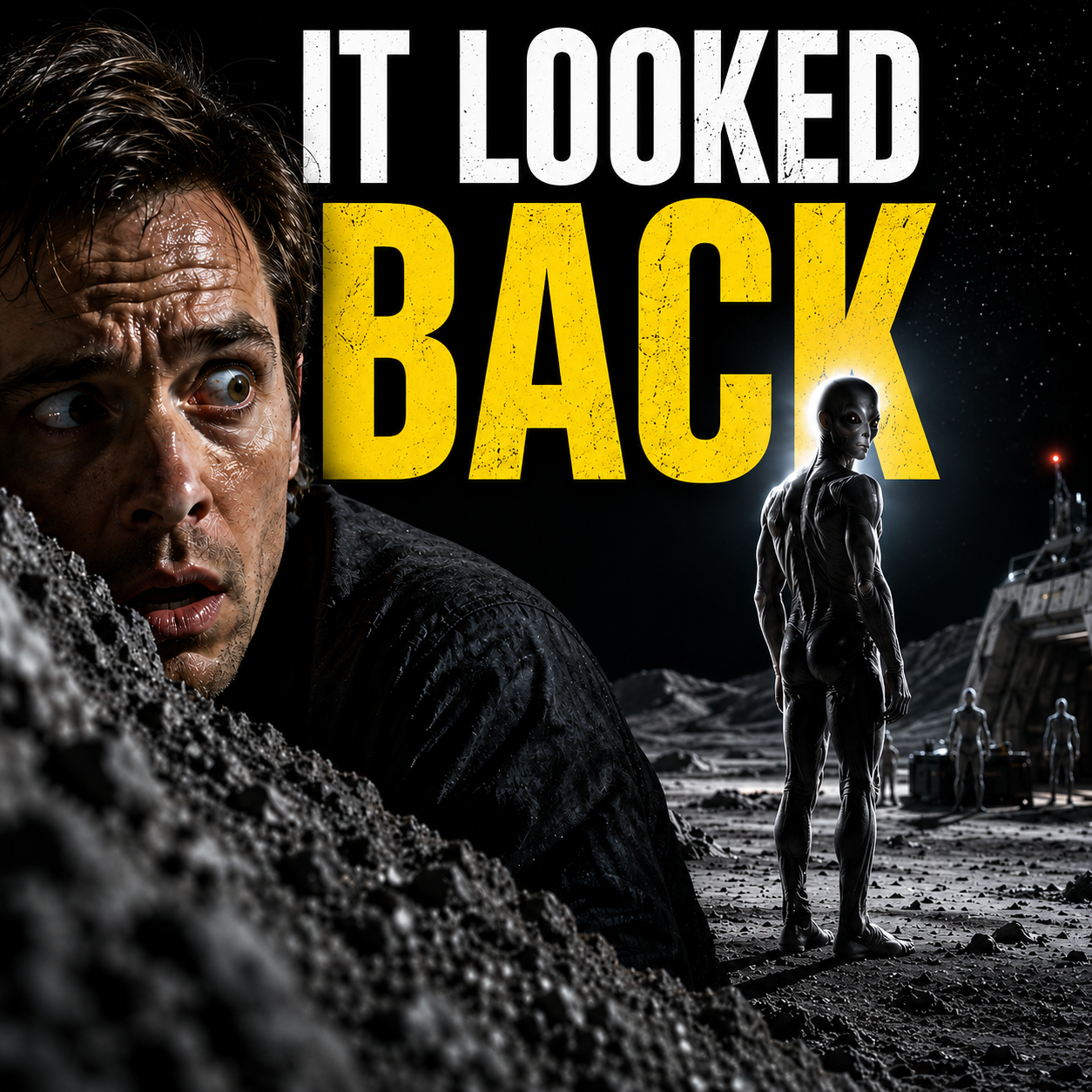
He Remote Viewed the Moon. Then Something Saw Him.
FAQs
What is the Ingo Swann lunar structures theory?
Ingo Swann, a renowned psychic and remote viewer, claimed to have observed artificial structures on the moon during a remote viewing session in the 1970s. He described these structures as being of extraterrestrial origin and not naturally occurring.
What evidence supports the Ingo Swann lunar structures theory?
There is no scientific evidence to support Ingo Swann’s claims of artificial structures on the moon. The images and data collected by various lunar missions, such as the Apollo missions and more recent lunar orbiters, have not shown any conclusive evidence of artificial structures on the moon.
Has the Ingo Swann lunar structures theory been scientifically validated?
No, the Ingo Swann lunar structures theory has not been scientifically validated. The scientific community generally dismisses Swann’s claims as lacking empirical evidence and being based on subjective experiences rather than objective observations.
What is the general consensus among scientists regarding the Ingo Swann lunar structures theory?
The general consensus among scientists is that there is no credible evidence to support Ingo Swann’s claims of artificial structures on the moon. The scientific community views his assertions as pseudoscientific and lacking in empirical support.
Are there any ongoing efforts to investigate the Ingo Swann lunar structures theory?
There are no ongoing scientific efforts to investigate the Ingo Swann lunar structures theory. The scientific community focuses on evidence-based research and has not found any compelling reason to pursue Swann’s claims further.