Geomagnetic perturbations refer to temporary disturbances in the Earth’s magnetic field, which can arise from various natural phenomena. These fluctuations can be caused by solar activity, such as solar flares and coronal mass ejections, which release charged particles into space. When these particles interact with the Earth’s magnetosphere, they can induce changes in the magnetic field, leading to geomagnetic storms.
These storms can vary in intensity and duration, affecting not only the magnetic field but also the ionosphere and the overall space weather environment. The significance of understanding geomagnetic perturbations lies in their potential impact on both natural systems and human-made technologies. For instance, these disturbances can influence navigation systems, satellite operations, and even power grids.
The study of geomagnetic perturbations is crucial for predicting their effects and developing strategies to mitigate potential disruptions. Researchers utilize a variety of tools and methodologies to monitor these changes, including ground-based magnetometers and satellite observations, which provide valuable data for understanding the dynamics of the Earth’s magnetic field.
Key Takeaways
- Geomagnetic perturbations are disturbances in Earth’s magnetic field caused by solar and environmental factors.
- Magnetometer anomalies help detect and analyze these perturbations for better understanding and response.
- These perturbations can significantly impact technology, including communication and navigation systems.
- Ongoing research and advancements in magnetometer technology improve prediction, monitoring, and mitigation efforts.
- Understanding and mapping geomagnetic perturbations are crucial for minimizing their environmental and technological effects.
Detecting Magnetometer Anomalies
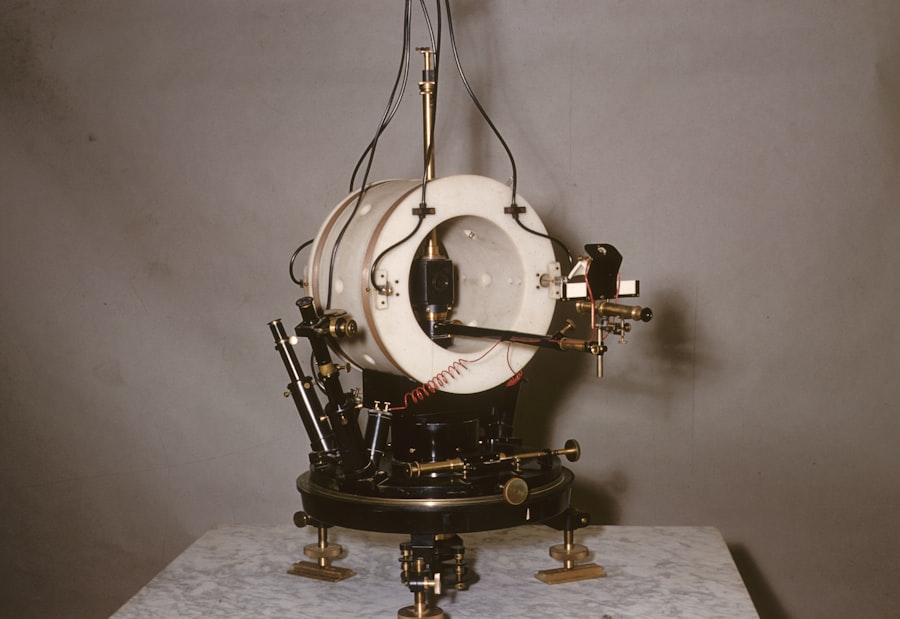
Detecting magnetometer anomalies involves identifying irregularities in the Earth’s magnetic field that deviate from expected patterns. Magnetometers are sensitive instruments designed to measure the strength and direction of magnetic fields. By analyzing data collected from these devices, scientists can pinpoint anomalies that may indicate geomagnetic perturbations or other geological phenomena.
The detection process often involves comparing real-time measurements with historical data to identify significant deviations. One common method for detecting anomalies is through the use of arrays of magnetometers strategically placed across different geographical locations.
For example, during a geomagnetic storm, magnetometers may record sudden spikes or drops in magnetic intensity, which can be correlated with solar activity. Advanced data processing techniques, including machine learning algorithms, are increasingly being employed to enhance anomaly detection capabilities, enabling researchers to respond more effectively to geomagnetic events.
Causes of Geomagnetic Perturbations
The causes of geomagnetic perturbations are multifaceted, primarily stemming from solar activity and its interaction with the Earth’s magnetic field. Solar flares, which are intense bursts of radiation from the sun’s surface, can release vast amounts of energy and charged particles into space. When these particles collide with the Earth’s magnetosphere, they can cause significant disturbances in the magnetic field.
Coronal mass ejections (CMEs), which involve the expulsion of plasma and magnetic fields from the sun’s corona, are another major contributor to geomagnetic perturbations. In addition to solar phenomena, geomagnetic perturbations can also be influenced by terrestrial factors. For instance, changes in the Earth’s core dynamics can lead to variations in the magnetic field.
Furthermore, human activities such as mining and large-scale construction projects can induce localized magnetic anomalies. Understanding these causes is essential for developing predictive models that can forecast geomagnetic events and their potential impacts on technology and infrastructure.
Impact of Geomagnetic Perturbations on Technology
The impact of geomagnetic perturbations on technology is profound and multifaceted. One of the most significant effects is on satellite operations. Satellites rely on stable magnetic environments for navigation and communication; however, during geomagnetic storms, increased radiation levels can disrupt satellite electronics and degrade signal quality.
This disruption can lead to communication blackouts or degraded performance for critical services such as GPS navigation and weather forecasting. Power grids are another area where geomagnetic perturbations can have serious consequences. Geomagnetically induced currents (GICs) can flow through power lines during geomagnetic storms, potentially damaging transformers and other infrastructure components.
In severe cases, this can lead to widespread power outages, as seen during the 1989 Quebec blackout caused by a geomagnetic storm. The vulnerability of modern technology to these disturbances underscores the importance of ongoing research into mitigation strategies and protective measures.
Mapping and Analyzing Magnetometer Anomalies
| Parameter | Description | Typical Range | Units | Notes |
|---|---|---|---|---|
| Magnetic Field Intensity (F) | Total strength of the geomagnetic field | 25,000 – 65,000 | nT (nanotesla) | Varies with location and time |
| Declination (D) | Angle between magnetic north and true north | -30 to +30 | Degrees | Positive eastward |
| Inclination (I) | Angle between magnetic field and horizontal plane | -90 to +90 | Degrees | Positive downward |
| Geomagnetic Perturbation (ΔF) | Deviation from baseline magnetic field intensity | 0 – 500 | nT | Indicates anomalies or disturbances |
| Frequency of Anomalies | Number of detected perturbations per day | 0 – 20 | Events/day | Depends on geomagnetic activity |
| Duration of Anomaly | Time span of a single perturbation event | Seconds to Hours | Time | Varies widely |
| Amplitude of Anomaly | Peak deviation during perturbation | 10 – 1000 | nT | Higher values indicate stronger disturbances |
Mapping and analyzing magnetometer anomalies is a critical aspect of understanding geomagnetic perturbations and their implications. Researchers employ geographic information systems (GIS) to visualize magnetic field data collected from various magnetometer stations. This spatial analysis allows scientists to identify patterns and correlations between anomalies and external factors such as solar activity or geological features.
Advanced analytical techniques are also utilized to interpret magnetometer data effectively. Time-series analysis helps in understanding how anomalies evolve over time, while statistical methods can quantify the significance of observed deviations. By integrating data from multiple sources, including satellite observations and ground-based measurements, researchers can create comprehensive models that enhance our understanding of geomagnetic perturbations and their potential impacts on both natural systems and human infrastructure.
Geomagnetic Perturbations and Environmental Effects
Geomagnetic perturbations not only affect technology but also have broader environmental implications. For instance, these disturbances can influence animal behavior, particularly in species that rely on the Earth’s magnetic field for navigation. Migratory birds, sea turtles, and certain fish species utilize magnetic cues to orient themselves during long-distance migrations.
Changes in the magnetic field due to geomagnetic storms may disrupt these natural navigation systems, potentially leading to disorientation or altered migration patterns. Additionally, geomagnetic perturbations can impact atmospheric phenomena such as auroras. The interaction between charged particles from solar winds and the Earth’s atmosphere creates stunning displays of light known as auroras borealis (northern lights) and auroras australis (southern lights).
While these phenomena are visually captivating, they also serve as indicators of geomagnetic activity and can provide insights into the dynamics of the Earth’s magnetosphere.
Predicting Geomagnetic Perturbations
Predicting geomagnetic perturbations is a complex endeavor that relies on a combination of observational data and modeling techniques. Scientists utilize real-time data from solar observatories to monitor solar activity closely. Instruments such as the Solar Dynamics Observatory (SDO) provide critical information about solar flares and CMEs, allowing researchers to assess their potential impact on Earth’s magnetic field.
Numerical models play a vital role in predicting geomagnetic events by simulating the interactions between solar wind and the Earth’s magnetosphere. These models incorporate various parameters, including solar wind speed, density, and magnetic field orientation. By analyzing these factors, scientists can forecast when geomagnetic storms are likely to occur and estimate their intensity.
Continuous advancements in computational power and modeling techniques are enhancing prediction accuracy, enabling better preparedness for potential disruptions.
Monitoring Geomagnetic Perturbations
Monitoring geomagnetic perturbations is essential for understanding their dynamics and mitigating their effects on technology and the environment. A global network of ground-based magnetometers continuously collects data on magnetic field variations across different regions. This network is complemented by satellite missions that provide a broader perspective on space weather conditions.
In addition to traditional monitoring methods, innovative technologies such as CubeSats are being deployed to enhance data collection capabilities. These small satellites can be launched in swarms to gather high-resolution magnetic field data over specific areas or during particular events. The integration of ground-based and satellite data allows for a more comprehensive understanding of geomagnetic perturbations and their potential impacts.
Mitigating the Effects of Geomagnetic Perturbations
Mitigating the effects of geomagnetic perturbations requires a multi-faceted approach that encompasses technological advancements, infrastructure resilience, and public awareness. For power grids, utilities are implementing measures such as installing GIC monitoring systems that can detect abnormal currents during geomagnetic storms. This real-time monitoring enables operators to take preventive actions, such as temporarily shutting down vulnerable components or rerouting power flows.
In aviation, airlines are increasingly aware of the potential impacts of geomagnetic storms on navigation systems. Flight routes may be adjusted during periods of heightened solar activity to minimize exposure to radiation or disruptions in communication systems. Public awareness campaigns also play a crucial role in educating individuals about the potential effects of geomagnetic events on technology and safety measures that can be taken during such occurrences.
Research and Advancements in Magnetometer Technology
Research into magnetometer technology has seen significant advancements over recent years, driven by the need for more accurate and reliable measurements of the Earth’s magnetic field. Traditional fluxgate magnetometers have been widely used; however, newer technologies such as optically pumped magnetometers offer enhanced sensitivity and precision. These devices utilize laser technology to measure magnetic fields with unprecedented accuracy, making them invaluable for both scientific research and practical applications.
Moreover, miniaturization has become a key trend in magnetometer development. Smaller devices can be deployed in various environments, including remote locations or even integrated into smartphones for consumer applications. The evolution of magnetometer technology not only improves our ability to detect geomagnetic perturbations but also opens new avenues for research in fields such as geology, archaeology, and environmental science.
Future Implications of Geomagnetic Perturbations
The future implications of geomagnetic perturbations are vast and warrant careful consideration as society becomes increasingly reliant on technology that is vulnerable to these disturbances. As climate change continues to alter atmospheric conditions, it is possible that the frequency or intensity of geomagnetic events may also change over time. This necessitates ongoing research into both historical patterns of geomagnetic activity and future projections based on current trends.
Furthermore, as space exploration expands with missions targeting Mars and beyond, understanding geomagnetic perturbations will be crucial for ensuring the safety of astronauts and equipment in space environments where radiation levels may be significantly higher during solar events. The integration of advanced monitoring systems will be essential for safeguarding both terrestrial infrastructure and future space missions against the unpredictable nature of geomagnetic perturbations. In summary, as our understanding of geomagnetic perturbations deepens through research and technological advancements, it becomes increasingly important to develop strategies that address their potential impacts on both natural ecosystems and human-made systems alike.
Magnetometer anomalies can provide valuable insights into geomagnetic perturbations, which are often linked to various geophysical phenomena. For a deeper understanding of these anomalies and their implications, you can explore the article available at XFile Findings. This resource delves into the intricacies of magnetometer data and its relevance in studying Earth’s magnetic field variations.
FAQs
What is a magnetometer anomaly?
A magnetometer anomaly refers to a deviation or irregularity in the Earth’s magnetic field detected by a magnetometer. These anomalies can indicate variations in the Earth’s subsurface materials or geomagnetic disturbances.
What causes geomagnetic perturbations?
Geomagnetic perturbations are caused by changes in the Earth’s magnetic field due to solar wind, solar storms, or interactions between the solar wind and the Earth’s magnetosphere. These disturbances can affect magnetometer readings.
How do magnetometer anomalies relate to geomagnetic perturbations?
Magnetometer anomalies can be the result of geomagnetic perturbations. When the Earth’s magnetic field is disturbed by external factors like solar activity, magnetometers detect these changes as anomalies or fluctuations.
What are common sources of magnetometer anomalies?
Common sources include variations in the Earth’s crustal magnetic properties, man-made structures or equipment, and external geomagnetic disturbances such as solar flares or geomagnetic storms.
How are magnetometer anomalies detected?
Magnetometer anomalies are detected using magnetometers, instruments that measure the strength and direction of magnetic fields. Data is analyzed to identify deviations from expected magnetic field values.
Why is it important to study magnetometer anomalies and geomagnetic perturbations?
Studying these phenomena helps in understanding Earth’s interior structure, monitoring space weather effects, protecting communication and navigation systems, and improving geophysical exploration techniques.
Can magnetometer anomalies affect technology?
Yes, significant geomagnetic perturbations can disrupt satellite operations, GPS navigation, power grids, and communication systems, making it important to monitor and predict these anomalies.
What types of magnetometers are used to detect anomalies?
Common types include fluxgate magnetometers, proton precession magnetometers, optically pumped magnetometers, and superconducting quantum interference devices (SQUIDs), each with varying sensitivity and applications.
How do researchers differentiate between local anomalies and global geomagnetic perturbations?
Researchers analyze spatial and temporal patterns of magnetic field data, use multiple measurement points, and correlate data with solar and geomagnetic activity indices to distinguish local anomalies from global perturbations.
Are magnetometer anomalies predictable?
While some anomalies related to Earth’s crust are relatively stable, geomagnetic perturbations caused by solar activity can be partially predicted using space weather forecasting models, though exact timing and intensity remain challenging to forecast.