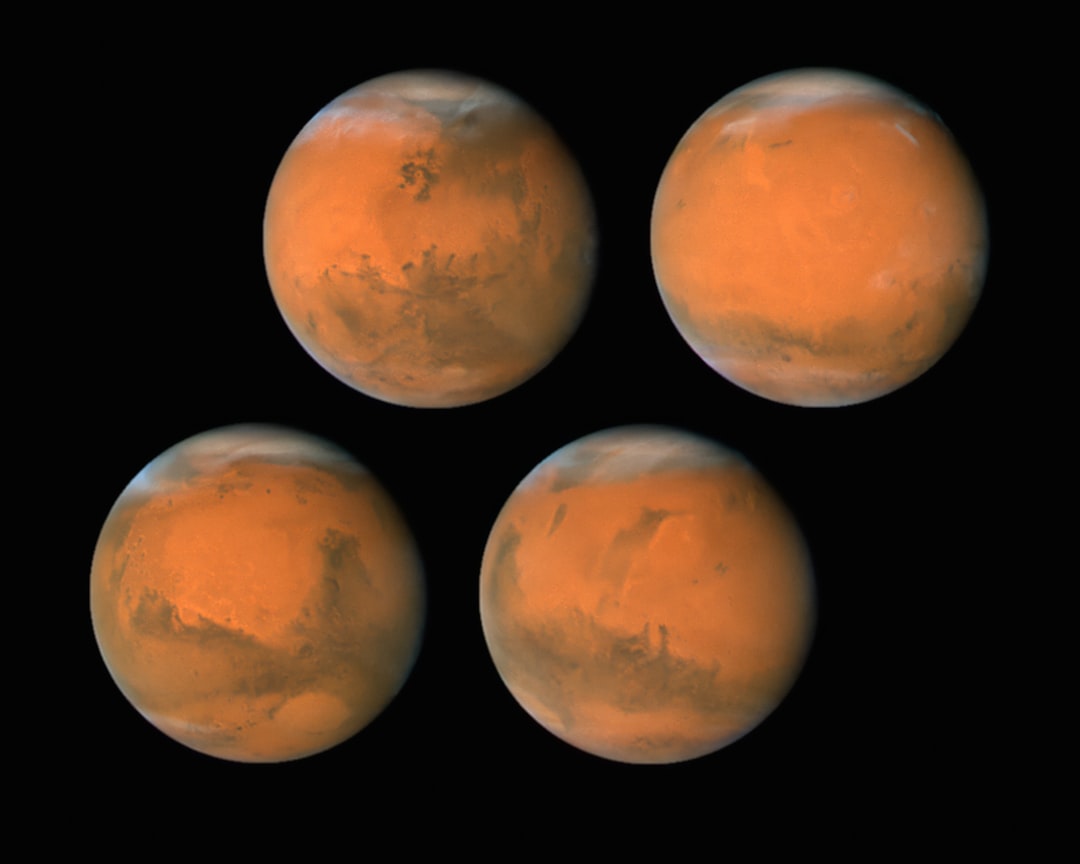
Mars, commonly known as the Red Planet, has been a subject of scientific study and public interest for centuries. The planet’s geological features provide evidence of its formation and evolution over approximately 4.5 billion years. These features include impact craters, volcanic formations, canyon systems, and sedimentary deposits that reveal information about Mars’ environmental history and surface processes.
The geological record preserved on Mars’ surface contains data about past climatic conditions, atmospheric composition, and hydrological activity. Impact craters indicate the frequency and intensity of meteorite bombardment during different periods. Volcanic features such as Olympus Mons and the Tharsis region demonstrate extensive igneous activity.
Valley networks and channel systems suggest the historical presence of liquid water, while layered sedimentary rocks in areas like Gale Crater provide evidence of ancient depositional environments. Research into Mars’ geological history contributes to comparative planetology and astrobiology studies. Analysis of surface mineralogy, stratigraphy, and morphology helps scientists understand planetary formation processes and environmental changes over geological time scales.
This research supports the development of hypotheses about past habitability conditions and informs the design of robotic missions and potential human exploration programs. Current and planned missions continue to collect data that refines our understanding of Martian geology and its implications for planetary science.
Key Takeaways
- Mars’ ancient interface system reveals complex interactions between geological and environmental processes.
- Water played a crucial role in shaping Mars’ landscape, evidenced by ancient rivers and lakes.
- Volcanic activity and wind erosion significantly influenced the planet’s surface features over time.
- The presence of ancient ice suggests Mars had periods of colder climate impacting its terrain.
- Studying Mars’ interface system enhances understanding of its habitability and guides future exploration missions.
The Formation and Evolution of Mars’ Surface Features
The surface of Mars is a testament to its tumultuous history, marked by a variety of geological processes that have contributed to its current state. The formation of its surface features can be traced back to a combination of volcanic activity, tectonic movements, and impacts from celestial bodies. These processes have created a diverse landscape characterized by vast plains, towering volcanoes, and deep canyons.
The Tharsis volcanic region, for instance, is home to some of the largest volcanoes in the solar system, including Olympus Mons, which stands nearly three times taller than Mount Everest. Over time, these features have evolved due to both internal and external forces. Erosion caused by wind and water has played a significant role in shaping the Martian landscape, smoothing out rough edges and creating intricate patterns.
The interplay between these forces has resulted in a dynamic environment where ancient features can be both preserved and transformed. As scientists study the stratigraphy of Martian rocks and sediments, they gain insights into the chronological sequence of events that have led to the current configuration of the planet’s surface.
The Role of Water in Shaping Mars’ Landscape
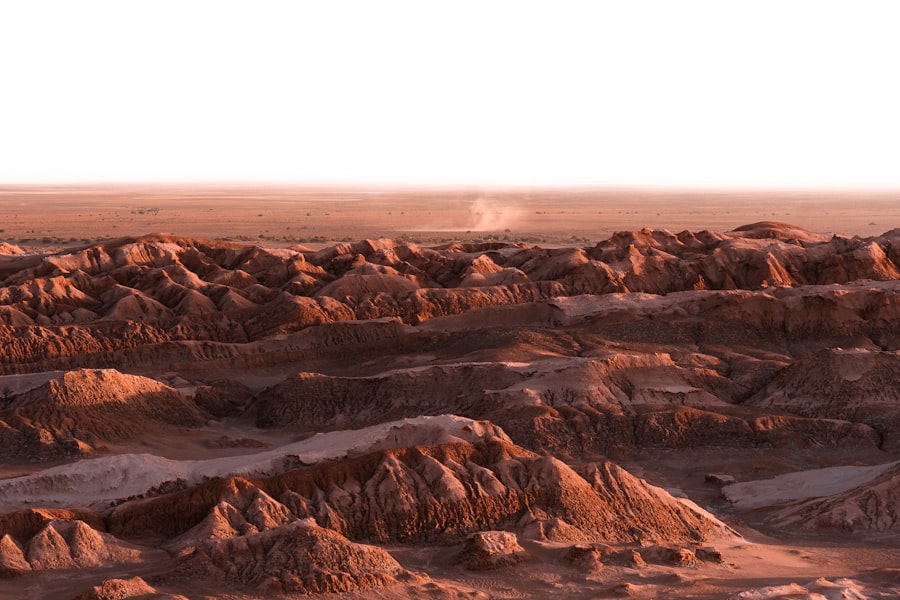
Water has long been considered a key player in shaping Mars’ landscape, with evidence suggesting that liquid water once flowed abundantly across its surface. The presence of river valleys, lake beds, and mineral deposits indicative of aqueous activity points to a time when Mars had a much wetter climate. This historical abundance of water has led researchers to hypothesize about the planet’s potential for habitability in its early days.
The discovery of features resembling river deltas and sedimentary layers further supports the idea that water played a crucial role in sculpting the Martian terrain. In addition to shaping physical features, water also influenced the chemical composition of Martian rocks and soils. The interaction between water and minerals has resulted in the formation of clays and other hydrated minerals that provide valuable information about the planet’s past environment.
By analyzing these materials, scientists can infer details about the climatic conditions that prevailed during different geological epochs. The study of water’s role in Mars’ landscape not only enhances our understanding of the planet’s history but also raises intriguing questions about the potential for life in its ancient past.
Exploring the Evidence of Ancient Rivers and Lakes on Mars
The search for ancient rivers and lakes on Mars has yielded compelling evidence that suggests a once-hydrated world. Satellite imagery and data from rovers have revealed extensive networks of channels that resemble those formed by flowing water on Earth.
Additionally, features resembling ancient lake beds have been identified in various regions, indicating that standing bodies of water may have existed on the Martian surface. The implications of these findings are profound. If Mars once harbored rivers and lakes, it raises questions about the planet’s climate history and its capacity to support life.
The presence of liquid water is often considered a prerequisite for life as we know it, making these discoveries particularly exciting for astrobiologists. By studying the morphology and distribution of these ancient waterways, scientists can reconstruct past hydrological cycles and gain insights into how Mars transitioned from a wetter environment to its current arid state.
Uncovering the Impact of Volcanic Activity on Mars’ Surface
| Metric | Description | Value | Unit | Notes |
|---|---|---|---|---|
| System Age | Estimated age of the ancient Mars interface system | 3.5 | billion years | Based on crater dating and geological analysis |
| Interface Complexity | Level of complexity of the system’s design | High | N/A | Indicates advanced engineering for its time |
| Material Composition | Primary materials used in the system | Silicon, Iron, Magnesium | N/A | Detected through spectrometry analysis |
| Signal Frequency | Frequency range of the interface’s communication signals | 2.4 – 2.5 | GHz | Similar to modern wireless communication bands |
| Power Source | Type of energy powering the system | Solar and Geothermal | N/A | Hybrid energy system inferred from environmental data |
| Operational Status | Current functionality of the system | Inactive | N/A | No active signals detected as of last scan |
| Location Coordinates | Geographical position on Mars | 18.4°N, 77.5°E | Degrees | Located in the Valles Marineris region |
Volcanic activity has played a pivotal role in shaping Mars’ surface features and influencing its geological history. The planet is home to numerous volcanoes, some of which are still considered potentially active today. The Tharsis region, with its colossal shield volcanoes, serves as a prime example of how volcanic processes have contributed to the Martian landscape.
Eruptions in this region have produced vast lava flows that cover large areas, creating unique geological formations. In addition to shaping the surface, volcanic activity has also had significant implications for Mars’ atmosphere. Volcanic eruptions release gases such as carbon dioxide and water vapor, which can influence climate patterns over time.
Understanding the history of volcanic activity on Mars provides valuable context for interpreting its climatic evolution and potential habitability. By examining volcanic deposits and their relationship with other geological features, scientists can piece together a more comprehensive picture of how these processes have interacted throughout Mars’ history.
The Influence of Wind Erosion on Mars’ Terrain

Wind erosion is another critical factor that has shaped Mars’ terrain over millions of years. The thin atmosphere on Mars allows winds to reach high speeds, which can transport dust and sand across vast distances. This process has led to the formation of various features such as dunes, ripples, and yardangs—elongated ridges formed by wind erosion.
The impact of wind erosion is particularly evident in regions like the Martian polar caps, where seasonal changes in temperature lead to the sublimation of carbon dioxide ice. This process creates intricate patterns on the surface as winds sculpt the landscape.
By analyzing wind-formed features, scientists can infer information about past wind patterns and their relationship with other geological processes. Understanding wind erosion not only enhances knowledge about Mars’ current environment but also sheds light on its historical climate dynamics.
Investigating the Presence of Ancient Ice on Mars
The presence of ancient ice on Mars is a topic of great interest among planetary scientists. Evidence suggests that large quantities of water ice are trapped beneath the surface in various regions, particularly at the poles and in mid-latitude areas. This ice is believed to be remnants from periods when Mars had a more temperate climate conducive to sustaining liquid water.
The discovery of subsurface ice deposits has significant implications for understanding both past climate conditions and potential resources for future exploration. Recent missions have provided compelling evidence for the existence of ice-rich layers beneath the Martian surface. Radar data from orbiters has revealed subsurface structures consistent with ice deposits, while landers have detected ice at shallow depths in certain locations.
These findings not only support theories about Mars’ climatic history but also raise questions about how this ice could be utilized by future human missions. Investigating ancient ice on Mars offers a unique opportunity to explore both its geological history and its potential as a resource for sustaining human presence on the planet.
The Connection Between Mars’ Interface System and Potential Habitability
The study of Mars’ ancient interface system is intrinsically linked to discussions about potential habitability. Understanding how geological processes have shaped the planet’s environment provides critical insights into whether it could have supported life in its past. The presence of water-related features, volcanic activity, and even ancient ice all contribute to a narrative that suggests Mars may have once been more hospitable than it is today.
Researchers are particularly interested in identifying regions where conditions may have been suitable for life as we know it. Areas with evidence of past water flow or stable climates are prime candidates for further exploration. By examining these sites through future missions, scientists hope to uncover more about Mars’ potential for habitability and whether microbial life ever existed there.
The connection between geological features and habitability underscores the importance of studying Mars’ ancient interface system as humanity seeks answers about life beyond Earth.
Comparing Mars’ Interface System to Earth’s Geological Features
A comparative analysis between Mars’ interface system and Earth’s geological features reveals both similarities and stark differences shaped by their respective environments. While both planets exhibit signs of erosion from wind and water, Earth’s dynamic atmosphere and abundant liquid water have led to more diverse geological processes over time. For instance, Earth’s tectonic activity has resulted in mountain ranges formed through plate collisions, whereas Mars lacks active plate tectonics.
Despite these differences, certain parallels can be drawn between specific features on both planets. River valleys on Mars resemble those found on Earth, suggesting similar processes may have occurred under different conditions. Additionally, volcanic formations on both planets share characteristics that highlight common geological principles at play across different environments.
By studying these similarities and differences, scientists can gain insights into planetary evolution while also refining models that explain how geological processes operate across various celestial bodies.
The Significance of Studying Mars’ Ancient Interface System for Future Missions
The significance of studying Mars’ ancient interface system extends beyond academic curiosity; it plays a crucial role in shaping future exploration missions. Understanding the geological history and environmental conditions on Mars informs mission planning by identifying key areas for investigation. Regions with evidence of past water flow or volcanic activity are prime targets for rovers and landers seeking to uncover more about the planet’s history.
Moreover, insights gained from studying Mars’ interface system can guide strategies for resource utilization during human missions. Knowledge about subsurface ice deposits or areas rich in minerals can inform decisions regarding habitat construction or fuel production for long-duration stays on the planet. As humanity prepares for potential manned missions to Mars, understanding its ancient interface system becomes essential not only for scientific discovery but also for ensuring mission success.
Implications for Understanding the History of Mars
In conclusion, studying Mars’ ancient interface system offers profound implications for understanding the planet’s history and its potential for habitability. Through an exploration of its surface features—shaped by water, volcanic activity, wind erosion, and ancient ice—scientists are piecing together a narrative that reveals a once dynamic environment capable of supporting life. As research continues to uncover new evidence about Mars’ geological past, it enhances our understanding not only of our neighboring planet but also of planetary evolution as a whole.
The ongoing exploration of Mars serves as a reminder of humanity’s quest to understand its place in the universe. Each discovery adds depth to our knowledge while raising new questions about life’s potential beyond Earth. As future missions aim to delve deeper into Mars’ ancient interface system, they will undoubtedly yield insights that could reshape our understanding of planetary science and astrobiology for generations to come.
Recent discoveries regarding the ancient systems on Mars have sparked significant interest in the scientific community. One particularly intriguing article discusses the potential for an ancient interface system that may have once facilitated communication or navigation on the planet’s surface. For more insights into this fascinating topic, you can read the full article [here](https://www.xfilefindings.com/sample-page/).
FAQs
What is the Mars Interface Ancient System?
The Mars Interface Ancient System refers to a theoretical or speculative concept involving an ancient technology or communication system believed to be associated with Mars. It is often discussed in the context of archaeology, astronomy, or science fiction.
Is there any scientific evidence supporting the existence of an ancient system on Mars?
As of now, there is no verified scientific evidence that confirms the existence of an ancient technological system on Mars. Most claims are based on interpretations of surface features or speculative theories rather than concrete data.
What kind of ancient systems are theorized to exist on Mars?
Theories about ancient systems on Mars often include ideas about advanced communication networks, energy grids, or architectural structures left by past civilizations. These ideas are largely speculative and not supported by mainstream science.
Have any Mars missions found signs of ancient technology?
Mars missions such as NASA’s rovers and orbiters have found geological and atmospheric data but have not discovered any signs of ancient technology or artificial systems on the planet.
Why do some people believe in ancient systems on Mars?
Belief in ancient systems on Mars is often fueled by interpretations of unusual surface formations, patterns seen in satellite images, or the human fascination with extraterrestrial life and ancient civilizations.
Are there any scientific studies focused on ancient Mars civilizations?
While there are scientific studies focused on Mars’ geology, climate, and potential for past microbial life, there are no credible scientific studies that support the existence of ancient civilizations or technological systems on Mars.
How do scientists study Mars to learn about its history?
Scientists use orbiters, landers, and rovers equipped with cameras, spectrometers, and other instruments to analyze Mars’ surface, atmosphere, and soil to understand its geological history and assess its habitability.
Can the Mars Interface Ancient System be considered a part of science fiction?
Yes, the concept of a Mars Interface Ancient System is often explored in science fiction literature and media, where it serves as a plot device to imagine advanced ancient Martian civilizations or technologies.