You’ve probably seen the moon countless times, a familiar, comforting presence in your night sky. Perhaps you’ve even marveled at its changing phases, from a sliver of silver to a brilliant, full orb. But have you ever stopped to think about the whispers of the unexplained, the tantalizing anomalies that have sparked curiosity and debate for centuries? This isn’t about debunking every myth; instead, let’s embark on a journey to uncover some of these moon anomalies and understand what might be behind them.
You’ve likely noticed the moon’s steady luminescence. But what if, on occasion, you could swear there was a fleeting, unusual glow? This is the essence of Transient Lunar Phenomena, or TLPs. These are reported flashes or changes in the moon’s brightness, sometimes lasting only a few seconds, other times for much longer. They’ve been observed by amateur astronomers, professional scientists, and even, in some historical accounts, by figures like Galileo. The very nature of TLPs makes them elusive, but their persistence in eyewitness accounts demands attention.
What Are Witnesses Claiming?
Imagine yourself looking through a telescope. Suddenly, a patch of the moon’s surface appears brighter than usual, or perhaps a distinct flash of light emanates from it. This is what people report. Some describe them as reddish or bluish hues, others as shimmering spots. The location of these phenomena is also varied, appearing on crater rims, plains, and even near the lunar terminator – the line between the moon’s illuminated and dark sides. The sheer volume of these observations, spanning decades and coming from diverse observers, suggests something more than mere optical illusions for everyone involved.
The Lava Tube Hypothesis
One of the most compelling explanations for some TLPs involves what lies beneath the moon’s surface: lava tubes. These are natural geological formations, like underground tunnels, created by ancient volcanic activity. When molten lava flowed across the moon’s surface, the outer layers could have cooled and solidified while the molten core continued to flow, eventually draining away to leave behind these hollow tubes.
How Lava Tubes Could Create Light
Now, how could these seemingly inert tubes produce light? The leading theory suggests that as sunlight enters an opening in a lava tube, it can refract and reflect within the enclosed space. If the opening is at a specific angle or if there are certain reflective minerals present within the tube, this light could be amplified and directed outwards, creating the appearance of a flash or a brighter spot visible from Earth. Think of it like a natural spotlight, temporarily illuminated by the sun.
The Role of Gas Release
Another possibility within the lava tube framework is the release of gases. While the moon is largely considered geologically inactive, there might be residual gases trapped within these subsurface structures. If these gases are suddenly released through a fissure or vent, they could interact with sunlight, causing a temporary luminescence. This is analogous to seeing a faint glow from geysers on Earth, though on a much smaller and more infrequent scale.
The Dust Cloud Theory
Beyond subterranean explanations, some TLPs are attributed to the presence of dust. The moon’s surface is covered in a fine powder called regolith, a result of billions of years of meteorite impacts. This dust is electrostatically charged, and can become quite agitated.
Electrostatic Levitation of Dust
When the sun’s ultraviolet radiation interacts with the lunar surface, it can strip electrons from the dust particles. This leaves the particles with a positive charge, causing them to repel each other. Under certain conditions, this electrostatic repulsion can be strong enough to lift fine dust particles a few centimeters, or even meters, above the surface. This suspended dust cloud, illuminated by sunlight, could appear as a hazy patch or a subtle glow.
Impact Events and Dust Ejection
Smaller meteorite impacts, too small to be seen directly, could also disturb the regolith and loft dust into the lunar atmosphere. While the moon has no significant atmosphere, this ejected dust can remain suspended for a short period before settling back down. If these events occur in favorable lighting conditions, they might be perceived as transient phenomena.
The Unexplained Remains
Despite these plausible explanations, it’s important to acknowledge that not all TLPs are definitively accounted for. The variability in their appearance, duration, and location means that some observations might still fall into the realm of the truly mysterious, awaiting further scientific investigation. The challenge lies in reliably capturing these fleeting events for detailed study.
For those interested in exploring the intriguing subject of lunar anomalies, a related article can be found at XFile Findings. This resource delves into various unexplained phenomena on the Moon, offering insights and analyses that complement the discussion on Moon anomalies. Whether you are a casual reader or a dedicated enthusiast, this article provides a wealth of information that enhances our understanding of the mysteries surrounding our celestial neighbor.
The Lunar Face: Optical Illusions and Pareidolia
You’ve undoubtedly seen it: the “man in the moon.” This familiar image is a classic example of how our brains interpret patterns, even where none are intentionally present. The dark plains and brighter highlands of the moon, when viewed from Earth, can coincidentally align to create shapes and figures that resemble familiar objects or faces. This phenomenon is known as pareidolia.
What is Pareidolia?
Pareidolia is a psychological phenomenon where the mind perceives a familiar pattern or image where none exists. It’s not just limited to the moon; you might see faces in clouds, figures in wood grain, or hear hidden messages in music played backward. Our brains are hardwired to seek out patterns, especially those that resemble faces, as a survival mechanism.
Evolutionary Roots of Pattern Recognition
From an evolutionary perspective, quickly recognizing faces – whether friend or foe – was crucial for survival. This innate ability to identify faces has been exaggerated by the specific arrangement of lunar features. The large, dark areas on the moon, called “maria” (Latin for seas), and the brighter, mountainous regions, the “highlands,” create stark contrasts that our brains readily interpret as features of a face.
The “Man in the Moon” and Other Recognizable Shapes
The most common example is the “man in the moon,” often perceived as having eyes, a nose, and a mouth. However, depending on your perspective and imagination, you might also see animals, objects, or even entire scenes. These interpretations are entirely subjective and depend on individual perception and cultural influences.
Cultural Interpretations Across the Globe
It’s fascinating to note that different cultures have historically interpreted these lunar features in distinct ways. While Western cultures often see a “man,” some East Asian cultures perceive a rabbit or a toad pounding rice or medicine. This highlights the universality of pareidolia and the human tendency to project familiar images onto ambiguous stimuli. These interpretations are not about actual lunar formations but about how our brains process the visual information presented.
The Science Behind the Illusion
The “illusion” of the man in the moon isn’t an illusion in the sense of something being deliberately hidden. Instead, it’s a consequence of how light and shadow interact with the moon’s topography. The maria are vast, ancient lava flows that are darker than the surrounding highlands. These large, relatively smooth areas, contrasted with the rugged, reflective highlands, create the large-scale features that our brains then fill in to form recognizable shapes.
How Lighting and Angle Play a Role
The angle at which you view the moon, the phase of illumination, and even atmospheric conditions can subtly alter the perceived shapes. A gibbous moon, for instance, might present a different set of perceived features than a full moon. The terminator, the line between light and shadow, can also play a significant role, creating new outlines and contours that can spark different interpretations.
Distinguishing Illusion from Reality
It’s crucial to differentiate between pareidolia and actual physical anomalies. While the “man in the moon” is a product of our visual perception, other lunar phenomena require a deeper scientific investigation. Understanding pareidolia helps us appreciate how our minds work but also reminds us to look beyond mere appearances when seeking genuine lunar mysteries.
The Lunar Shadow Play: Eclipses and Celestial Mechanics

While not anomalies in the sense of being unexplained, the predictable yet awe-inspiring events of lunar eclipses reveal the intricate dance of celestial bodies and can sometimes lead to misinterpretations if not understood. You’ve likely witnessed a lunar eclipse, a breathtaking spectacle where the Earth passes between the Sun and the Moon, casting a shadow upon our celestial neighbor.
The Mechanics of a Lunar Eclipse
A lunar eclipse occurs when the Sun, Earth, and Moon align in a specific order. The Earth, being larger than the Moon, casts a shadow that can obscure the Moon’s surface. There are different types of lunar eclipses:
Total Lunar Eclipses: The Blood Moon
During a total lunar eclipse, the Moon passes completely through the Earth’s umbra, the darkest part of its shadow. You might have heard the term “blood moon” used to describe the deep red or coppery color the Moon takes on during totality. This is not a sign of danger but a beautiful demonstration of physics.
Why Does the Moon Turn Red?
The Earth’s atmosphere acts like a lens, bending sunlight. As sunlight passes through the atmosphere, blue light is scattered away, while red light penetrates more effectively. This reddish light is then projected onto the Moon’s surface, giving it its characteristic hue. The intensity and exact shade of red can vary depending on the amount of dust and clouds in Earth’s atmosphere at the time of the eclipse.
Partial and Penumbral Lunar Eclipses
In a partial lunar eclipse, only a portion of the Moon enters the Earth’s umbra. You’ll see a dark “bite” taken out of the Moon. A penumbral lunar eclipse is the most subtle, where the Moon passes only through the Earth’s penumbra, the lighter, outer part of its shadow. This can cause a slight dimming of the Moon that is often difficult to notice without careful observation.
Beyond the Visible: Unseen Influences
While eclipses are well-understood, the concept of unseen influences on celestial bodies can sometimes lead to speculation.
Gravitational Effects and Tidal Forces
The Moon’s gravitational pull is responsible for Earth’s tides. These powerful forces, though constant, can be intensified during specific alignments, like during a new or full moon when the Sun, Earth, and Moon are in conjunction or opposition. While these are predictable, their sheer magnitude can sometimes be misinterpreted as something more mysterious.
The ‘Dark Side’ of the Moon: A Misconception
Perhaps one of the most common misconceptions is the idea of a “dark side” of the moon that is perpetually hidden from Earth. This is not entirely accurate. The Moon is tidally locked with Earth, meaning it rotates on its axis at the same rate that it orbits our planet. This results in the same hemisphere of the Moon always facing us. However, the side facing away from Earth, often called the “far side,” receives sunlight just as much as the near side. It’s only “dark” to us on Earth because we never see it.
The Predictability and Wonder
Lunar eclipses, despite their sometimes dramatic appearance, are entirely predictable celestial events governed by the laws of physics. Their recurring nature allows us to study the mechanics of our solar system and appreciate the grandeur of cosmic alignments. The “anomalies” here are in our initial wonder at such a spectacle, rather than in any inherent mystery of the event itself.
Lunar Ice and the Search for Resources
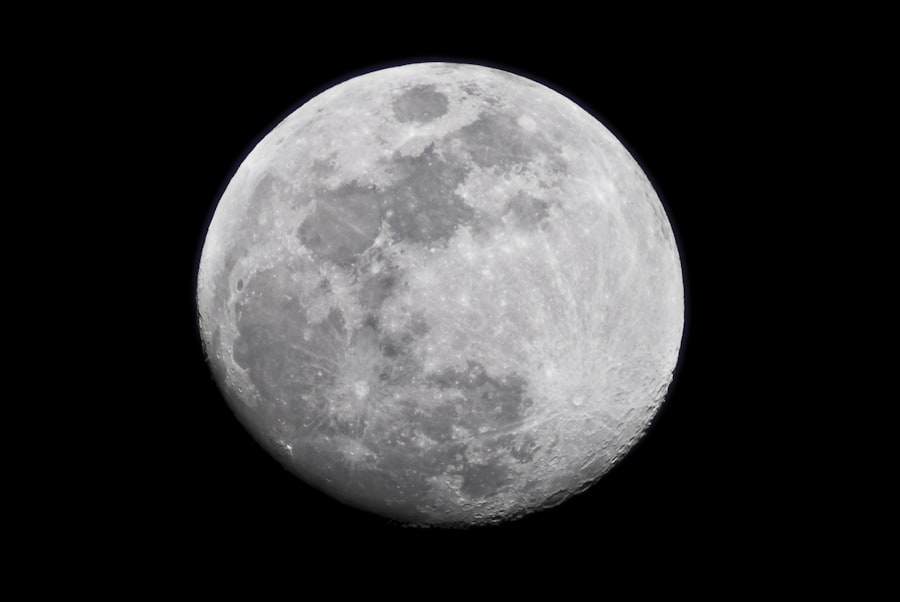
For a long time, the Moon was considered a bone-dry celestial body. However, scientific missions have revealed a significant presence of water ice, particularly in permanently shadowed craters near the lunar poles. This discovery has profound implications for future lunar exploration and beyond.
The Polar Ice Caps: A Frozen Discovery
The Moon’s poles are characterized by craters that are so deep and their rims so high that the crater floors never receive direct sunlight. These “permanently shadowed regions” (PSRs) are incredibly cold, providing ideal conditions for ice to remain stable for billions of years.
Evidence from Space Missions
Instruments aboard spacecraft like NASA’s Lunar Reconnaissance Orbiter (LRO) and the Indian Space Research Organisation’s Chandrayaan-1 have provided strong evidence for the presence of water ice. Spectrometers detected the characteristic signature of water molecules, and radar data revealed subsurface deposits in PSRs.
The Significance of Lunar Water Ice
The existence of water ice on the Moon is not just a scientific curiosity; it’s a game-changer for space exploration.
Resource for Future Astronauts
Water is essential for life. Having a local source of water on the Moon means that future astronauts wouldn’t need to transport all their water from Earth, significantly reducing the cost and complexity of lunar missions. Water can be used for drinking, sanitation, and even for growing food in lunar habitats.
A Source for Rocket Fuel
Beyond life support, lunar water ice can be broken down into hydrogen and oxygen through a process called electrolysis. These gases are the primary components of rocket fuel. This opens up the possibility of “lunar refueling stations,” allowing spacecraft to launch from the Moon for missions deeper into space, reducing the fuel needed to escape Earth’s gravity.
The Mystery of Its Origin
While the presence of ice is confirmed, its ultimate origin is still a subject of ongoing research.
Cometary and Asteroidal Impacts
One leading theory suggests that water was delivered to the Moon by comets and water-rich asteroids that have impacted its surface over billions of years. These icy bodies would have vaporized upon impact, and the water molecules, if they landed in PSRs, could have been preserved.
Solar Wind Interaction
Another hypothesis involves the interaction of the solar wind – a stream of charged particles from the Sun – with the lunar regolith. Protons from the solar wind can combine with oxygen atoms in the lunar soil to form hydroxyl (OH), and under certain conditions, these can coalesce to form water.
Challenges of Extraction and Utilization
Despite the excitement, extracting and utilizing lunar water ice presents significant engineering challenges. The extreme cold and darkness of PSRs, coupled with the fine, abrasive nature of lunar dust, make operations difficult. Developing specialized equipment and techniques to access and process this frozen resource will be crucial for unlocking its full potential.
In exploring the various Moon anomalies that have puzzled scientists and enthusiasts alike, one can find intriguing insights in a related article that delves deeper into these mysteries. For those interested in understanding the peculiarities of lunar formations and their implications, this article offers a comprehensive overview that sheds light on the subject. It discusses not only the anomalies themselves but also the theories that attempt to explain their origins, making it a valuable resource for anyone fascinated by the Moon’s secrets.
Unexplained Lunar Formations: The Enigmatic Surface
| Category | Explanation |
|---|---|
| Craters | Formed by impacts from meteoroids and asteroids |
| Volcanic Features | Result of ancient volcanic activity |
| Highlands and Maria | Differences in lunar crust composition |
| Lunar Swirls | Caused by magnetic anomalies |
Beyond the readily explained features, the Moon’s surface is peppered with formations that continue to intrigue scientists and amateur observers alike. While many have geological explanations, a few remain subjects of ongoing discussion and investigation.
The Rilles and their Origins
Rilles are long, narrow, trench-like depressions on the Moon’s surface. They are often associated with ancient volcanic activity.
Sinuous Rilles: Remnants of Lava Channels
The most common type are sinuous rilles, which resemble dried-up riverbeds. They are believed to be the solidified channels of ancient lava flows. As molten rock flowed through these channels, it carved out the depressions, and after the lava solidified, the channel remained as a rille.
Straight and Arcuate Rilles: Different Geological Processes
Other types of rilles, like straight and arcuate rilles, might have formed through different geological processes, such as tectonic fracturing or the collapse of subsurface lava tubes. Their distinct shapes provide clues to the varied geological history of the Moon.
The Mysterious “Face on Mars” Counterpart: Other Perceived Lunar Features
Just as the “man in the moon” is a product of pareidolia, other perceived features on the lunar surface have also been subject to interpretation, sometimes leaning towards the speculative.
The “Domes” and “Mounds”
The Moon is dotted with various elevated features, often referred to as domes or mounds. While most are understood to be volcanic in origin, remnants of ancient lava extrusions, their sheer number and varied appearances can sometimes spark more imaginative theories.
Lunar Lineations and Grids
Occasionally, observers have reported seeing apparent linear patterns or grid-like structures on the lunar surface. While some of these can be attributed to the way light and shadow fall on natural geological features or even the result of photography artifacts, they continue to fuel curiosity about potential artificial origins, though no concrete evidence supports such claims.
The Search for Evidence of Past Life or Technology
The question of whether the Moon has ever hosted life, or has been visited by extraterrestrial civilizations, is a perennial fascination.
The Absence of Biological Signatures
Despite extensive exploration and analysis of lunar samples, there has been no credible evidence found to suggest the presence of past or present life on the Moon. The lack of a significant atmosphere, liquid water on the surface, and protection from radiation makes the Moon a very inhospitable environment.
Debunking Hoaxes and Misinterpretations
Many purported “anomalies” that suggest alien activity have been thoroughly debunked as either natural formations misinterpreted, optical illusions, or even outright hoaxes. The scientific community maintains a rigorous approach to evidence, requiring reproducible and verifiable data to support extraordinary claims.
The Ongoing Exploration and Discovery
The quest to understand every facet of the Moon is far from over. Future missions, equipped with more advanced sensors and analytical tools, will undoubtedly continue to unravel the geological mysteries of our closest celestial neighbor, providing more definitive explanations for the enigmatic features we observe.
The Moon, in its quiet, luminous presence, continues to hold secrets. From the fleeting flashes of light to the enduring patterns in its surface, these anomalies, whether explained by physics, geology, or our own perception, invite us to look closer, to question, and to marvel at the universe around us. Your journey of discovery about the Moon is just beginning.

The Moon’s Soul Trap: John Lear’s Chilling Revelation
FAQs
What are some common moon anomalies?
Some common moon anomalies include unusual surface features such as craters, rilles, and volcanic domes. Other anomalies include transient lunar phenomena, which are temporary changes in the appearance of the lunar surface.
What causes these moon anomalies?
Moon anomalies are primarily caused by a combination of geological processes such as impact cratering, volcanic activity, and tectonic activity. Transient lunar phenomena are still not fully understood, but they may be related to outgassing or other temporary changes on the lunar surface.
Are there any theories about moon anomalies that are not related to natural processes?
There are some conspiracy theories and pseudoscientific claims about moon anomalies, such as the presence of alien structures or artificial objects. However, these claims lack credible evidence and are not supported by the scientific community.
How do scientists study and explain moon anomalies?
Scientists study moon anomalies using a combination of remote sensing data from spacecraft, telescopic observations, and lunar samples brought back by the Apollo missions. By analyzing these data, scientists can better understand the geological processes that have shaped the lunar surface.
What is the significance of studying moon anomalies?
Studying moon anomalies helps scientists better understand the geological history of the moon and other planetary bodies in our solar system. It also provides valuable insights into the processes that have shaped the lunar surface over billions of years. Additionally, understanding moon anomalies can inform future lunar exploration and potential resource utilization.