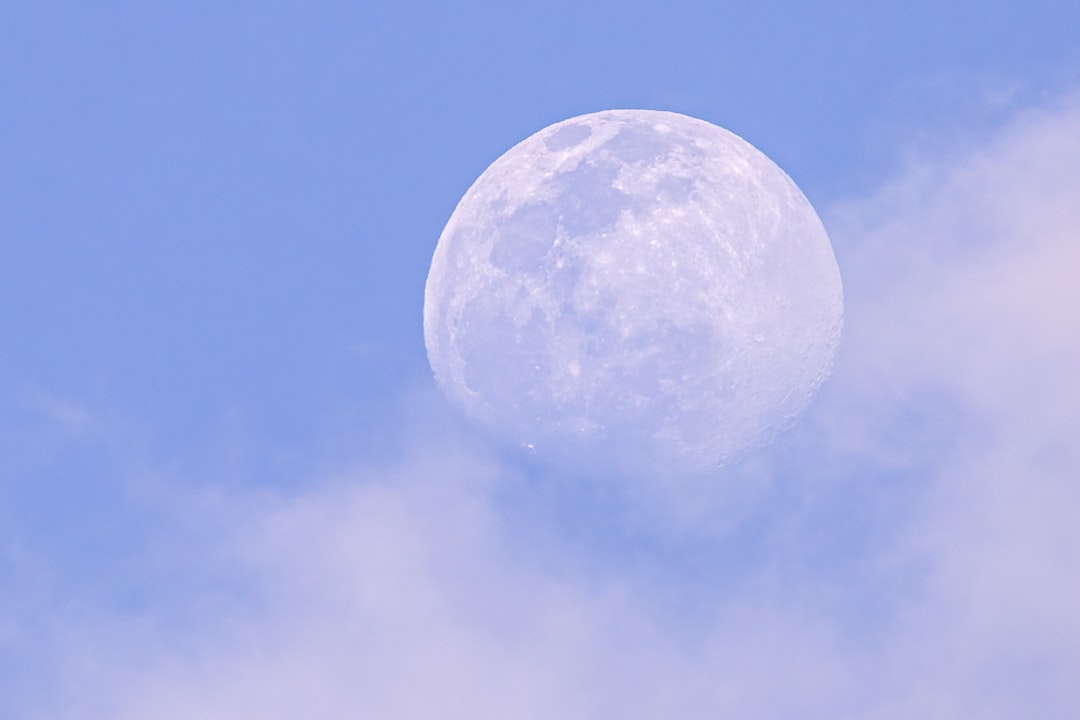
The Moon, Earth’s only natural satellite, has long captivated the imagination of scientists and laypeople alike. Among the many mysteries surrounding this celestial body, one of the most intriguing is the phenomenon of moon density anomalies. These anomalies refer to the unexpected variations in the Moon’s density, which have puzzled researchers since the early days of lunar exploration.
The Moon’s average density is about 3.
Understanding these density anomalies is crucial for unraveling the Moon’s geological history and its relationship with Earth. The significance of moon density anomalies extends beyond mere curiosity; they may hold the key to understanding the Moon’s origin and evolution.
As scientists delve deeper into this enigma, they explore various theories, including the controversial Hollow Moon Theory, which posits that the Moon may be largely hollow. This article will examine the history, evidence, and implications of moon density anomalies, shedding light on one of the most enduring mysteries of our solar system.
Key Takeaways
- Moon density anomalies have sparked theories like the Hollow Moon hypothesis, suggesting unusual internal structures.
- Geological and seismic data provide mixed evidence, with some anomalies unexplained by conventional models.
- The Hollow Moon theory faces significant criticism but has prompted new research and alternative explanations.
- Comparisons with other celestial bodies help contextualize lunar density irregularities and challenge hollow structure claims.
- Ongoing discoveries and advancements in lunar exploration are crucial for resolving debates about the Moon’s internal composition.
The Hollow Moon Theory: A Brief History
The Hollow Moon Theory has its roots in the early 20th century when scientists began to question the conventional understanding of the Moon’s structure. The idea gained traction in 1970 when physicist Don Wilson published a book titled “Is the Moon Hollow?” In it, he proposed that the Moon was not a solid body but rather a shell surrounding a vast, empty interior. This radical notion captured the imagination of conspiracy theorists and alternative science enthusiasts, leading to a surge of interest in lunar anomalies.
As lunar exploration progressed, particularly with the Apollo missions, more data became available to analyze the Moon’s structure. While mainstream scientists largely dismissed the Hollow Moon Theory as pseudoscience, some researchers continued to investigate its implications. They pointed to peculiar seismic data and gravitational anomalies as potential evidence supporting the idea that the Moon might possess a hollow interior.
This ongoing debate has kept the Hollow Moon Theory alive in popular culture and scientific discourse, prompting further investigation into the Moon’s enigmatic nature.
Evidence Supporting the Hollow Moon Theory

Proponents of the Hollow Moon Theory often cite several pieces of evidence that they believe support their claims. One of the most compelling arguments comes from seismic data collected during the Apollo missions. When astronauts placed seismometers on the lunar surface, they recorded unusual seismic activity that suggested a lack of solid material beneath certain regions.
Some researchers interpreted these findings as indicative of a hollow structure, arguing that if the Moon were solid, seismic waves would behave differently. Another line of evidence comes from gravitational anomalies observed on the Moon’s surface. Variations in gravitational pull have been detected in certain areas, leading some to speculate that these discrepancies could be explained by a hollow interior.
The idea is that if large voids exist within the Moon, they would create localized gravitational effects that could account for these anomalies. While mainstream scientists remain skeptical of these interpretations, they continue to fuel interest in the Hollow Moon Theory and its implications for lunar geology.
Geological and Seismic Data Analysis
A closer examination of geological and seismic data reveals a complex picture of the Moon’s internal structure. The Apollo missions provided invaluable information about lunar geology, including rock samples and seismic readings. These data suggest that while there are variations in density across different regions of the Moon, they can be explained by geological processes such as volcanic activity and impact cratering rather than a hollow interior.
Seismic studies conducted on the Moon have shown that seismic waves travel through its crust and mantle at varying speeds, indicating differences in material composition. For instance, areas with higher concentrations of basaltic rock exhibit different seismic characteristics compared to regions dominated by anorthosite. This variability suggests a more intricate internal structure than what the Hollow Moon Theory proposes.
Furthermore, researchers have utilized advanced modeling techniques to simulate seismic wave propagation through the Moon, providing insights into its layered composition and reinforcing the idea of a solid body rather than a hollow one.
Theoretical Explanations for Hollow Moon Anomalies
| Metric | Value | Unit | Notes |
|---|---|---|---|
| Average Moon Density | 3.34 | g/cm³ | Measured by Apollo missions; lower than Earth’s average density |
| Density Anomalies Range | ±0.1 to 0.3 | g/cm³ | Variations detected by GRAIL gravity mapping |
| Moon’s Core Radius | 350 | km | Estimated from seismic and gravity data |
| Moon’s Average Radius | 1,737 | km | Overall radius of the Moon |
| Porosity of Lunar Crust | 10-20 | % | Indicates internal voids but not large hollow spaces |
| Gravity Anomalies Detected | Several | Locations | Localized mass concentrations (“mascons”) identified |
| Evidence for Hollow Moon | None | N/A | Scientific consensus rejects hollow moon theory |
While mainstream science leans toward a solid interpretation of lunar data, proponents of the Hollow Moon Theory have developed various theoretical explanations for observed anomalies. One such explanation involves the concept of “cavities” or “voids” within the Moon’s crust that could account for density variations without necessitating a completely hollow interior. These cavities might be remnants of ancient volcanic activity or impact events that created large voids beneath the surface.
Another theoretical framework suggests that if the Moon were formed through a unique process—such as a giant impact hypothesis—its internal structure could be more complex than previously thought. This theory posits that during its formation, debris from Earth and other celestial bodies coalesced in such a way that it created pockets of lower density material within an otherwise solid body. Such pockets could lead to localized gravitational anomalies while still maintaining an overall solid structure.
Comparison with Other Celestial Bodies

To better understand moon density anomalies and their implications, it is essential to compare them with other celestial bodies in our solar system. For instance, Mars exhibits similar density variations due to its geological history and composition. However, unlike the Hollow Moon Theory, Mars is widely accepted as having a solid interior with evidence of past volcanic activity and tectonic processes.
In contrast, some moons of gas giants like Saturn and Jupiter display characteristics that align more closely with hollow theories due to their unique formation processes and compositions. For example, Saturn’s moon Enceladus has been found to harbor subsurface oceans beneath its icy crust, leading to discussions about its internal structure. However, these discussions do not directly support the Hollow Moon Theory but rather highlight how diverse celestial bodies can be in terms of their geological makeup.
Criticisms and Challenges to the Hollow Moon Theory
Despite its intriguing premise, the Hollow Moon Theory faces significant criticisms from mainstream scientists who argue that it lacks robust empirical support. One major challenge is the overwhelming evidence gathered from lunar missions that points toward a solid structure composed of various materials. The consensus among geologists is that while there are density anomalies on the Moon, they can be explained through known geological processes rather than requiring a hollow interior.
Moreover, critics argue that many claims supporting the Hollow Moon Theory stem from misinterpretations or selective use of data. For instance, seismic readings can be complex and influenced by numerous factors such as temperature variations and material composition. Dismissing these complexities in favor of a simplistic hollow model undermines scientific rigor and hinders progress in understanding lunar geology.
Recent Discoveries and Advancements in Research
Recent advancements in lunar research have provided new insights into moon density anomalies and their implications for understanding the Moon’s structure. The Lunar Reconnaissance Orbiter (LRO) has been instrumental in mapping the lunar surface with unprecedented detail, revealing features that challenge previous assumptions about its geology. High-resolution imaging has uncovered evidence of ancient volcanic activity and impact craters that contribute to our understanding of density variations across different regions.
Additionally, ongoing analysis of lunar samples returned by Apollo missions continues to yield valuable information about the Moon’s composition and history. Researchers are employing advanced techniques such as isotopic analysis to gain deeper insights into the processes that shaped the Moon over billions of years. These discoveries not only enhance our understanding of lunar geology but also provide context for evaluating theories like the Hollow Moon Theory within a broader scientific framework.
Implications for Future Lunar Exploration
The exploration of lunar density anomalies has significant implications for future missions aimed at returning humans to the Moon and establishing a sustainable presence there. Understanding the Moon’s geological history is crucial for identifying potential resources such as water ice or minerals that could support human habitation and exploration efforts. Moreover, insights gained from studying moon density anomalies may inform strategies for future robotic missions designed to investigate specific regions of interest on the lunar surface.
By targeting areas with unique geological features or density variations, scientists can gather data that may shed light on both lunar history and broader planetary formation processes within our solar system.
Alternative Explanations for Moon Density Anomalies
While proponents of the Hollow Moon Theory present compelling arguments for their claims, alternative explanations for moon density anomalies abound within mainstream scientific discourse. One widely accepted explanation involves variations in mineral composition across different regions of the Moon due to its complex geological history. Impact cratering has played a significant role in shaping lunar geology, leading to localized changes in density as different materials are excavated or deposited during collisions with asteroids or comets.
Additionally, volcanic activity has contributed to variations in surface composition over time, resulting in differences in density across various regions.
The Future of Lunar Research
As humanity stands on the brink of renewed lunar exploration, understanding moon density anomalies remains an essential aspect of unraveling the mysteries surrounding our closest celestial neighbor. While theories like the Hollow Moon Theory continue to capture public interest, ongoing research grounded in empirical evidence will ultimately shape our understanding of lunar geology. The future of lunar research promises exciting discoveries as new technologies enable scientists to probe deeper into the Moon’s history and composition.
By embracing a multidisciplinary approach that combines geology, physics, and advanced imaging techniques, researchers can continue to explore this enigmatic world while addressing questions about its formation and evolution within our solar system. As we venture back to the Moon, each new finding will contribute to a richer understanding not only of our satellite but also of planetary processes at large.
The concept of moon density anomalies has long intrigued researchers and enthusiasts alike, particularly in relation to the hollow moon theory. This theory posits that the Moon may not be a solid celestial body but rather a hollow structure, potentially housing advanced civilizations or serving as an artificial satellite. For a deeper exploration of these fascinating ideas, you can read more in the article found at XFile Findings, which delves into various theories surrounding the Moon and its mysteries.
FAQs
What are moon density anomalies?
Moon density anomalies refer to variations in the distribution of mass within the Moon’s interior. These anomalies are detected through measurements of the Moon’s gravitational field, which reveal areas where the density is higher or lower than average. Such variations can indicate differences in composition, structure, or the presence of subsurface features.
How are moon density anomalies detected?
Scientists detect moon density anomalies primarily through gravitational mapping missions, such as NASA’s GRAIL (Gravity Recovery and Interior Laboratory) mission. By measuring subtle changes in the Moon’s gravitational pull, researchers can infer variations in density beneath the surface.
What causes density anomalies on the Moon?
Density anomalies on the Moon can be caused by several factors, including variations in rock composition, the presence of large impact basins filled with denser or less dense materials, and geological structures such as mascons (mass concentrations). These features reflect the Moon’s complex geological history.
What is the hollow moon theory?
The hollow moon theory is a speculative hypothesis suggesting that the Moon is hollow or contains large empty spaces inside. This idea is not supported by scientific evidence and contradicts current understanding of lunar geology and geophysics.
Is there any scientific evidence supporting the hollow moon theory?
No credible scientific evidence supports the hollow moon theory. Data from seismic studies, gravitational measurements, and lunar missions indicate that the Moon has a solid interior with a differentiated structure, including a crust, mantle, and core.
How do moon density anomalies relate to the hollow moon theory?
Some proponents of the hollow moon theory have cited moon density anomalies as evidence for hollow regions inside the Moon. However, scientists explain these anomalies through natural geological processes and variations in material density, not hollow spaces.
What have lunar missions revealed about the Moon’s internal structure?
Lunar missions, including Apollo seismic experiments and recent orbital studies, have shown that the Moon has a layered internal structure with a crust, mantle, and small core. These findings are consistent with a solid body rather than a hollow one.
Why is understanding moon density anomalies important?
Studying moon density anomalies helps scientists understand the Moon’s formation, geological history, and internal composition. This knowledge provides insights into planetary formation processes and the evolution of the Earth-Moon system.