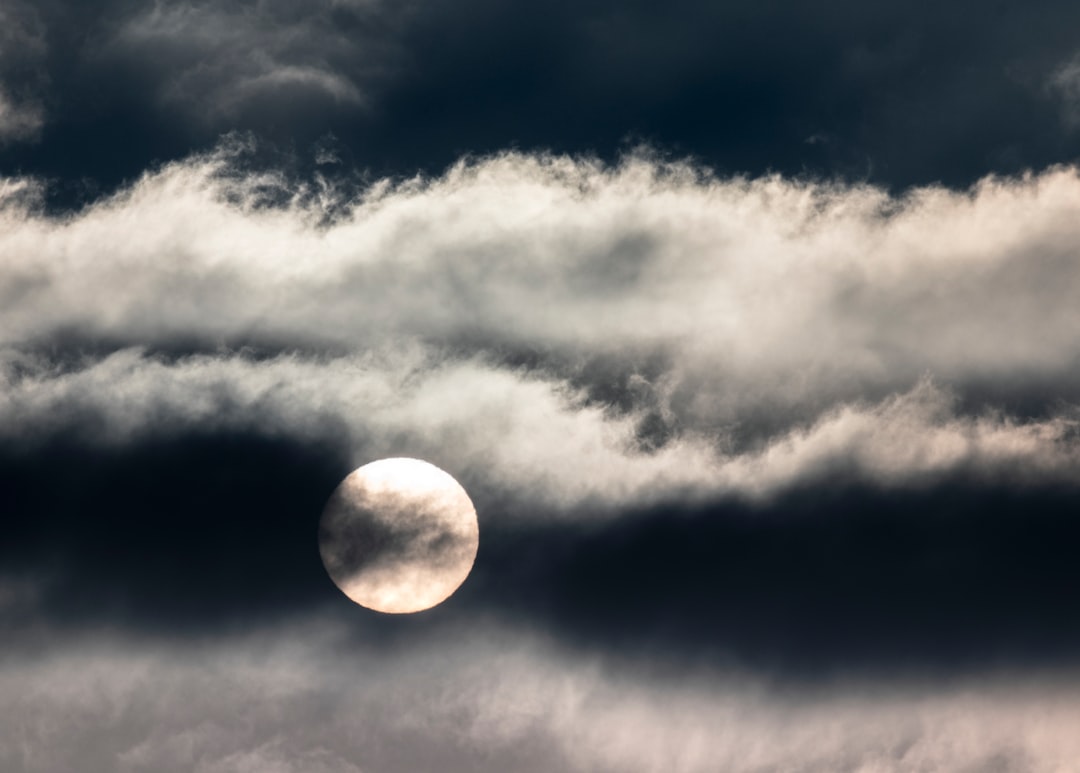
The term “dark side of the moon” refers to the far side of the Moon, which is permanently turned away from Earth due to tidal locking. This phenomenon occurs because the Moon’s rotational period matches its orbital period around Earth, causing the same hemisphere to always face our planet. Contrary to popular misconception, the far side receives equal amounts of sunlight as the near side and experiences regular day-night cycles.
The far side of the Moon exhibits significantly different geological characteristics compared to the near side. It contains substantially more impact craters and fewer maria (large, dark basaltic plains formed by ancient volcanic activity). The near side features approximately 31% maria coverage, while the far side contains only about 2%.
This asymmetry, known as the lunar dichotomy, results from differences in crustal thickness and composition between the two hemispheres. The far side’s terrain consists primarily of heavily cratered highlands with elevations generally higher than those on the near side. The South Pole-Aitken Basin, one of the largest impact structures in the solar system, dominates the southern portion of the far side.
This geological diversity has made the far side a target for scientific investigation, as it preserves a more complete record of early lunar bombardment and provides insights into the Moon’s formation and evolution.
Key Takeaways
- The Moon’s far side holds unexplored regions with unique geological features and mysteries.
- Evidence of ancient lunar volcanoes provides insights into the Moon’s volcanic history and evolution.
- NASA’s discovery of water on the Moon opens possibilities for sustained human presence and resource utilization.
- Analysis of lunar samples has deepened understanding of the Moon’s composition and formation.
- Future NASA missions aim to further explore the Moon, focusing on habitation, science, and potential resource extraction.
Lunar Volcanoes: Unraveling the Secrets of Moon’s Past
Lunar volcanoes offer a fascinating glimpse into the Moon’s geological past, revealing insights into its formation and evolution. Unlike Earth, where volcanic activity is ongoing, the Moon’s volcanic activity is believed to have ceased billions of years ago. However, evidence of ancient volcanic eruptions can be found in the form of vast lava plains and unique geological features.
These remnants provide clues about the Moon’s internal structure and thermal history, suggesting that it was once geologically active. The study of lunar volcanoes has led scientists to propose that the Moon may have experienced significant volcanic activity during its early history. The presence of large volcanic domes and rilles indicates that molten rock once flowed freely across its surface.
By analyzing these features, researchers can gain a better understanding of the Moon’s mantle composition and the processes that contributed to its cooling over time. This knowledge not only sheds light on the Moon’s past but also enhances our understanding of planetary formation in general.
Water on the Moon: NASA’s Discovery and its Implications

The discovery of water on the Moon has revolutionized our understanding of its potential for supporting future human exploration. NASA’s missions have identified water ice in permanently shadowed craters at the lunar poles, where temperatures remain extremely low. This finding has significant implications for future lunar missions, as water can be used for drinking, oxygen production, and even rocket fuel.
The presence of water on the Moon opens up possibilities for sustainable human presence and exploration beyond Earth. Moreover, the existence of water on the Moon raises intriguing questions about its origin. Scientists speculate that water may have been delivered by comets or formed through chemical reactions involving solar wind and lunar regolith.
Understanding how water came to exist on the Moon could provide insights into similar processes on other celestial bodies, potentially guiding future exploration efforts in our solar system.
The Moon’s Magnetic Field: Unraveling its Mysteries
The Moon’s magnetic field presents a captivating puzzle for scientists seeking to understand its geological history. Unlike Earth, which has a strong and dynamic magnetic field generated by its molten core, the Moon’s magnetic field is weak and patchy. This discrepancy raises questions about the Moon’s internal structure and whether it ever had a global magnetic field similar to Earth’s.
Some theories suggest that ancient lunar dynamo activity may have existed, but it ceased long ago. Recent studies have revealed localized magnetic anomalies on the lunar surface, indicating that certain regions possess stronger magnetic fields than others. These anomalies are thought to be remnants of an ancient magnetic field that may have existed when the Moon was still geologically active.
By investigating these magnetic features, scientists hope to gain insights into the Moon’s formation and evolution, as well as its interactions with solar wind and cosmic radiation.
Apollo Moon Missions: NASA’s Historic Exploration
| Moon Mystery | Description | NASA’s Official Explanation | Unexplained Aspects |
|---|---|---|---|
| Transient Lunar Phenomena (TLP) | Short-lived changes in light, color, or appearance on the lunar surface | Attributed to outgassing, electrostatic phenomena, or observational errors | Inconsistent occurrences and lack of definitive cause |
| Moon’s Hollow Core Theory | Hypothesis that the Moon may be hollow or contain large voids | Seismic data suggests a solid interior with a small core | Unusual seismic readings and low density raise questions |
| Unidentified Structures on the Moon | Reports of geometric shapes and anomalies in lunar photographs | Natural geological formations and image artifacts | Some formations appear too regular to be natural |
| Moon’s Origin | Standard theory: Giant impact hypothesis | Widely accepted but some isotopic similarities with Earth unexplained | Exact formation process and timing remain debated |
| Water Presence | Discovery of water ice in shadowed lunar craters | Confirmed by multiple missions; water is scarce and trapped | Amount and distribution still uncertain |
The Apollo missions stand as a monumental achievement in human exploration, marking humanity’s first steps on another celestial body.
These missions not only demonstrated technological prowess but also provided invaluable scientific data about the Moon’s geology, composition, and environment.
The iconic images of astronauts walking on the lunar surface continue to inspire generations. The Apollo program yielded a wealth of lunar samples that have been meticulously studied over the decades. These samples have revealed crucial information about the Moon’s age, composition, and geological processes.
The data collected during these missions laid the groundwork for future lunar exploration and sparked interest in understanding not only our natural satellite but also other celestial bodies in our solar system. The legacy of Apollo continues to influence contemporary space missions and research initiatives.
Lunar Samples: What Have They Revealed?

The lunar samples collected during the Apollo missions have proven to be a treasure trove of scientific knowledge. Over 800 pounds of lunar material were brought back to Earth, providing researchers with direct access to the Moon’s geology. These samples have undergone extensive analysis using advanced techniques, revealing insights into the Moon’s formation and evolution.
For instance, isotopic studies have helped determine the age of lunar rocks, indicating that the Moon is approximately 4.5 billion years old. In addition to age determination, lunar samples have shed light on the Moon’s volcanic history and surface processes. The presence of basaltic rocks suggests that volcanic activity played a significant role in shaping the lunar landscape.
Furthermore, studies of impact breccias—rocks formed from meteorite impacts—have provided insights into the frequency and scale of impacts on the Moon’s surface throughout its history. The ongoing analysis of these samples continues to yield new discoveries, enhancing our understanding of both the Moon and planetary science as a whole.
Moonquakes: Understanding the Moon’s Seismic Activity
Moonquakes present another intriguing aspect of lunar science, offering insights into the Moon’s internal structure and seismic activity. Unlike Earthquakes, which are caused by tectonic movements, moonquakes are believed to result from various factors such as tidal forces exerted by Earth and thermal expansion or contraction of the lunar surface. The Apollo missions equipped astronauts with seismometers that recorded these seismic events, providing valuable data for researchers.
The study of moonquakes has revealed that they can vary in intensity and duration, with some being relatively mild while others are more significant. Understanding these seismic events is crucial for future lunar exploration, as they can impact lander stability and human habitats on the Moon’s surface. By analyzing moonquake data, scientists aim to gain insights into the Moon’s internal structure and dynamics, contributing to a more comprehensive understanding of its geological history.
The Moon’s Atmosphere: NASA’s Findings and Implications
The Moon possesses an extremely thin atmosphere known as an exosphere, which is composed primarily of hydrogen, helium, neon, and trace amounts of other gases. NASA’s findings regarding this tenuous atmosphere have significant implications for future lunar exploration and habitation. Unlike Earth’s atmosphere, which provides protection from harmful radiation and maintains stable temperatures, the Moon’s exosphere offers little to no shielding from solar radiation or micrometeorite impacts.
Understanding the composition and behavior of the Moon’s exosphere is essential for planning future missions. For instance, astronauts will need to consider radiation exposure when designing habitats or conducting extravehicular activities on the lunar surface. Additionally, studying how dust particles interact with this thin atmosphere can inform strategies for mitigating dust-related challenges during lunar operations.
As NASA continues to investigate the Moon’s atmospheric conditions, it enhances our preparedness for sustained human presence on this celestial body.
Lunar Mysteries: Unexplained Anomalies and Phenomena
Despite extensive research and exploration, numerous mysteries surrounding the Moon remain unresolved. Unexplained anomalies such as transient lunar phenomena—brief flashes or changes in brightness observed on the lunar surface—continue to baffle scientists. These phenomena have been reported for centuries but lack definitive explanations.
Some theories suggest they may be related to outgassing or impacts from micrometeorites. Another intriguing mystery involves unusual features observed in certain regions of the Moon, such as strange formations or unexplained color variations in lunar soil. These anomalies challenge existing models of lunar geology and prompt further investigation into their origins.
As technology advances and new missions are planned, researchers hope to unravel these mysteries and gain deeper insights into the complexities of our nearest celestial neighbor.
The Moon’s Origin: NASA’s Theories and Research
The origin of the Moon has long been a subject of scientific inquiry, with several theories proposed over the years. One prevailing hypothesis suggests that the Moon formed from debris resulting from a colossal impact between Earth and a Mars-sized body known as Theia approximately 4.5 billion years ago. This giant impact theory explains many characteristics shared between Earth and its satellite, including their isotopic similarities.
NASA’s research into lunar samples has provided critical evidence supporting this theory while also raising new questions about how such an event could lead to a stable orbiting body like the Moon. Ongoing studies aim to refine our understanding of this formative event and explore alternative theories that may account for specific observations about lunar geology and composition. As scientists continue to investigate these origins, they contribute to a broader understanding of planetary formation processes across our solar system.
Future Lunar Exploration: NASA’s Plans and Missions
Looking ahead, NASA has ambitious plans for future lunar exploration aimed at establishing a sustainable human presence on the Moon by 2024 through its Artemis program. This initiative seeks not only to return astronauts to the lunar surface but also to lay groundwork for future missions to Mars and beyond. By utilizing advanced technologies and international partnerships, NASA aims to create a robust framework for ongoing exploration.
Future missions will focus on various scientific objectives, including studying polar regions where water ice is believed to exist and conducting experiments that could inform long-term habitation strategies. Additionally, robotic missions will play a crucial role in scouting potential landing sites and conducting preliminary research before human crews arrive. As humanity prepares for this new chapter in space exploration, it stands on the brink of unlocking further secrets held by our enigmatic neighbor—the Moon.
If you’re intrigued by the enigmatic aspects of the moon and the secrets that NASA may be keeping, you might want to explore the article titled “Moon Mysteries: What NASA Isn’t Telling Us” available on XFile Findings. This article delves into various theories and findings that suggest there is more to our lunar neighbor than meets the eye. You can read it here: Moon Mysteries: What NASA Isn’t Telling Us.
FAQs
What are some of the unexplained phenomena observed on the Moon?
Some unexplained phenomena on the Moon include transient lunar phenomena (TLP), which are short-lived changes in brightness or color on the lunar surface, and unusual geological formations that scientists are still studying to understand their origins.
Has NASA discovered anything on the Moon that has not been publicly disclosed?
NASA follows strict protocols for transparency and scientific reporting. While some data may be classified for national security reasons, the majority of lunar research findings are published and accessible to the public. There is no verified evidence that NASA is withholding significant discoveries about the Moon.
Are there any conspiracy theories related to the Moon that involve NASA?
Yes, there are various conspiracy theories claiming that NASA has hidden information about the Moon, such as evidence of extraterrestrial life or secret bases. However, these theories lack credible evidence and are not supported by the scientific community.
What is the significance of the Moon’s geological features studied by NASA?
NASA’s study of the Moon’s geological features helps scientists understand the history of the Moon, the Earth-Moon system, and the broader solar system. Features like craters, lava plains, and regolith provide insights into impact events, volcanic activity, and space weathering processes.
Why is the Moon important for future space exploration?
The Moon serves as a valuable platform for testing technologies and conducting scientific research that can support future missions to Mars and beyond. Its proximity to Earth makes it an ideal location for establishing bases, studying space environments, and developing sustainable space exploration methods.
Has NASA found any evidence of water on the Moon?
Yes, NASA missions have confirmed the presence of water ice in permanently shadowed craters near the Moon’s poles. This discovery is crucial for future lunar exploration as it could provide resources for drinking water, oxygen, and rocket fuel.
What are transient lunar phenomena (TLP)?
Transient lunar phenomena are temporary changes in the appearance of the lunar surface, such as flashes of light, color changes, or hazy areas. These events are rare and not fully understood, with hypotheses including outgassing, electrostatic activity, or impacts from micrometeorites.
Does NASA have plans for future Moon missions?
Yes, NASA has ongoing plans for lunar exploration, including the Artemis program, which aims to return humans to the Moon, establish a sustainable presence, and prepare for missions to Mars. These missions will involve both crewed and robotic spacecraft.