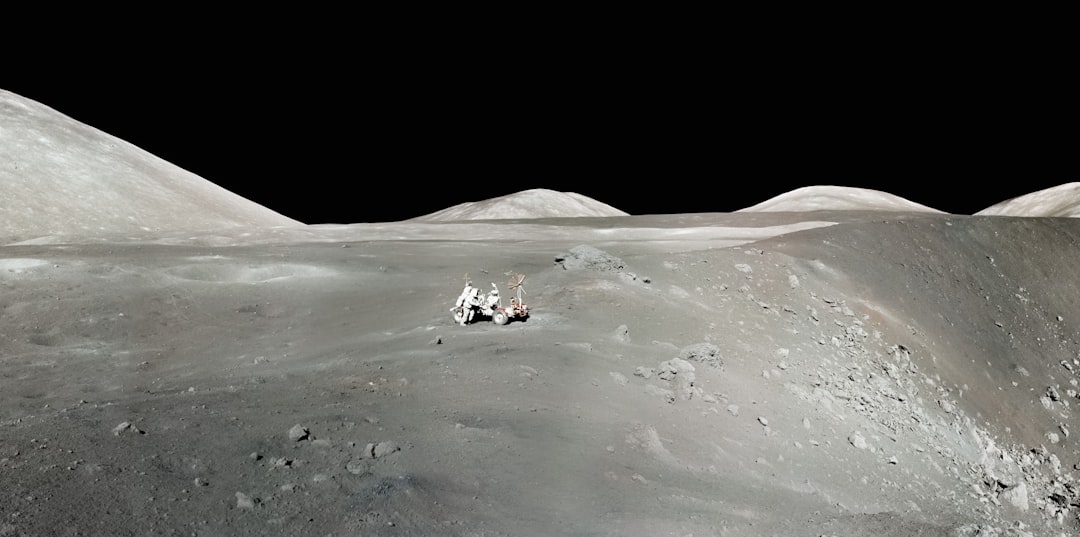
The Apollo Moon landing, a monumental achievement in human history, took place on July 20, 1969, when NASA’s Apollo 11 mission successfully landed astronauts Neil Armstrong and Buzz Aldrin on the lunar surface. This event marked the culmination of years of intense research, development, and competition during the Cold War era, particularly the Space Race between the United States and the Soviet Union. As Armstrong took his historic first step onto the Moon, he famously declared, “That’s one small step for man, one giant leap for mankind,” encapsulating the significance of this moment not just for America, but for humanity as a whole.
The mission was not merely a demonstration of technological prowess; it represented a profound leap in scientific understanding and exploration.
The lunar module, known as the Eagle, was designed to navigate the harsh conditions of space and land safely on the Moon’s surface.
The successful return of the astronauts to Earth further solidified the mission’s legacy, as it showcased human ingenuity and resilience in overcoming the challenges of space travel.
Key Takeaways
- The Apollo Moon Landing marked a historic achievement in space exploration.
- Various conspiracy theories question the authenticity of the moon landing.
- Missing tapes and moon rock controversies fuel skepticism among critics.
- Astronaut testimonies and scientific analysis support the legitimacy of the missions.
- Recent revelations and future space exploration continue to shape society’s view of space.
The Conspiracy Theories
Despite the overwhelming evidence supporting the authenticity of the Apollo Moon landing, conspiracy theories have emerged over the decades, suggesting that the entire event was staged. These theories often claim that the U.S. government fabricated the Moon landing to assert its dominance in the Space Race and distract from domestic issues.
Proponents of these theories point to perceived inconsistencies in photographs and videos from the mission, arguing that shadows appear unnatural or that the American flag appears to wave in a vacuum. Such conspiracy theories have gained traction in popular culture, fueled by documentaries, books, and online forums that question the veracity of the Moon landing. Skeptics often cite supposed anomalies in the lunar landscape or claim that certain scientific principles were violated during the mission.
However, experts in photography and physics have consistently debunked these claims, explaining how lighting conditions and camera technology can create illusions that mislead observers. Despite this, the allure of conspiracy theories continues to captivate a segment of the population, reflecting broader themes of distrust in government institutions.
The Missing Tapes
One of the more intriguing aspects surrounding the Apollo Moon landing is the story of the missing tapes. In 2006, it was revealed that NASA had lost the original SSTV (Slow Scan Television) recordings of the Apollo 11 Moon landing. These tapes contained high-quality footage transmitted directly from the lunar module during its historic descent and landing.
The loss of such crucial material raised eyebrows and fueled speculation about what else might have been concealed or mishandled by government agencies. NASA’s explanation for the missing tapes was that they had been inadvertently erased and reused due to a lack of foresight regarding their historical significance. This incident has led to questions about archival practices within government agencies and whether important historical records are adequately preserved.
While some conspiracy theorists have seized upon this narrative as evidence of a cover-up, historians and archivists emphasize that such losses are not uncommon in large organizations where resources are limited and priorities shift over time.
The Moon Rock Controversy
The Moon rock controversy adds another layer of complexity to discussions surrounding the Apollo missions. During the Apollo program, astronauts brought back a total of 382 kilograms (842 pounds) of lunar material, which was distributed to various countries and institutions as symbols of international cooperation in space exploration. However, some of these Moon rocks have become subjects of controversy due to allegations of theft or misattribution.
One notable case involved a Moon rock given to the Netherlands in 1969, which was later discovered to be a piece of petrified wood rather than genuine lunar material. Similarly, several other rocks have been lost or misplaced over the years, leading to questions about their authenticity and provenance. These incidents have fueled conspiracy theories suggesting that not all Moon rocks are genuine or that they were fabricated entirely.
Nevertheless, scientific analysis has consistently confirmed the authenticity of most lunar samples returned by Apollo missions, reinforcing their significance as invaluable resources for understanding the Moon’s geology.
The Unexplained Anomalies
| Metric | Details | Source | Notes |
|---|---|---|---|
| Number of Apollo Moon Landings | 6 successful manned missions (Apollo 11, 12, 14, 15, 16, 17) | NASA Official Records | All missions confirmed with extensive documentation and samples |
| Conspiracy Theories Circulation | High since 1970s | Public Opinion Surveys | Claims include staged landings and secret programs |
| NASA Secret Program Evidence | No verified evidence available | Scientific Community Consensus | Most claims debunked by experts and independent analysis |
| Moon Rocks Analyzed | 382 kg of lunar samples | NASA and International Labs | Samples verified as extraterrestrial by multiple countries |
| Independent Verification | Radar tracking and satellite imagery | Global Space Agencies | Supports authenticity of moon landings |
Throughout the years, various unexplained anomalies have emerged from photographs and data collected during the Apollo missions. Some enthusiasts have pointed to peculiar formations or objects captured in images as evidence of extraterrestrial life or advanced technology on the Moon’s surface. These claims often rely on selective interpretation of visual data, leading to sensationalized conclusions that lack scientific backing.
For instance, certain images show unusual shadows or structures that some claim resemble artificial constructs. However, experts in geology and photography argue that these anomalies can be attributed to natural geological formations or optical illusions created by lighting conditions on the lunar surface. While curiosity about these anomalies is natural, it is essential to approach such claims with a critical eye and rely on scientific inquiry rather than speculation.
The Testimonies of Astronauts
The testimonies of astronauts who participated in the Apollo missions provide compelling evidence supporting the reality of lunar landings. Neil Armstrong, Buzz Aldrin, and other astronauts have consistently recounted their experiences with vivid detail, describing their training, preparations, and emotions during their historic journeys. Their firsthand accounts offer invaluable insights into the challenges they faced and the triumphs they achieved while exploring an alien world.
Moreover, many astronauts have expressed their deep sense of responsibility in representing humanity during their missions. They often emphasize that their experiences on the Moon were not just personal achievements but milestones for all humankind. Their unwavering commitment to sharing their stories has helped dispel doubts surrounding the authenticity of their missions and has inspired generations to pursue careers in science and engineering.
The Government Cover-Up
The notion of a government cover-up surrounding the Apollo Moon landing has been a persistent theme among conspiracy theorists. Some argue that NASA orchestrated an elaborate deception to maintain public support for space exploration while diverting attention from pressing social issues at home. This narrative suggests that officials manipulated evidence and controlled information to create a façade of success.
However, this perspective overlooks the extensive collaboration involved in space missions. Thousands of individuals contributed to Apollo’s success across various sectors—scientific research, engineering, logistics—making it implausible for such a vast conspiracy to remain hidden for decades. Furthermore, numerous independent organizations and international observers monitored NASA’s activities during this period, providing additional layers of accountability that would be difficult to circumvent.
The Recent Revelations
In recent years, new revelations regarding space exploration have emerged that continue to shape public perception of past missions like Apollo 11. Advances in technology have allowed scientists to analyze lunar samples with unprecedented precision, yielding fresh insights into the Moon’s geological history. Additionally, renewed interest in lunar exploration has led to discussions about returning humans to the Moon and establishing a sustainable presence there.
These developments have reignited public fascination with space travel and prompted renewed scrutiny of historical missions. As new data emerges from ongoing research and exploration efforts, it becomes increasingly clear that understanding humanity’s past endeavors in space is crucial for shaping future missions. The lessons learned from Apollo can inform contemporary approaches to exploration while addressing lingering questions about our place in the cosmos.
The Scientific Analysis
Scientific analysis plays a pivotal role in validating the findings from Apollo missions and dispelling myths surrounding them. Researchers have conducted extensive studies on lunar samples brought back by astronauts, revealing critical information about the Moon’s composition and geological processes. These analyses have confirmed that lunar rocks possess unique isotopic signatures distinct from terrestrial materials.
Moreover, advancements in technology have enabled scientists to conduct remote sensing studies using satellites orbiting the Moon. These studies provide additional context for understanding lunar geology and support findings from earlier missions. By combining historical data with modern techniques, researchers continue to build a comprehensive picture of our nearest celestial neighbor while reinforcing confidence in past achievements.
The Future of Space Exploration
As humanity looks toward future endeavors in space exploration, lessons learned from Apollo will undoubtedly inform new missions. Plans for returning humans to the Moon under NASA’s Artemis program aim not only to revisit previous landing sites but also to establish a sustainable presence on the lunar surface. This initiative seeks to pave the way for future manned missions to Mars and beyond.
International collaboration is also becoming increasingly important as nations recognize that space exploration transcends borders. Partnerships between countries can enhance scientific research while fostering goodwill among nations.
The Impact on Society
The impact of the Apollo Moon landing on society cannot be overstated; it inspired generations to dream big and pursue careers in science, technology, engineering, and mathematics (STEM). The mission served as a catalyst for educational initiatives aimed at fostering interest in these fields among young people worldwide. Moreover, it instilled a sense of unity among nations as they collectively celebrated humanity’s achievements beyond Earth.
In addition to inspiring future generations, Apollo’s legacy continues to shape cultural narratives around exploration and innovation today. The spirit of curiosity ignited by this monumental event remains alive as society grapples with pressing challenges such as climate change and technological advancement. Ultimately, Apollo serves as a reminder that when humanity comes together with purpose and determination, remarkable achievements are possible—both on Earth and beyond.
For those interested in exploring the intriguing theories surrounding NASA’s secret programs and the truth behind the moon landing, a related article can be found on XFile Findings. This resource delves into various conspiracy theories and offers insights into the mysteries that continue to captivate the public’s imagination. You can read more about it in their article [here](https://www.xfilefindings.com/).
WATCH THIS! 🚀 THE ALIEN ENGINE THAT SAVED APOLLO 11 (And Why NASA Hid It for 60 Years)
FAQs
What is the NASA secret program related to the moon landing?
There is no verified evidence of a secret NASA program specifically related to the moon landing beyond the publicly known Apollo missions. NASA’s Apollo program, which successfully landed astronauts on the moon between 1969 and 1972, is well-documented and publicly available.
Did NASA hide the truth about the moon landing?
No credible evidence supports the claim that NASA hid the truth about the moon landing. The Apollo moon landings have been extensively verified through multiple sources, including telemetry data, rock samples, photographs, and independent tracking by other countries.
Are there conspiracy theories about the moon landing being faked?
Yes, some conspiracy theories claim the moon landings were staged or faked. However, these theories have been debunked by experts, scientists, and extensive evidence supporting the authenticity of the Apollo missions.
What evidence confirms the moon landings were real?
Evidence includes moon rock samples analyzed worldwide, photographs and videos taken on the lunar surface, telemetry data, and the retroreflectors left on the moon that are still used for laser ranging experiments. Additionally, third-party tracking by other countries during the missions supports their authenticity.
Has NASA ever acknowledged any secret programs related to the moon?
NASA has not publicly acknowledged any secret programs related to the moon landings beyond the Apollo missions. All official information about lunar exploration is available through NASA’s archives and publications.
Where can I find reliable information about the Apollo moon landings?
Reliable information can be found on NASA’s official website, scientific journals, historical archives, and reputable space history books. Many universities and space agencies also provide educational resources about the Apollo program.