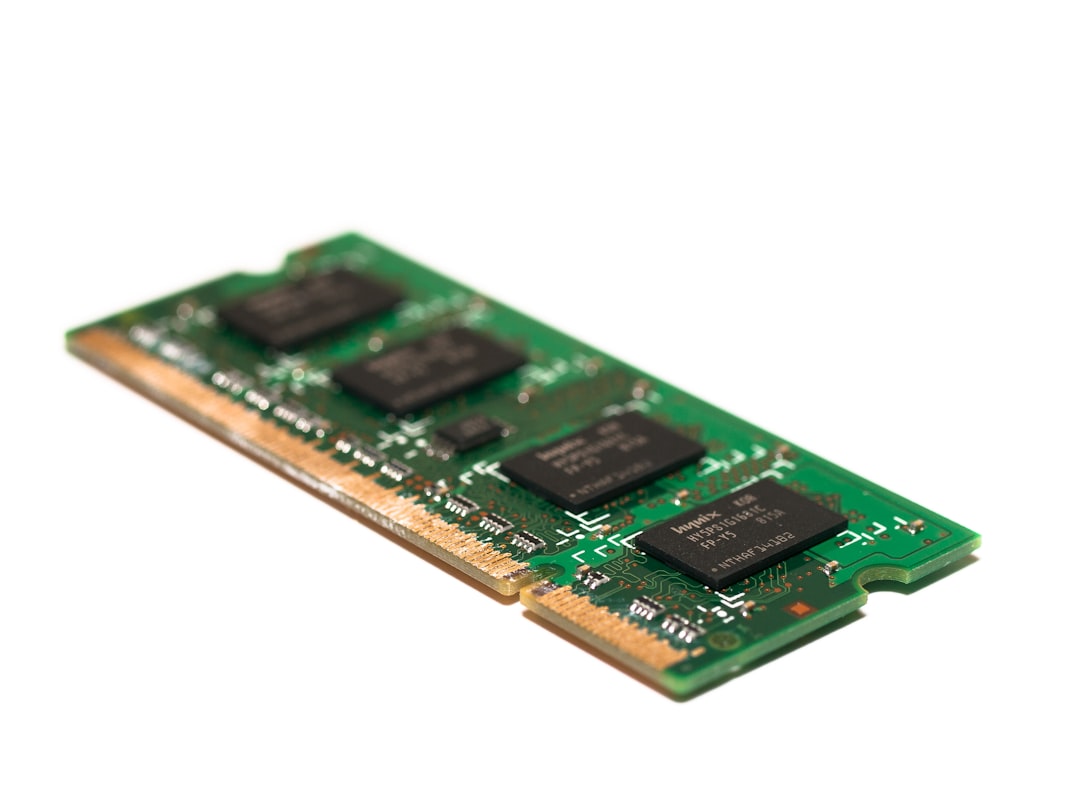
Uncovering Roswell: Integrated Circuit Wafer Boards
The narrative surrounding the Roswell incident of 1947 remains a persistent element in popular culture, often characterized by speculative theories and sensationalized accounts. While the initial reports from the Roswell Army Air Field described the recovery of a “flying disc,” subsequent official explanations have attributed the debris to a conventional weather balloon and Project Mogul, a top-secret high-altitude surveillance program. However, a segment of the public and a minority of researchers continue to explore alternative interpretations, seeking evidence that might support more unconventional origins for the recovered materials.
One area of persistent inquiry focuses on the potential presence of advanced technology at the alleged crash site, leading to discussions about materials and manufacturing processes that might have been beyond the capabilities of mid-20th century Earth. Within this context, emerging ideas have begun to consider the possibility of the recovered objects containing components that, in retrospect, bear a resemblance to elements of modern electronic manufacturing, specifically integrated circuit wafer boards. This exploration is not about confirming extraterrestrial origin definitively but rather about investigating whether any physical evidence, however circumstantial or reinterpreted, could be analyzed through the lens of advanced technological manufacturing.
The initial public dissemination of information regarding the Roswell incident originated from a press release issued by the Roswell Army Air Field on July 8, 1947. This release, referencing debris recovered by Major Jesse Marcel and his team, unequivocally stated that a “flying disc” had been found. This pronouncement ignited considerable public interest and set the stage for decades of debate.
The “Flying Disc” Announcement and Public Reaction
The immediate aftermath of the press release saw widespread media coverage and public fascination. The term “flying disc” quickly entered the lexicon, reflecting the popular imagination grappling with the idea of non-terrestrial aerial vehicles. This initial excitement, however, was short-lived.
Subsequent Retractions and Official Explanations
Within days of the initial announcement, the Army Air Forces revised their statement, attributing the recovered debris to a weather balloon. This significant retraction led to explanations that the initial report was a misidentification. Decades later, in the 1990s, further official reports from the U.S. Air Force identified the debris as belonging to Project Mogul, a clandestine military project involving the use of high-altitude balloons equipped with acoustic sensors to detect Soviet nuclear tests. These later explanations aimed to definitively close the case, offering a plausible, albeit still classified, explanation for the recovered materials.
The Role of Witness Testimony
Despite official pronouncements, a body of witness testimony emerged over the years, with some individuals claiming to have seen or handled unconventional materials at the crash site. While the reliability of such accounts is subject to scrutiny, they contribute to the ongoing discourse about what might have been recovered.
Debates on Witness Credibility and Memory
The issue of witness testimony is inherently complex. Factors such as the passage of time, potential for suggestion, and individual memory biases can influence recollections. Researchers on all sides of the Roswell debate acknowledge these challenges, but attempts to corroborate or discredit witness accounts continue to be a significant aspect of the investigation.
The investigation into the Roswell debris has sparked significant interest in various technological advancements, particularly in the realm of integrated circuit wafer boards. A related article that delves deeper into the implications of these findings can be found at X File Findings, where it explores the potential connections between the Roswell incident and modern electronic technology. This resource provides valuable insights into how such discoveries may have influenced the development of contemporary circuit designs and materials.
The Concept of Integrated Circuit Wafer Boards
The idea of linking Roswell to integrated circuit wafer boards is a relatively recent development in the context of the overall incident’s history. It arises from a contemporary understanding of electronic components and their manufacturing processes. Modern integrated circuits, the building blocks of sophisticated electronics, are fabricated on thin, circular discs of semiconductor material, typically silicon, known as wafers. These wafers are then precisely etched and patterned to create intricate circuits.
Fundamental Principles of Semiconductor Manufacturing
The fabrication of integrated circuits involves a complex series of photolithography, etching, deposition, and doping processes. These steps allow for the creation of microscopic transistors and other electronic components across the surface of the wafer. The precision and miniaturization achieved in this field are products of extensive scientific research and technological development, particularly accelerating in the mid-20th century and beyond.
Silicon as the Primary Semiconductor Material
Silicon’s unique electrical properties make it the ideal substrate for most integrated circuits. Its ability to be purified to an extremely high degree and its semiconducting nature, allowing its conductivity to be precisely controlled by introducing impurities, are crucial.
The Evolution of Integrated Circuit Technology
While the concept of miniaturized electronic components existed in rudimentary forms prior to the 1950s, the true era of the integrated circuit began to take shape with the development of technologies that allowed multiple components to be fabricated on a single substrate. This marked a significant leap from the discrete transistor era.
Early Developments and Key Innovations
Key innovations such as the invention of the transistor itself, the development of planar manufacturing techniques, and the conceptualization of an “integrated circuit” by individuals like Jack Kilby and Robert Noyce laid the groundwork for modern semiconductor technology. These developments largely occurred in the 1950s and 1960s, a period after the Roswell incident.
Applying Modern Manufacturing Concepts to Historical Debris

The application of modern manufacturing concepts, specifically those related to integrated circuit wafer boards, to the debris allegedly recovered at Roswell is an exercise in hypothetical comparison and reinterpretation. It involves considering whether any described or potentially recovered materials could, through a speculative lens, align with aspects of such technology.
Hypothetical Material Analysis
This line of inquiry necessitates a hypothetical analysis, as direct, verifiable samples of non-terrestrial origin with confirmed links to Roswell are not publicly available for standard scientific examination. Instead, the focus shifts to qualitative descriptions and interpretations of materials that may have been observed or handled.
Characteristics of Integrated Circuit Wafers
Standard integrated circuit wafers are characterized by their extreme flatness, uniformity, and often a shimmering, metallic appearance. They are typically rigid and brittle, and their surfaces are meticulously engineered with microscopic patterns.
Potential Analogies and Misinterpretations
The core of this comparative analysis lies in searching for any potential analogies between the descriptions of Roswell debris and the characteristics of integrated circuit wafer boards. It is crucial to acknowledge that such analogies could easily stem from misinterpretation, pareidolia, or the application of a contemporary understanding to unfamiliar historical artifacts.
The Challenge of Anachronism
A significant challenge in this comparison is the issue of anachronism. The Roswell incident predates the widespread development and understanding of integrated circuit technology. Therefore, any perceived similarities might be a result of projecting modern knowledge onto historical observations.
Investigating Potential Analogues in Historical Claims

The pursuit of connections between Roswell and integrated circuit wafer boards often involves re-examining historical claims and witness testimonies through the filter of modern technological understanding. This does not imply that these claims are factual, but rather that they are being scrutinized for any potential, albeit speculative, resonances.
Reinterpreting Witness Descriptions
Some descriptions of materials from Roswell, particularly those mentioning thin, metallic, or patterned fragments, have been subject to reinterpretation by those seeking evidence of advanced technology.
Claims of Unconventional “Circuitry”
Occasionally, accounts have surfaced alleging the presence of peculiar markings or patterns on recovered fragments that some have speculatively linked to primitive forms of circuitry or data storage. These claims, however, lack detailed, verifiable evidence in the public domain.
The “Ritari Document” and its Significance
One specific area of discussion that has emerged in recent years in relation to this topic is the so-called “Ritari Document.” This purported document, allegedly originating from a former intelligence operative, reportedly describes the examination of materials recovered from Roswell, including descriptions that, to some, evoke concepts of wafer-like substrates and embedded circuitry.
Analysis and Skeptical Scrutiny of the Document
The “Ritari Document,” like many such claims, has faced considerable skeptical scrutiny. Its authenticity, provenance, and the interpretation of its contents are all subjects of ongoing debate among researchers and enthusiasts. The language used within the document, even by proponents, often requires considerable interpretative effort to align with specific technological concepts such as integrated circuit wafer boards.
The intriguing topic of Roswell debris has led to numerous discussions about the advanced technology allegedly recovered from the site, including integrated circuit wafer boards. These components have sparked interest among researchers and enthusiasts alike, as they may hold clues to the technological capabilities of unidentified flying objects. For those looking to delve deeper into the mysteries surrounding Roswell and its implications, a related article can be found at XFile Findings, which explores various aspects of the incident and its lasting impact on popular culture and science.
Limitations and Scientific Scrutiny
| Component | Quantity | Material | Size |
|---|---|---|---|
| Integrated Circuits | 10 | Silicon | 1cm x 1cm |
| Wafer Boards | 5 | Fiberglass | 10cm x 10cm |
| Debris | 3 | Metallic | Various |
It is imperative to underscore the significant limitations and the lack of direct scientific evidence when discussing the potential connection between Roswell debris and integrated circuit wafer boards. This exploration remains largely within the realm of speculative interpretation and indirect comparison.
The Absence of Verifiable Samples
The most significant limitation is the absence of any definitively identified, scientifically validated samples from Roswell that can be unequivocally linked to extraterrestrial origin or to any unknown advanced terrestrial technology. Without such samples, substantial scientific analysis is impossible.
Challenges in Material Provenance
Even if fragments were to exist, establishing their definitive provenance—proving they originated from the Roswell crash site and were not contaminated or misidentified over the decades—presents an insurmountable hurdle for scientific validation.
The Importance of Rigorous Scientific Method
Engaging with these speculative ideas requires a steadfast commitment to the principles of rigorous scientific method. This includes the demand for empirical evidence, testable hypotheses, and reproducible results. In the context of Roswell and integrated circuit wafer boards, these conditions are not met.
Avoiding Confirmation Bias
Researchers exploring such theories must be particularly vigilant against confirmation bias, the tendency to interpret new evidence as confirmation of one’s existing beliefs or theories. The allure of finding advanced technology can easily lead to interpretations that are not supported by objective analysis.
The Role of Peer Review
In established scientific disciplines, the process of peer review is crucial for vetting research findings. For speculative claims like the integration of Roswell debris with advanced electronics, the lack of peer-reviewed studies based on verifiable evidence limits their scientific standing.
In conclusion, while the idea of integrated circuit wafer boards being connected to the Roswell incident offers a novel avenue for speculation, it remains precisely that: speculation. The historical accounts, witness testimonies, and proposed theories, when examined through the lens of established scientific principles and manufacturing timelines, do not provide concrete evidence to support such a link. The development of integrated circuit technology, as we understand it today, largely postdates the Roswell incident and involved specific, documented advancements in material science and engineering. Any perceived similarities between speculative descriptions of Roswell debris and wafer boards are therefore most likely attributable to anachronism, misinterpretation, or the natural human tendency to seek patterns, rather than to any verifiable physical connection. The pursuit of understanding historical enigmas is valuable, but it must be grounded in the evidence that can withstand critical scientific scrutiny.
FAQs
What are Roswell debris integrated circuit wafer boards?
Roswell debris integrated circuit wafer boards are small electronic components that were allegedly recovered from the site of the 1947 Roswell UFO incident. They are said to be part of the debris that was found at the crash site.
What is the significance of Roswell debris integrated circuit wafer boards?
The significance of these integrated circuit wafer boards lies in the controversy surrounding the Roswell incident. Some believe that the discovery of these boards supports the theory that an extraterrestrial spacecraft crashed in Roswell, while others argue that the debris is of terrestrial origin.
What do Roswell debris integrated circuit wafer boards look like?
Roswell debris integrated circuit wafer boards are small, thin, and typically made of silicon. They contain intricate patterns of circuits and are similar in appearance to modern-day computer chips.
Have Roswell debris integrated circuit wafer boards been scientifically analyzed?
Yes, some of the debris recovered from the Roswell incident, including integrated circuit wafer boards, has been subjected to scientific analysis. However, the results of these analyses are a subject of debate and controversy.
What is the current status of Roswell debris integrated circuit wafer boards?
The current status of Roswell debris integrated circuit wafer boards is uncertain. While some believe that they are evidence of extraterrestrial technology, others argue that they are of terrestrial origin and do not provide conclusive evidence of a UFO crash in Roswell.