Understanding Orbital Mechanics: A Simplified Explanation
Orbital mechanics, a branch of astrodynamics, governs the motion of objects in space under the influence of gravity. It’s the science that allows us to predict where planets will be in their cosmic dance, how satellites will stay in orbit around Earth, and how spacecraft will navigate the vast distances between celestial bodies. While the mathematics involved can be complex, the fundamental principles are surprisingly intuitive, rooted in Newton’s laws of motion and universal gravitation. This article aims to demystify orbital mechanics, providing a simplified explanation of its core concepts, making the universe’s grand ballet accessible to a wider audience. We’ll explore the forces at play, the shapes of orbits, and the factors that determine an object’s celestial path, all without diving into the deep end of calculus.
At its heart, orbital mechanics is a delicate balance between two fundamental forces: gravity and inertia. Without gravity, an object in motion would continue in a straight line forever. Without inertia, an object would be pulled inexorably towards any massive body it encountered. It is the interplay of these two, however, that creates the stable, predictable orbits we observe throughout the cosmos.
Gravity’s Grasp
Gravity, as famously described by Sir Isaac Newton, is a force of attraction between any two objects with mass. The more massive an object, the stronger its gravitational pull. This is why planets orbit stars, moons orbit planets, and satellites orbit Earth. The force of gravity pulls an object towards the center of another, more massive object. Imagine a ball tied to a string, being swung around your head. Your hand, applying tension through the string, is analogous to the force of gravity.
Newton’s Law of Universal Gravitation
Newton’s groundbreaking law quantifies this force. It states that the gravitational force between two objects is directly proportional to the product of their masses and inversely proportional to the square of the distance between their centers. Mathematically, this is represented as:
$F = G \frac{m_1 m_2}{r^2}$
Where:
- $F$ is the gravitational force.
- $G$ is the gravitational constant.
- $m_1$ and $m_2$ are the masses of the two objects.
- $r$ is the distance between the centers of the two objects.
This formula highlights a few crucial aspects. Firstly, the greater the masses of the objects involved, the stronger the gravitational attraction. This is why the Sun, with its immense mass, holds all the planets in orbit. Secondly, as the distance between the objects increases, the gravitational force diminishes rapidly. The inverse square relationship means that if you double the distance, the force becomes four times weaker. This explains why the gravitational influence of distant stars is negligible compared to our own Sun.
The Persistence of Motion: Inertia
Inertia, on the other hand, is the tendency of an object to resist changes in its state of motion. An object at rest tends to stay at rest, and an object in motion tends to stay in motion with the same speed and in the same direction. This is Newton’s First Law of Motion, also known as the law of inertia.
The Role of Velocity
When we talk about orbits, it’s the inertia of a moving object that prevents it from falling directly into the more massive body. Imagine throwing a ball horizontally. It moves forward due to its initial velocity (inertia), but gravity pulls it downwards, causing it to follow a curved path. If you could throw it fast enough, it would travel so far horizontally before hitting the ground that the ground itself would curve away beneath it. This is the essence of an orbit. The object is continuously falling towards the central body, but its sideways velocity is so great that it constantly “misses” it.
Speed is Key
The speed of an orbiting object is critical. If an object is moving too slowly, gravity will overcome its inertia, and it will spiral inwards. If it’s moving too fast, it might escape the gravitational pull altogether. The precise speed required for a stable orbit depends on the mass of the central body and the distance from its center. For a perfectly circular orbit, there’s a specific speed that perfectly balances the inward pull of gravity with the outward tendency of inertia.
For those interested in a deeper understanding of orbital mechanics, a related article can be found at XFile Findings, which explores the fundamental principles governing the motion of celestial bodies. This article delves into the laws of gravitation, the dynamics of orbits, and the mathematical models used to predict the trajectories of satellites and spacecraft, making it an excellent resource for both students and enthusiasts of astrophysics.
The Shapes of Orbits: Ellipses, Circles, and Beyond
While we often visualize orbits as perfect circles, the reality is that most celestial bodies follow elliptical paths. This understanding, first articulated by Johannes Kepler, is a cornerstone of orbital mechanics.
Kepler’s Laws of Planetary Motion
Johannes Kepler, a 17th-century astronomer, analyzed vast amounts of observational data and formulated three fundamental laws that describe the motion of planets around the Sun. These laws, derived empirically, were later explained by Newton’s theory of gravity.
First Law: The Law of Ellipses
Kepler’s First Law states that the orbit of every planet is an ellipse with the Sun at one of the two foci. An ellipse is a closed curve, similar to a stretched circle. It has two focal points, and the sum of the distances from any point on the ellipse to the two foci is constant. In planetary orbits, the Sun is at one of these foci.
Eccentricity: The Measure of Ellipticalness
The degree to which an ellipse is stretched is measured by its eccentricity.
- An eccentricity of 0 represents a perfect circle.
- An eccentricity between 0 and 1 represents an ellipse.
- As the eccentricity approaches 1, the ellipse becomes more elongated.
While all planets in our solar system have elliptical orbits, their eccentricities are generally quite small, meaning they are very close to being circular. However, some comets, like Halley’s Comet, have highly eccentric orbits, taking them from the inner solar system to the far reaches of the outer solar system and back again.
Second Law: The Law of Equal Areas
Kepler’s Second Law states that a line joining a planet and the Sun sweeps out equal areas during equal intervals of time. This means that a planet moves faster when it is closer to the Sun and slower when it is farther away.
Perihelion and Aphelion
- Perihelion: The point in an orbit where an object is closest to the Sun. At perihelion, the object moves at its fastest speed.
- Aphelion: The point in an orbit where an object is farthest from the Sun. At aphelion, the object moves at its slowest speed.
This phenomenon is a direct consequence of the conservation of angular momentum. As the object gets closer to the Sun, its distance decreases, so its speed must increase to keep its angular momentum constant.
Third Law: The Law of Harmonies
Kepler’s Third Law relates the orbital period of a planet to the size of its orbit. It states that the square of the orbital period is proportional to the cube of the semi-major axis of its orbit. For circular orbits, the semi-major axis is simply the radius.
Orbital Period and Orbital Radius
This law provides a powerful tool for understanding the relationship between how long it takes an object to complete an orbit and how far away it is from the central body. For example, Mercury, being closer to the Sun, has a much shorter orbital period (about 88 Earth days) than Neptune, which is much farther away and takes about 165 Earth years to complete one orbit.
Beyond Ellipses: Hyperbolic and Parabolic Orbits
While Kepler’s laws primarily describe bound orbits (ellipses and circles), there are also unbound orbits: parabolic and hyperbolic.
Parabolic Orbits
A parabolic orbit is a special case where an object has just enough energy to escape the gravitational pull of the central body, but not enough to go into a hyperbolic orbit. Objects on parabolic trajectories will pass through the system once and never return. Comets that are not gravitationally bound to the Sun often follow parabolic paths.
Hyperbolic Orbits
Objects on hyperbolic orbits have more than enough energy to escape the gravitational pull of the central body. They will approach the central body, be deflected by its gravity, and then travel away, never to return. These are the paths of interstellar objects or spacecraft that are being flung out of a solar system.
Factors Affecting Orbital Motion
Several factors can influence an object’s orbital path. While gravity and initial velocity are the primary drivers, external forces and the properties of the orbiting object itself can cause deviations and changes over time.
Mass of the Central Body
As we’ve seen, the mass of the central body is paramount. A more massive central body exerts a stronger gravitational pull, requiring a higher orbital velocity for a given distance to maintain a stable orbit. This is why planets orbit stars, which are far more massive than the planets themselves.
Gravitational Influence
The gravitational influence of a massive object dictates the “depth” of the gravitational well it creates. Objects falling into this well will accelerate. For an orbit to form, the object’s sideways velocity must be sufficient to counteract this continuous acceleration towards the center.
Orbital Velocity
The speed at which an object moves is critical. As discussed, there’s a specific velocity for a circular orbit at a given radius. Deviations from this velocity will result in an elliptical orbit.
Escape Velocity
A key concept related to orbital velocity is escape velocity. This is the minimum speed an object needs to completely break free from the gravitational pull of a celestial body. For Earth, the escape velocity is approximately 11.2 kilometers per second (about 25,000 miles per hour). Any object launched at or above this speed will not enter orbit but will instead travel into interstellar space.
Altitude and Distance from the Central Body
The altitude or distance from the central body directly impacts the gravitational force experienced and the required orbital velocity. Objects at higher altitudes experience weaker gravitational forces and therefore require slower orbital speeds for stable orbits. Conversely, objects closer to the central body experience stronger gravity and need to move faster to stay in orbit.
The Inverse Square Law in Action
The inverse square law of gravity ($1/r^2$) dictates that as distance ($r$) increases, the gravitational force decreases rapidly. This means that the gravitational “grip” of a central body weakens significantly with distance, allowing for slower orbital speeds at greater altitudes.
The Influence of Other Celestial Bodies
In reality, orbits are rarely perfect ellipses dictated by a single central body. The gravitational pull of other celestial bodies, such as other planets, moons, or even distant stars, can perturb these orbits.
Gravitational Perturbations
These perturbations are usually small but can accumulate over long periods, causing gradual changes in an orbit. For example, the Moon’s gravitational pull affects Earth’s orbit, and the orbits of planets in the solar system are subtly influenced by each other. Spacecraft trajectories are carefully calculated to account for these gravitational influences.
Tidal Forces
Tidal forces are a consequence of the variation in gravitational pull across an object. The side of an object closer to a massive body experiences a stronger pull than the side farther away. This differential pull can cause stretching and deformation, which is responsible for phenomena like ocean tides on Earth. While not directly an orbital mechanic, tidal forces can influence the evolution of orbits over very long timescales, particularly for close binary systems or moons.
Reaching and Maintaining Orbits: The Rocket Equation and Beyond
Getting an object into orbit and keeping it there involves overcoming Earth’s gravity and then maintaining a precise velocity. This is where the principles of rocketry and orbital maneuvering come into play.
The Rocket Equation: The Foundation of Spaceflight
The Tsiolkovsky rocket equation is a fundamental principle in rocketry, describing how a rocket’s velocity changes as it expends propellant. It essentially states that a rocket’s final velocity depends on the exhaust velocity of its engines and the ratio of its initial mass (with fuel) to its final mass (without fuel).
Delta-V: The “Change in Velocity” Budget
In orbital mechanics, the concept of “delta-v” (change in velocity) is crucial. Each maneuver required to enter orbit, change orbit, or travel to another destination requires a certain delta-v. Rockets are designed to provide this delta-v. The rocket equation helps engineers calculate how much propellant is needed to achieve a specific delta-v.
Launching into Orbit
To launch a rocket into orbit, it needs to achieve a horizontal velocity that is high enough to ensure it doesn’t fall back to Earth. This is often referred to as reaching orbital velocity. The launch trajectory is carefully designed to gradually build up this horizontal speed while simultaneously gaining altitude.
Orbital Maneuvers: Changing Your Celestial Address
Once in orbit, spacecraft can perform maneuvers to change their orbital parameters, such as their altitude, inclination, or shape. These maneuvers are typically performed by firing thrusters.
Changing Altitude
To increase altitude, a spacecraft typically fires its engines in the direction of its motion. This provides a boost in velocity, which elongates the orbit on the opposite side, taking it to a higher altitude. To decrease altitude, the spacecraft fires its engines against its direction of motion, slowing it down and causing its orbit to lower.
Changing Inclination
The inclination of an orbit refers to the angle between the orbital plane and a reference plane (usually Earth’s equatorial plane). Changing inclination requires a significant amount of delta-v and is often more fuel-intensive than changing altitude. It involves firing thrusters at specific points in the orbit, typically near the orbital poles.
Staying in Orbit: The Challenge of Orbital Decay
For objects in low Earth orbit, there’s a constant, albeit slow, process of orbital decay. This is due to atmospheric drag. Even at altitudes of several hundred kilometers, there are still wisps of the Earth’s atmosphere that exert a frictional force on orbiting objects.
Atmospheric Drag
Atmospheric drag acts as a braking force, gradually reducing the orbital velocity of an object. As the velocity decreases, gravity becomes more dominant, causing the orbit to lower. If left unchecked, this can lead to the object eventually re-entering the atmosphere and burning up.
Deorbiting and Re-entry
For satellites that have reached the end of their operational life, a controlled deorbit maneuver is often performed. This involves firing thrusters to reduce their velocity, causing them to descend into the atmosphere where they are intentionally burned up or designed to land in a designated safe area. This is an important aspect of space debris mitigation.
Orbital mechanics is a fascinating field that explores the motion of objects in space, governed by the laws of physics. For those looking to deepen their understanding, a related article can provide valuable insights into the principles that dictate how satellites and celestial bodies interact. You can read more about these concepts in this informative piece on orbital dynamics, which delves into the intricacies of gravitational forces and trajectories. This exploration not only enhances our comprehension of space travel but also sheds light on the fundamental forces that shape our universe.
The Wider Universe: Interplanetary and Interstellar Trajectories
| Topic | Definition |
|---|---|
| Orbit | The path followed by an object revolving around another object under the influence of gravity. |
| Orbital Velocity | The velocity required for an object to stay in a stable orbit around another object. |
| Escape Velocity | The minimum velocity an object needs to escape the gravitational pull of another object and move into space. |
| Kepler’s Laws | Three laws that describe the motion of planets and other objects in orbit around a central body. |
The principles of orbital mechanics extend far beyond our own planet, governing the movement of celestial bodies across the vastness of space. Understanding these principles is crucial for space exploration.
Interplanetary Trajectories: Navigating the Solar System
Traveling between planets requires careful planning and execution of complex orbital maneuvers. Spacecraft don’t simply “point and shoot” towards their destination. Instead, they leverage the gravitational forces of planets to assist in their journey.
Hohmann Transfer Orbits
A Hohmann transfer orbit is an energy-efficient elliptical path used to move between two circular orbits of different radii. For example, to travel from Earth to Mars, a spacecraft might enter a Hohmann transfer orbit that has its perihelion at Earth’s orbit and its aphelion at Mars’ orbit. The spacecraft launches from Earth into this transfer orbit, and then, at the correct time, fires its engines again to match Mars’ orbital velocity and enter its orbit.
Gravity Assists (Slingshot Maneuvers)
Gravity assists, also known as gravity assists or slingshot maneuvers, are a technique where a spacecraft uses the gravitational pull of a planet to increase its speed and change its direction. By flying close to a planet, the spacecraft can “steal” some of the planet’s orbital energy, effectively getting a free boost. This technique has been vital for missions to the outer solar system, allowing spacecraft to reach distant destinations with less fuel.
Interstellar Trajectories: Leaving Our Solar System
The concept of leaving our solar system involves achieving escape velocity and then embarking on a trajectory that will take the spacecraft out of the Sun’s gravitational influence.
Voyager and Pioneer Missions
The Voyager 1 and 2 probes, along with the Pioneer 10 and 11 spacecraft, are prime examples of missions that have entered interstellar space. They were launched at high velocities and, with the help of gravity assists from the outer planets, have achieved enough speed to escape the Sun’s gravity and are now venturing into the space between stars.
The Dance of Galaxies and Stars
On even grander scales, orbital mechanics governs the movement of stars within galaxies and galaxies within galaxy clusters. While the forces involved are the immense gravitational pulls of billions of stars and the mysterious dark matter, the underlying principles of gravity and motion remain the same.
Galactic Rotation Curves
The observation of galactic rotation curves, where stars in the outer regions of galaxies orbit much faster than expected based on visible matter, is strong evidence for the existence of dark matter. This unseen matter provides the additional gravitational pull needed to keep these outer stars in their orbits.
Orbital mechanics, though rooted in complex mathematics, reveals a universe governed by elegant and predictable laws. From the precise dance of planets around stars to the intricate trajectories of spacecraft, understanding these principles allows us to comprehend our place in the cosmos and to continue our exploration of the final frontier. The continuous interplay of gravity and inertia orchestrates a cosmic ballet, a testament to the fundamental forces that shape the universe.
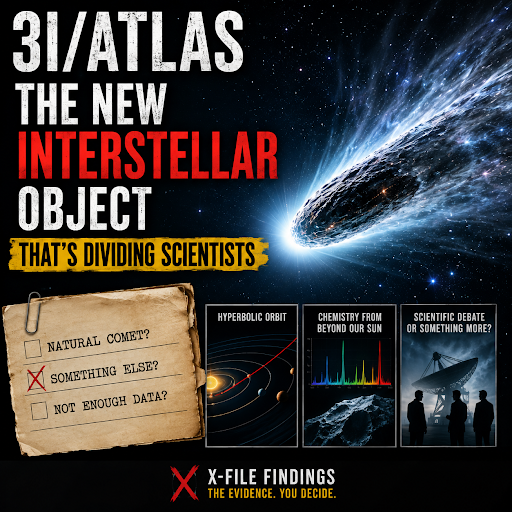
The New Interstellar Object That’s Dividing Scientists
FAQs
What is orbital mechanics?
Orbital mechanics is the study of the motion of objects in space, including the motion of satellites, spacecraft, and celestial bodies such as planets and moons. It involves understanding the forces and principles that govern the motion of these objects in their orbits.
What are the key principles of orbital mechanics?
The key principles of orbital mechanics include Kepler’s laws of planetary motion, Newton’s law of universal gravitation, and the conservation of angular momentum. These principles help explain how objects move in space and how their orbits are determined.
How do spacecraft use orbital mechanics?
Spacecraft use orbital mechanics to navigate through space, enter and exit orbits, and perform maneuvers such as orbital transfers and rendezvous with other objects. Understanding orbital mechanics is crucial for planning and executing space missions.
What are some common applications of orbital mechanics?
Orbital mechanics is used in various applications, including satellite communication, GPS navigation, space exploration, and the design of spacecraft trajectories for missions to other planets and celestial bodies.
Why is orbital mechanics important in space exploration?
Orbital mechanics is essential for space exploration because it enables scientists and engineers to calculate and predict the motion of spacecraft and celestial bodies, plan trajectories for missions, and ensure the safe and efficient operation of space missions. Understanding orbital mechanics is crucial for the success of space exploration endeavors.