
The submerged world, largely unseen and often unappreciated, plays a critical role in global economic activity and environmental health. From vital communication cables and energy pipelines to essential shipping routes, a complex network of underwater infrastructure underpins modern society. However, this vital infrastructure faces considerable challenges, including natural degradation, accidental damage, and the increasing pressures of human activity. In this context, artificial reefs are emerging as a significant element in managing and enhancing the functionality and resilience of underwater infrastructure. This article will explore the multifaceted role of artificial reefs in supporting and interacting with this submerged landscape.
Global Connectivity and Trade
The vast majority of international trade, by volume, traverses the oceans. Shipping lanes, meticulously mapped and maintained, are the arteries of the global economy. These routes are not merely paths; they are accompanied by a complex web of supporting infrastructure. Buoys, navigational markers, and dredging operations are all essential for safe and efficient passage. Furthermore, undersea communication cables, carrying the bulk of the world’s data, form an invisible network connecting continents. The integrity of these cables is paramount, with any disruption having immediate and far-reaching economic consequences.
Energy Security and Resource Extraction
Similarly, a substantial portion of global energy production relies on underwater infrastructure. Offshore oil and gas platforms extract resources from beneath the seabed, and the pipelines that transport these resources to shore are extensive and complex. As the world transitions towards renewable energy sources, offshore wind farms are becoming increasingly prevalent. The foundations of these turbines, along with their associated subsea cables, represent a growing segment of underwater infrastructure. This expansion necessitates ongoing development and maintenance, further highlighting the importance of understanding and managing the marine environment.
Environmental and Scientific Applications
Beyond direct economic uses, underwater infrastructure also serves scientific and environmental purposes. Scientific monitoring stations, deployed to gather data on oceanographic conditions, climate change, and marine ecosystems, are often fixed to the seabed or integrated into other structures. Submarine cable landing points and trenching activities can also have localized environmental impacts, requiring careful consideration and mitigation. Understanding the interactions between these structures and the marine environment is crucial for both operational efficiency and ecological stewardship.
Recent studies have highlighted the intriguing concept of non-human underwater infrastructure, emphasizing the role of artificial reefs and underwater habitats in supporting marine biodiversity. For a deeper understanding of this topic, you can explore the article on underwater ecosystems and their importance in conservation efforts at XFile Findings. This resource provides valuable insights into how these structures not only benefit marine life but also contribute to the overall health of oceanic environments.
The Concept and Purpose of Artificial Reefs
Definition and Construction
Artificial reefs are man-made structures intentionally placed on the seafloor to mimic the functions of natural reefs. They are not a novel concept, with historical examples dating back to antiquity, where shipwrecks inadvertently created habitats. Modern artificial reefs, however, are designed with specific objectives in mind. Their construction materials vary widely, encompassing salvaged ships, concrete modules, steel frames, and even specialized modular units. The choice of material and design is often dictated by the intended purpose, local environmental conditions, and regulatory frameworks.
Ecological Enhancement and Biodiversity Support
One of the primary drivers for the creation of artificial reefs is their capacity to enhance marine biodiversity and productivity. Natural reefs, whether coral or rocky, provide complex three-dimensional habitats that support a wide array of marine life. Artificial reefs aim to replicate this complexity, offering shelter, foraging grounds, and nursery areas for fish, invertebrates, and other marine organisms. As they become colonized by algae, corals, and sessile invertebrates, they gradually transform from inert structures into vibrant ecosystems, contributing to the overall health and resilience of local marine environments.
Fisheries Management and Habitat Restoration
Artificial reefs are frequently employed as a tool for fisheries management. By providing new habitat and concentrating fish populations, they can enhance fishing opportunities and potentially reduce fishing pressure on natural stocks. They can also serve as a means of habitat restoration, particularly in areas where natural habitats have been degraded or lost. For instance, in regions with soft-bottom environments, the introduction of hard substrata can facilitate the establishment of diverse benthic communities and attract pelagic species.
Research and Monitoring Platforms
Beyond their ecological benefits, artificial reefs can also function as valuable platforms for scientific research and monitoring. Their fixed locations and predictable characteristics make them ideal sites for studying marine populations, species interactions, and the impact of various environmental factors. Researchers can deploy sensors, collect samples, and conduct experiments in a controlled setting, contributing to a deeper understanding of ocean processes and the effectiveness of marine conservation strategies.
Artificial Reefs as Infrastructure Components
Stabilizing and Protecting Submerged Structures
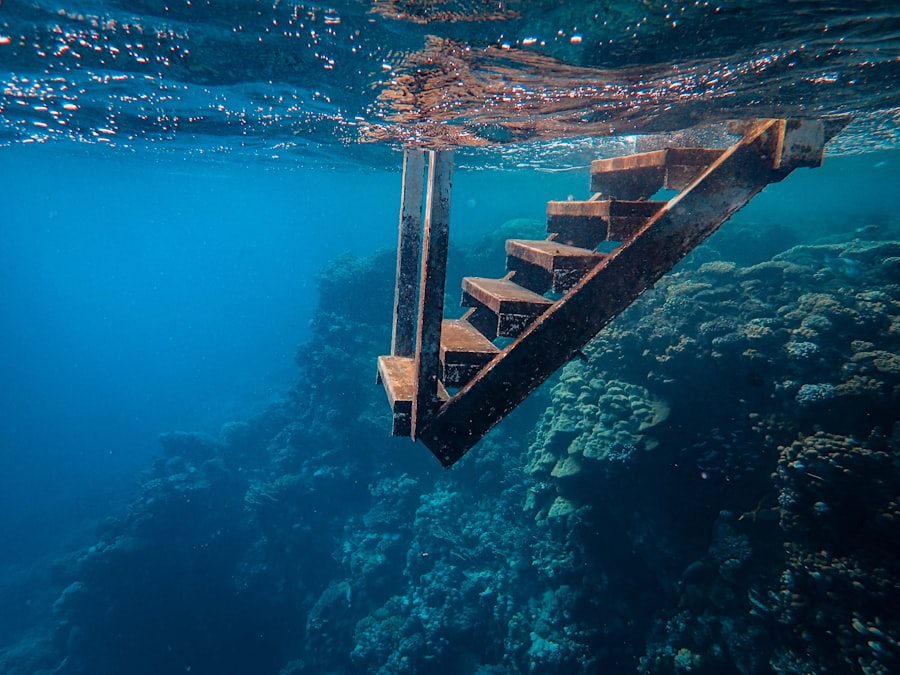
In instances where artificial reefs are deliberately integrated into existing or planned underwater infrastructure projects, they can serve a crucial role in stabilization and protection. For example, the placement of concrete modules or specialized engineered structures around the bases of offshore wind turbine foundations or the anchor points of subsea cables can provide a buffer against strong currents, sediment scour, and accidental impacts. This protective function can extend the operational lifespan of infrastructure and reduce the need for costly repairs.
Mitigating Environmental Impacts of Infrastructure Development
The construction and presence of underwater infrastructure can inevitably lead to localized environmental impacts. Artificial reefs can be strategically deployed as part of mitigation strategies. For instance, during the dredging of shipping channels, the material removed can sometimes be re-purposed to construct artificial reefs in designated areas, thereby creating new habitats and offsetting some of the ecological disruption. Similarly, the deployment of artificial reefs in proximity to pipeline corridors can help to re-establish benthic communities that may have been disturbed during installation.
Providing Anchor Points and Supports
Certain types of artificial reef structures can be designed to provide functional support for other submerged elements. For example, complex steel or concrete lattices could be engineered to offer secure anchor points for monitoring equipment, scientific instruments, or even sections of less critical subsea cables that require a stable foundation. This dual functionality allows for the efficient use of space and resources on the seafloor.
Innovative Applications and Future Directions

Multi-functional Artificial Reef Modules
Evolving research and development are leading to the creation of multi-functional artificial reef modules that integrate a variety of purposes. These could include units designed to provide habitat enhancement while simultaneously housing sensors for data collection, or modules engineered for structural stability and water flow modulation. The aim is to maximize the benefits derived from each deployment, addressing both ecological and infrastructural needs.
Integration with Marine Renewable Energy Projects
As offshore renewable energy installations, such as wind and wave farms, become more widespread, the opportunities for integrating artificial reef concepts are significant. The foundations of these structures create a stable substratum that can be enhanced with artificial reef elements to promote marine life colonization. This synergy can turn the footprint of energy generation into a hub for biodiversity, creating a win-win scenario for both energy production and ecosystem health.
Bioremediation and Carbon Sequestration Potential
Emerging research is exploring the potential of artificial reefs to contribute to bioremediation and carbon sequestration. Certain materials used in artificial reef construction, combined with the increased biological activity they foster, could potentially absorb pollutants or facilitate the long-term storage of carbon dioxide. While these applications are still in their early stages of development, they highlight the evolving understanding of the multifaceted role artificial reefs can play in supporting both human infrastructure and environmental sustainability.
Recent advancements in marine technology have led to the development of non-human underwater infrastructure, which plays a crucial role in environmental monitoring and ocean exploration. For those interested in exploring this topic further, a related article discusses the implications and innovations surrounding these underwater systems. You can read more about it in this insightful piece on marine technology. These innovations not only enhance our understanding of marine ecosystems but also pave the way for sustainable practices in ocean management.
Challenges and Considerations in Deployment
| Infrastructure Type | Location | Depth (meters) | Length (meters) |
|---|---|---|---|
| Subsea pipelines | North Sea | 100 | 5000 |
| Underwater cables | Pacific Ocean | 3000 | 8000 |
| Offshore wind farms | Atlantic Ocean | 20 | 10000 |
Material Selection and Environmental Impact
The choice of materials for artificial reefs is a critical consideration to avoid introducing harmful substances into the marine environment. While concrete and steel are common, their long-term degradation and potential for leaching need to be assessed. Furthermore, the sourcing of materials must be environmentally responsible, and the construction process itself should minimize disruption. The potential for invasive species to be transported on artificial reef components also requires careful management.
Site Selection and Permitting Processes
Selecting appropriate sites for artificial reefs is paramount to ensuring their success and minimizing potential conflicts with other uses of the marine space. Factors such as seabed substrate, water depth, current patterns, and proximity to existing sensitive habitats must be carefully evaluated. The permitting process for deploying artificial reefs can also be complex, involving multiple regulatory agencies and requiring extensive environmental impact assessments.
Monitoring and Long-Term Management
The long-term effectiveness and impact of artificial reefs necessitate ongoing monitoring. This includes assessing ecological colonization, structural integrity, and any unintended consequences. Establishing clear management plans for artificial reefs, including protocols for maintenance, decommissioning, and adaptive management based on monitoring data, is essential for their sustained success. Without adequate oversight, artificial reefs can become derelict structures or fail to achieve their intended objectives.
FAQs
What is non-human underwater infrastructure?
Non-human underwater infrastructure refers to man-made structures that are located underwater and are not designed for human habitation. This can include underwater pipelines, cables, offshore wind farms, and underwater communication systems.
What are the purposes of non-human underwater infrastructure?
Non-human underwater infrastructure serves various purposes such as transporting oil and gas through underwater pipelines, transmitting electricity through underwater cables, harnessing renewable energy through offshore wind farms, and facilitating communication through underwater communication systems.
What are the challenges associated with non-human underwater infrastructure?
Challenges associated with non-human underwater infrastructure include corrosion, biofouling, extreme pressure, and the need for regular maintenance and inspection. Additionally, these structures can impact marine ecosystems and require careful planning and environmental impact assessments.
How is non-human underwater infrastructure constructed and maintained?
Non-human underwater infrastructure is constructed using specialized equipment and techniques for underwater construction. Maintenance typically involves regular inspections, cleaning, and repairs using remotely operated vehicles (ROVs) and other underwater technology.
What are the environmental impacts of non-human underwater infrastructure?
Non-human underwater infrastructure can have environmental impacts such as habitat disruption, noise pollution, and the potential for oil spills or other hazardous material releases. However, advancements in technology and regulations aim to minimize these impacts and promote sustainable practices in underwater infrastructure development.