The vast, often sparsely populated landscapes of Australia have long been a fertile ground for tales of the unexplained. From the ancient whispers of Indigenous Dreamtime to the modern anxieties of a technologically driven world, the continent has fostered a unique cultural tapestry where the extraordinary often seems to brush against the mundane. Among the most enduring and captivating of these mysteries are the countless reports of Unexplained Aerial Phenomena, or UFOs, that have been documented across Australia for decades. These sightings, ranging from fleeting glimpses of strange lights to detailed accounts of solid craft performing impossible maneuvers, have etched themselves into the Australian psyche, sparking debate, igniting curiosity, and leaving many with a profound sense of wonder about what might be sharing our skies.
The latter half of the 20th century witnessed a significant surge in UFO reports globally, and Australia was no exception. The post-World War II era, characterized by a fascination with technology, space exploration, and a healthy dose of Cold War paranoia, provided fertile ground for the emergence and popularization of the UFO phenomenon. In Australia, this period saw a rise in media attention, public interest, and the formation of dedicated research groups eager to document and understand these enigmatic occurrences. The vastness of the Australian continent, with its immense uninhabited interior and extensive coastline, offered ample opportunities for encounters to go unnoticed by mainstream society, yet tantalizingly close to remote communities and isolated individuals.
Early Documented Cases: From the Skies of Victoria to the Outback
While anecdotal accounts of unusual aerial phenomena likely stretch back to the earliest days of Australian settlement, the mid-20th century saw a more systematic recording of these events. One of the earliest and most significant cases to capture public imagination occurred in Victoria.
The Warrnambool Incident (1954): A Silent Visitor Above the Sea
In January 1954, residents of Warrnambool, Victoria, reported witnessing a large, disc-shaped object hovering silently above the ocean. Numerous witnesses, including fishermen and townsfolk, described a metallic craft that moved with an uncanny grace, defying conventional aerodynamic principles. The object was reportedly seen for an extended period, leaving a lasting impression on those who observed it. The lack of any identifiable aircraft, coupled with the object’s unusual characteristics, cemented its place as a key early Australian UFO case. Investigations at the time, while not conclusive, struggled to provide a conventional explanation.
The Mac Robertson Miller Airlines Incident (1957): A Mid-Air Encounter Over the Pilbara
A more dramatic encounter took place in 1957 when crew members and passengers aboard a MacRobertson Miller Airlines flight over the Western Australian Pilbara region reported seeing a large, cigar-shaped object keeping pace with their aircraft. The incident, documented in pilot logs and passenger testimonials, described a phenomenon that was both perplexing and unnerving. The object reportedly emitted a faint glow and displayed an ability to maintain a consistent distance from the airliner, suggesting advanced propulsion capabilities. This case highlighted the potential for UFO sightings to occur in widely dispersed and remote locations, making official investigation challenging.
The Rise of UFO Research Organizations: From Hobbyists to Investigators
As public interest grew, so did the number of individuals and groups dedicated to the study of UFOs. These organizations, often fueled by passionate amateurs and researchers, played a crucial role in collecting witness testimonies, analyzing photographic and film evidence, and disseminating information to the public.
The UAPRC and the Early Efforts of Dr. Raymond Gallant
Organizations like the Unidentified Flying Object Research Centre (UAPRC) in Australia began to emerge, attempting to provide a structured approach to the investigation of these reports. While many of these early efforts were met with skepticism from official channels, they laid the groundwork for more sophisticated investigations in later years and preserved valuable witness accounts that might otherwise have been lost. Researchers like Dr. Raymond Gallant were instrumental in compiling and publicizing these early cases, bringing them to the attention of a wider audience.
Recent Australian UFO sightings have sparked significant interest among enthusiasts and researchers alike, leading to a surge in discussions about unidentified aerial phenomena. For those looking to delve deeper into this intriguing topic, a related article can be found at XFile Findings, which explores various accounts and theories surrounding UFO encounters in Australia. This article provides valuable insights and context, making it a must-read for anyone fascinated by the mysteries of the skies.
The 1960s and 70s: Mass Sightings, Military Encounters, and the Public Imagination
The decades of the 1960s and 70s proved to be another fertile period for UFO sightings in Australia. This era was marked by a greater number of mass sightings, more detailed accounts of pilot encounters, and increased public awareness fueled by sensational media coverage and popular culture. The technological advancements of the time, including the development of more sophisticated surveillance systems, also led to a greater potential for officially documented but often unexplained phenomena.
The Bass Strait Triangle: A Maritime Mystery and a Hotspot for Activity
The waters off the coast of Victoria and Tasmania became particularly notorious for a cluster of UFO sightings, leading to the moniker “Bass Strait Triangle.” This region, with its unpredictable weather and isolation, became a focal point for a variety of unexplained aerial and maritime phenomena.
The Freddy Silva Incident (1966): A Pilot’s Terrifying Ordeal
One of the most compelling incidents in the Bass Strait region involved pilot Frederick Silva in 1966. While flying a light aircraft, Silva reportedly encountered a massive, unidentified object that appeared to emit beams of light and cause his aircraft’s instruments to malfunction. He described an object of immense size and speed, capable of maneuvers that were beyond any known technology. The incident was so profound that it led to an official investigation by the Royal Australian Air Force (RAAF), though no definitive explanation was ever publicly provided.
Other Bass Strait Encounters: A Pattern of the Unexplained
Beyond the Silva incident, numerous other reports emerged from the Bass Strait region, including sightings of glowing orbs, triangular craft, and objects that exhibited unusual speed and agility. These recurring patterns of anomalous activity contributed to the mystique of the area and fueled ongoing speculation about the possibility of a connection to extraterrestrial visitation or other unknown phenomena.
RAAF Involvement and Classified Investigations: Hints of Official Awareness
Throughout this period, there were documented instances of the Royal Australian Air Force (RAAF) investigating UFO reports. While the official stance often leaned towards conventional explanations such as misidentified aircraft, weather phenomena, or atmospheric conditions, the very act of investigation by a military branch suggested a level of concern and acknowledgement that something out of the ordinary was being observed.
Operation Blue Book Down Under? The Secrecy Surrounding RAAF Investigations
Although Australia did not have a direct equivalent to the United States’ Project Blue Book, the RAAF did maintain records of UFO reports. However, much of this information remained classified for many years, leading to speculation about what was being investigated and why. Leaked documents and declassified reports, when they emerged, often offered intriguing but ultimately inconclusive insights into the military’s perspective on the phenomenon.
The Modern Era: From the Outback to Urban Skies, Continued Observations
As the 21st century dawned, the phenomenon of unexplained aerial sightings in Australia did not wane. Instead, the advent of widespread camera phones, the internet, and social media has led to an explosion in the number of reported sightings and a democratization of the investigation process. While this has also led to an increase in hoaxes and misidentifications, it has also provided a wealth of visual and anecdotal evidence that continues to puzzle researchers and the public alike.
High-Profile Sightings and Witness Testimonies: The Persistence of the Unknown
From remote outback stations to bustling city centers, reports of unusual aerial phenomena continue to pour in. These modern sightings often echo the characteristics of earlier observations, with descriptions of silent, fast-moving lights, disc-shaped craft, and objects exhibiting advanced maneuverability.
The Phoenix Lights Australia (2017): A Mass Sighting in the South
In 2017, a series of unexplained lights were observed over several Australian states, most notably in South Australia. This event, often referred to as “Phoenix Lights Australia” due to its similarity to a famous US sighting, involved numerous witnesses reporting large, triangular or V-shaped craft emitting silent lights. The widespread nature of the sighting and the consistency of the witness descriptions brought renewed attention to the phenomenon in Australia.
The ‘Perth Lights’ and Other Urban Encounters: UFOs in Our Backyard
Even in densely populated urban areas, UFO sightings persist. Reports of unusual lights and objects over cities like Perth, Sydney, and Melbourne are not uncommon. These urban encounters, while often met with greater public scrutiny and the immediate availability of digital recording devices, continue to present perplexing questions about what is being observed.
The Role of Social Media and the Internet: A New Era of Documentation and Dissemination
The internet and social media platforms have revolutionized how UFO sightings are reported, discussed, and investigated. Witness accounts, amateur footage, and alleged photographic evidence can now be shared globally within minutes, fostering a sense of community among researchers and enthusiasts.
Citizen Investigators and the Democratization of Research
Online forums, dedicated websites, and social media groups have become hubs for “citizen investigators” who meticulously document and analyze reported sightings. While the quality of evidence varies, this decentralized approach has brought a new level of scrutiny and engagement to the study of UFOs, often highlighting patterns and anomalies that might have been overlooked in the past.
The Challenge of Verification: Separating Fact from Fiction
However, this increased accessibility also presents challenges. The ease with which images and videos can be manipulated means that distinguishing genuine sightings from hoaxes or misidentifications requires careful analysis and critical thinking. The sheer volume of information can also be overwhelming, making it difficult to identify truly significant cases.
Indigenous Australian Lore: Ancient Whispers of Celestial Visitors
Long before the modern era of UFO sightings, Indigenous Australian cultures possessed rich oral traditions that spoke of beings and events that touched the sky. While it is crucial to avoid anachronistically imposing modern UFO interpretations onto ancient spiritual beliefs, the parallels between some of these traditional narratives and contemporary sightings are compelling and offer a unique perspective on humanity’s long-standing fascination with the unknown in the heavens.
Dreamtime Stories and Celestial Beings: Echoes of the Unexplained
Many Indigenous Australian creation stories and Dreamtime narratives feature beings that descend from the sky, travel vast distances, and possess extraordinary abilities. These figures, often associated with creation, wisdom, or even warnings, are sometimes depicted as arriving in luminous vessels or manifesting as radiant entities.
The Star People and the Wagyl: Connections to the Celestial Realm
Certain Indigenous traditions speak of “Star People” or ancestral beings who originated from the stars and journeyed to Earth. The Wagyl, a prominent ancestral snake spirit in some Indigenous cultures, is often associated with water and the creation of landscapes, but its immense power and ability to traverse vast distances can, in certain interpretations, resonate with the idea of powerful beings interacting with our world from above.
Interpreting Ancient Narratives: A Cautionary Approach
It is vital to approach the interpretation of Indigenous lore with respect and sensitivity. The purpose of these narratives is deeply spiritual and cultural, and reducing them solely to extraterrestrial explanations would be a disservice to their complexity. However, the recurring themes of celestial visitors and their profound impact on the Earth can prompt reflection on whether some ancient understandings might have been rooted in observations of phenomena that we, in the modern era, are still struggling to comprehend.
Recent Australian UFO sightings have sparked significant interest among enthusiasts and researchers alike, leading to a deeper exploration of unexplained aerial phenomena in the region. For those looking to delve further into this intriguing topic, a related article can be found at XFile Findings, which discusses various encounters and the implications they may have on our understanding of the universe. As more reports emerge, the conversation around these mysterious sightings continues to grow, inviting both skepticism and curiosity from the public.
The Scientific and Skeptical Perspective: Seeking Rational Explanations
| Date | Location | Number of Witnesses | Duration of Sighting |
|---|---|---|---|
| January 15, 2021 | Sydney, New South Wales | 3 | 10 minutes |
| March 22, 2021 | Melbourne, Victoria | 5 | 30 minutes |
| May 5, 2021 | Brisbane, Queensland | 2 | 20 minutes |
Despite the persistent accounts and the compelling nature of some sightings, the scientific and skeptical communities generally approach UFO phenomena with a healthy dose of caution. The emphasis is on seeking rational, evidence-based explanations, and attributing sightings to known phenomena until all other possibilities have been exhausted.
Conventional Explanations: The Usual Suspects
The vast majority of UFO sightings, when thoroughly investigated, can be attributed to mundane causes. These include misidentified aircraft (both conventional and experimental), atmospheric phenomena, meteorological events, celestial bodies, and even man-made objects.
Atmospheric Phenomena: Ball Lightning, Lenticular Clouds, and Refractions
The Australian skies are home to a myriad of atmospheric optical illusions. Ball lightning, though rare, can create luminous orbs that behave in unusual ways. Lenticular clouds, with their saucer-like appearance, can often be mistaken for solid craft. Various forms of light refraction and reflection can also create bizarre visual effects.
Satellite Launches, Drones, and Military Exercises: Modern Sources of Confusion
In recent decades, the proliferation of satellites, drones, and sophisticated military testing has introduced new potential sources of misidentification. The launch of rockets into space, the deployment of advanced drone technology, and secret military exercises can all create unusual aerial displays that are not immediately recognizable to the public.
The Burden of Proof: The Need for Verifiable Evidence
Skeptics and scientists emphasize the importance of verifiable, empirical evidence. Anecdotal accounts, while valuable for highlighting patterns of reported activity, are not sufficient to prove the existence of extraterrestrial craft or phenomena beyond conventional understanding.
The UAP Task Force and the Evolving Scientific Dialogue
In recent years, there has been a tentative shift within some scientific circles to take the study of Unidentified Aerial Phenomena (UAP), as they are now more commonly referred to by military and intelligence agencies, more seriously. The establishment of task forces, such as the one by the US Department of Defense, and the release of official reports have acknowledged that there are indeed aerial observations that remain unexplained, even after rigorous analysis.
The Future of UFO Research: Open-Minded Inquiry and Rigorous Investigation
While definitive proof of extraterrestrial visitation remains elusive, the ongoing discourse surrounding UFO sightings in Australia encourages an open-minded yet scientifically rigorous approach to investigation. The persistence of these reports, spanning decades and diverse locations, suggests that the human experience of witnessing the unexplained in our skies is a rich and enduring aspect of our collective consciousness, inviting us to continue looking up and asking questions.
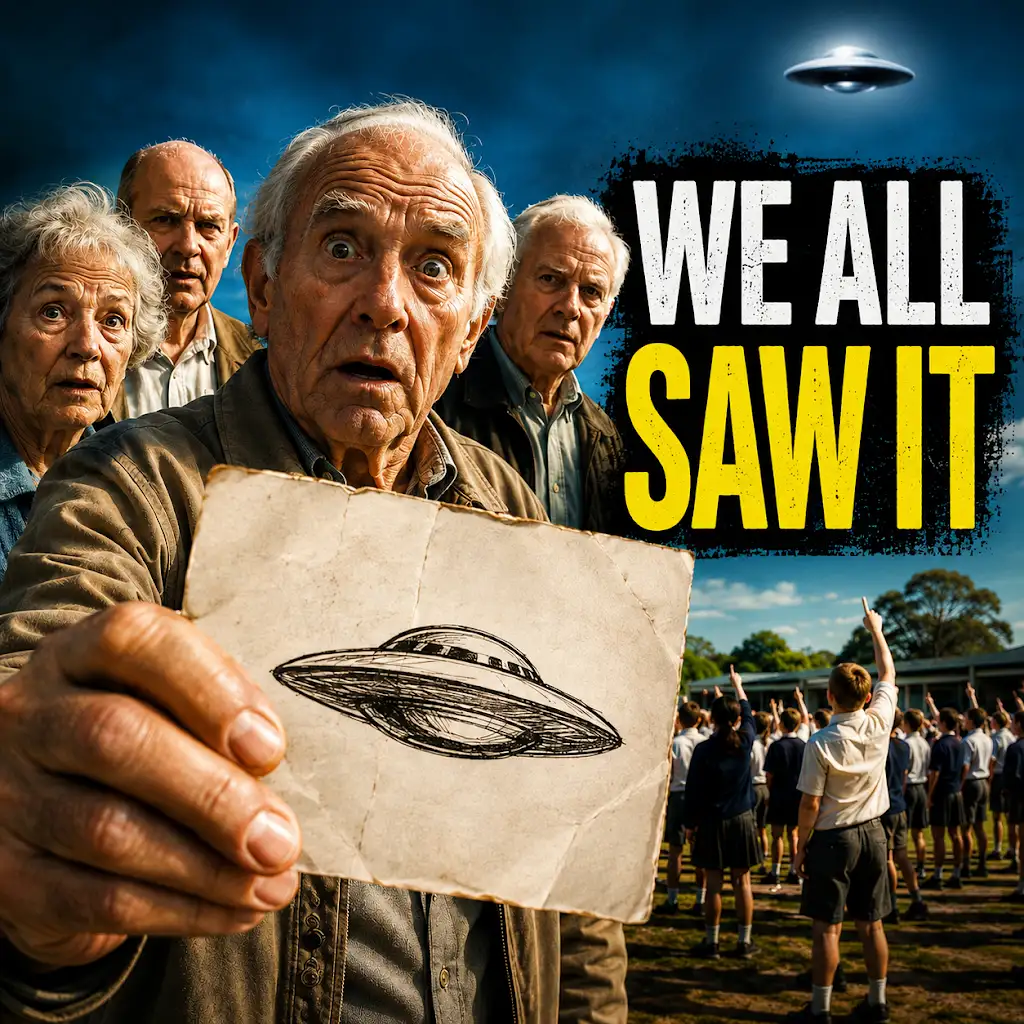
200 Students Saw a UFO. Then They Were Told to Stay Silent.
FAQs
What are some notable Australian UFO sightings?
Some notable Australian UFO sightings include the Westall UFO encounter in 1966, the Valentich disappearance in 1978, and the Tully Saucer Nest incident in 1966.
How many UFO sightings are reported in Australia each year?
According to the Australian UFO Research Network, there are approximately 800 UFO sightings reported in Australia each year.
What do experts say about Australian UFO sightings?
Experts generally approach UFO sightings with skepticism and seek to find rational explanations for the phenomena. While some sightings remain unexplained, experts emphasize the need for critical analysis and investigation.
Are there any official investigations into Australian UFO sightings?
The Australian government has not conducted any official investigations into UFO sightings. However, there have been calls for more transparency and research into the phenomena.
How can individuals report UFO sightings in Australia?
Individuals can report UFO sightings to organizations such as the Australian UFO Research Network or to local authorities. It is important to provide detailed information and any supporting evidence when making a report.