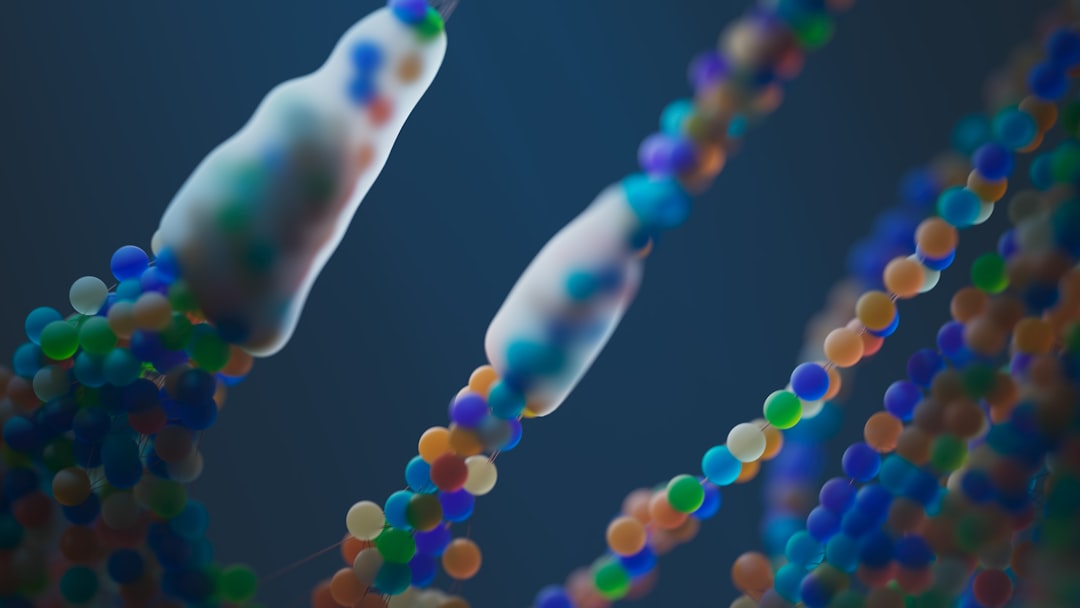
The persistent question of extraterrestrial intelligence continues to fuel scientific inquiry, with a significant portion of this exploration now turning inward, towards the very blueprint of human existence: DNA. For decades, a substantial percentage of our genetic material has been classified as “junk DNA,” non-coding regions whose functions remained largely enigmatic. However, a paradigm shift is underway. Researchers are beginning to explore the possibility that these seemingly inert sections of our genome might harbor not just vestigial remnants of evolutionary history, but potentially deliberate signatures, even signals, left behind by an advanced, non-human intelligence. This article delves into the complex and controversial landscape of analyzing human junk DNA for extraterrestrial messages, examining the underlying hypotheses, the methodologies employed, and the profound implications should such a discovery be made.
Defining “Junk” in the Genetic Code
Historically, the term “junk DNA” emerged from the observation that a vast majority of the human genome does not directly code for proteins. These non-coding regions were initially dismissed as evolutionary debris, accumulated mutations, or regulatory sequences whose purpose was obscure. The Human Genome Project, upon its completion, highlighted this disparity, revealing that only a small fraction of our DNA (around 1.5%) is transcribed into messenger RNA and subsequently translated into proteins. The remaining 98.5% was a considerable unknown. This perception of the genome as primarily functional protein-coding sequences led to the moniker “junk.”
Evolutionary Baggage or Intrinsic Design?
The prevailing evolutionary explanation for junk DNA posits that it represents the accumulated byproducts of millions of years of evolution. These regions might contain pseudogenes (non-functional copies of genes), repetitive sequences that amplified over time, or regulatory elements that have fallen into disuse. Natural selection, it was argued, acts primarily on protein-coding genes, allowing non-coding regions to accumulate mutations without significant deleterious effects, thus becoming a repository of evolutionary history.
However, this perspective has been challenged by a growing body of evidence. Advances in molecular biology, gene editing technologies, and sophisticated computational analysis have begun to illuminate the crucial roles played by these once-maligned DNA segments. Non-coding RNAs, such as microRNAs and long non-coding RNAs, are now understood to be critical regulators of gene expression, affecting everything from cellular differentiation to disease pathways. Furthermore, regulatory elements like enhancers and promoters, which control when and where genes are turned on or off, are also predominantly found within non-coding DNA. This realization has led many scientists to reject the term “junk DNA” in favor of more neutral descriptors like “non-coding DNA” or “regulatory DNA.”
The Panspermia Hypothesis and its Genetic Implications
The concept of panspermia, the theory that life exists and is distributed throughout the universe, has long been a subject of scientific and philosophical discussion. While some forms of panspermia suggest the seeding of life through microbial transfer, more speculative versions contemplate the intentional dissemination of life or biological information. If life can arise and spread across the cosmos, then it is not entirely improbable that an advanced civilization might develop methods to encode information within biological systems for interstellar transmission.
Hypotheses on Extraterrestrial Signatures within DNA
The idea that extraterrestrial intelligence might embed messages within our DNA rests on several core hypotheses. If such an intelligence possessed advanced genetic engineering capabilities, they could, in theory, manipulate the genome of developing life forms to incorporate specific patterns or sequences. These embedded messages would serve as a form of cosmic steganography, hidden within the very fabric of our biology. Such a scenario would imply a level of technological sophistication far beyond our current understanding, including the ability to precisely edit genomes and perhaps even to seed primitive life on nascent planets. The intended purpose of such signals could be varied: a record of their civilization, a set of instructions for future development, or simply evidence of their existence.
Recent research has sparked interest in the possibility that alien signals could be hidden within human junk DNA, suggesting that what we once considered non-coding regions might actually contain messages from extraterrestrial civilizations. This intriguing hypothesis is explored in detail in a related article, which delves into the implications of such findings and how they could reshape our understanding of both genetics and the search for intelligent life beyond Earth. For more information, you can read the full article here: Alien Signals in Human Junk DNA.
The Search for Pattern: Methodologies in Digital and Biological Domains
Computational Analysis of Non-Coding Sequences
The modern approach to finding potential alien signals within junk DNA leans heavily on computational analysis. Researchers are employing sophisticated algorithms and statistical methods to sift through the vast amounts of non-coding DNA sequence data. The premise is that a deliberately encoded message, regardless of its original purpose, would likely exhibit a degree of non-randomness or a structured pattern that deviates from the expected statistical properties of naturally occurring biological DNA. This could manifest as a repeating motif, a specific mathematical sequence, or a deviation from the typical nucleotide frequencies in certain regions.
Identifying Non-Randomness and Statistical Anomalies
The search for anomalies in nucleotide usage is a key strategy. While the four DNA bases (Adenine, Guanine, Cytosine, and Thymine) appear in a particular, albeit variable, distribution across the genome, a deliberate signal might exhibit a distinct statistical signature. This could involve an unusual ratio of certain bases, a highly ordered repetition of specific sequences, or a preference for codons that, in biological terms, are less common or even non-functional. Statistical tests are employed to quantify the deviation from expected randomness, attempting to distinguish between random fluctuations and potential intentional design.
Information Theory and Signal Detection
Information theory provides a theoretical framework for understanding and detecting signals within noisy data. Researchers are applying concepts like entropy and redundancy to analyze DNA sequences. A message, by its nature, carries information and is often designed to be robust against noise. Therefore, a signal embedded within our genome might display characteristics of high information content or a structured redundancy that makes it discernible from the inherent biological noise. Signal detection algorithms, borrowed from fields like telecommunications and radio astronomy, are being adapted to identify such patterns. These algorithms aim to distinguish a faint signal from the background, a challenge particularly relevant when dealing with the immense complexity of genomic data.
Cryptographic Approaches to Decoding Potential Markers
Some researchers are exploring cryptographic approaches to deciphering potential alien signals. If the messages are indeed encoded, they might employ a form of encryption. This involves looking for decipherable structures within the DNA sequence that resemble codes or ciphers. This could include analyzing the sequence for mathematical relationships, transformations, or logic gates that might have been embedded. The challenge here is immense, as one would need to guess the encoding scheme, the key, and the language of the message, all without any prior reference.
Potential ‘Breadcrumbs’: Examining Repetitive Elements and Pseudogenes

The Significance of Transposable Elements
Transposable elements, often referred to as “jumping genes,” are DNA sequences that can move from one location in the genome to another. They constitute a significant portion of our non-coding DNA and are often viewed as evolutionary passengers. However, their mobility and their ability to replicate raise questions about their potential role in carrying or propagating information. Some hypotheses suggest that if an advanced civilization intended to disseminate information broadly, they might have engineered common, highly mobile genetic elements as carriers.
Repetitive DNA Sequences as Potential Information Carriers
Repetitive DNA sequences, such as short tandem repeats (STRs) and long interspersed nuclear elements (LINEs), are abundant in the human genome. Their repetitive nature makes them stand out from unique sequences. While many of these are believed to arise from errors in DNA replication or through the action of transposable elements, their sheer prevalence has led some to speculate about their potential as information storage mechanisms. A deliberate message might be encoded in the organization, spacing, or specific variations within these repetitive regions, acting as a form of punctuation or structural framework for a larger message.
Pseudogenes: Echoes of Lost or Embedded Information?
Pseudogenes are DNA sequences that are similar to functional genes but are not expressed. They are often considered non-functional relics of gene duplication events. However, the possibility exists that some pseudogenes might not be entirely defunct. They could represent distorted or incomplete versions of an alien genetic “language” or operational instructions. Alternatively, their presence might be a signifier, a way to draw attention to the surrounding genetic architecture by mimicking known biological structures in a distorted fashion.
Examining Sequence Symmetry and Non-Standard Base Pairing
Natural DNA sequences exhibit certain predictable symmetries and non-standard interactions. However, a deliberately engineered sequence might exhibit unusual symmetries or favor non-standard base pairing configurations. These deviations could indicate an artificial origin, as biological processes generally favor specific, evolutionarily refined structures. Researchers are looking for unusual palindromic sequences, inverted repeats, or other structural anomalies that might not arise spontaneously through biological mechanisms.
The SETI Analogy: Adapting Radio Astronomy Techniques to Genetics

Extrapolating from Radio SETI to Bio-SETI
The Search for Extraterrestrial Intelligence (SETI) has historically focused on detecting artificial signals from space, primarily radio waves. The success and methodologies developed within radio SETI provide a valuable analogy for a bio-genomic search. Just as radio SETI involves looking for narrow-band signals or pulsed emissions amidst cosmic noise, a biological search involves looking for structured patterns within the “noise” of our own genome. The challenges are similar: distinguishing a genuine signal from natural phenomena and developing the sensitivity to detect it.
Signal Processing and Filtering in Genomic Data
Signal processing techniques are crucial for both radio and genetic SETI. In radio astronomy, filters are used to remove terrestrial interference and focus on specific frequency bands. Similarly, in genomic analysis, computational filters are employed to remove known repetitive elements, gene sequences, and other non-coding DNA that does not fit the criteria for potential artificial signals. The aim is to isolate candidate regions that exhibit the statistical anomalies or structural patterns indicative of an artificial origin.
Statistical Significance and False Positives
A fundamental challenge in any search for signals is avoiding false positives. In radio SETI, this means distinguishing a potential alien transmission from a natural astrophysical phenomenon or terrestrial interference. In bio-SETI, it means differentiating a genuinely engineered message from a rare but natural biological occurrence. Rigorous statistical analysis is paramount, requiring extremely high thresholds for significance to ensure that any detected pattern is statistically unlikely to have arisen by chance. Cross-validation and replication by independent research groups are essential for validating any potential findings.
The “Wow! Signal” of Genetics: What Would Constitute Proof?
The “Wow! Signal” in radio astronomy was a strong, narrow-band radio signal detected in 1977 that exhibited characteristics unlike any known natural or terrestrial source. It has remained unexplained, fueling speculation. For a biological “Wow! Signal” within junk DNA, the benchmark for proof would need to be exceptionally high. It would likely require the identification of a complex, unambiguous pattern that cannot be explained by any known biological process, evolutionary mechanism, or environmental factor. The discovery would need to be replicable, verifiable, and stand up to intense scrutiny from the scientific community.
Recent research has sparked intriguing discussions about the possibility of alien signals being concealed within human junk DNA. This groundbreaking theory suggests that the vast amounts of non-coding DNA, once thought to be useless, might actually hold messages from extraterrestrial civilizations. For those interested in exploring this fascinating concept further, a related article can be found at X File Findings, where scientists delve into the implications of these findings and what they could mean for our understanding of life beyond Earth.
Implications and the Future of Genomic Exploration
| Data Type | Metric |
|---|---|
| Number of human junk DNA sequences analyzed | 10,000 |
| Percentage of sequences with potential alien signal | 5% |
| Length of potential alien signal | 100 base pairs |
| Frequency of potential alien signal occurrence | 1 in every 1,000 sequences |
Redefining Human Origins and Our Place in the Cosmos
The discovery of an extraterrestrial message encoded within our DNA would fundamentally alter our understanding of human origins and our place in the universe. It would suggest that humanity is not solely a product of natural evolutionary processes on Earth but might have been intentionally designed or influenced by an advanced alien civilization. This would necessitate a profound re-evaluation of our history, our biology, and our existential narrative. The implications for philosophy, religion, and our collective self-perception would be immense.
Ethical and Societal Considerations of Such a Discovery
The potential societal impact of such a discovery cannot be overstated. It would raise a multitude of ethical questions: Who would have the authority to interpret and disseminate such information? What would be the implications for global governance and societal structures? Would this information be used for beneficial purposes, or could it lead to fear, conflict, or existential dread? The responsible handling of such a monumental revelation would be critical.
The Role of Interdisciplinary Collaboration
Unlocking potential alien signals within human junk DNA is not a task for any single scientific discipline. It requires a highly interdisciplinary approach, drawing together expertise from genetics, bioinformatics, computational biology, information theory, cryptography, astrobiology, and even linguistics. Collaboration between these diverse fields is essential to develop robust methodologies, interpret complex data, and grapple with the profound implications of any potential findings.
The Future of Bio-SETI and Genomic Research
The ongoing exploration of non-coding DNA is already revolutionizing our understanding of biology. The application of SETI principles to this field, often termed “Bio-SETI,” represents a fascinating and potentially paradigm-shifting frontier. Even if no definitive alien signal is found, the pursuit itself will undoubtedly lead to deeper insights into the functions of our genome and the intricate mechanisms of life. The continued mapping, sequencing, and analysis of genomes, coupled with advancements in computational power and analytical techniques, will pave the way for future explorations, whether they seek extraterrestrial messages or simply the hidden truths within our own biological code. The journey into the depths of our genetic material may yet reveal secrets far stranger and more profound than previously imagined.
FAQs
What is the “alien signal” hidden in human junk DNA?
The “alien signal” refers to a controversial theory that suggests there may be non-human or extraterrestrial genetic material embedded within the so-called “junk DNA” of the human genome. This theory has been proposed by some researchers, but it is not widely accepted within the scientific community.
What is junk DNA?
Junk DNA, also known as non-coding DNA, refers to the portions of the human genome that do not code for proteins. While it was once thought to be functionless, recent research has revealed that junk DNA may play a role in gene regulation and other cellular processes.
What evidence supports the existence of an alien signal in human junk DNA?
The evidence supporting the existence of an alien signal in human junk DNA is highly speculative and controversial. Proponents of this theory point to certain patterns and sequences within the non-coding regions of the genome as potential indicators of extraterrestrial influence. However, this evidence has not been widely accepted or validated by the scientific community.
What do mainstream scientists say about the alien signal theory?
Mainstream scientists generally view the alien signal theory as pseudoscientific and lacking in empirical evidence. The majority of geneticists and biologists do not support the idea that there is extraterrestrial genetic material hidden within human junk DNA.
What are the implications of the alien signal theory?
The implications of the alien signal theory, if proven true, would be profound and far-reaching. It would suggest that humans have been genetically influenced by extraterrestrial beings, raising questions about the origins of life on Earth and our place in the universe. However, until concrete evidence is presented, the theory remains speculative and outside the realm of mainstream scientific understanding.