
Long Delayed Echoes (LDEs) are radio signals that return to their point of transmission after delays significantly exceeding normal propagation times. While conventional radio echoes typically return within milliseconds, LDEs exhibit delays ranging from several seconds to multiple minutes, representing a departure from standard radio wave behavior. LDEs occur when radio transmissions reflect off ionospheric layers or other atmospheric structures under specific propagation conditions.
These reflected signals can travel distances of thousands of kilometers before returning to the original transmitter. The phenomenon has been documented by both professional researchers and amateur radio operators since the early 20th century. The extended delay times observed in LDEs cannot be explained by conventional ionospheric reflection mechanisms alone.
Various theories have been proposed to account for this phenomenon, including multiple ionospheric reflections, ducting through atmospheric layers, and interactions with plasma structures in the magnetosphere. The irregular and unpredictable nature of LDE occurrence has made systematic study challenging, contributing to ongoing scientific investigation into the underlying mechanisms responsible for these anomalous propagation events.
Key Takeaways
- Long Delayed Echoes (LDEs) are radio signals that return after an unusually long delay, puzzling scientists since their discovery.
- Various theories attempt to explain LDEs, including atmospheric reflections, ionospheric anomalies, and possible extraterrestrial origins.
- LDEs have played a significant role in advancing radio communication technology and understanding signal propagation.
- Recent research and breakthroughs are shedding new light on the mechanisms behind LDEs, enhancing their scientific significance.
- Potential applications of LDEs span from improving communication systems to exploring extraterrestrial communication possibilities.
The History of Long Delayed Echoes
The history of Long Delayed Echoes dates back to the early 20th century when radio technology was still in its infancy. The first documented observations of LDEs occurred in the 1920s, when amateur radio operators began to notice peculiar delays in the return of their transmitted signals. These early observations sparked curiosity and prompted further investigation into the underlying causes of this enigmatic phenomenon.
As radio technology advanced, so too did the understanding of LDEs, leading to more systematic studies and documentation. In the decades that followed, particularly during World War II and the subsequent Cold War era, interest in LDEs intensified. Military applications of radio communication necessitated a deeper understanding of signal propagation, leading to more rigorous scientific inquiry into LDEs.
Researchers began to explore the potential implications of these delayed echoes for long-distance communication, navigation, and even surveillance. The phenomenon became a focal point for both amateur enthusiasts and professional scientists, culminating in a wealth of data and theories that continue to shape contemporary research.
Theories and Explanations for Long Delayed Echoes

Numerous theories have been proposed to explain the occurrence of Long Delayed Echoes, each offering a different perspective on the underlying mechanisms at play. One prominent theory suggests that LDEs result from the reflection of radio waves off multiple layers of the ionosphere, which can create complex paths for signals to travel. This multi-path propagation can lead to signals being delayed as they bounce between different atmospheric layers before returning to the source.
The varying densities and compositions of these layers can significantly influence the timing and strength of the echoes. Another theory posits that LDEs may be influenced by natural phenomena such as meteor trails or auroras. When meteors enter the Earth’s atmosphere, they can create ionized trails that reflect radio waves, potentially causing delayed echoes.
Similarly, auroras can alter the ionospheric conditions, affecting how radio signals propagate. These natural events introduce additional variables into the equation, complicating the understanding of LDEs but also enriching the field with new avenues for exploration.
The Role of Radio Signals in Long Delayed Echoes
Radio signals play a crucial role in the manifestation of Long Delayed Echoes, serving as both the medium for communication and the subject of study. The characteristics of these signals—such as frequency, power, and modulation—can significantly impact the likelihood and nature of LDEs. For instance, lower frequency signals tend to penetrate the ionosphere more effectively, increasing the chances of encountering multiple reflective layers that can produce delayed echoes.
Moreover, the technology used to transmit and receive these signals has evolved dramatically over time. Early radio equipment was limited in its capabilities, often resulting in less precise measurements and interpretations of LDEs.
This technological evolution has not only enhanced understanding but has also opened new doors for experimentation and discovery in the field.
The Connection Between Long Delayed Echoes and Extraterrestrial Communication
| Metric | Description | Typical Values | Measurement Units |
|---|---|---|---|
| Delay Time | Time interval between the original radio signal transmission and the received echo | 0.1 to 10 seconds | Seconds (s) |
| Frequency Range | Radio frequency bands where LDEs are commonly observed | 1 MHz to 30 MHz | Megahertz (MHz) |
| Signal Strength | Relative power level of the delayed echo compared to the original signal | -20 to -60 | Decibels (dB) |
| Echo Duration | Length of time the delayed echo signal is detectable | 0.5 to 5 seconds | Seconds (s) |
| Polarization | Polarization state of the delayed echo signal | Linear or Circular | Type |
| Propagation Path | Hypothesized path causing the delay (e.g., ionospheric reflection, magnetospheric ducting) | Variable | Descriptive |
| Occurrence Rate | Frequency of LDE events during observation periods | Rare to occasional | Events per hour |
The intriguing nature of Long Delayed Echoes has led some researchers to speculate about their potential connection to extraterrestrial communication. The idea that LDEs could be indicative of signals from intelligent life beyond Earth has captured the imagination of scientists and enthusiasts alike. Some proponents argue that if advanced civilizations exist elsewhere in the universe, they might utilize similar radio frequencies for communication, inadvertently creating echoes that could be detected on Earth.
While this notion remains speculative, it has spurred interest in exploring LDEs as a possible avenue for detecting extraterrestrial signals. Researchers have begun to investigate whether certain patterns or characteristics associated with LDEs could differentiate between natural atmospheric phenomena and potential artificial signals from distant civilizations. This intersection of astrophysics and communication technology continues to inspire innovative research initiatives aimed at unraveling the mysteries of both LDEs and extraterrestrial life.
The Scientific Significance of Long Delayed Echoes
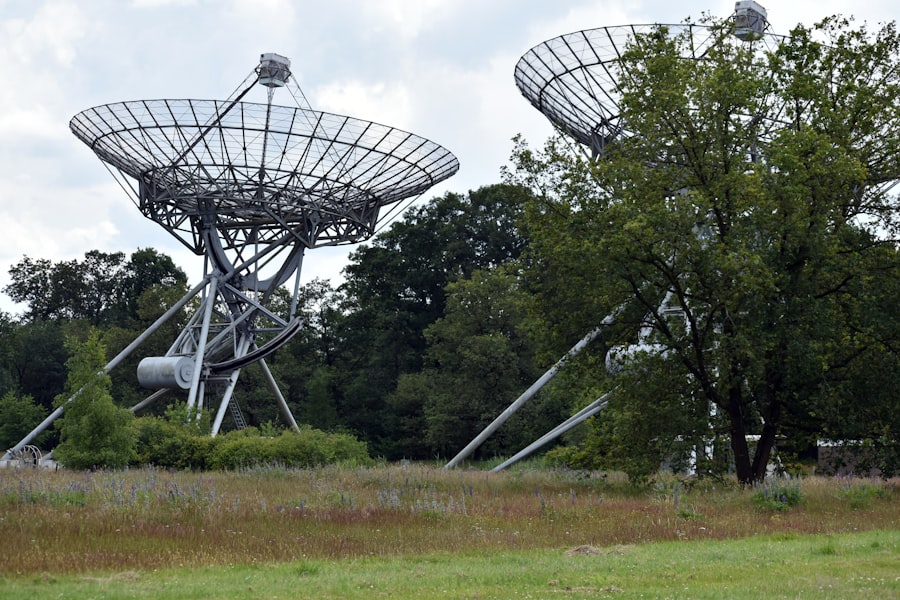
The scientific significance of Long Delayed Echoes extends far beyond their initial intrigue as a curious anomaly in radio communication. They serve as a valuable tool for understanding atmospheric conditions and ionospheric behavior, providing insights into how radio waves interact with various layers of the atmosphere. By studying LDEs, scientists can gain a deeper appreciation for the complexities of signal propagation, which is essential for improving communication technologies.
Furthermore, LDEs have implications for various fields beyond radio communication. For instance, they can inform studies related to climate change by offering data on atmospheric conditions over time. Understanding how radio waves behave in different environmental contexts can also enhance navigation systems and improve radar technologies.
Thus, LDEs represent a multifaceted area of research with far-reaching consequences across multiple scientific disciplines.
The Hunt for Long Delayed Echoes: Research and Discoveries
The pursuit of understanding Long Delayed Echoes has led to numerous research initiatives and discoveries over the years. Scientists have employed a variety of methodologies to study these phenomena, ranging from observational studies conducted by amateur radio operators to sophisticated experiments utilizing advanced technology in controlled environments. This collaborative effort has resulted in a wealth of data that continues to inform theories about LDEs.
Recent advancements in data collection techniques have allowed researchers to analyze LDEs with unprecedented precision. High-frequency radar systems and satellite-based observations have provided new insights into how atmospheric conditions influence signal propagation. Additionally, international collaborations among scientists have facilitated knowledge sharing and fostered innovative approaches to studying LDEs on a global scale.
As researchers continue to refine their methodologies, they are uncovering new patterns and correlations that deepen our understanding of this captivating phenomenon.
The Impact of Long Delayed Echoes on Radio Communication Technology
Long Delayed Echoes have had a profound impact on the development and refinement of radio communication technology. As researchers have sought to understand LDEs better, they have inadvertently contributed to advancements in signal processing techniques and transmission methods. The need to mitigate the effects of delayed echoes has led engineers to innovate solutions that enhance signal clarity and reduce interference.
Moreover, insights gained from studying LDEs have informed improvements in various communication systems, including those used for aviation, maritime navigation, and emergency services. By understanding how atmospheric conditions affect signal propagation, engineers can design more robust systems capable of maintaining reliable communication even under challenging circumstances. Thus, LDEs have not only enriched scientific knowledge but have also played a pivotal role in shaping practical applications within the field of communication technology.
The Future of Long Delayed Echoes Research
The future of Long Delayed Echoes research appears promising as scientists continue to explore this enigmatic phenomenon with renewed vigor. With advancements in technology enabling more sophisticated data collection and analysis methods, researchers are poised to uncover new insights that could reshape our understanding of LDEs. The integration of machine learning algorithms into data analysis processes may also facilitate pattern recognition and predictive modeling related to delayed echoes.
Furthermore, interdisciplinary collaborations are likely to play a crucial role in advancing research on LDEs. By bringing together experts from fields such as atmospheric science, astrophysics, and engineering, researchers can develop comprehensive approaches that address the complexities associated with LDEs. As interest in this area grows, funding opportunities may also increase, allowing for more extensive studies that could yield groundbreaking discoveries.
Unraveling the Mystery of Long Delayed Echoes: Recent Breakthroughs
Recent breakthroughs in the study of Long Delayed Echoes have shed light on some previously elusive aspects of this phenomenon. Researchers have made significant strides in identifying specific atmospheric conditions that contribute to the occurrence of LDEs, leading to a better understanding of their underlying mechanisms. For instance, studies have shown that variations in solar activity can influence ionospheric behavior, thereby affecting the likelihood and characteristics of delayed echoes.
Additionally, advancements in computational modeling have allowed scientists to simulate various scenarios involving LDEs more accurately. These models enable researchers to predict how changes in atmospheric conditions might impact signal propagation over time. Such breakthroughs not only enhance theoretical understanding but also provide practical applications for improving communication systems reliant on radio wave transmission.
The Potential Applications of Long Delayed Echoes in Science and Technology
The potential applications of Long Delayed Echoes extend beyond mere curiosity; they hold promise for various scientific and technological advancements. For instance, insights gained from studying LDEs could inform developments in global positioning systems (GPS) by enhancing our understanding of how atmospheric conditions affect signal accuracy. Improved models could lead to more reliable navigation solutions across diverse environments.
Moreover, LDEs may find applications in environmental monitoring by providing data on atmospheric changes over time. Researchers could leverage this information to study climate patterns or track pollution levels based on how radio waves interact with different atmospheric constituents. As scientists continue to unravel the mysteries surrounding Long Delayed Echoes, their findings may pave the way for innovative solutions that address pressing challenges across multiple domains.
In conclusion, Long Delayed Echoes represent a captivating intersection between science and technology that continues to inspire inquiry and exploration. As researchers delve deeper into this phenomenon’s complexities, they unlock new possibilities for understanding our world while simultaneously advancing communication technologies that shape modern society.
Long delayed echoes of radio signals have intrigued scientists and enthusiasts alike, leading to various studies and discussions about their origins and implications. For a deeper dive into this fascinating phenomenon, you can explore a related article on the topic at XFile Findings, which delves into the mysteries surrounding these enigmatic signals and their potential explanations.
WATCH THIS! 🛰️125 Years of Hidden Signals: What NASA Just Admitted About the Black Knight Satellite
FAQs
What are long delayed echoes in radio signals?
Long delayed echoes (LDEs) are radio signals that are received significantly later than expected, often with delays ranging from several seconds to minutes after the original transmission. These echoes are unusual because typical radio echoes occur within milliseconds.
How were long delayed echoes first discovered?
Long delayed echoes were first reported in the 1920s and 1930s by amateur radio operators and researchers who noticed that some radio signals returned with unexpected delays, sometimes up to several seconds after transmission.
What causes long delayed echoes?
The exact cause of long delayed echoes is still not fully understood. Several theories have been proposed, including reflections from the ionosphere, magnetosphere, or even plasma clouds in space. Some suggest that signals may be trapped and slowly released by natural phenomena in the Earth’s atmosphere or near-Earth space.
Are long delayed echoes common?
No, long delayed echoes are relatively rare and unpredictable. They tend to occur under specific atmospheric or space weather conditions, making them a subject of ongoing research rather than a common radio phenomenon.
Do long delayed echoes affect modern communication systems?
Long delayed echoes generally do not affect modern communication systems significantly because these systems use frequencies and technologies that are less susceptible to such phenomena. However, understanding LDEs can help improve knowledge of the Earth’s ionosphere and space environment.
Can long delayed echoes be intentionally generated?
Currently, there is no reliable method to intentionally generate long delayed echoes. They are considered natural phenomena resulting from complex interactions between radio waves and the Earth’s atmospheric or space environment.
What frequencies are most affected by long delayed echoes?
Long delayed echoes are most commonly observed in the high-frequency (HF) radio bands, typically between 3 MHz and 30 MHz, where ionospheric reflection plays a significant role in signal propagation.
Why are long delayed echoes important to study?
Studying long delayed echoes helps scientists better understand the Earth’s ionosphere, magnetosphere, and space weather conditions. This knowledge can improve radio communication, navigation systems, and our understanding of near-Earth space environments.