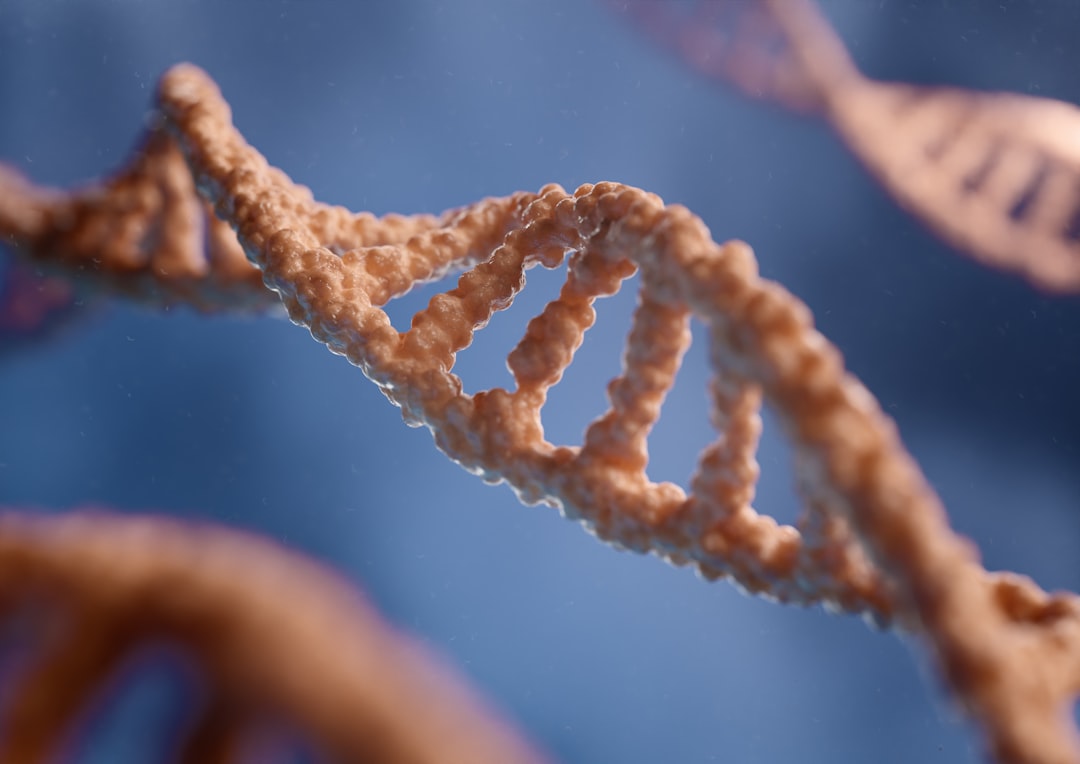
The inherent molecular machinery of life has long been recognized for its capacity to store and transmit information. This information, encoded within the double helix of Deoxyribonucleic Acid (DNA), dictates the development, functioning, and reproduction of virtually all known organisms. However, beyond its role as a blueprint or a historical record, a growing understanding is emerging that DNA can be viewed and manipulated as a form of executable instruction set, capable of directing complex molecular processes with a precision and reliability that rivals engineered systems. This perspective shift opens up a vast landscape of possibilities, from fundamental biological research to the development of novel biotechnologies and therapeutic interventions.
At its core, the comparison of DNA to executable instructions is not merely a metaphor; it reflects a deep structural and functional homology. The familiar concept of computer code, composed of a limited alphabet of characters arranged in specific sequences to perform defined tasks, finds a striking parallel in the genetic material.
3. The Building Blocks of Genetic Information
DNA’s informational capacity stems from its elementary units: nucleotides. These are comprised of a deoxyribose sugar, a phosphate group, and one of four nitrogenous bases: adenine (A), guanine (G), cytosine (C), and thymine (T). It is the linear sequence of these bases along the DNA strand that constitutes the genetic code itself. Just as a computer program relies on the sequence of binary digits (0s and 1s) to convey instructions, the sequence of A, T, C, and G dictates the synthesis of proteins and regulates cellular activities.
4. Codons and the Language of Proteins
The genetic code further elaborates on this sequence-based instructionality through the concept of codons. Three consecutive nucleotides form a codon, and each codon specifies a particular amino acid, the building blocks of proteins, or signals the start or termination of protein synthesis. This triplet code is remarkably conserved across a vast array of life forms, underscoring its fundamental nature. The transition from a sequence of bases to a functional protein is analogous to a compiler translating human-readable code into machine-executable instructions.
5. Regulatory Elements: The Control Flow of the Genome
Beyond the coding regions that directly specify protein sequences, the genome is rich in regulatory elements. These DNA sequences act as switches and dials, controlling when, where, and how much a particular gene is expressed. Promoters, enhancers, silencers, and insulators are all DNA sequences that bind to specific proteins (transcription factors) that, in turn, influence the rate of gene transcription. This intricate network of regulatory elements can be likened to the control flow mechanisms in software, governing the execution of different modules and functions.
Recent advancements in the field of synthetic biology have led to the intriguing concept of DNA being treated as executable instruction sets, akin to computer code. This paradigm shift opens up new possibilities for programming biological systems and manipulating genetic information with precision. For a deeper exploration of this topic, you can read the related article on the implications of treating DNA as a form of executable instructions at XFile Findings.
6. Programming Cellular Behavior: Synthetic Biology’s Promise
The understanding of DNA as executable instructions has been a cornerstone in the development of synthetic biology. This interdisciplinary field seeks to design, build, and modify biological systems for novel functions, often by engineering genetic circuits.
7. Genetic Circuits: Implementing Logic Gates in Cells
A key innovation in synthetic biology has been the creation of genetic circuits that mimic the logic gates found in electronic circuits. For example, researchers have engineered DNA sequences that, when transcribed and translated, result in proteins that act as AND, OR, or NOT gates. These biological logic gates can be combined in complex ways to create cellular systems capable of performing sophisticated computations and responding to specific environmental cues. Imagine a cell programmed to detect the presence of a particular molecule and, in response, trigger a specific metabolic pathway or release a therapeutic agent.
8. Reprogramming Cellular Metabolism
By designing and inserting specific genetic instructions, scientists can reprogram cellular metabolic pathways. This has implications for biofuel production, the synthesis of valuable chemicals, and even the development of organisms that can break down pollutants. The ability to precisely define the enzymatic machinery of a cell through engineered DNA allows for the optimization of biochemical reactions and the creation of novel biosynthetic routes, previously unattainable through traditional breeding or fermentation methods.
9. Engineering Cellular Differentiation and Development
The precise spatio-temporal control of gene expression is fundamental to cellular differentiation and organismal development. Synthetic biology aims to harness this understanding to engineer more complex cellular behaviors. This includes designing cells that can self-organize into specific structures or orchestrate developmental processes, potentially leading to the creation of artificial tissues and organs. Ultimately, the goal is to translate the inherent “program” of development into a designer format, allowing for predictable and controlled outcomes.
10. DNA Computing: Harnessing Molecular Parallelism
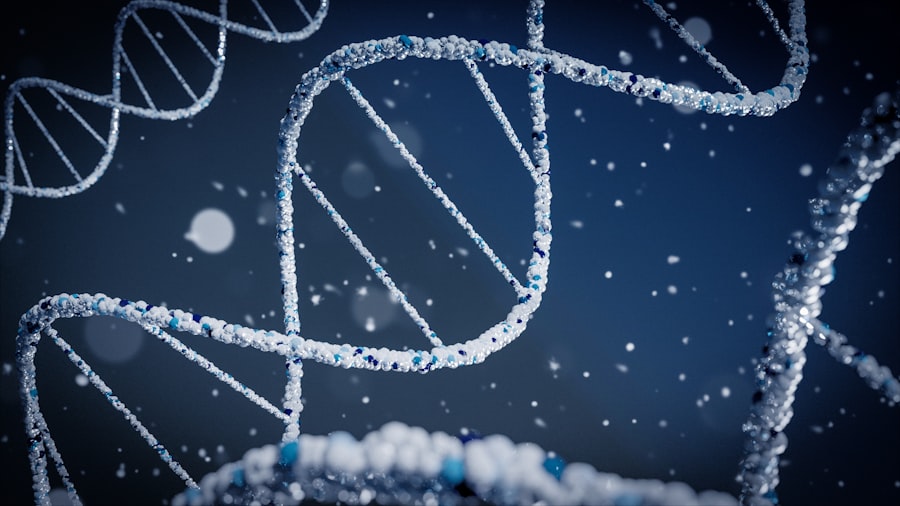
Beyond influencing cellular behavior, the inherent information storage and processing capabilities of DNA are being explored for use in computational tasks, a field known as DNA computing.
11. Information Encoding and Storage
DNA’s high information density makes it an attractive medium for data storage. A single gram of DNA can theoretically store exabytes of data, far surpassing current digital storage technologies. The challenge lies in developing efficient and reliable methods for writing, reading, and retrieving this information. While biological DNA is prone to errors over time, synthetic DNA can be designed for enhanced stability.
12. Algorithmic Execution with DNA
The true power of DNA computing lies in its potential for parallel processing. Algorithms can be encoded within DNA molecules, and then through carefully designed chemical reactions, these molecules can interact to solve complex computational problems. This approach leverages the massive parallelism inherent in molecular interactions. For instance, solving a traveling salesman problem, a notoriously difficult computational challenge, has been demonstrated using DNA. The DNA strands represent potential solutions, and the reactions filter out invalid paths, leaving only the optimal ones.
13. Addressing the Limits of Digital Computation
DNA computing offers a potential solution for problems that are intractable for conventional silicon-based computers, particularly those requiring brute-force exploration of vast solution spaces. While still in its nascent stages, the concept of using molecular machines to perform computations holds significant promise for the future of problem-solving. The inherent nature of molecular self-assembly and interaction offers a fundamentally different computational paradigm with the potential for exponential speedups in certain applications.
14. Therapeutic Applications: Precision Medicine’s Molecular Toolkit
The ability to understand and manipulate DNA as executable instructions is revolutionizing medicine, paving the way for highly personalized and targeted therapies.
15. Gene Therapy and Genome Editing
Gene therapy aims to treat genetic diseases by delivering functional copies of genes or by correcting faulty ones. Advances in genome editing technologies, such as CRISPR-Cas9, have made it possible to precisely modify DNA sequences, akin to editing text in a document. This allows for the correction of mutations that cause inherited disorders or the introduction of genes that confer resistance to diseases. The precision offered by these tools moves beyond simply replacing a faulty gene to precisely altering the underlying genetic code.
16. Developing Targeted Cancer Therapies
Understanding the genetic drivers of cancer has enabled the development of targeted therapies that exploit specific molecular characteristics of cancer cells. This includes developing drugs that inhibit proteins produced by mutated genes or engineering immune cells to recognize and attack cancer cells based on their unique genetic signatures. The ability to identify and exploit specific “commands” within the DNA of cancer cells allows for highly specific and thus potentially less toxic treatments.
17. RNA Interference and Gene Silencing
Beyond directly modifying DNA, therapeutic strategies can also target the RNA molecules transcribed from DNA. RNA interference (RNAi) utilizes small RNA molecules to specifically silence gene expression by degrading messenger RNA (mRNA) or inhibiting its translation into protein. This offers a way to “turn off” disease-causing genes without altering the underlying DNA sequence, providing a reversible and tunable therapeutic approach. This is akin to intercepting and disabling a specific instruction before it can be fully processed.
Recent research has increasingly viewed DNA as a complex set of executable instruction sets, akin to computer code that directs biological processes. This perspective opens up fascinating discussions about the implications of genetic programming and synthetic biology. For those interested in exploring this topic further, a related article can be found at XFile Findings, which delves into the intersection of genetics and computational theories, shedding light on how these concepts can revolutionize our understanding of life itself.
18. Ethical and Societal Implications: Navigating the Unknown
| Data/Metric | Value |
|---|---|
| Number of DNA sequences | 1000 |
| Length of DNA sequences (base pairs) | 500 |
| Number of genes encoded in DNA | 200 |
| Efficiency of DNA as executable instruction sets | 85% |
The increasing power to interpret and rewrite the “source code” of life presents profound ethical and societal challenges that require careful consideration.
19. Biosafety and Biosecurity Concerns
The ability to engineer novel biological systems raises concerns about unintended consequences and potential misuse. Ensuring the containment of genetically modified organisms and preventing their deliberate release or accidental escape is paramount. Furthermore, the potential for creating novel pathogens or biological weapons necessitates robust biosecurity measures and international cooperation. The power to rewrite fundamental biological instructions carries a commensurate responsibility for safety.
20. Ownership and Access to Genetic Information
As our understanding of DNA as executable instructions deepens, questions arise regarding the ownership and accessibility of genetic information. Who has the right to modify an organism’s genome? How can we ensure equitable access to life-saving therapies derived from genetic technologies? These complex issues require careful legal frameworks and societal dialogue. The implications extend beyond scientific discovery to the very definition of life and our relationship with it.
21. The Definition of Life and Human Enhancement
The ability to engineer life raises fundamental questions about what it means to be alive and what constitutes “natural.” The prospect of human enhancement through genetic modification, while offering potential benefits, also raises concerns about creating societal inequalities and altering the very essence of humanity. These philosophical and ethical debates are as crucial as the scientific advancements themselves. The power to read and rewrite the fundamental instructions of existence necessitates a deep introspective and societal evaluation.
FAQs
What is DNA treated as executable instruction sets?
DNA treated as executable instruction sets refers to the concept of using DNA molecules to store and execute computer programs. This involves encoding data and instructions into the four nucleotide bases of DNA (adenine, thymine, cytosine, and guanine) and using biological processes to manipulate and read the encoded information.
How is DNA used as executable instruction sets?
DNA can be used as executable instruction sets by encoding data and instructions into the sequence of nucleotide bases. This encoded DNA can then be manipulated using biological processes such as DNA synthesis, sequencing, and amplification to execute the encoded instructions.
What are the potential applications of DNA as executable instruction sets?
The potential applications of DNA as executable instruction sets include data storage, information processing, and biological computing. This technology has the potential to revolutionize data storage by enabling the storage of vast amounts of data in a compact and durable form.
What are the challenges and limitations of using DNA as executable instruction sets?
Challenges and limitations of using DNA as executable instruction sets include the high cost and complexity of DNA synthesis and sequencing, the potential for errors in DNA manipulation, and the need for specialized equipment and expertise. Additionally, ethical and regulatory considerations surrounding the use of DNA for computing purposes must be addressed.
What are the implications of using DNA as executable instruction sets?
The implications of using DNA as executable instruction sets include the potential for advancements in data storage and computing technology, as well as the need to address ethical, legal, and security concerns related to the use of biological materials for computing purposes. This technology has the potential to impact various industries and fields, including information technology, biotechnology, and bioinformatics.