The history of moon exploration spans centuries, beginning with ancient civilizations observing lunar phases and creating myths about this celestial body. In the early 17th century, Galileo Galilei made significant advances by using telescopes to observe the moon’s surface features, including craters and mountains. These observations established a foundation for scientific lunar studies.
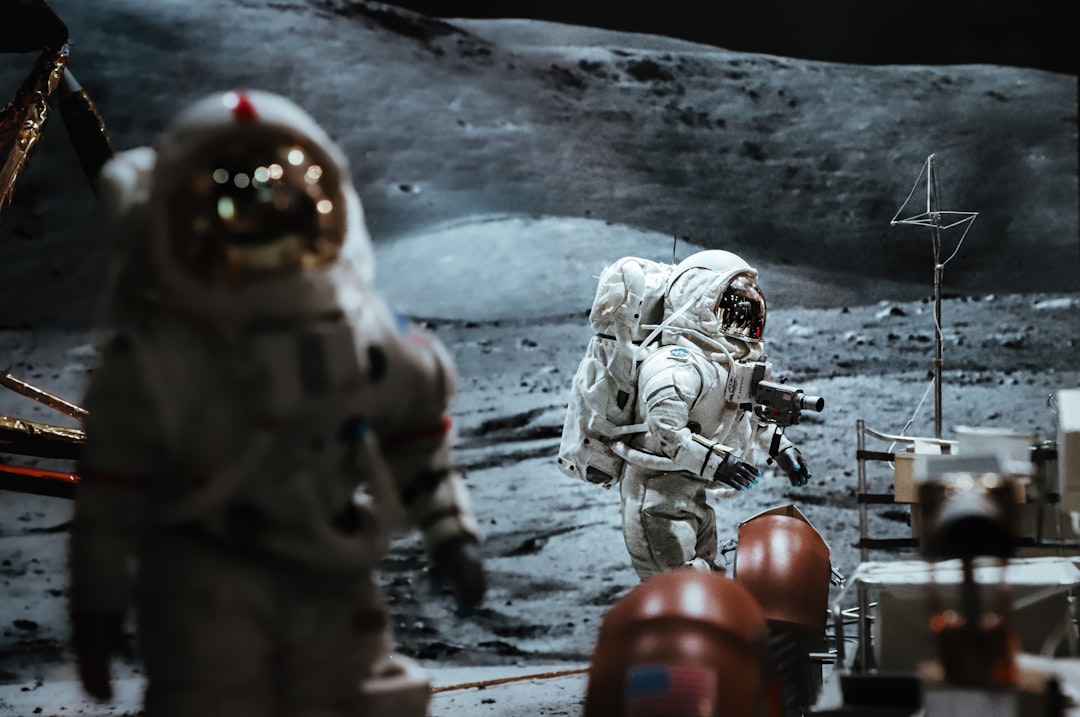
The Space Age marked a crucial development in moon exploration, particularly during the Cold War when the United States and Soviet Union competed for space dominance. This competition culminated in the Apollo missions, with Apollo 11 achieving the first human lunar landing in 1969. Neil Armstrong and Buzz Aldrin’s historic moonwalk represented both a technological milestone and a moment of global significance.
Subsequent Apollo missions expanded scientific knowledge about lunar geology and environmental conditions, providing valuable data for future exploration initiatives.
Key Takeaways
- Moon exploration has evolved from early robotic probes to complex human missions, greatly expanding our scientific knowledge.
- Robotic probes have been crucial in revealing the Moon’s geological features, water presence, and seismic activity.
- Human missions provide unique opportunities for in-depth study and have significant cultural and technological impacts.
- Discovering lunar resources opens possibilities for future space industries and sustained human presence on the Moon.
- Ethical and environmental concerns are essential to address as we plan for future exploration and potential colonization.
The Impact of Moon Exploration on Scientific Understanding
Moon exploration has profoundly influenced scientific understanding across various disciplines, from astronomy to geology and planetary science. The data collected from lunar missions has provided invaluable insights into the formation and evolution of not only the moon but also Earth and other celestial bodies within the solar system. For instance, samples returned from the Apollo missions revealed that the moon is approximately 4.5 billion years old, offering clues about the early solar system’s conditions.
These findings have helped scientists piece together the history of planetary formation and the processes that shaped terrestrial planets. Moreover, lunar exploration has enhanced our understanding of fundamental scientific principles. The study of lunar regolith—the layer of loose material covering solid bedrock—has shed light on processes such as impact cratering and volcanic activity.
By analyzing the composition of lunar rocks and soil, scientists have been able to draw parallels between the moon’s geological history and that of Earth, leading to a better comprehension of planetary dynamics. This knowledge extends beyond our own planet, as it informs theories about other celestial bodies, including Mars and asteroids, thereby enriching our understanding of the solar system as a whole.
The Role of Robotic Probes in Uncovering Moon Mysteries
Robotic probes have played a pivotal role in unraveling the mysteries of the moon, serving as essential tools for exploration and data collection. These unmanned spacecraft have been instrumental in conducting detailed surveys of the lunar surface, mapping its topography, and analyzing its composition without the risks associated with human missions. Notable examples include NASA’s Lunar Reconnaissance Orbiter (LRO), which has provided high-resolution images of the moon’s surface, revealing features such as craters, lava flows, and potential landing sites for future missions.
In addition to mapping and imaging, robotic probes have also been equipped with scientific instruments capable of conducting experiments and gathering data on various lunar phenomena. For instance, India’s Chandrayaan-1 mission made significant discoveries regarding water molecules on the moon’s surface, while China’s Chang’e program has successfully landed rovers that analyze soil samples and search for resources. These robotic missions not only expand our knowledge but also pave the way for future human exploration by identifying safe landing zones and potential resources that could support sustained lunar presence.
The Significance of Human Missions to the Moon
Human missions to the moon hold immense significance beyond mere exploration; they represent a testament to human ingenuity and determination. The Apollo program demonstrated what humanity could achieve when united by a common goal, inspiring generations to pursue careers in science, technology, engineering, and mathematics (STEM). The iconic images of astronauts walking on the lunar surface continue to resonate as symbols of hope and possibility, encouraging young minds to dream big and strive for excellence.
Furthermore, human presence on the moon allows for real-time experimentation and decision-making that robotic missions cannot replicate. Astronauts can conduct complex scientific investigations, respond to unexpected challenges, and adapt their methods based on immediate observations. This flexibility is crucial for addressing unforeseen circumstances that may arise during exploration.
The Apollo missions showcased this adaptability when astronauts encountered various challenges on the lunar surface, demonstrating that human intuition and problem-solving skills are invaluable assets in space exploration.
Unearthing the Geological Secrets of the Moon
| Metric | Value | Description |
|---|---|---|
| Moon’s Diameter | 3,474 km | Diameter of the Moon, about 27% of Earth’s diameter |
| Distance from Earth | 384,400 km (average) | Average distance between Earth and the Moon |
| Number of Apollo Missions | 17 | Total Apollo missions conducted by NASA (1961-1972) |
| Moon Landings | 6 | Number of successful manned Moon landings (Apollo 11, 12, 14, 15, 16, 17) |
| Water Ice Presence | Confirmed | Water ice detected in permanently shadowed lunar craters |
| Moonquakes Detected | Thousands | Seismic activity recorded by Apollo seismometers |
| Age of Moon | 4.5 billion years | Estimated age based on lunar rock dating |
| Gravity on Moon | 1.62 m/s² | Approximately 16.5% of Earth’s gravity |
| Unexplained Phenomena | Transient Lunar Phenomena (TLP) | Short-lived changes in brightness or color on the lunar surface |
| Future Missions Planned | Multiple (Artemis, Chandrayaan-3, Luna 25+) | Upcoming missions aiming to explore and establish lunar presence |
The moon serves as a geological time capsule, preserving evidence of its history and offering insights into planetary processes that have shaped not only itself but also other celestial bodies. Through extensive geological studies conducted during Apollo missions and subsequent robotic explorations, scientists have uncovered a wealth of information about the moon’s formation and evolution. The analysis of lunar samples has revealed distinct layers within its crust, providing clues about volcanic activity and impact events over billions of years.
One of the most significant geological findings is related to the presence of large impact basins formed by asteroid collisions. These basins are characterized by their unique geological features, including circular depressions surrounded by raised rings. By studying these formations, scientists can better understand the frequency and scale of impact events in the early solar system.
Additionally, investigations into volcanic regions on the moon have revealed evidence of ancient lava flows, indicating that volcanic activity persisted longer than previously thought. This knowledge not only enhances our understanding of lunar geology but also informs theories about volcanic processes on other planetary bodies.
Investigating the Presence of Water on the Moon

The discovery of water on the moon has revolutionized our understanding of its potential for supporting future exploration and even human habitation. Initial hints came from data collected by various missions, including India’s Chandrayaan-1 and NASA’s Lunar Reconnaissance Orbiter. These missions detected hydrogen-rich deposits in permanently shadowed craters at the lunar poles, suggesting that water ice may exist in these frigid regions.
Subsequent missions have confirmed these findings, leading scientists to explore how this resource could be utilized for future lunar endeavors. Water is not only essential for sustaining human life but also serves as a critical resource for fuel production through electrolysis—splitting water into hydrogen and oxygen. This capability could enable astronauts to produce rocket fuel on-site for missions deeper into space or even support long-term lunar bases.
The presence of water also raises intriguing questions about the moon’s geological history and its potential for hosting microbial life in subsurface environments. As research continues to unfold, understanding water’s role on the moon could reshape humanity’s approach to space exploration.
Unraveling the Mysteries of Moonquakes and Lunar Volcanism
Moonquakes and lunar volcanism present fascinating areas of study that continue to intrigue scientists seeking to understand the moon’s internal processes. Unlike earthquakes on Earth, which are caused by tectonic activity, moonquakes are believed to result from a combination of factors such as tidal forces exerted by Earth and thermal expansion or contraction within the lunar crust. Data collected from seismometers deployed during Apollo missions revealed that moonquakes can vary in intensity and duration, providing valuable insights into the moon’s geological activity.
Lunar volcanism is another captivating aspect of moon geology that has garnered attention in recent years. While it was once thought that volcanic activity had ceased billions of years ago, evidence suggests that some regions may have experienced eruptions more recently than previously believed. Studies of volcanic features such as sinuous rilles—long channels formed by lava flows—indicate that these processes may have occurred within the last few hundred million years.
Understanding these phenomena not only sheds light on the moon’s geological history but also informs theories about volcanic activity on other celestial bodies.
Exploring the Dark Side of the Moon
The term “dark side of the moon” often evokes images shrouded in mystery; however, it refers to the far side that remains hidden from Earth’s view due to synchronous rotation. This enigmatic region has been a subject of fascination since humanity first glimpsed it through telescopes. Robotic missions like China’s Chang’e-4 have provided unprecedented insights into this unexplored territory, revealing unique geological features such as large impact craters and ancient highlands.
Exploration of the far side has unveiled significant differences compared to its Earth-facing counterpart. For instance, it is characterized by a thicker crust and fewer maria—large basaltic plains formed by ancient volcanic activity—indicating a more complex geological history. The far side also hosts some of the largest impact craters in the solar system, offering clues about past collisions with asteroids and comets.
As scientists continue to analyze data from these missions, they gain a deeper understanding of not only the moon’s history but also broader planetary processes that govern celestial bodies throughout our solar system.
The Hunt for Lunar Resources and Their Potential Uses
The quest for lunar resources has gained momentum as nations and private entities set their sights on sustainable exploration beyond Earth. The moon is believed to harbor valuable materials such as helium-3—a potential fuel for future fusion reactors—and rare earth elements essential for advanced technologies. Identifying these resources could revolutionize energy production on Earth while providing critical materials for space exploration.
Helium-3 is particularly intriguing due to its potential as a clean energy source with minimal radioactive waste compared to traditional nuclear fuels. As global energy demands continue to rise, harnessing helium-3 from lunar regolith could offer a viable solution for sustainable energy production.
As research progresses into resource extraction technologies, humanity stands at the brink of unlocking new possibilities for both lunar colonization and sustainable practices on Earth.
The Future of Moon Exploration and the Possibility of Moon Colonization
The future of moon exploration is poised for exciting developments as international collaborations and private ventures gain momentum. NASA’s Artemis program aims to return humans to the lunar surface by 2024 with plans for sustainable exploration beyond mere visits. This initiative envisions establishing a permanent human presence on the moon through lunar bases equipped with advanced technologies for research and resource utilization.
Establishing habitats capable of supporting life requires innovative solutions for life support systems, radiation protection, and sustainable resource management. However, successful colonization could serve as a stepping stone for further exploration beyond our lunar neighbor—Mars being a primary target for future human missions.
As nations collaborate on ambitious projects like lunar gateways and international research stations, they lay the groundwork for humanity’s next chapter in space exploration.
Ethical and Environmental Considerations in Moon Exploration
As humanity embarks on an era of renewed interest in moon exploration, ethical and environmental considerations must take center stage in discussions surrounding these endeavors. The potential exploitation of lunar resources raises questions about ownership rights, environmental preservation, and respect for celestial heritage sites left behind by previous missions. Ensuring responsible practices will be crucial in maintaining both scientific integrity and respect for historical achievements.
Moreover, protecting lunar environments from contamination is paramount as human activities increase on its surface. The introduction of terrestrial microbes poses risks to pristine ecosystems that may exist beneath its surface or within permanently shadowed regions where water ice resides. Establishing guidelines for planetary protection will be essential in safeguarding these environments while allowing for scientific discovery and exploration.
In conclusion, moon exploration represents a multifaceted journey that intertwines history with scientific discovery while paving pathways toward future possibilities beyond Earth. As humanity continues to push boundaries through technological advancements and collaborative efforts across nations, it must remain vigilant in addressing ethical considerations while striving for sustainable practices in this new frontier.
In the quest to unravel the mysteries of the moon, recent advancements in space exploration have shed light on its enigmatic features and potential resources. For a deeper dive into the intriguing findings and ongoing research in this field, you can read more in the article available at this link. This resource provides insights into the latest discoveries and theories surrounding lunar exploration, making it a must-read for enthusiasts and researchers alike.
FAQs
What are some of the main mysteries of the Moon?
The Moon holds several mysteries including the origin of its water ice, the nature of its deep interior, the presence of unusual geological formations like lunar swirls, and the reasons behind its asymmetric crust thickness.
How has space exploration helped us understand the Moon?
Space exploration missions, such as the Apollo program, Lunar Reconnaissance Orbiter, and recent robotic landers, have provided detailed data on the Moon’s surface composition, geology, topography, and environment, greatly enhancing our understanding of its history and characteristics.
Why is the Moon important for future space exploration?
The Moon serves as a potential base for scientific research, a testing ground for technologies needed for Mars and beyond, and a source of resources like water ice that could support human missions and fuel production.
What is the significance of water ice on the Moon?
Water ice, found in permanently shadowed craters near the lunar poles, is crucial because it can be used for drinking water, oxygen production, and converted into rocket fuel, making long-term lunar missions more sustainable.
Have humans ever walked on the Moon?
Yes, twelve astronauts walked on the Moon during six Apollo missions between 1969 and 1972, conducting experiments and collecting samples that have been invaluable for lunar science.
What challenges does the Moon present for exploration?
Challenges include extreme temperature variations, lack of atmosphere, high radiation levels, lunar dust that can damage equipment, and the difficulty of landing and operating in rugged terrain.
Are there plans for future Moon missions?
Yes, multiple space agencies and private companies plan to return humans to the Moon in the coming years, including NASA’s Artemis program aiming to land astronauts near the lunar south pole and establish a sustainable presence.
What role do robotic missions play in exploring the Moon?
Robotic missions scout landing sites, conduct scientific experiments, map the surface, and test technologies, providing critical information and support for future human exploration.