The universe, a vast expanse of cosmic dust and unimaginable distances, has captivated humanity since the dawn of time. From the earliest stargazers who charted celestial movements for survival and spiritual understanding, to the modern astronomers pushing the boundaries of our knowledge with sophisticated telescopes and theoretical models, the quest to unravel the mysteries of astronomy remains a fundamental human endeavor. This exploration is not merely about distant celestial bodies; it is a profound journey into our own origins, our place in the cosmos, and the very nature of reality itself.
The earliest human civilizations were intrinsically linked to the night sky. The predictable cycles of the sun, moon, and stars provided the framework for calendars, agricultural planning, and navigation. This practical necessity soon blossomed into a deeper fascination, giving rise to myths, legends, and early attempts at systematic observation.
Early Astronomers and Their Worldviews
Across the globe, ancient cultures developed sophisticated cosmological models. The Babylonians, renowned for their meticulous record-keeping, observed and cataloged planetary movements with remarkable accuracy, laying the groundwork for later astronomical advancements. The Egyptians aligned their pyramids with celestial bodies, demonstrating a deep understanding of astronomical phenomena. In ancient Greece, thinkers like Aristotle proposed geocentric models of the universe, placing Earth at the center, a view that would dominate Western thought for over a millennium. These early observations, though often intertwined with religious and philosophical beliefs, were crucial first steps in understanding the celestial realm.
The Birth of Tools: From Naked Eye to Early Telescopes
For millennia, human eyes were the primary instruments for observing the heavens. Yet, even with this limitation, remarkable discoveries were made. The recognition of constellations, the tracking of planetary retrograde motion, and the prediction of eclipses were all achieved through dedicated, often painstaking, naked-eye observation. The invention of rudimentary astronomical tools, such as the astrolabe and quadrant, further refined measurement and observation capabilities, allowing for more precise charting of stellar positions and celestial events. However, it was the advent of the telescope that truly revolutionized astronomy, opening up a universe previously hidden from human sight.
Astronomy has always been a field filled with intriguing mysteries, from the enigma of dark matter to the search for extraterrestrial life. For those interested in exploring some of these captivating questions further, a related article can be found at this link, which delves into various astronomical phenomena that continue to puzzle scientists and enthusiasts alike.
The Telescope’s Revolution: A Window into the Unseen Cosmos
The invention of the telescope in the early 17th century marked a watershed moment in the history of astronomy. This optical marvel allowed humanity to peer beyond the limitations of the naked eye, revealing a cosmos far more complex and wondrous than previously imagined. Suddenly, the familiar stars revealed celestial companions, and distant worlds became tangible.
Galileo’s Gaze: Challenging the Geocentric Orthodoxy
Galileo Galilei, with his improved version of the refracting telescope, became one of the first to systematically point this new instrument at the heavens. His observations provided irrefutable evidence that challenged the long-held geocentric model. He observed the phases of Venus, mirroring the moon’s phases, which could only be explained if Venus orbited the Sun. He discovered four moons orbiting Jupiter, demonstrating that not all celestial bodies revolved around Earth. These groundbreaking discoveries, documented in his seminal work Sidereus Nuncius, ignited a scientific revolution and paved the way for a heliocentric understanding of the solar system.
Kepler’s Laws and Newton’s Gravity: Unlocking Cosmic Mechanics
While Galileo provided observational evidence, Johannes Kepler, through meticulous analysis of Tycho Brahe’s observational data, formulated his laws of planetary motion. These laws described the elliptical orbits of planets around the Sun, replacing the ancient notion of perfect circular paths. Following in their footsteps, Sir Isaac Newton provided the unifying explanation with his law of universal gravitation. Newton’s insight revealed that the same force that makes an apple fall to the ground also governs the celestial dance of planets and stars. This understanding of gravitational mechanics provided a powerful framework for predicting celestial movements and understanding the underlying forces at play in the cosmos.
The Evolution of Telescopes: From Refractors to Reflectors and Beyond
The early refracting telescopes, while revolutionary, suffered from chromatic aberration, a phenomenon that caused color fringing. This led to the development of reflecting telescopes, which used mirrors instead of lenses to focus light. Sir Isaac Newton himself designed and built the first practical reflecting telescope. Over centuries, telescope technology continued to advance, leading to larger and more sophisticated instruments. The development of radio telescopes in the 20th century opened up entirely new wavelengths of cosmic information, allowing astronomers to study phenomena invisible to optical telescopes, such as distant galaxies and the cosmic microwave background radiation.
Exploring Our Celestial Neighborhood: The Solar System and Its Mysteries

Our understanding of the solar system has expanded dramatically in recent decades, transforming it from a collection of celestial bodies into a dynamic and complex system ripe for exploration.
The Inner Planets: A Tale of Volcanism, Atmosphere, and Potential Past Life
Mercury, the closest planet to the Sun, is a world of extreme temperature contrasts and is scarred by impact craters. Venus, often called Earth’s “twin” due to its similar size and mass, is veiled in a thick, toxic atmosphere of carbon dioxide, creating a runaway greenhouse effect that makes its surface hotter than Mercury. Mars, the “Red Planet,” has long captivated our imagination with its potential for past life. Rovers and orbiters have revealed evidence of ancient riverbeds and oceans, fueling the search for biosignatures. The rocky composition and diverse geology of the inner planets offer crucial insights into planetary formation and evolution.
The Outer Giants: Gas Giants, Icy Moons, and Ringed Wonders
Jupiter, the largest planet in our solar system, is a swirling vortex of gas with its iconic Great Red Spot. Its numerous moons, including the Galilean moons (Io, Europa, Ganymede, and Callisto), are worlds in themselves, with Io’s intense volcanic activity and Europa’s subsurface ocean hinting at the potential for life beyond Earth. Saturn, renowned for its breathtaking ring system, is another gas giant with a diverse collection of moons, including Titan, which possesses a thick atmosphere and liquid methane lakes. Uranus and Neptune, the ice giants, are characterized by their frigid atmospheres and unique axial tilts, offering a glimpse into the outer reaches of solar system formation.
Dwarf Planets and Kuiper Belt Objects: The Remnants of Creation
Beyond Neptune lies the Kuiper Belt, a vast region populated by icy bodies, including dwarf planets like Pluto, Eris, and Makemake. These objects are considered remnants from the early formation of the solar system, offering invaluable clues about the conditions and materials present billions of years ago. Studying their composition, orbits, and interactions helps us understand the processes that shaped our solar system and the potential for similar formations in other star systems.
Beyond Our Solar System: Exoplanets, Stars, and Galactic Structures
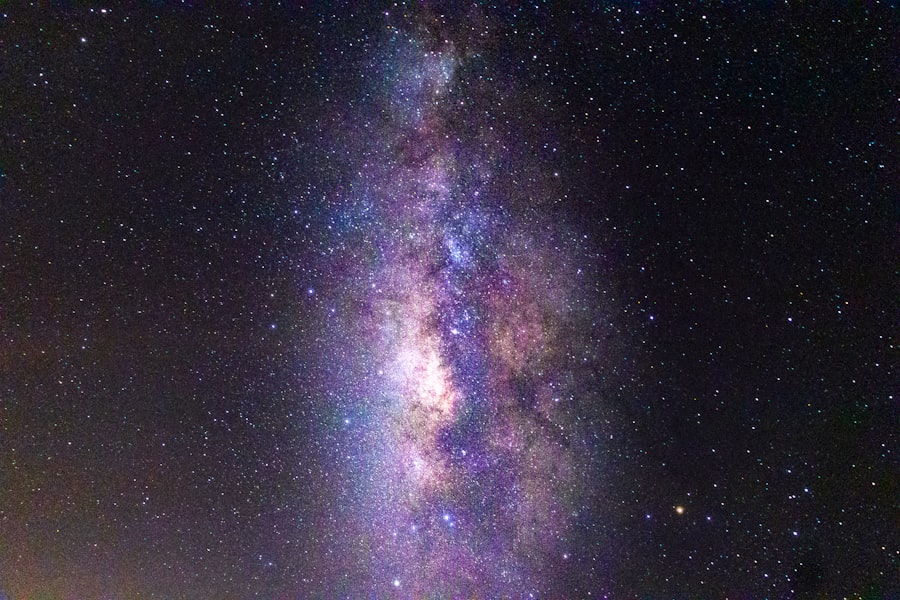
The universe extends far beyond our immediate cosmic neighborhood, revealing an astonishing array of stars, planetary systems, and grand galactic structures.
The Discovery of Exoplanets: Worlds Beyond Our Sun
The detection of exoplanets – planets orbiting stars other than our Sun – has revolutionized our understanding of planetary systems. Using techniques like the transit method and Doppler spectroscopy, astronomers have discovered thousands of exoplanets, ranging from gas giants to rocky “super-Earths.” This burgeoning field of study has revealed that planets are not rare phenomena but are likely ubiquitous in the galaxy, raising profound questions about the potential for life elsewhere in the universe.
The Life and Death of Stars: Cosmic Furnaces and Stellar Remnants
Stars, the luminous beacons of the cosmos, are the fundamental building blocks of galaxies. Born from vast clouds of gas and dust, they spend billions of years fusing hydrogen into helium, generating light and heat. The diversity of stars is astounding, from tiny red dwarfs to colossal blue giants. Their eventual demise is equally dramatic, ranging from gentle shedding of outer layers to spectacular supernova explosions that forge heavier elements and seed the galaxy with the ingredients for future star and planet formation. Stellar remnants, such as white dwarfs, neutron stars, and black holes, are some of the most extreme and fascinating objects in the universe.
Galaxies: Islands of Stars in the Cosmic Ocean
Galaxies are immense collections of stars, gas, dust, and dark matter, bound together by gravity. Our own Milky Way is a spiral galaxy, home to billions of stars, including our Sun. Astronomers have identified a staggering variety of galaxies, from dwarf galaxies to colossal elliptical giants, each with its own unique history and evolutionary path. The study of galactic collisions, mergers, and the formation of large-scale cosmic structures provides crucial insights into the evolution of the universe over cosmic time.
Astronomy has always been a field filled with intriguing mysteries, and one of the most captivating is the enigma of dark matter. Researchers continue to explore its elusive nature and how it influences the universe’s structure. For those interested in delving deeper into the unknown aspects of our cosmos, a fascinating article can be found at XFile Findings, which discusses various astronomical phenomena that challenge our current understanding and spark curiosity among scientists and enthusiasts alike.
The Unseen Universe: Dark Matter, Dark Energy, and the Cosmic Web
| Mystery | Description |
|---|---|
| Dark Matter | Astronomers have observed that there is more mass in the universe than can be accounted for by visible matter, leading to the theory of dark matter. |
| Dark Energy | There is a mysterious force causing the universe to expand at an accelerating rate, known as dark energy, but its nature is still not fully understood. |
| Fast Radio Bursts | These brief and intense radio emissions from deep space have puzzled astronomers since their discovery, and their origin remains unknown. |
| Black Holes | While we have observed the effects of black holes, the actual nature of these mysterious objects and what happens beyond the event horizon is still a mystery. |
Despite our increasing observational power, much of the universe remains enigmatic. The majority of its contents are invisible to our current instruments, leading to the concepts of dark matter and dark energy, which are among the biggest mysteries in modern astronomy.
Dark Matter: The Invisible Scaffolding of Galaxies
Observations of galaxy rotation curves and gravitational lensing have revealed the existence of unseen matter that exerts a gravitational influence. This mysterious substance, dubbed “dark matter,” comprises roughly 85% of the matter in the universe. It does not interact with light, making it invisible to traditional telescopes. Its presence is inferred solely through its gravitational effects, and understanding its fundamental nature is a paramount goal of modern physics and astronomy. Dark matter is thought to provide the gravitational scaffolding upon which galaxies and larger cosmic structures form.
Dark Energy: The Accelerating Expansion of the Universe
Even more perplexing is dark energy, a hypothetical form of energy that permeates all of space and is responsible for the accelerating expansion of the universe. While gravity acts to pull matter together, dark energy appears to exert a repulsive force, pushing galaxies apart at an ever-increasing rate. This discovery, made in the late 1990s, has profound implications for the ultimate fate of the universe, suggesting a future of ever-increasing emptiness. The nature of dark energy remains one of the most significant unsolved puzzles in cosmology.
The Cosmic Web: The Large-Scale Structure of the Universe
On the largest scales, the universe is not uniformly distributed. Instead, it is organized into a vast, intricate network known as the cosmic web. This structure consists of long filaments of galaxies and dark matter, interconnected at massive clusters and separated by enormous voids. Understanding the formation and evolution of this cosmic web requires sophisticated simulations and observations that map the distribution of matter across vast cosmic distances, providing a breathtaking view of the universe’s grand architecture.
The Future of Astronomy: New Tools and Unanswered Questions
The pursuit of astronomical knowledge is a continuous journey, constantly propelled by technological innovation and the insatiable human curiosity to understand our place in the cosmos. The future promises even more profound discoveries as we develop new tools and refine our theories.
The Next Generation of Telescopes: Pushing the Observational Frontier
The development of next-generation telescopes, such as the James Webb Space Telescope and future ground-based observatories like the Extremely Large Telescope (ELT), will unlock unprecedented capabilities. These instruments will be able to observe the universe in greater detail, at higher resolutions, and across a wider range of wavelengths than ever before. This will allow us to probe the early universe, study the atmospheres of exoplanets in search of biosignatures, and gain a deeper understanding of the elusive nature of dark matter and dark energy.
The Search for Extraterrestrial Life: Are We Alone?
The discovery of exoplanets has intensified the search for extraterrestrial life, known as astrobiology. Scientists are actively developing new methods for detecting biosignatures in the atmospheres of exoplanets and are exploring the potential for life on celestial bodies within our own solar system, such as on the moons of Jupiter and Saturn. This quest to answer the age-old question, “Are we alone?” remains one of the most compelling aspects of astronomical research.
Unveiling the Origins: The Big Bang, Inflation, and the Early Universe
The Big Bang theory remains the prevailing model for the origin of the universe, describing its expansion from an incredibly hot and dense state. However, many questions persist about the very earliest moments of cosmic history, including the period of cosmic inflation that is thought to have occurred fractions of a second after the Big Bang. Future observations and theoretical advancements will continue to refine our understanding of these foundational processes, bringing us closer to comprehending the universe’s ultimate beginnings.
The unraveling of the mysteries of astronomy is a testament to human ingenuity, perseverance, and our enduring fascination with the celestial tapestry. From the earliest whispers of ancient myths to the cutting-edge research of today, each discovery opens new avenues of inquiry, pushing the boundaries of our knowledge and reminding us of the profound, awe-inspiring beauty of the universe we inhabit. The journey continues, promising even greater revelations as we continue to gaze upwards and ask “why?”.

They Reopened the Wow! Signal After 48 Years—Here’s What Changed
FAQs
What are some of the biggest mysteries in astronomy?
Some of the biggest mysteries in astronomy include the nature of dark matter and dark energy, the existence of black holes, the origin of cosmic rays, and the search for extraterrestrial life.
What is dark matter and dark energy?
Dark matter is a mysterious substance that makes up about 27% of the universe, and its presence is inferred from its gravitational effects on visible matter. Dark energy is a hypothetical form of energy that is thought to be responsible for the accelerating expansion of the universe.
What are black holes and why are they mysterious?
Black holes are regions of spacetime where gravity is so strong that nothing, not even light, can escape. They are mysterious because their formation and behavior are not fully understood, and they challenge our current understanding of physics.
What are cosmic rays and where do they come from?
Cosmic rays are high-energy particles that originate from sources outside the solar system. Their exact origins are still not fully understood, but they are thought to come from supernovae, pulsars, and other high-energy astrophysical phenomena.
What is the search for extraterrestrial life and why is it a mystery?
The search for extraterrestrial life involves looking for signs of life beyond Earth, whether it be microbial or intelligent life. It is a mystery because we have not yet found definitive evidence of extraterrestrial life, and the conditions necessary for life elsewhere in the universe are still not fully understood.