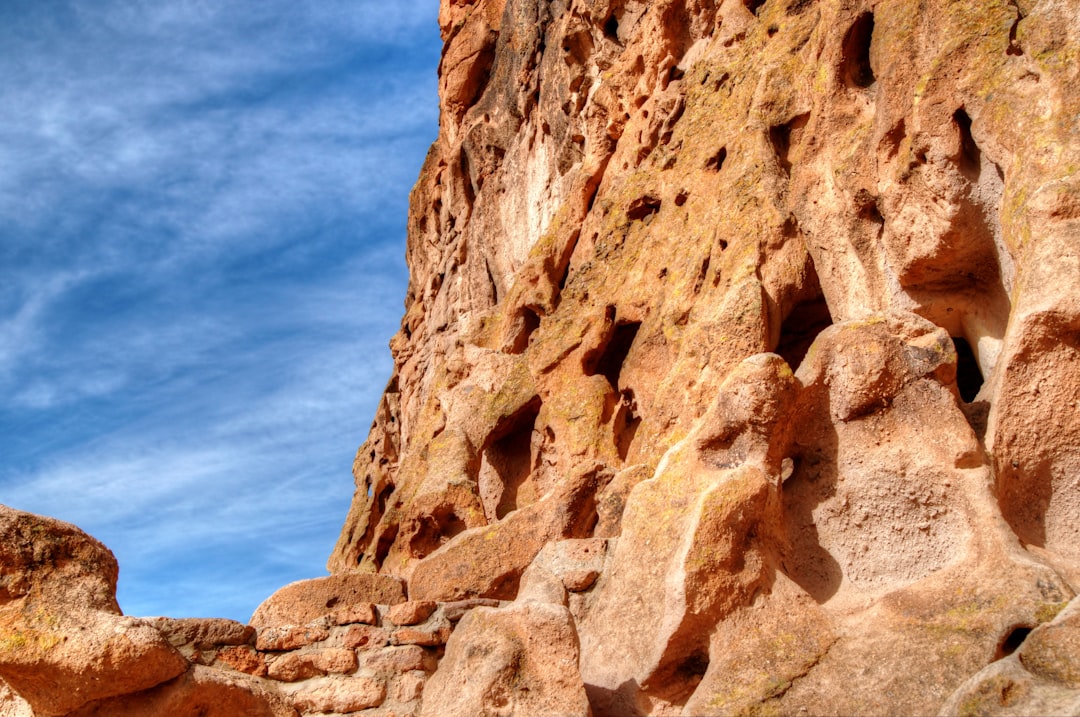
Los Alamos, a name that echoes with intrigue and scientific breakthroughs, stands nestled in the Sangre de Cristo Mountains of New Mexico. It is a place where history, science, and secrecy have intertwined for decades, creating a landscape veiled in a perpetual mystique. Beyond the iconic mushroom cloud associated with its wartime origins, Los Alamos is a nexus of cutting-edge research, profound scientific inquiry, and a unique community shaped by its extraordinary purpose. To unravel its mysteries is to delve into the very heart of human ingenuity, the ethical complexities of creation, and the enduring legacy of a project that irrevocably altered the course of history.
Throughout its existence, Los Alamos has been a crucible for some of the most significant scientific endeavors of the 20th and 21st centuries. From the frantic race to develop the atomic bomb during World War II to its current role in national security, advanced materials, and emerging technologies, the scientific output emanating from this mesa has been nothing short of revolutionary. Yet, the story of Los Alamos is not solely one of scientific achievement; it is also a tale of human endeavor, sacrifice, ethical debate, and the enduring impact of secret knowledge.
The Genesis of a Secret City
The inception of Los Alamos is steeped in the urgency and fear of global conflict.
The Manhattan Project and the Dawn of the Atomic Age
The year is 1942. World War II rages across continents, and a palpable fear grips the Allied nations. Intelligence suggests that Nazi Germany is actively pursuing the development of a weapon of unprecedented destructive power – the atomic bomb. This terrifying prospect galvanized the United States into action, birthing the Manhattan Project, a top-secret endeavor to harness the power of nuclear fission and develop an atomic weapon before their adversaries. The need for a secluded, secure location, far from prying eyes and potential sabotage, became paramount.
Choosing the Ideal Sanctuary: The Birth of Site Y
Numerous locations were scouted across the American landscape, each assessed for its isolation, accessibility, and suitability for a large scientific and military undertaking. General Leslie Groves, the military head of the Manhattan Project, was a man of decisive action and meticulous planning. His vision required a site that offered natural barriers, a stable environment, and sufficient space for laboratories, housing, and infrastructure. After considerable deliberation, his gaze fell upon a remote mesa in northern New Mexico, a place known as Los Alamos. Its rugged terrain provided a natural fortress, and its sparse population offered the necessary seclusion. The decision was made to establish “Site Y,” the unassuming designation for what would become the epicenter of the world’s first nuclear arsenal.
The Arrival of Genius: Assembling the Minds of Manhattan
The selection of Los Alamos was not merely a matter of geography; it was a strategic decision to gather a constellation of the brightest scientific minds of the era. Under the visionary leadership of theoretical physicist J. Robert Oppenheimer, a diverse group of brilliant individuals was assembled. Physicists like Enrico Fermi, Leo Szilard, and Richard Feynman, chemists like Edward Teller, and engineers and mathematicians from various disciplines converged on this isolated mesa, drawn by the monumental challenge and the profound implications of their work. This formidable collection of intellects, operating under immense pressure and secrecy, would soon embark on a journey that would redefine human capabilities and forever alter the geopolitical landscape.
For those intrigued by the enigmatic history of Los Alamos, a related article that delves deeper into the secrets of this iconic location can be found at XFile Findings. This resource explores various theories and discoveries surrounding the area, shedding light on the mysteries that have captivated historians and enthusiasts alike. Whether you’re a seasoned researcher or a curious newcomer, this article offers valuable insights into the fascinating world of Los Alamos.
Life Behind the Bamboo Curtain: The Unique Community of Los Alamos
The creation of Los Alamos was not just about building a laboratory; it was about forging an entire community, a self-contained world designed for purpose and secrecy.
A Society Under Wraps: Secrecy as the Fabric of Daily Life
Life in Los Alamos during the Manhattan Project was unlike anything experienced by civilians before or since. The residents, comprising scientists, engineers, military personnel, and their families, lived in a bubble of profound secrecy. Information about their work was strictly compartmented, meaning individuals often knew only their specific role and not the broader, overarching project. This enforced discretion permeated every aspect of daily life. Casual conversations were guarded, mail was censored, and even seemingly innocuous questions could elicit evasive answers. The very fabric of their existence was woven with the threads of secrecy, fostering a unique sense of shared purpose and collective responsibility, yet also creating an atmosphere of isolation from the outside world.
The Barracks and the Boomtown Atmosphere
Initially, housing was rudimentary, with many scientists and workers living in hastily constructed barracks or small, prefab homes. The rapid influx of people created a boomtown atmosphere, with amenities struggling to keep pace with the burgeoning population. Yet, amidst the functional, often spartan living conditions, a vibrant and surprisingly cosmopolitan community began to take shape. The presence of so many brilliant minds fostered an intellectual environment that extended beyond the laboratory walls. Salons, lectures, and lively debates on physics and philosophy were common, creating a rich cultural tapestry within the confines of the mesa.
The Role of Families: Maintaining a Sense of Normalcy
The families who accompanied their scientist husbands to Los Alamos played an equally crucial, albeit often overlooked, role in the project’s success. They were tasked with building a home and a semblance of normalcy in an environment dictated by its clandestine mission. Schools were established, social activities were organized, and a sense of community was carefully cultivated to support the efforts of the men who were working on the project. These women and children, though often unaware of the precise nature of the work being done, were integral to the morale and well-being of the scientists, allowing them to focus on the immense scientific and ethical challenges before them. Their resilience and adaptability were instrumental in making Los Alamos a viable and productive place to live and work.
The Trinity Test: The Moment of Truth
The culmination of years of intense scientific effort, groundbreaking innovation, and extraordinary secrecy arrived on a scorching New Mexico morning.
Project Trinity: A World Transformed in an Instant
July 16, 1945. The desolate Jornada del Muerto desert, near the Alamogordo Air Force Base in New Mexico, was the chosen site for a test of unprecedented significance. The culmination of the Manhattan Project’s most ambitious undertaking, the Trinity test aimed to detonate the world’s first nuclear device. The scientific community, having worked tirelessly to understand and harness nuclear fission, held its breath. The stakes were immeasurably high. The success of Trinity would prove the viability of the atomic bomb, a weapon with the potential to end the war and reshape global power dynamics.
The Unveiling of a Fiery Spectacle
At 5:29 AM, the desert sky was ripped apart by an blinding flash of light, brighter than a thousand suns. A colossal fireball erupted, followed by a thunderous roar that reverberated for miles. The mushroom cloud, a terrifyingly beautiful testament to the unleashed power of the atom, ascended into the heavens. The scientists and military personnel who witnessed the event were awestruck, a mixture of profound relief and a chilling realization of the destructive force they had unleashed. Oppenheimer famously recalled a line from the Bhagavad Gita: “Now I am become Death, the destroyer of worlds.” The Trinity test was a stark and undeniable demonstration of humanity’s newfound capacity for both creation and annihilation.
Immediate Ramifications and the Unforeseen Future
The success of the Trinity test had immediate and far-reaching consequences. It provided the definitive proof needed to proceed with the deployment of atomic bombs, leading to the bombings of Hiroshima and Nagasaki later that year, and ultimately, the end of World War II. However, it also marked the beginning of the nuclear age, a period defined by the constant specter of nuclear war and the complex ethical debates surrounding the use and proliferation of nuclear weapons. The mushroom cloud, a symbol of both scientific triumph and profound moral questioning, became indelibly etched into the collective consciousness of humanity.
Beyond the Bomb: The Evolution of Los Alamos National Laboratory
While its origins are inextricably linked to the atomic bomb, Los Alamos was never destined to be solely a site of weapons development. Its enduring legacy lies in its remarkable capacity for scientific evolution and adaptation.
A Shifting Mission: From Weapons to Discovery
Following the end of World War II, the immediate imperative of rapid weapons development waned, but the need for scientific expertise and innovation remained. Los Alamos transitioned, though not without internal debate and external pressure, from its singular focus on nuclear weapons to a broader mandate encompassing a wide spectrum of scientific research. The infrastructure, the highly skilled workforce, and the culture of intense scientific inquiry remained. This allowed the laboratory to pivot towards new challenges and explore novel avenues of research, contributing significantly to fields beyond national security.
Arms Control and Non-Proliferation: The Legacy of Stewardship
The very weapons developed at Los Alamos also necessitated the creation of programs dedicated to arms control and non-proliferation. The laboratory became instrumental in understanding the physics of nuclear weapons, which in turn informed strategies for verifying arms control treaties and preventing the spread of nuclear technology. This aspect of Los Alamos’s work, while less sensational than its wartime origins, has played a crucial role in global security for decades, demonstrating a commitment to responsible stewardship of the knowledge it possesses.
Expanding Frontiers: From Fusion Energy to Human Genome
The scientific prowess cultivated at Los Alamos proved adaptable to a multitude of complex problems. Research into controlled nuclear fusion, an endeavor aimed at harnessing the power of the stars for clean energy, became a significant focus. The laboratory also contributed to breakthroughs in materials science, supercomputing, advanced diagnostics, and even played a role in the Human Genome Project, showcasing its versatility and the breadth of its scientific capabilities. This evolution demonstrated that the foundational principles of scientific inquiry and problem-solving, honed in the crucible of wartime necessity, could be applied to address some of humanity’s most pressing challenges.
The Mysteries of Los Alamos continue to intrigue both historians and enthusiasts of science, particularly regarding the secretive nature of the Manhattan Project. For those interested in exploring more about the enigmatic events surrounding this pivotal moment in history, a related article can be found at this link. It delves into the lesser-known aspects of the project and the individuals involved, shedding light on the complexities that shaped modern nuclear science.
The Enduring Enigma: Los Alamos Today
The mystique of Los Alamos has not entirely dissipated. While its secrets are no longer as absolute as they once were, the laboratory continues to operate at the forefront of scientific discovery, grappling with new challenges and pushing the boundaries of human knowledge.
A Hub for Global Challenges: Security and Beyond
Today, Los Alamos National Laboratory remains a critical institution for national security, addressing emerging threats from cyber warfare to the proliferation of advanced weapons. Its expertise in nuclear physics, chemistry, and engineering continues to be vital in ensuring the safety and security of the nation’s nuclear deterrent. However, the laboratory’s mission has broadened considerably, reflecting the interconnectedness of global challenges and the interdisciplinary nature of modern scientific inquiry.
Advancing New Technologies: Quantum Computing and AI
Los Alamos is actively engaged in the development of transformative technologies that promise to reshape our future. Research into quantum computing, which has the potential to solve problems currently intractable for even the most powerful supercomputers, is a significant area of focus. The laboratory is also at the forefront of artificial intelligence and machine learning, exploring their applications in scientific discovery, national security, and beyond. These cutting-edge endeavors underscore Los Alamos’s continued commitment to innovation and its role in shaping the technological landscape of the 21st century.
The Ethical Compass: Balancing Innovation and Responsibility
With immense scientific power comes immense ethical responsibility. The historical context of Los Alamos, born from the development of weapons of mass destruction, casts a long shadow. The laboratory, and the scientific community at large, continue to grapple with the ethical implications of their work. The pursuit of knowledge must be tempered by a deep consideration of its potential consequences. Los Alamos, as a significant player in the global scientific arena, faces the ongoing challenge of balancing groundbreaking innovation with a profound commitment to ethical principles and responsible application of its discoveries. The legacy of its past serves as a constant reminder of the critical importance of this delicate equilibrium. The mysteries of Los Alamos, while perhaps no longer defined by the absolute secrecy of the Manhattan Project, persist in the profound questions it continues to tackle and the enduring impact of the knowledge it uncovers.

Why Manhattan Project Scientists Couldn’t Explain the Green Fireballs
FAQs
What is Los Alamos known for?
Los Alamos is known for being the site of the Manhattan Project during World War II, where the first atomic bombs were developed.
What is the significance of Los Alamos in history?
Los Alamos is significant in history for its role in the development of the atomic bomb, which ultimately led to the end of World War II.
What are some of the mysteries surrounding Los Alamos?
Some of the mysteries surrounding Los Alamos include the secrecy and security measures surrounding the Manhattan Project, as well as the ongoing research and development activities at the Los Alamos National Laboratory.
What is the Los Alamos National Laboratory?
The Los Alamos National Laboratory is a multidisciplinary research institution that conducts scientific research in various fields, including national security, energy, and environmental management.
What is the current status of Los Alamos?
Today, Los Alamos is a thriving community with a strong focus on scientific research and development, as well as a popular tourist destination for those interested in the history of the Manhattan Project.