
The vast expanse of space has always captivated the human imagination, fueling a relentless drive to understand its origins, composition, and ultimate destiny. Space science investigation, a multifaceted field of inquiry, embarks on this profound journey, employing sophisticated tools and ingenious methodologies to unravel the universe’s most profound mysteries. From the infinitesimally small particles that govern cosmic interactions to the gargantuan structures that dwarf our comprehension, space science continuously pushes the boundaries of knowledge, offering glimpses into a reality far grander and more complex than we could have ever conceived. This exploration delves into the core of space science investigation, dissecting its various branches, the technologies that empower it, the challenges it faces, and the awe-inspiring discoveries it continues to yield.
Space science investigation is not a monolithic entity but rather a constellation of disciplines, each contributing a unique perspective to our understanding of the cosmos. These foundational pillars, rooted in centuries of observation and theoretical development, provide the bedrock upon which modern space exploration is built.
Astronomy: The Ancient Art of Stargazing, Reimagined
Astronomy, arguably the oldest of the space sciences, has evolved from naked-eye observations to the deployment of advanced telescopes that peer across billions of light-years. Its primary focus is the study of celestial objects and phenomena beyond Earth’s atmosphere.
Observational Astronomy: Witnessing the Universe in Action
Observational astronomers are the detectives of the cosmos, meticulously collecting data through a variety of instruments. This branch is further divided based on the electromagnetic spectrum being observed.
Radio Astronomy: Listening to the Universe’s Whispers
Radio telescopes, often vast dishes, capture radio waves emitted by celestial bodies. These waves can penetrate cosmic dust and gas that obscure visible light, allowing astronomers to study phenomena like quasars, pulsars, and the cosmic microwave background radiation, the faint afterglow of the Big Bang.
Optical Astronomy: The Familiar Gaze at Visible Light
Optical telescopes, ranging from ground-based behemoths to space-based observatories like the Hubble Space Telescope, detect visible light. This is the most intuitive form of astronomical observation, providing stunning images of galaxies, nebulae, and planets, and enabling the study of stellar evolution and galactic dynamics.
Infrared Astronomy: Peering Through the Cosmic Veil
Infrared telescopes, often flown on balloons or spacecraft to escape Earth’s atmospheric absorption, detect infrared radiation. This allows astronomers to see through dust clouds, observe cooler objects like exoplanets and brown dwarfs, and study the formation of stars and galaxies.
X-ray and Gamma-ray Astronomy: Unveiling High-Energy Phenomena
Space-based observatories are crucial for X-ray and gamma-ray astronomy, as Earth’s atmosphere absorbs these high-energy photons. These observations reveal extreme cosmic events such as supernovae, black hole accretion disks, and active galactic nuclei, providing insights into the most energetic processes in the universe.
Theoretical Astronomy: Building Models and Explaining Phenomena
Theoretical astronomers develop mathematical models and simulations to explain the observations made by their colleagues. They explore fundamental questions about gravity, cosmology, and the formation and evolution of celestial structures.
Cosmological Models: The Grand Narratives of the Universe
These models attempt to describe the universe as a whole, including its origin, expansion, and ultimate fate. The Lambda-CDM model, which incorporates dark matter and dark energy, is currently the leading cosmological model.
Stellar Evolution and Formation: The Life Cycles of Stars
Theoretical astronomers model the birth, life, and death of stars, from the collapse of giant molecular clouds to the formation of white dwarfs, neutron stars, and black holes. This understanding is crucial for interpreting observed stellar populations and for understanding the enrichment of the universe with heavy elements.
Astrophysics: The Physics of the Cosmos
Astrophysics applies the laws of physics to understand celestial objects and phenomena. It bridges the gap between pure physics and astronomy, explaining the “how” and “why” behind cosmic observations.
Stellar Physics: The Inner Workings of Stars
This sub-field delves into the internal processes of stars, including nuclear fusion, energy transport, and magnetic fields. Understanding these processes is key to explaining stellar luminosity, temperature, and lifespan.
Galactic Dynamics: The Dance of Stars and Matter
Galactic dynamics studies the motion and interactions of stars, gas, and dark matter within galaxies. This involves understanding gravitational forces, galaxy mergers, and the formation of galactic structures like spiral arms and bars.
Plasma Physics in Space: The Electrically Charged Universe
Much of the universe is composed of plasma, an ionized gas. Plasma physics in space investigates the behavior of these charged particles, their interactions with magnetic fields, and phenomena like solar flares and auroras.
Planetary Science: Exploring Our Celestial Neighbors and Beyond
Planetary science focuses on planets, moons, asteroids, and comets within our solar system and the discovery and characterization of exoplanets in other star systems.
Solar System Exploration: Probing Our Own Cosmic Backyard
Missions to planets like Mars, Jupiter, and Saturn, as well as robotic explorers to asteroids and comets, provide invaluable in-situ data about the composition, geology, and potential for life in our solar system.
Exoplanetology: Searching for Worlds Beyond Our Own
The discovery and characterization of exoplanets, planets orbiting stars other than our Sun, have revolutionized our understanding of planetary formation and the potential for life elsewhere.
Detection Methods: Finding Distant Worlds
Techniques like the transit method (observing dips in starlight as a planet passes in front of its star) and radial velocity measurements (detecting the wobble of a star caused by a planet’s gravity) are crucial for exoplanet discovery.
Characterization and Habitability: Assessing Life’s Potential
Once detected, exoplanets are further studied for their atmospheric composition, temperature, and presence of liquid water – key indicators of habitability.
For those interested in the latest advancements in space science investigation, a fascinating article can be found at XFile Findings. This article delves into recent discoveries regarding exoplanets and their potential for harboring life, shedding light on the methods scientists use to detect and analyze these distant worlds. It provides a comprehensive overview of current research and the implications for our understanding of the universe, making it a must-read for space enthusiasts and researchers alike.
The Technological Arsenal: Tools of Cosmic Discovery
The ambition of space science investigation is matched only by the ingenuity of the technologies developed to pursue it. These tools, both on Earth and in orbit, are essential for gathering the data that fuels our understanding.
Space Telescopes: Eyes in the Void
Space telescopes offer unparalleled views of the universe, free from the distortions and absorption of Earth’s atmosphere.
Hubble Space Telescope (HST): A Legacy of Unprecedented Views
For decades, Hubble has delivered breathtaking images and critical scientific data, revolutionizing our understanding of cosmology, galaxy evolution, and the age of the universe.
James Webb Space Telescope (JWST): The Infrared Frontier
JWST, Hubble’s successor, is an infrared observatory designed to peer further back in time than ever before, studying the first galaxies, the formation of stars and planets, and the atmospheres of exoplanets.
Other Space Observatories: Specialized Tools for Specialized Questions
Numerous other space observatories are dedicated to specific wavelengths of light or scientific questions, such as the Chandra X-ray Observatory and the Kepler Space Telescope (focused on exoplanet detection).
Ground-Based Observatories: Powerhouses of Observation
Despite the advantages of space telescopes, powerful ground-based observatories, equipped with adaptive optics and advanced instrumentation, remain vital for astronomical research.
Large Optical Telescopes: Capturing Faint Light
Telescopes like the Gran Telescopio Canarias and the Extremely Large Telescope (under construction) are designed to collect vast amounts of light, allowing for the study of fainter and more distant objects.
Radio Telescope Arrays: Synthesizing Signals
Radio telescope arrays, such as the Atacama Large Millimeter/submillimeter Array (ALMA), combine signals from multiple dishes to achieve higher resolution and sensitivity, enabling detailed studies of star-forming regions and protoplanetary disks.
Space Probes and Rovers: In-Situ Exploration
Robotic missions sent to planets, moons, and asteroids provide direct access to these celestial bodies, gathering data through instruments and even direct sampling.
Planetary Orbiters: Mapping and Atmospheric Studies
Orbiters provide a global perspective, mapping surfaces, studying atmospheric composition, and monitoring weather patterns on other worlds.
Landers and Rovers: Surface Exploration and Analysis
Landers and rovers conduct detailed surface investigations, analyzing soil and rock samples, searching for signs of past or present life, and studying geological processes.
Laboratory Experiments and Simulations: Recreating Cosmic Conditions
While direct observation is paramount, laboratory experiments and sophisticated computer simulations play a crucial role in testing theories and understanding physical processes that are impossible to replicate on Earth.
Particle Accelerators: Simulating Cosmic Rays
Particle accelerators help scientists understand the interactions of high-energy particles that bombard Earth and are found throughout space.
Computer Simulations: Modeling Complex Systems
Supercomputers are used to simulate the formation of galaxies, the evolution of stars, and the dynamics of planetary systems, allowing scientists to test hypotheses and predict outcomes.
The Unseen Architects: Dark Matter and Dark Energy

Two of the most profound mysteries confronting space science investigation are the nature of dark matter and dark energy, invisible components that constitute the vast majority of the universe’s mass-energy content.
Dark Matter: The Invisible Scaffolding of the Cosmos
Dark matter is inferred from its gravitational effects on visible matter. It does not interact with light, making it undetectable by conventional means.
Evidence for Dark Matter: Galactic Rotation Curves and Gravitational Lensing
The unexpected speed at which stars orbit the centers of galaxies suggests the presence of an unseen mass. Gravitational lensing, the bending of light by massive objects, also provides evidence for dark matter’s distribution.
The Search for Dark Matter Particles: Direct and Indirect Detection
Scientists are actively searching for the elusive dark matter particle through direct detection experiments deep underground and indirect detection methods that look for annihilation products in space.
Dark Energy: The Accelerating Force of Expansion
Dark energy is the mysterious force driving the accelerating expansion of the universe. Its nature remains one of the biggest puzzles in modern cosmology.
The Discovery of Cosmic Acceleration: Supernova Observations
Observations of distant supernovae in the late 1990s revealed that the universe’s expansion is not slowing down, as expected, but is instead speeding up, pointing to the existence of dark energy.
Theories on Dark Energy: Cosmological Constant and Beyond
Current theories suggest dark energy might be a cosmological constant, a property of space itself, or a more dynamic field. Understanding its origin is crucial for predicting the ultimate fate of the universe.
The Quest for Life: Astrobiology and the Search for Extraterrestrial Intelligence
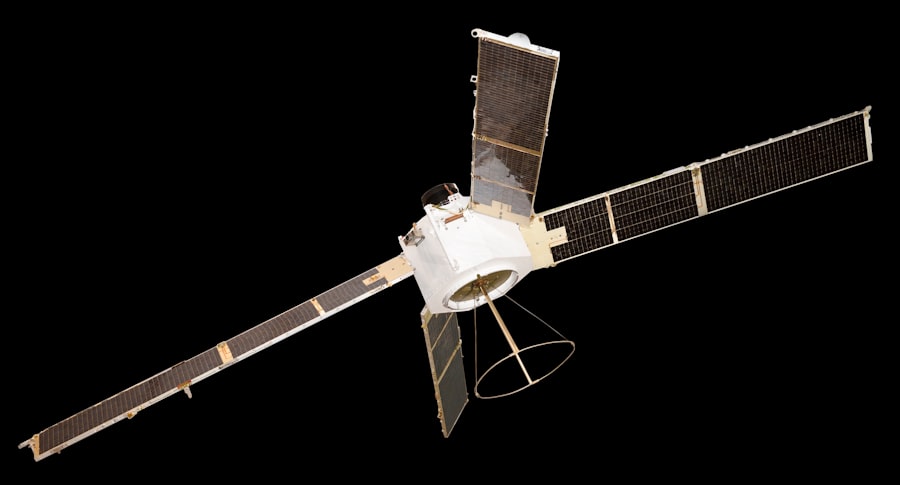
The question of whether life exists beyond Earth is a central driving force in space science investigation, fueling the burgeoning field of astrobiology.
Astrobiology: The Study of Life’s Origins and Possibilities
Astrobiology is an interdisciplinary field that investigates the origins, evolution, distribution, and future of life in the universe.
Searching for Biosignatures: Signs of Life on Other Worlds
Scientists look for biosignatures, indicators of biological activity, in the atmospheres of exoplanets and on the surfaces of planets and moons within our solar system.
Water as a Precursor: The Search for Habitable Zones
The presence of liquid water is considered a fundamental requirement for life as we know it, guiding the search for habitable zones around stars and in planetary systems.
Atmospheric Clues: Gases as Indicators of Life
Certain combinations of atmospheric gases, such as oxygen and methane existing together, could indicate biological processes rather than purely geological ones.
Extremophiles: Life in Earth’s Harsh Environments
Studying extremophiles – organisms that thrive in extreme conditions on Earth – provides insights into the potential resilience and diversity of life in extraterrestrial environments.
SETI: Listening for Cosmic Conversations
The Search for Extraterrestrial Intelligence (SETI) employs radio telescopes and other methods to scan the cosmos for signs of intelligent life.
Radio Astronomy for SETI: Detecting Artificial Signals
SETI projects focus on listening for non-random radio signals that could be indicative of technological civilizations.
Optical SETI: Searching for Laser Signals
Optical SETI searches for brief, powerful laser pulses that could be used for interstellar communication.
Recent advancements in space science have opened up new avenues for exploration and understanding of our universe. A fascinating article discusses the latest findings from the Mars rover missions, shedding light on the planet’s geological history and potential for past life. For more insights into these groundbreaking discoveries, you can read the full article here. These investigations not only enhance our knowledge of Mars but also pave the way for future missions to other celestial bodies.
Challenges and the Future of Space Science Investigation
| Space Science Investigation Metrics | 2019 | 2020 | 2021 |
|---|---|---|---|
| Number of Space Missions | 25 | 30 | 28 |
| Amount of Data Collected (in TB) | 150 | 180 | 200 |
| Number of Scientific Papers Published | 300 | 320 | 350 |
Despite its remarkable progress, space science investigation faces significant challenges, from the immense distances involved to the inherent difficulties of exploring the unknown.
The Tyranny of Distance: Reaching and Studying the Far Reaches of Space
The vastness of space presents immense logistical and technological hurdles for exploration. Interstellar travel, for instance, remains a distant dream with current technology.
Funding and Resources: Sustaining Ambitious Endeavors
Space science investigation requires substantial financial investment and long-term commitment, making it susceptible to shifts in political priorities and economic conditions.
Technological Limitations: Pushing the Boundaries of Engineering
Developing instruments capable of withstanding extreme conditions, transmitting data across vast distances, and operating autonomously presents ongoing engineering challenges.
The Ethical Imperative: Responsible Exploration and Planetary Protection
As humanity ventures further into space, ethical considerations regarding the contamination of other worlds and the responsible use of extraterrestrial resources become increasingly important.
Planetary Protection: Preventing Contamination
Strict protocols are in place to prevent the unintentional transfer of terrestrial microbes to other planets and vice versa, safeguarding both Earth’s biosphere and potential extraterrestrial life.
The Next Frontiers: What Lies Ahead
The future of space science investigation promises even more profound discoveries.
Gravitational Wave Astronomy: A New Window on the Universe
The detection of gravitational waves has opened a new era of astronomy, allowing scientists to observe cataclysmic events like black hole mergers and neutron star collisions.
Quantum Gravity and the Early Universe: Unifying the Cosmos
Unraveling the mysteries of quantum gravity is seen as a crucial step towards understanding the very first moments of the universe and the fundamental nature of reality.
Advanced Propulsion Systems: Enabling Deeper Exploration
The development of advanced propulsion systems, such as fusion rockets or warp drives (highly speculative), could dramatically reduce travel times and open up new possibilities for interstellar exploration.
In conclusion, space science investigation is a continuous, evolving endeavor, driven by an insatiable curiosity to understand our place in the cosmos. It is a testament to human ingenuity, collaboration, and the enduring power of scientific inquiry. As we continue to unravel the mysteries of space, we not only expand our knowledge of the universe but also gain a deeper appreciation for our own fragile planet and the profound interconnectedness of all things. The journey is far from over, and the universe, in its infinite complexity and breathtaking beauty, continues to beckon, promising a future filled with even more extraordinary discoveries.

The New Interstellar Object That’s Dividing Scientists
FAQs
What is space science investigation?
Space science investigation refers to the study and exploration of outer space, including the planets, stars, galaxies, and other celestial bodies. It involves the use of various scientific methods and technologies to gather data and conduct research in order to better understand the universe.
What are the goals of space science investigation?
The goals of space science investigation include expanding our knowledge of the universe, understanding the origins and evolution of celestial bodies, and exploring the potential for life beyond Earth. Additionally, space science investigation aims to develop new technologies and innovations that can benefit life on Earth.
What are some examples of space science investigation missions?
Some examples of space science investigation missions include the Hubble Space Telescope, the Mars rovers, the Voyager probes, and the International Space Station. These missions have provided valuable data and insights into various aspects of space, including planetary exploration, astrophysics, and the search for extraterrestrial life.
How is space science investigation conducted?
Space science investigation is conducted using a variety of tools and methods, including telescopes, spacecraft, satellites, and robotic rovers. Scientists and researchers analyze data collected from these instruments to make observations and draw conclusions about the nature of the universe.
What are the potential benefits of space science investigation?
The potential benefits of space science investigation include advancements in technology, medical research, environmental monitoring, and resource management. Additionally, space science investigation can inspire and educate future generations of scientists and engineers, and contribute to international collaboration and cooperation.