Sumerian gate technology represents a significant achievement in early engineering, architecture, and urban planning within one of humanity’s first civilizations. The Sumerians occupied southern Mesopotamia from approximately 4500 BCE and developed numerous technological and social innovations that influenced later societies. Their gate construction demonstrates advanced understanding of both practical defense requirements and symbolic representation of political authority.
Sumerian gates functioned as critical components of urban infrastructure rather than simple architectural features. As major city-states including Uruk, Ur, and Lagash expanded during the fourth and third millennia BCE, fortified entrances became essential for controlling population movement, defending against military threats, and demonstrating civic power. The construction methods and design elements used in these gates reveal sophisticated knowledge of materials science and structural engineering principles that were subsequently adopted and refined by later Mesopotamian, Egyptian, and Mediterranean civilizations.
These monumental entrances incorporated multiple functions within their design: physical security through massive construction and defensive positioning, administrative control through regulated access points, and political symbolism through decorative elements and imposing scale. Archaeological evidence indicates that Sumerian gates utilized advanced techniques including corbelled arches, reinforced foundations, and integrated defensive systems that established architectural precedents for urban fortification throughout the ancient world.
Key Takeaways
- Sumerian gates served both practical and symbolic purposes in ancient Mesopotamian society.
- Their construction showcased advanced engineering and architectural skills for the time.
- Gates held significant mythological and cultural symbolism, often linked to protection and divine power.
- Archaeological findings provide valuable insights but also spark debates about their exact functions and technologies.
- Ongoing research aims to deepen understanding and resolve controversies surrounding Sumerian gate technology.
The Historical Context of Sumerian Gate Technology
To fully appreciate Sumerian gate technology, one must consider the historical backdrop against which it developed. The rise of urban centers in Mesopotamia marked a significant shift from nomadic lifestyles to settled agricultural communities. This transition, which began around 4000 BCE, led to increased population density and the need for organized governance.
As city-states emerged, so did the necessity for defensive structures, including walls and gates, to protect inhabitants from external threats. The Sumerians faced various challenges, including rival city-states and nomadic tribes. Consequently, the construction of formidable gates became a priority for urban planners.
These gates were often integrated into massive city walls, which served as both a protective barrier and a symbol of the city’s strength. The historical context reveals that Sumerian gate technology was not merely a response to immediate threats but also a reflection of the broader socio-political dynamics of the time.
The Function and Purpose of Sumerian Gates
The primary function of Sumerian gates was to regulate access to the city while providing security against potential invaders. These gates were strategically placed at key points along the city walls, allowing for controlled entry and exit. In addition to their defensive role, gates also served as checkpoints where goods and people could be monitored.
This function was crucial in a society that relied heavily on trade and commerce.
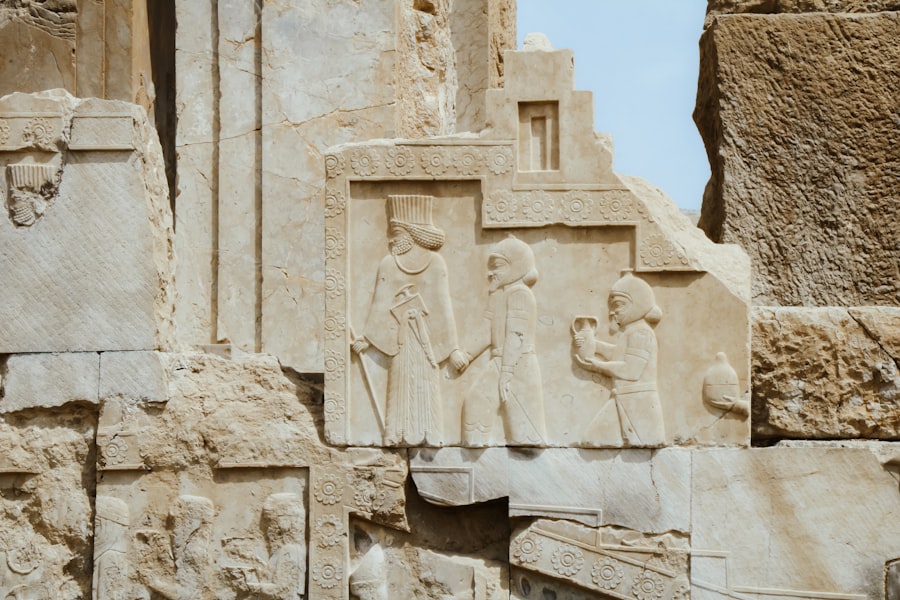
Many gates were adorned with intricate carvings and inscriptions that celebrated deities or commemorated historical events.
They acted as portals not only to the physical realm but also to the spiritual world, embodying the connection between the divine and the earthly. Thus, while their primary purpose was functional, Sumerian gates also played a vital role in reinforcing social order and cultural identity.
The Construction and Design of Sumerian Gates
The construction of Sumerian gates involved advanced techniques that showcased the civilization’s architectural prowess. Typically made from mudbrick or stone, these gates were designed to withstand both natural elements and human assaults. The use of mudbrick was particularly prevalent due to its availability in the region, while stone was often reserved for more prominent structures or ceremonial gates.
Design-wise, Sumerian gates exhibited a variety of styles that reflected local traditions and available resources. Some gates featured simple rectangular openings, while others boasted elaborate archways adorned with decorative motifs. The incorporation of buttresses and towers enhanced their structural integrity and provided vantage points for guards.
The meticulous attention to detail in both construction and design underscores the significance placed on these monumental entrances within Sumerian society.
The Symbolism and Mythology of Sumerian Gates
| Aspect | Description | Mythological Significance | Technological Element | Related Sumerian Deity |
|---|---|---|---|---|
| Gate of the Underworld | Entrance to Kur, the Sumerian underworld | Represents passage between life and death | Symbolic gates with protective seals | Ereshkigal |
| City Gates | Fortified entrances to Sumerian city-states | Guardianship and divine protection | Advanced mudbrick construction and defensive design | Inanna (goddess of war and love) |
| Mythical Gates of Heaven | Portals connecting earth to the divine realm | Access points for gods and spirits | Conceptual rather than physical technology | Anu (sky god) |
| Gate Seals | Clay or stone seals used to secure gates | Protection against evil spirits and unauthorized entry | Early use of cylinder seals for security | Ningirsu (god of war and protection) |
| Symbolic Gateways in Myth | Metaphorical gates representing transitions | Life cycles, spiritual journeys, and cosmic order | Use of symbolic architecture in temples | Enki (god of wisdom and water) |
Sumerian gates transcended their physical form to embody rich symbolism and mythology. They were often associated with protective deities who were believed to guard the city from harm. For instance, the goddess Inanna was frequently invoked in connection with city gates, symbolizing fertility, love, and war.
This association imbued the gates with a sense of divine protection, reinforcing their importance as sacred thresholds. Moreover, myths surrounding creation and civilization often featured gates as pivotal elements in narratives about order versus chaos. The act of passing through a gate could symbolize a transition from one state of being to another—be it from chaos to order or from the mundane to the sacred.
Such symbolism highlights how deeply ingrained these structures were in the cultural consciousness of the Sumerians, serving as reminders of their beliefs about life, death, and the divine.
The Archaeological Evidence of Sumerian Gates
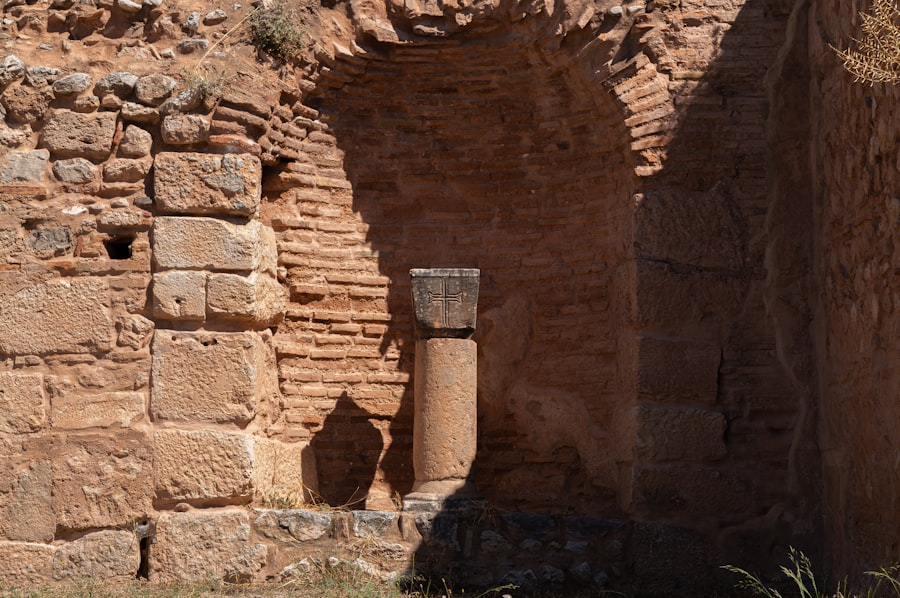
Archaeological excavations in ancient Sumer have uncovered substantial evidence of gate structures that provide insight into their design and function. Sites such as Uruk and Ur have yielded remnants of massive city walls with well-preserved gate foundations. These findings reveal not only the scale of construction but also the sophistication of engineering techniques employed by the Sumerians.
Artifacts discovered near these gates often include tools used in construction, decorative elements that adorned the entrances, and inscriptions that offer glimpses into the cultural significance attributed to these structures. For instance, seals bearing images of gates or deities associated with them have been found in proximity to these sites, further emphasizing their importance in Sumerian society. Such archaeological evidence continues to inform scholars about the technological advancements and cultural practices of this ancient civilization.
The Scientific Understanding of Sumerian Gate Technology
The study of Sumerian gate technology has benefited from interdisciplinary approaches that combine archaeology with engineering principles. Researchers have employed modern techniques such as 3D modeling and structural analysis to better understand how these ancient structures were built and how they functioned within their urban environments. By analyzing the materials used in construction and their durability over time, scientists can draw conclusions about the technological capabilities of the Sumerians.
Additionally, studies on soil composition and environmental factors have shed light on how these elements influenced gate construction. For example, understanding how mudbrick responds to weathering can provide insights into maintenance practices employed by ancient builders. This scientific understanding not only enhances knowledge about Sumerian gate technology but also contributes to broader discussions about ancient engineering practices across different cultures.
The Legacy and Influence of Sumerian Gates
The legacy of Sumerian gate technology extends far beyond its immediate historical context; it has influenced architectural practices in subsequent civilizations throughout history. The principles established by the Sumerians regarding urban planning and defensive architecture can be seen in later cultures such as the Babylonians and Assyrians, who adopted and adapted these techniques for their own city designs. Moreover, the symbolic significance attributed to gates has persisted through time, influencing architectural styles in various cultures around the world.
Gates have continued to serve as powerful symbols of entry into sacred spaces or fortified cities, echoing the traditions established by the Sumerians. This enduring legacy underscores how foundational Sumerian innovations were in shaping architectural practices across different epochs.
The Controversies and Debates Surrounding Sumerian Gate Technology
Despite extensive research on Sumerian gate technology, debates persist regarding certain aspects of their construction and purpose. Scholars have differing opinions on whether specific gates served primarily defensive functions or if they held more ceremonial significance within urban life. Some argue that certain gates were designed more for display than for protection, while others maintain that their primary role was indeed defensive.
Additionally, there are ongoing discussions about the extent to which Sumerian gate technology influenced neighboring cultures. While it is clear that there was some level of exchange between civilizations in Mesopotamia, determining the precise nature and impact of this exchange remains a topic of scholarly debate.
The Future Research and Exploration of Sumerian Gate Technology
As archaeological techniques continue to advance, future research on Sumerian gate technology promises to yield new insights into this fascinating aspect of ancient civilization. Innovations such as ground-penetrating radar and remote sensing technologies may allow researchers to uncover previously hidden structures or features associated with city gates that have yet to be discovered. Furthermore, interdisciplinary collaborations between archaeologists, historians, engineers, and scientists will likely enhance understanding of how these ancient technologies functioned within their societal frameworks.
As new discoveries are made and existing theories are reevaluated, scholars will continue to unravel the complexities surrounding Sumerian gate technology, shedding light on its significance in both historical and contemporary contexts.
Unraveling the Mysteries of Sumerian Gate Technology
In conclusion, Sumerian gate technology stands as a testament to the ingenuity and cultural richness of one of humanity’s earliest civilizations. These monumental structures served multifaceted purposes—protective barriers against invaders, symbols of divine guardianship, and reflections of societal organization. Through archaeological evidence and scientific inquiry, scholars have begun to piece together the intricate tapestry surrounding these gates.
As research continues to evolve, it is clear that Sumerian gate technology will remain a focal point for understanding not only ancient engineering practices but also broader themes related to culture, power dynamics, and human expression throughout history. Unraveling the mysteries surrounding these ancient entrances offers valuable insights into how early societies navigated challenges while leaving an indelible mark on future generations.
In exploring the fascinating intersection of Sumerian mythology and ancient technology, one can delve into the intricate designs and symbolic meanings of Sumerian gates. These gates not only served as physical entrances to cities but also held significant mythological importance, often representing the threshold between the earthly realm and the divine. For a deeper understanding of how ancient civilizations integrated mythology with their technological advancements, you can read more in this related article on XFile Findings.
FAQs
What are the Sumerian gates mentioned in mythology?
The Sumerian gates refer to ancient gateways or portals described in Sumerian mythology, often symbolizing entrances to divine realms or underworlds. These gates are sometimes depicted as guarded by deities or mythical creatures.
How do Sumerian myths describe the function of these gates?
In Sumerian mythology, gates often serve as transitional points between the human world and the divine or supernatural realms. They can represent thresholds to the afterlife, sacred spaces, or places where gods interact with humans.
Is there any technological aspect associated with Sumerian gates?
While the Sumerians were advanced in technology for their time, including architecture and engineering, the “gates” in mythology are primarily symbolic or spiritual rather than technological devices. However, some interpretations suggest that the detailed descriptions of gates reflect the Sumerians’ sophisticated understanding of construction and design.
What materials did the Sumerians use to build gates or city entrances?
Historically, Sumerians constructed city gates and walls using mud bricks, baked bricks, and bitumen as mortar. These materials were abundant in Mesopotamia and allowed for durable and impressive architectural structures.
Are there any famous Sumerian gates that have been discovered archaeologically?
Yes, notable examples include the Ishtar Gate of Babylon, which, while from a later period, was influenced by earlier Mesopotamian architecture. Archaeological sites like Uruk and Ur have revealed remnants of city walls and gates that reflect Sumerian urban planning.
How do Sumerian gates compare to gates in other ancient mythologies?
Sumerian gates share similarities with gates in other ancient mythologies, such as Egyptian or Greek, where gates often symbolize passage to other worlds or divine domains. However, Sumerian gates are unique in their integration with early urban development and religious symbolism.
What role did gates play in Sumerian society beyond mythology?
Beyond mythology, gates were crucial in Sumerian cities for defense, controlling access, and demonstrating the power and prestige of a city-state. They often featured inscriptions and reliefs that conveyed political and religious messages.
Can the concept of Sumerian gates be linked to modern technology?
While the mythological gates themselves are symbolic, the Sumerians’ architectural and engineering innovations laid foundational principles for modern construction and urban planning technologies. The idea of controlled access points is a concept still relevant in security and infrastructure today.