
The pursuit of knowledge regarding Unidentified Anomalous Phenomena (UAP) has entered a new and complex phase, characterized by heightened public interest and an increasingly robust legislative mandate. However, the seemingly straightforward directive to disclose UAP records encounters a formidable adversary: the inherent limitations and “unreasonable burdens” placed upon the very institutions tasked with their retrieval. This article will explore the multifaceted challenges faced by government agencies and private entities in fulfilling these disclosure requirements, emphasizing the practical and bureaucratic hurdles that impede a comprehensive understanding of UAP.
The United States government, through various congressional initiatives, has unequivocally expressed a desire for greater transparency concerning UAP. This shift in policy reflects not only growing public curiosity but also national security concerns and a recognition of the potential scientific value embedded within these enigmatic observations.
Legislative Imperatives
Recent legislative acts, such as amendments to defense authorization bills, have included provisions specifically addressing the collection, analysis, and declassification of UAP-related information. These mandates often establish timelines and reporting requirements, placing a direct onus on agencies to review their holdings.
- The Schumer-Rounds Amendment (Proposed): While ultimately not fully enacted in its initial form, this amendment demonstrated a strong congressional will to enforce the automatic declassification of UAP records after a certain period, akin to the JFK Assassination Records Act. Its ambition highlighted the perceived need for a paradigm shift in how such information is treated.
- Intelligence Authorization Acts: Ongoing additions and modifications to these acts continue to refine the legal framework for UAP reporting and data sharing among intelligence components. They stipulate the creation of dedicated offices and processes for UAP collection and analysis.
Public and Scientific Pressure
Beyond legislative diktats, a groundswell of public and scientific interest has further propelled the demand for UAP record disclosure. Whistleblowers, academic researchers, and advocacy groups have amplified calls for transparency, asserting the public’s right to know and the scientific community’s capacity to analyze previously restricted data.
- Growing Media Attention: Documentaries, investigative reports, and regular news coverage have kept UAP in the public consciousness, fueling skepticism about past government secrecy and demanding a more open approach.
- Academic Engagement: An increasing number of studies and conferences focused on UAP indicate a growing willingness within academia to treat these phenomena as legitimate subjects of scientific inquiry, rather than purely fringe topics.
In recent discussions surrounding the search burden of unreasonable UAP (Unidentified Aerial Phenomena) records, an insightful article can be found that delves into the complexities and challenges faced by researchers and government agencies alike. This article highlights the implications of excessive documentation requirements and the impact on transparency and accountability. For more information on this topic, you can read the full article at XFile Findings.
The Archival Labyrinth: Navigating Decades of Secrecy
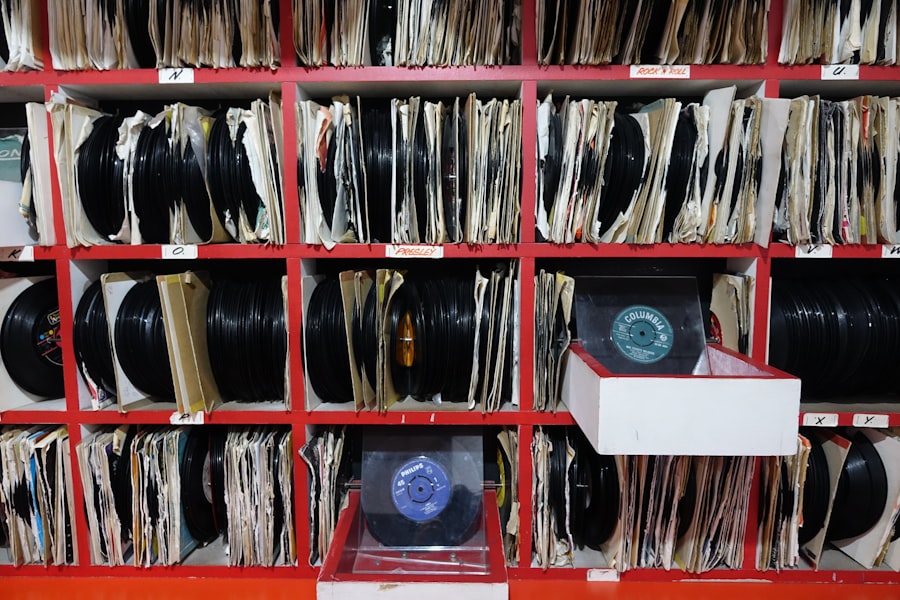
The directive to retrieve and declassify UAP records is akin to asking an archivist to locate a specific grain of sand on a sprawling beach, where the sand has been deliberately scattered over decades and much of it buried under layers of subsequent activity. Government archives are not uniformly organized, and the very nature of UAP records, often deemed sensitive or classified from their inception, complicates their identification and retrieval.
Fragmented Documentation and Disparate Holdings
UAP observations have historically been recorded across a multitude of government agencies, each with its own internal documentation standards, classification protocols, and archival practices. These records are not consolidated in a central repository, but rather scattered across various departments, from military branches to intelligence agencies, and even civilian bodies like the Federal Aviation Administration.
- Department of Defense: Records from the Navy, Air Force, and Army, often detailing radar contacts, pilot reports, and sensor data, are primary sources. These can be held in unit-level archives, operational databases, or broader departmental repositories.
- Intelligence Agencies: The CIA, NSA, and other intelligence organizations have likely collected UAP information through various means, including aerial reconnaissance, signals intelligence, and human intelligence. These records are often among the most heavily classified and difficult to access.
- Civilian Agencies: Agencies like NASA or NOAA, while not primarily focused on UAP, may possess incidental observations or data that could be relevant, further adding to the document dispersion.
Obscure Filing Systems and Obsolete Technologies
The passage of time has rendered many older filing systems obsolete. Information once stored on microfiche, punch cards, or magnetic tapes may require specialized equipment and expertise to access and interpret. Furthermore, the terminology used to describe UAP has evolved, meaning current search terms may not effectively capture older records.
- Legacy Computing Systems: Retrieving data from ancient computer systems, some of which are no longer supported by current technology, presents a significant technical hurdle. Data migration and conversion can be costly and time-consuming.
- Outdated Classification Markings: Older documents may use classification markings and codewords that are no longer in common use, making it challenging for contemporary analysts to understand their original context or sensitivity.
The Classification Conundrum: Balancing Secrecy and Transparency
The very reason many UAP records have been withheld is their historical classification, often predicated on national security concerns. The process of declassifying these documents is not a simple administrative task; it involves a laborious and often contentious review process, weighing the public’s right to know against potential harm to national defense or intelligence operations.
The “Born Classified” Problem
Many UAP reports, particularly those originating from military or intelligence sources, were “born classified.” This means they were immediately designated as secret or top secret due to the nature of the information involved, such as sensitive sensor capabilities, operational procedures, or foreign intelligence collection methods. Separating the UAP content from the protected metadata and operational details is a delicate surgical procedure.
- Protective Classification: The classification was not necessarily to conceal UAP itself, but rather to protect how the UAP was observed (e.g., the capabilities of a stealth aircraft’s radar) or the broader context of the observation (e.g., during a sensitive reconnaissance mission).
- Compartmentalization: Information was often compartmentalized, meaning only individuals with a specific “need to know” had access. This further limits the number of people who can effectively identify and review these records for declassification.
Declassification Review Process
Declassification review is a painstaking, document-by-document process involving multiple layers of review by subject matter experts, security officers, and legal counsel. This process is inherently time-consuming and resource-intensive, often leading to significant backlogs.
- Redaction Challenges: Sensitive information within a document must be redacted precisely, without altering the meaning or context of the remaining unclassified material. This often requires highly skilled analysts who understand the nuances of classification guidelines.
- Interagency Coordination: When a document contains information relevant to multiple agencies, each agency must conduct its own review and provide clearance for declassification. This interagency coordination can be a significant bottleneck, especially when agencies have differing interpretations of national security implications.
Human Resources and Expertise: The Unfillable Gaps
Even with legislative mandates and a willingness to declassify, the practical execution of these directives hinges on the availability of qualified personnel. The institutional knowledge required to effectively search, identify, and review UAP records is dwindling, creating significant “unreasonable burdens” for contemporary agencies.
The Brain Drain of Institutional Memory
Many of the individuals who were involved in recording, analyzing, or classifying UAP incidents in past decades have retired or passed away. Their unique institutional memory, which could significantly aid in locating and understanding these records, is often irreplaceable. Without these “human search engines,” agencies must rely solely on keyword searches and metadata, which may prove insufficient for uncovering deeply buried information.
- Retired Personnel: Locating and leveraging the expertise of retired employees, who possess invaluable historical context, is difficult but often crucial for navigating the archival landscape.
- Loss of Context: Without the people who created or worked with these records, the context surrounding specific observations or classifications can be lost, making declassification decisions more challenging.
Shortage of Specialized Skills
The demand for personnel with specific skills, such as intelligence analysts specializing in non-conventional threats, archivists with expertise in historical classification systems, and technical experts capable of retrieving data from obsolete formats, far outstrips the current supply. This creates a bottleneck in the processing of UAP records.
- Intelligence Community Workload: Intelligence agencies are constantly under pressure to address current threats, leaving limited resources and personnel available for historical review projects, especially for phenomena that historically were not prioritized.
- Technical Archival Expertise: The specialized skills needed to handle deteriorating physical archives or recover data from ancient digital formats are niche and expensive, making it difficult for agencies to quickly scale up their efforts.
The ongoing debate surrounding the search burden for unreasonable UAP records has sparked significant interest among researchers and enthusiasts alike. Many are questioning the transparency of government agencies in releasing information related to unidentified aerial phenomena. For a deeper understanding of this issue, you can explore a related article that delves into the complexities of UAP documentation and the challenges faced by those seeking access to these records. To read more about this topic, visit this insightful article that sheds light on the intricacies involved in the pursuit of UAP information.
The Financial and Infrastructural Cost: A Resource Sink
| Metric | Value | Description |
|---|---|---|
| Total UAP Records Requested | 1,200 | Number of Unidentified Aerial Phenomena records requested under FOIA |
| Records Deemed Search Burden Unreasonable | 450 | Number of records where search was considered too burdensome to process |
| Average Time to Search per Record (hours) | 5 | Estimated average hours required to locate and review each record |
| Total Estimated Search Time (hours) | 6,000 | Calculated total hours to search all requested records |
| Percentage of Records with Unreasonable Search Burden | 37.5% | Proportion of total records where search burden was deemed unreasonable |
| Average Pages per Record | 150 | Average number of pages contained in each UAP record |
| Total Pages to Review | 180,000 | Estimated total pages across all requested records |
Complying with UAP transparency mandates is not a cost-free endeavor. It requires significant financial investment in personnel, technology, and infrastructure, funds that are often not explicitly allocated or easily obtainable within existing agency budgets. This financial drain constitutes another “unreasonable burden,” forcing agencies to divert resources from other critical missions.
Budgetary Constraints
Government agencies operate within strict budgetary cycles and allocations. Funding for extensive historical document review and declassification projects, especially for a topic that has historically been marginalized, is often difficult to secure. This leads to a prioritization dilemma, where UAP disclosure efforts may compete with other, more immediately pressing agency objectives.
- Unfunded Mandates: Some legislative mandates for UAP disclosure may be “unfunded,” meaning Congress directs agencies to perform a task without providing the necessary financial resources, forcing them to reallocate existing funds.
- Opportunity Costs: Every dollar spent on UAP record retrieval is a dollar not spent on other agency priorities, such as current intelligence analysis, defense procurement, or public services.
Technological Upgrades and Infrastructure Development
To effectively search, retrieve, process, and secure UAP records, agencies may need to invest in new technologies and upgrade existing infrastructure. This includes advanced data analytics tools, secure digital archival systems, and facilities for handling classified materials.
- Secure Digital Archives: Building and maintaining secure digital archives capable of handling vast quantities of classified data and facilitating controlled access for review is a significant undertaking.
- Advanced Search Algorithms: Developing or acquiring sophisticated search algorithms that can accurately identify UAP-related information across diverse datasets and overcome limitations of keyword searches is crucial for efficient record retrieval.
Conclusion: A Marathon, Not a Sprint
The journey toward comprehensive UAP record disclosure is a marathon, not a sprint. The “unreasonable burdens” of fragmented documentation, the complexities of historical classification, the dwindling pool of institutional knowledge, and the significant financial and infrastructural costs all conspire to make this endeavor immensely challenging. While the legislative and public will for transparency is strong, readers must understand that the process of disentangling decades of secrecy is a slow, methodical, and resource-intensive undertaking.
Government agencies are not intentionally withholding information out of malice, but rather grappling with the sheer logistical and administrative hurdles inherent in such a broad and retrospective mandate. The metaphorical “haystack” of government archives is vast, and the UAP “needles” are often tiny, rusty, and camouflaged by time and secrecy. Achieving full transparency will require sustained commitment, innovative solutions, and a realistic understanding of the very real limitations faced by the institutions tasked with unlocking these enigmatic secrets. It is a testament to the persistent nature of these phenomena and the growing public insistence on answers that these Herculean efforts are even being attempted.

WATCH NOW ▶️ SHOCKING: Why the CIA’s Polygraph Didn’t Lie About 2026
FAQs
What does “search burden unreasonable” mean in the context of UAP records?
“Search burden unreasonable” refers to a determination that the effort, time, and resources required to locate and compile Unidentified Aerial Phenomena (UAP) records are excessively high, making the search impractical or overly difficult for the agency responsible.
Why might UAP records be considered difficult to retrieve?
UAP records may be scattered across multiple departments, classified, poorly cataloged, or exist in various formats, which complicates the retrieval process and increases the search burden.
Who is responsible for managing and releasing UAP records?
Typically, government agencies such as the Department of Defense, intelligence agencies, or other federal entities handle UAP records. Their responsibility includes maintaining, reviewing, and, when appropriate, releasing these records to the public.
Are there legal standards governing the release of UAP records?
Yes, laws like the Freedom of Information Act (FOIA) set guidelines for the public’s right to access government records, including UAP files. However, exemptions exist for national security, privacy, or other sensitive concerns, which can affect the release.
What steps can be taken if a search for UAP records is deemed unreasonably burdensome?
Requesters can narrow the scope of their inquiry, specify particular time frames or types of records, or appeal the decision. They may also seek assistance from oversight bodies or legal counsel to facilitate access.