
The universe, a vast canvas painted with stardust and nebulae, has long captivated the human imagination. For millennia, humanity has sought to understand its place within this grand cosmic tapestry. From ancient astronomers charting celestial movements to modern astrophysicists probing the furthest reaches of space with sophisticated instruments, the quest for knowledge continues. This article delves into the profound and often surprising connections that bind us to the cosmos, exploring the fundamental principles and observable phenomena that reveal our intrinsic relationship with the universe.
The very atoms that constitute your body, and indeed all matter on Earth, were not forged on this planet. They are the remnants of stars that lived, died, and exploded billions of years ago. This “stardust legacy” is a fundamental concept in understanding our cosmic origins.
Stellar Nucleosynthesis: The Universe’s Alchemy
Stars are not merely luminous objects in the night sky; they are celestial furnaces where the building blocks of matter are constructed.
The Big Bang and the First Elements
In the immediate aftermath of the Big Bang, the universe was a hot, dense soup of fundamental particles. As it expanded and cooled, protons and neutrons began to fuse, forming the lightest elements: hydrogen and helium. These were the primordial ingredients for everything that would follow.
Fusion in Stellar Cores
Within the immense pressure and heat of stellar cores, hydrogen atoms fuse to create helium. This process, known as nuclear fusion, releases vast amounts of energy, which is what makes stars shine. As stars mature, they can fuse helium into heavier elements like carbon, oxygen, and nitrogen – the very elements that are essential for life.
The Role of Massive Stars
Massive stars, those significantly larger than our Sun, are the true alchemists of the universe. They possess the necessary gravitational force and internal temperatures to forge even heavier elements, such as iron and beyond. These elements are crucial for the formation of rocky planets and the complex chemistry that underlies biology.
Supernova Events: Cosmic Dispersal Mechanisms
The lifecycle of stars, particularly the most massive ones, culminates in spectacular explosions known as supernovae. These cataclysmic events are not just displays of cosmic power; they are vital for distributing the elements forged within stars throughout the galaxy.
Type II Supernovae
Massive stars, at the end of their lives, exhaust their nuclear fuel. Without the outward pressure from fusion to counteract gravity, their cores collapse catastrophically. This collapse triggers a shockwave that blasts the outer layers of the star into space, carrying with them the heavy elements created during the star’s lifetime.
Neutron Star and Black Hole Formation
The remnant of a Type II supernova can be an incredibly dense neutron star or, if the star was massive enough, a black hole. These exotic objects are also products of stellar evolution and contribute to the dynamic nature of galaxies.
The Interstellar Medium: A Reservoir of Elements
The ejected material from supernovae mixes with existing gas and dust in the galaxy, forming what is known as the interstellar medium. This enriched medium becomes the raw material for the next generation of stars and planetary systems, perpetuating the cycle of creation and dispersal.
Our Solar System’s Birthplace
Our own solar system formed from a vast cloud of gas and dust, a portion of the interstellar medium that had been enriched by previous generations of stars.
The Solar Nebula
Approximately 4.6 billion years ago, a large, rotating cloud of interstellar gas and dust, known as the solar nebula, began to collapse under its own gravity. This collapse was likely triggered by a nearby supernova explosion, which provided the initial shockwave.
Formation of the Sun
As the nebula collapsed, it spun faster and flattened into a disk. The vast majority of the material accumulated at the center, where increasing pressure and temperature eventually ignited nuclear fusion, giving birth to our Sun.
Accretion of Planets
In the surrounding disk, dust grains began to clump together through electrostatic forces and gentle collisions. These clumps grew larger, forming planetesimals, which then collided and merged to form the planets we see today. The lighter elements, like hydrogen and helium, were more prevalent in the outer regions, leading to the formation of gas giants. The heavier elements, remnants of stellar nucleosynthesis, settled in the inner regions, forming the terrestrial planets, including Earth.
For those interested in exploring the intriguing themes presented in “Cosmic Connection,” a related article that delves deeper into the mysteries of the universe can be found at XFile Findings. This article examines various phenomena that challenge our understanding of reality and offers insights into the connections between cosmic events and human experience, making it a perfect complement to the ideas discussed in “Cosmic Connection.”
The Gravitational Embrace: A Universal Binding Force
Gravity, often perceived as a simple force that keeps your feet on the ground, is in fact a fundamental cosmic glue that orchestrates the very structure of the universe. It is the unseen hand that shapes galaxies, dictates planetary orbits, and binds stellar systems together.
Newton’s Law of Universal Gravitation: An Early Insight
Sir Isaac Newton’s groundbreaking work in the 17th century provided the first comprehensive mathematical description of gravity.
The Inverse Square Law
Newton’s law states that every particle of matter in the universe attracts every other particle with a force that is directly proportional to the product of their masses and inversely proportional to the square of the distance between their centers. This elegant formulation explained phenomena as diverse as falling apples and the motion of planets.
Universal Application
The beauty of Newton’s law lies in its universality. The same force that pulls an apple to the ground governs the intricate dance of celestial bodies, from the smallest asteroid to the most massive galaxy clusters.
Einstein’s General Relativity: A Spacetime Perspective
Albert Einstein, in the early 20th century, revolutionized our understanding of gravity with his theory of General Relativity.
Gravity as Curvature of Spacetime
Rather than a force acting at a distance, Einstein proposed that gravity is a manifestation of the curvature of spacetime caused by the presence of mass and energy. Massive objects warp the fabric of spacetime around them, and other objects follow these curves, which we perceive as gravitational attraction. Imagine a heavy ball placed on a stretched rubber sheet; it creates a dip, and smaller marbles rolled nearby will curve towards the ball along the indentation.
Gravitational Lensing
One of the most profound predictions of General Relativity is gravitational lensing. Massive objects, such as galaxies and galaxy clusters, can warp spacetime so intensely that they bend the path of light passing by them. This can cause distant objects to appear distorted, magnified, or even duplicated in the sky, acting as cosmic magnifying glasses.
The Dance of Celestial Bodies: Orbits and Tides
Gravity dictates the predictable paths of planets around stars, moons around planets, and stars within galaxies.
Orbital Mechanics
The balance between an object’s inertia (its tendency to move in a straight line) and the gravitational pull of a larger body creates stable orbits. This balance is what keeps Earth in its predictable path around the Sun and the Moon in its orbit around Earth.
Tidal Forces
Gravity also plays a crucial role in phenomena like tides. The Moon’s gravitational pull on Earth is stronger on the side facing the Moon and weaker on the opposite side. This differential pull stretches Earth’s oceans, creating bulges on both sides, resulting in high tides. Similarly, the Sun contributes to tidal forces, although to a lesser extent than the Moon.
The Large-Scale Structure of the Universe
On the grandest scales, gravity is the architect of cosmic structure.
Galaxy Formation and Evolution
The initial slight irregularities in the distribution of matter after the Big Bang were amplified by gravity over billions of years, leading to the formation of galaxies. These galaxies then tend to cluster together under their mutual gravitational attraction, forming larger structures like galaxy groups and clusters.
Cosmic Web
Observational evidence reveals that galaxies are not randomly distributed but are organized into a vast network known as the cosmic web, characterized by filaments and voids. This intricate structure is a testament to the long-range influence of gravity shaping the universe.
The Electromagnetic Spectrum: Cosmic Communication Channels
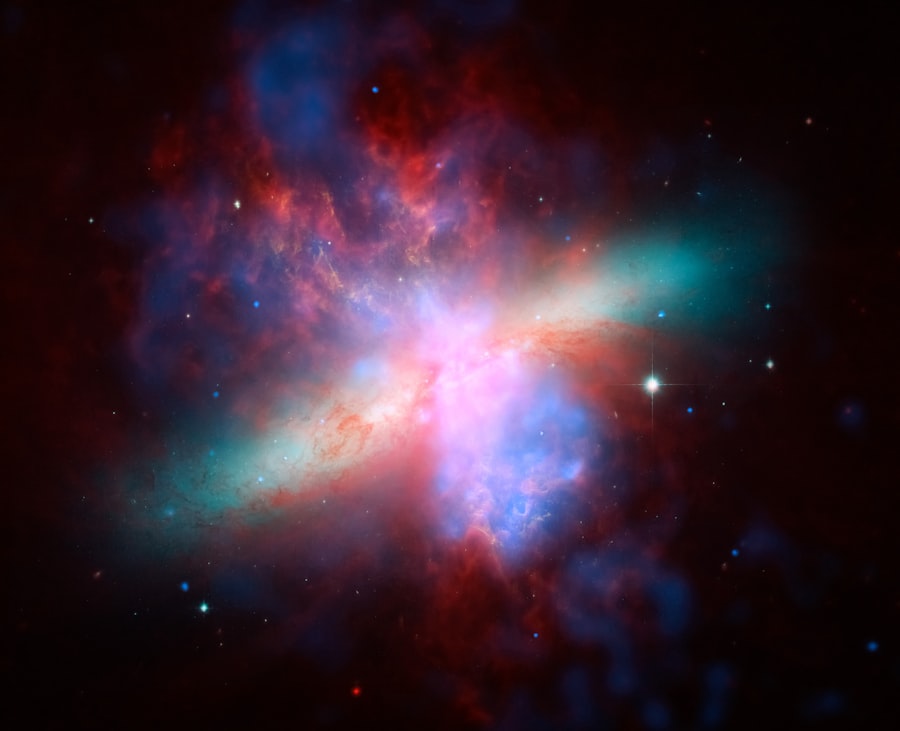
Light, in its various forms across the electromagnetic spectrum, is our primary messenger from the cosmos. It carries information about the temperature, composition, motion, and evolution of distant celestial objects.
Visible Light: The Familiar Window
The narrow band of the electromagnetic spectrum that our eyes can detect is what we call visible light.
Stellar Temperatures and Colors
The color of a star is a direct indicator of its surface temperature. Hotter stars tend to appear blue or white, while cooler stars appear red or orange. This is akin to how a heated piece of metal changes color from red to orange to white as its temperature increases.
Stellar Composition
When light from a star passes through a prism or diffraction grating, it separates into a spectrum of colors, revealing dark lines (absorption lines) at specific wavelengths. These lines correspond to elements in the star’s atmosphere absorbing light at characteristic frequencies, providing a spectral fingerprint of its chemical composition.
Beyond Visible Light: Unveiling Hidden Realities
The electromagnetic spectrum extends far beyond visible light, encompassing radio waves, microwaves, infrared radiation, ultraviolet radiation, X-rays, and gamma rays. Each of these regions offers unique insights into the universe.
Radio Astronomy: Listening to the Universe
Radio waves, with their long wavelengths, can penetrate dust clouds that obscure visible light. Radio telescopes allow us to study objects like pulsars, quasars, and the faint afterglow of the Big Bang (the cosmic microwave background radiation).
Infrared Astronomy: The Glow of Warm Objects
Infrared radiation is emitted by objects with moderate temperatures, including planets, stars, and dust clouds. Infrared telescopes can peer through dense nebulae to reveal newborn stars and the processes of star formation.
Ultraviolet, X-ray, and Gamma-ray Astronomy: Energetic Phenomena
These high-energy regions of the spectrum are associated with extremely energetic phenomena, such as supernova remnants, active galactic nuclei, and black holes. Observing in these wavelengths provides crucial information about the most violent and powerful events in the universe.
The Cosmic Microwave Background Radiation: Echo of the Big Bang
One of the most significant discoveries in cosmology is the cosmic microwave background (CMB) radiation. This faint glow of microwaves permeating the universe is interpreted as the residual heat from the Big Bang, a snapshot of the universe approximately 380,000 years after its birth.
Evidence for the Big Bang
The discovery and detailed study of the CMB’s properties, including its nearly uniform temperature and subtle variations, provide strong evidence for the Big Bang theory and our understanding of the early universe.
Seeds of Structure
The tiny temperature fluctuations within the CMB are interpreted as the initial density variations in the early universe that, under the influence of gravity, eventually grew into the galaxies and large-scale structures we observe today.
Doppler Effect and Redshift: Measuring Cosmic Motion
The Doppler effect, a phenomenon familiar from the changing pitch of a siren as it passes, also applies to light. This principle is crucial for understanding the motion of celestial objects.
Redshift and Blueshift
When a light source is moving away from an observer, the wavelengths of its light are stretched, shifting towards the red end of the spectrum (redshift). Conversely, if the source is moving towards the observer, the wavelengths are compressed, shifting towards the blue end (blueshift).
Hubble’s Law and the Expanding Universe
Edwin Hubble’s observations in the 1920s revealed that most galaxies are redshifted, indicating they are moving away from us. Furthermore, the farther away a galaxy is, the faster it is receding. This relationship, known as Hubble’s Law, is a cornerstone of evidence for the expansion of the universe.
The Quantum Realm: The Universe at its Tiniest Scales
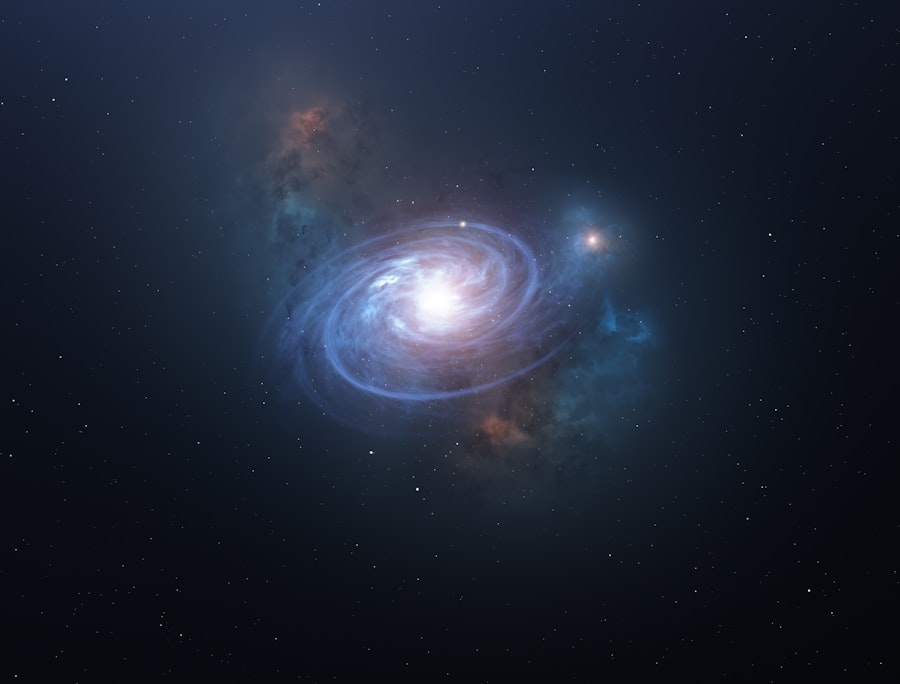
While gravity governs the grand architecture of the cosmos, the quantum realm dictates the behavior of matter and energy at the most fundamental levels. These two seemingly disparate domains, the macroscopic and the microscopic, are intricately linked, shaping the universe we inhabit.
Quantum Mechanics: A Probabilistic Universe
Quantum mechanics describes the behavior of subatomic particles, revealing a reality that is often counterintuitive and probabilistic.
Wave-Particle Duality
One of the most perplexing aspects of quantum mechanics is wave-particle duality, where particles like electrons and photons can exhibit characteristics of both waves and particles depending on how they are observed. This is like an object that can be both a solid sphere and a ripple in a pond simultaneously.
Quantum Superposition
Quantum superposition states that a quantum system can exist in multiple states or locations simultaneously until it is measured or observed. This is the principle behind concepts like Schrödinger’s cat being both alive and dead until the box is opened.
The Role of Quantum Fluctuations in Cosmology
Quantum fluctuations, tiny temporary variations in energy at the quantum level, are believed to have played a critical role in the early universe.
Inflationary Epoch
During the inflationary epoch, a period of extremely rapid expansion shortly after the Big Bang, these quantum fluctuations are thought to have been stretched to macroscopic scales. These amplified fluctuations provided the initial slight density variations that eventually seeded the formation of galaxies and cosmic structures.
The Uncertainty Principle
Heisenberg’s Uncertainty Principle states that certain pairs of physical properties, such as position and momentum, cannot be known with perfect accuracy simultaneously. This inherent uncertainty at the quantum level has profound implications for our understanding of the universe’s fundamental nature.
Quantum Entanglement: A Cosmic Spooky Connection
Quantum entanglement is a phenomenon where two or more particles become linked in such a way that they share the same fate, regardless of the distance separating them. Measuring the state of one entangled particle instantaneously influences the state of the other.
Distance is No Barrier
This “spooky action at a distance,” as Einstein famously called it, suggests a deeper, non-local interconnectedness in the universe, albeit one that does not allow for faster-than-light communication.
Fundamental Forces and Particles
The universe is governed by four fundamental forces: gravity, electromagnetism, the strong nuclear force, and the weak nuclear force. These forces are mediated by fundamental particles.
The Standard Model of Particle Physics
The Standard Model successfully describes the electromagnetic, strong, and weak forces, and the fundamental particles (quarks, leptons, bosons) that interact through them. However, it does not yet incorporate gravity.
The Search for a Unified Theory
Astrophysicists and theoretical physicists are actively seeking a “theory of everything” that would unify all four fundamental forces and provide a complete description of the universe from the smallest to the largest scales. This remains one of the biggest challenges in modern physics.
In exploring the intriguing themes of Cosmic Connection, one might find it enlightening to read a related article that delves into the mysteries of the universe and our place within it. This piece offers a fascinating perspective on the interconnectedness of all things, providing insights that complement the ideas presented in Cosmic Connection. For more information, you can check out the article here.
The Cosmic Biosphere: Life’s Place in the Universe
| Metric | Description | Value | Unit |
|---|---|---|---|
| Distance to Nearest Star | Distance from Earth to Proxima Centauri, the closest star | 4.24 | light years |
| Age of the Universe | Estimated time since the Big Bang | 13.8 | billion years |
| Number of Observable Galaxies | Estimated count of galaxies visible with current technology | 2 | trillion |
| Cosmic Microwave Background Temperature | Average temperature of the residual radiation from the Big Bang | 2.725 | Kelvin |
| Speed of Light | Fundamental constant representing the speed of light in vacuum | 299,792,458 | meters per second |
| Number of Known Exoplanets | Planets discovered outside our solar system | 5,500+ | planets |
| Milky Way Diameter | Estimated diameter of our home galaxy | 105,700 | light years |
The discovery of life’s existence on Earth, a planet orbiting an average star in a typical galaxy, raises profound questions about the prevalence of life elsewhere in the cosmos. Are we a solitary anomaly, or is life a common cosmic phenomenon?
The Habitable Zone: The Goldilocks Principle
The concept of the habitable zone, often referred to as the “Goldilocks zone,” describes the region around a star where conditions might be right for liquid water to exist on a planet’s surface.
Stellar Type and Habitable Zone Location
The size and temperature of a star determine the location and width of its habitable zone. Smaller, cooler stars have habitable zones closer to them, while larger, hotter stars have them further away.
Factors Beyond Liquid Water
While liquid water is considered essential for life as we know it, other factors are also crucial, including a stable atmosphere, protection from harmful radiation, and the presence of essential chemical elements.
Astrobiology: The Search for Extraterrestrial Life
Astrobiology is the interdisciplinary scientific field that studies the origins, evolution, distribution, and future of life in the universe.
Exoplanet Discoveries: A Universe Teeming with Worlds
The advent of advanced telescopes like Kepler and TESS has revolutionized exoplanet detection. Thousands of planets have been discovered orbiting other stars, revealing that planetary systems are common throughout the galaxy. Many of these exoplanets reside within their stars’ habitable zones.
Biosignatures: The Chemical Fingerprints of Life
Scientists are actively searching for “biosignatures” – chemical indicators of biological activity – in the atmospheres of exoplanets. These could include gases like oxygen and methane in combinations that are unlikely to be produced by geological processes alone.
Panspermia: The Seeds of Life Spread Across the Cosmos
Panspermia is a hypothesis that life, or its precursors, might be dispersed throughout the universe via meteoroids, asteroids, and other celestial bodies.
Resilience of Microbes
Studies have shown that some extremophilic microorganisms can survive the harsh conditions of space, including radiation and vacuum, for extended periods. This suggests that life, or at least its fundamental building blocks, could potentially travel between planets and even star systems.
Implications for Life’s Origin
If life originated on one planet in a solar system and was then transferred to others, it would significantly increase the probability of life arising elsewhere.
The Fermi Paradox: Where Is Everybody?
The Fermi Paradox highlights the apparent contradiction between the high probability estimates for the existence of extraterrestrial civilizations and the lack of conclusive evidence for their existence. If the universe is vast and old, and life is common, why have we not yet encountered any alien signals or visitors?
Potential Explanations
Various hypotheses attempt to resolve the Fermi Paradox, including the “Great Filter” (a hypothetical barrier that prevents civilizations from reaching technological maturity), the idea that advanced civilizations are intentionally avoiding contact, or that they communicate in ways we have yet to comprehend.
The cosmic connection is not merely a poetic notion; it is a scientifically verifiable reality. From the elemental composition of our bodies to the gravitational forces that shape galaxies, we are inextricably woven into the fabric of the universe. As our understanding deepens, we continue to unveil the profound and interconnected nature of existence, bridging the gap between the mundane and the magnificent, and reminding us of our enduring place in the grand cosmic ballet.
FAQs
What is the concept of a cosmic connection?
A cosmic connection refers to the idea that all elements of the universe are interconnected through energy, consciousness, or a universal force, suggesting a deep relationship between humans, nature, and the cosmos.
How do scientists study cosmic connections?
Scientists study cosmic connections through fields like astrophysics, quantum mechanics, and cosmology, examining phenomena such as gravitational waves, cosmic background radiation, and the fundamental forces that govern the universe.
Can cosmic connections influence human behavior or experiences?
While there is no scientific consensus that cosmic connections directly influence human behavior, some philosophical and spiritual traditions believe that understanding our place in the universe can impact consciousness, well-being, and personal growth.
What role does cosmic connection play in spirituality?
In spirituality, cosmic connection often represents a sense of unity with the universe, fostering feelings of oneness, purpose, and transcendence beyond the individual self.
Are there any practical applications of understanding cosmic connections?
Understanding cosmic connections can inspire advancements in technology, promote environmental awareness, and encourage holistic approaches to health and well-being by recognizing the interdependence of all life and matter.