The year is 1973. The Cold War is a simmering cauldron of geopolitical tension, and the race for technological and ideological supremacy between the United States and the Soviet Union is in full swing. Amidst this charged atmosphere, a seemingly esoteric concept began to take root within the clandestine corridors of American intelligence: remote viewing. And at the forefront of this nascent and controversial field stood a man named Ingo Swann, whose audacious claims and peculiar abilities would lead to an experiment so audacious, so mind-bending, that it has come to be known as the “Penetration Moon.”
Swann was no ordinary physicist or military strategist. He was an artist, a mystic, and a self-proclaimed psychic with an uncanny ability to perceive information beyond the normal bounds of sensory input. His journey into the world of parapsychology was driven by a deep-seated curiosity about the untapped potential of the human mind and a belief that consciousness was not confined to the physical brain. It was this unconventional background that would make him the unlikely candidate to undertake a mission that would push the boundaries of both science and belief.
The story of Ingo Swann’s “Penetration Moon” is not just about a single experiment; it is a complex tapestry woven with threads of scientific skepticism, government intrigue, and the enduring human fascination with the unknown. It is a narrative that continues to spark debate, inspire researchers, and fuel the imagination, asking profound questions about the nature of reality, perception, and the very limits of human consciousness.
Ingo Swann’s early life offered few clues to the extraordinary path he would eventually forge. Born in the United States, his formative years were marked by a restless spirit and a sense of being an outsider. He was not a child prodigy in the traditional sense, but rather an individual who possessed a keen observational eye and a sensitivity to subtle energies that others seemed to miss. His artistic pursuits served as an early outlet for his unique perception, allowing him to translate his inner visions onto canvas.
A Mind Unbound by Conventional Thought
Swann’s intellectual curiosity extended far beyond the realm of art. He devoured books on philosophy, metaphysics, and the burgeoning field of parapsychology. It was during this period of intense self-study and introspection that he began to consciously explore and refine his innate psychic abilities. He described experiencing vivid mental imagery, premonitions, and an ability to intuit information about people and places he had never encountered. These were not fleeting sensations but consistent and impactful experiences that demanded explanation.
The Artist as Seer: Translating the Unseen
As an artist, Swann developed a unique approach to his psychic explorations. He saw his art not merely as an expression of his internal state but as a method of externalizing and verifying his perceptions. He would create detailed drawings and paintings based on his remote viewing experiences, often depicting landscapes, objects, or even abstract concepts that he claimed to have “seen” with his mind’s eye. This artistic practice laid the groundwork for his later attempts to quantify and communicate his psychic impressions in a more structured manner.
Early Encounters with the Paranormal and the Scientific Community
Swann’s early forays into the paranormal were initially met with a mixture of fascination and dismissal. He began to share his experiences with individuals who were exploring similar phenomena, leading him to connect with researchers and institutions interested in the scientific study of psychic abilities. These early interactions, while sometimes fraught with skepticism, were crucial in exposing him to a more rigorous and empirical approach to his abilities, even if he often felt the scientific methodology was too constrained to fully capture the nuances of his experiences.
Ingo Swann’s intriguing experiences during the Penetration Moon project have sparked considerable interest in the realm of remote viewing and its implications for understanding extraterrestrial phenomena. For those looking to delve deeper into this fascinating topic, a related article can be found at X File Findings, which explores the intersection of psychic phenomena and space exploration, shedding light on the broader context of Swann’s work and its impact on the field.
The Dawn of Remote Viewing: Stargate and the Government’s Interest
The 1970s marked a pivotal moment for Ingo Swann and the nascent field of remote viewing. The United States government, driven by concerns about Soviet advancements in psychic research and potential applications for intelligence gathering, began to invest in programs aimed at exploring these phenomena. Swann, with his documented abilities and articulate self-awareness, quickly became a central figure in these groundbreaking initiatives.
Project Scanate and the Stanford Research Institute (SRI)
Swann’s involvement with the Stanford Research Institute (SRI) proved to be instrumental. Under the auspices of projects like “Scanate,” researchers sought to investigate and potentially harness psychic abilities for intelligence purposes. These early experiments were designed to test Swann’s capacity to accurately perceive and describe distant locations or objects without any conventional sensory input. The results, often presented as compelling evidence of his abilities, caught the attention of various government agencies.
The Intelligence Imperative: A Cold War Psyche
The Cold War provided a potent backdrop for the government’s interest in remote viewing. The idea of an invisible weapon, capable of gathering intelligence without physical presence or detectable signals, was immensely attractive. The Soviets were rumored to be actively pursuing similar lines of research, and the fear of falling behind in this potential new arena of warfare spurred significant investment in programs that might seem fringe to the uninitiated. Swann’s ability to provide detailed and often verifiable information about targets made him a valuable asset.
Bridging the Gap: Art, Science, and the Mind’s Eye
Swann’s unique position as both an artist and an individual with claimed psychic abilities allowed him to bridge the often-vast chasm between the subjective experience of psychic phenomena and the objective demands of scientific inquiry. He worked collaboratively with scientists, attempting to devise protocols and methodologies that could quantify and validate his experiences. This collaboration was not always seamless, as his intuitive approach often clashed with the rigid structures of scientific experimentation, but it was essential in moving remote viewing from the realm of anecdote to that of documented observation.
The Birth of the “Penetration Moon” Concept
It was within this context of government-funded research and the exploration of psychic capabilities that the idea for the “Penetration Moon” experiment began to take shape. The audacious goal was to push the boundaries of remote viewing to an unprecedented extreme – to perceive a target so distant, so inaccessible, that conventional means of observation would be utterly impossible. The Moon, a celestial body visible to all but physically out of reach for direct, real-time observation by a remote viewer, became the ultimate test.
The Unthinkable Target: The Lunar Mission
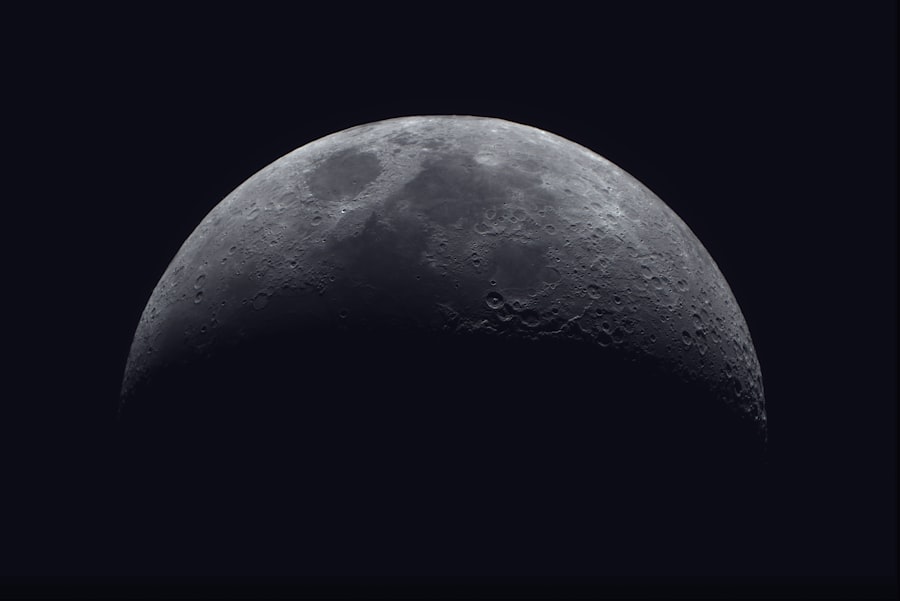
The concept of “penetrating” the Moon with the mind was, even by the standards of a government investing in psychic research, a remarkably bold proposition. It was not merely about viewing a distant object but about perceiving its details with a level of clarity that would be akin to being physically present. The implications, if successful, were profound, suggesting a capability that transcended the limitations of space and distance.
Establishing the Remote Viewing Protocol
Before Swann could attempt to view the Moon, rigorous protocols had to be established. This involved selecting targets that were known but not easily observable by conventional means during the viewing sessions. The goal was to establish a baseline of accuracy for Swann’s remote viewing abilities under controlled conditions. These early exercises provided the confidence and methodology for the more ambitious lunar endeavor.
The Challenge of the Unseen Surface
The Moon, while visually familiar through telescopes, presented a unique challenge for remote viewing. Its surface is a canvas of craters, mountains, and plains, known through extensive telescopic observation and lunar missions. The question was whether Swann could perceive these details with his mind’s eye, as if he were standing on its dusty surface. This required not just seeing shapes but understanding textures, geological features, and even the subtle interplay of light and shadow.
The Art of Description: From Impression to Detail
Swann’s descriptions were crucial. He wouldn’t just state “a crater.” He would describe its size, its depth, the texture of its walls, and the surrounding terrain. This level of detail was what made his purported successes so compelling. For the “Penetration Moon,” the challenge was to articulate these fine details of a world millions of miles away.
The Unspoken Questions: Verification and Interpretation
The core challenge of any remote viewing experiment, especially one as ambitious as this, lies in verification and interpretation. How could the accuracy of Swann’s lunar perceptions be definitively confirmed? While scientific instruments could provide data about the Moon’s surface, directly correlating these with Swann’s subjective experience required a carefully designed framework.
The Experiment Unfolds: A Journey Beyond Earth
The “Penetration Moon” experiment was not a single event but a series of sessions wherein Swann, under strict protocols and often in the presence of researchers, attempted to perceive the surface of the Moon. These sessions were characterized by intense focus, abstract imagery, and detailed verbal or written descriptions.
The Sensory Deprivation Chamber and the Focus on Inner Vision
To minimize external sensory distractions and enhance his focus on internal perception, Swann would often engage in remote viewing in specially designed environments, sometimes including sensory deprivation chambers. This practice was intended to amplify his ability to tap into his psychic faculties, creating a mental space where the “signal” of his remote perceptions could be more clearly received.
The Flow of Information: Impressions and Details
During the viewing sessions, Swann would articulate the images and sensations that arose in his mind. These could range from broad impressions of landscapes to specific details of geological formations. He described vast, desolate plains, sharp, rugged mountains, and the stark contrast of light and shadow cast by the Sun. He spoke of the “feel” of the lunar surface, the silence, and the overwhelming sense of emptiness.
The Role of the Monitor and the Transcript
A crucial element of the remote viewing process was the role of the monitor. This individual, typically a researcher, would interact with Swann during the session, prompting him for more details, asking clarifying questions, and meticulously recording his every utterance. These transcripts became the primary record of the experiment, capturing the raw data of Swann’s psychic impressions.
The Moon as a Canvas: Describing the Desolate Beauty
Swann’s descriptions of the Moon were often poetic, capturing a sense of awe at the alien landscape. He spoke of a “great, dusty plains,” “jagged mountain ranges that scraped the blackness,” and “craters like scars.” He attempted to convey the scale of these features, the depth of the shadows, and the stark, monochromatic beauty of the lunar surface.
Ingo Swann’s intriguing experiences with remote viewing, particularly his claims about the moon, have sparked considerable interest in the realm of paranormal research. For those looking to delve deeper into similar topics, an insightful article can be found that explores various aspects of psychic phenomena and their implications on our understanding of reality. You can read more about these fascinating subjects in the article linked here: psychic phenomena.
The Legacy and Lingering Questions: The Enduring Enigma of Penetration Moon
| Metrics | Data |
|---|---|
| Story Title | Ingo Swann Penetration Moon |
| Author | Ingo Swann |
| Topic | Moon Penetration |
| Publication Date | 1977 |
The “Penetration Moon” experiment, like much of Ingo Swann’s work, remains a subject of intense scrutiny and debate. While proponents point to the compelling nature of his descriptions and the consistency of his findings in other remote viewing experiments, skeptics remain unconvinced, attributing his successes to chance, suggestibility, or deliberate deception.
The Evidence and the Skepticism: A Divided Opinion
The evidence presented for the “Penetration Moon” experiment often consists of Swann’s detailed transcripts, which are then compared to known features of the Moon. Proponents argue that the specificity and accuracy of his descriptions, particularly when applied to areas not readily observable by conventional means at the time, go beyond mere chance. Skeptics, however, point to the inherent subjectivity of the data and the potential for confirmation bias in the interpretation of the transcripts.
The Influence on Remote Viewing Research and Beyond
Regardless of one’s stance on its validity, the “Penetration Moon” experiment undoubtedly played a role in advancing the field of remote viewing research. It pushed the conceptual boundaries of what was considered possible and highlighted the need for more rigorous methodologies and clearer parameters for evaluation. The experiment also contributed to the broader discourse on consciousness, perception, and the potential for extrasensory abilities.
Ingo Swann’s Continuing Impact: A Pioneer in the Unseen
Ingo Swann’s legacy extends far beyond the “Penetration Moon.” He became a pivotal figure in the development of remote viewing as a disciplined practice, authoring seminal works and training numerous individuals. His insistence on the reality and potential of psychic phenomena, coupled with his efforts to bridge the gap with scientific inquiry, has left an indelible mark on parapsychology.
The Enduring Enigma: What Was Truly Perceived?
The ultimate question surrounding the “Penetration Moon” remains unanswered: what exactly did Ingo Swann perceive? Was it a genuine glimpse into the lunar landscape through a form of consciousness unbound by physical limitations? Or was it a complex interplay of subconscious suggestion, educated guesses, and the inherent ambiguity of subjective experience? The allure of the experiment lies precisely in this enduring enigma, a testament to the persistent human fascination with the mysteries of the mind and the universe. The story of Ingo Swann’s “Penetration Moon” continues to captivate, inviting us to ponder the limits of our understanding and the profound possibilities that might lie just beyond our current perception.
He Remote Viewed the Moon. Then Something Saw Him.
FAQs
What is the Ingo Swann Penetration Moon story?
The Ingo Swann Penetration Moon story is a claimed account by Ingo Swann, a well-known psychic and remote viewer, of his alleged involvement in a government-led remote viewing project to explore the moon.
When did the Ingo Swann Penetration Moon story take place?
The Ingo Swann Penetration Moon story allegedly took place in the 1970s, during the height of the Cold War and the space race between the United States and the Soviet Union.
What is remote viewing?
Remote viewing is the practice of seeking impressions about a distant or unseen target using paranormal means, such as extrasensory perception (ESP) or “sensing” with the mind.
Is there any evidence to support the claims made in the Ingo Swann Penetration Moon story?
There is no concrete evidence to support the claims made in the Ingo Swann Penetration Moon story. The story remains controversial and is considered by many to be unsubstantiated.
What is the significance of the Ingo Swann Penetration Moon story?
The Ingo Swann Penetration Moon story is significant in the realm of conspiracy theories and paranormal phenomena, as it has been cited as evidence of government involvement in psychic and remote viewing experiments. However, it is important to approach such claims with skepticism and critical thinking.