
The formation of the Moon has captivated scientists and astronomers for centuries, presenting a puzzle that has yet to be fully solved. This celestial body, Earth’s only natural satellite, has been a subject of fascination not only for its beauty but also for the questions it raises about the origins of our solar system. The Moon’s unique characteristics, such as its size relative to Earth and its geological features, have led to various theories regarding how it came into existence.
Despite significant advancements in lunar research, the exact processes that led to the Moon’s formation remain a long-standing mystery. Various hypotheses have emerged over the years, each attempting to explain the Moon’s origin. Some suggest that it formed alongside Earth from the primordial accretion disk of dust and gas that surrounded the young Sun.
Others propose that it was captured by Earth’s gravitational pull after forming elsewhere in the solar system. However, these theories often struggle to account for the Moon’s specific composition and its relationship with Earth. As scientists continue to explore this enigma, they are piecing together a narrative that may one day illuminate the Moon’s origins.
Key Takeaways
- The Moon’s formation has been a long-standing mystery in the field of planetary science.
- The Giant Impact Hypothesis is a leading theory that suggests the Moon was formed from the debris of a collision between Earth and a Mars-sized body.
- Evidence from Moon rocks provides crucial clues to the Moon’s origin, shedding light on its composition and formation.
- Isotopic signatures help trace the Moon’s composition and provide insights into its unique characteristics.
- Computer simulations play a key role in understanding the Moon’s origin, allowing scientists to model different scenarios and test hypotheses.
The Giant Impact Hypothesis: A Leading Theory
Among the various theories proposed, the Giant Impact Hypothesis has emerged as the most widely accepted explanation for the Moon’s formation. This theory posits that a Mars-sized body, often referred to as Theia, collided with the early Earth approximately 4.5 billion years ago. The immense energy released during this cataclysmic event would have vaporized a significant portion of both bodies, leading to the ejection of debris into orbit around Earth.
Over time, this debris coalesced to form the Moon. The Giant Impact Hypothesis not only provides a plausible explanation for the Moon’s formation but also accounts for several key characteristics observed in lunar geology. For instance, it explains why the Moon is less dense than Earth and why it lacks a significant iron core.
Additionally, this theory aligns with computer simulations that demonstrate how such an impact could result in a satellite with the size and composition of the Moon. As researchers delve deeper into this hypothesis, they continue to refine their understanding of the dynamics involved in this monumental collision.
Evidence from Moon Rocks: Clues to the Moon’s Origin
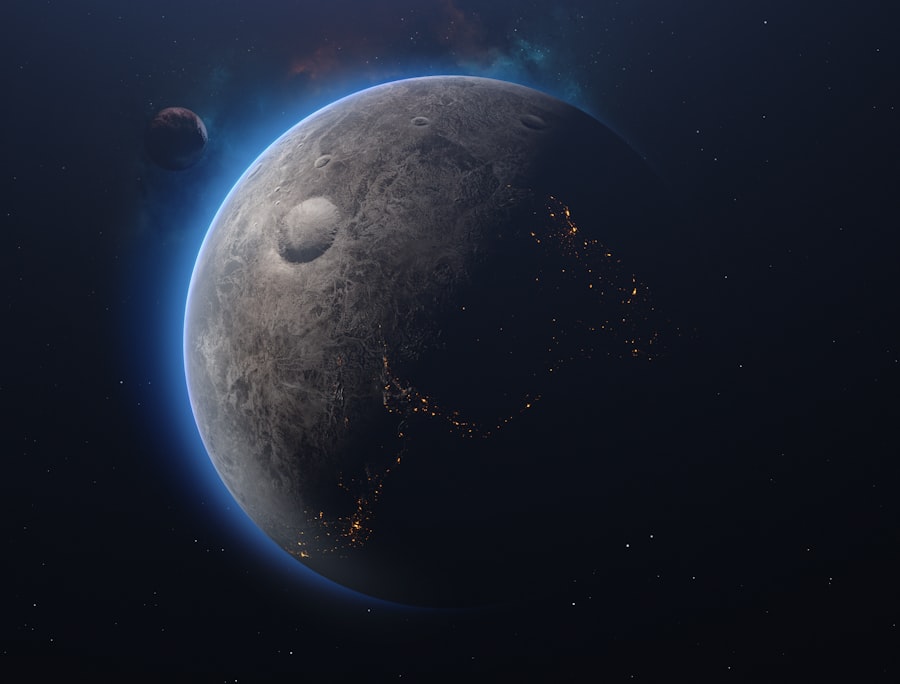
The Apollo missions of the late 1960s and early 1970s provided invaluable samples of lunar rocks and soil, offering critical insights into the Moon’s origin. These samples have been meticulously analyzed by scientists, revealing a wealth of information about the Moon’s geological history and composition. The age of these rocks, determined through radiometric dating techniques, suggests that they formed shortly after the Moon itself was created, providing a direct link to its formative processes.
One of the most significant findings from lunar samples is their isotopic composition, which closely resembles that of Earth’s mantle. This similarity supports the Giant Impact Hypothesis, suggesting that the material that formed the Moon originated from Earth itself. Furthermore, studies of lunar basalt and anorthosite have revealed details about volcanic activity on the Moon, shedding light on its thermal evolution and geological processes over billions of years.
These findings underscore the importance of lunar samples in unraveling the complex history of our nearest celestial neighbor.
Isotopic Signatures: Tracing the Moon’s Composition
| Isotope | Abundance on Earth (%) | Abundance on Moon (%) |
|---|---|---|
| Helium-4 | 99.999863 | 99.999863 |
| Oxygen-16 | 99.762 | 99.762 |
| Oxygen-17 | 0.038 | 0.038 |
| Oxygen-18 | 0.200 | 0.200 |
Isotopic analysis has become a crucial tool in understanding the Moon’s composition and its relationship with Earth. By examining isotopes of elements such as oxygen, titanium, and silicon found in lunar rocks, scientists can trace their origins and gain insights into the processes that shaped both bodies.
This isotopic similarity poses intriguing questions about the nature of the impact event proposed by the Giant Impact Hypothesis. If Theia contributed significantly to the Moon’s formation, one might expect to find distinct isotopic differences between lunar and terrestrial materials. However, the close match suggests that any material from Theia was thoroughly mixed with Earth’s mantle during the collision, leading to a homogenized isotopic signature.
This finding not only supports the Giant Impact Hypothesis but also highlights the complex interactions that occurred during the early stages of solar system formation.
The Role of Computer Simulations in Understanding the Moon’s Origin
In recent years, computer simulations have played an increasingly vital role in advancing our understanding of the Moon’s origin. These sophisticated models allow scientists to recreate the conditions surrounding the hypothesized impact event and explore various scenarios regarding how such a collision could have unfolded. By adjusting parameters such as impact angle, velocity, and mass ratios between Earth and Theia, researchers can simulate different outcomes and assess their compatibility with existing geological evidence.
These simulations have provided valuable insights into not only how the Moon formed but also how its orbit evolved over time. They help explain why the Moon has a relatively large size compared to Earth and why it possesses a unique geological history characterized by volcanic activity and impact cratering. As computational power continues to grow, researchers are able to refine their models further, leading to an ever-deeper understanding of this cosmic event that shaped both our planet and its satellite.
The Moon’s Orbital Dynamics: Insights into its Formation
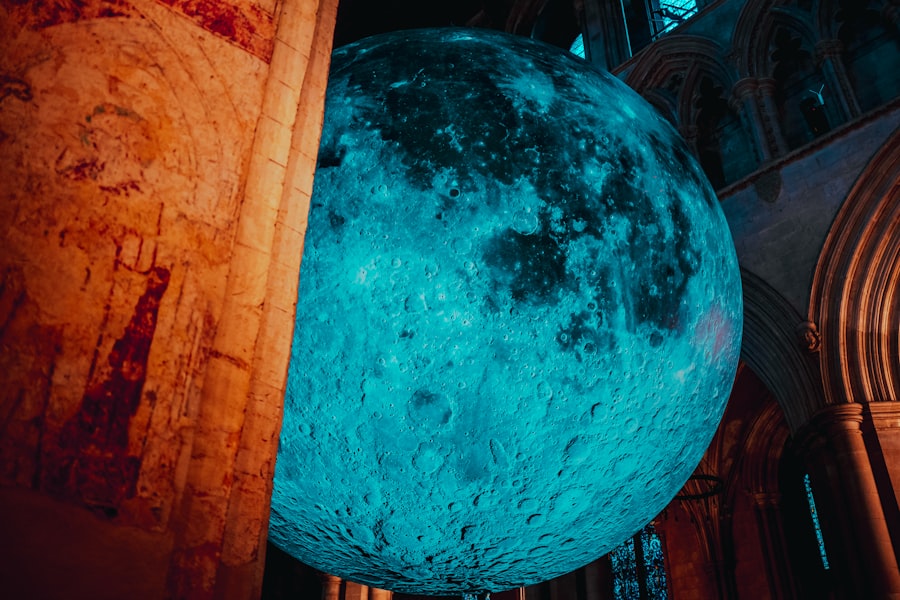
The dynamics of the Moon’s orbit offer additional clues about its formation and subsequent evolution. Observations reveal that the Moon is gradually moving away from Earth at a rate of approximately 3.8 centimeters per year due to tidal interactions between the two bodies. This phenomenon not only affects ocean tides on Earth but also provides insights into how gravitational forces have influenced the Moon’s trajectory since its formation.
Understanding these orbital dynamics is crucial for reconstructing the history of the Earth-Moon system. By studying how tidal forces have altered the Moon’s orbit over billions of years, scientists can infer details about its early position relative to Earth and how it has changed over time. This information complements findings from computer simulations and isotopic analyses, creating a more comprehensive picture of how our celestial neighbor came into being.
Lunar Samples and Their Contribution to Unraveling the Moon’s Mysterious Origin
The collection and analysis of lunar samples have been instrumental in piecing together the puzzle of the Moon’s origin. The Apollo missions returned nearly 382 kilograms of lunar material to Earth, providing a treasure trove of data for scientists to study. These samples include various rock types, regolith, and even volcanic glass, each offering unique insights into different aspects of lunar history.
Through detailed examination of these samples, researchers have been able to identify key geological processes that occurred on the Moon shortly after its formation. For instance, studies of volcanic rocks have revealed information about magma composition and eruption styles, while analyses of impact breccias provide evidence of collisional events that shaped the lunar surface. Each discovery adds another layer to our understanding of how the Moon formed and evolved over time.
The Moon’s Lack of Volatile Elements: Implications for its Formation
One intriguing aspect of lunar geology is the apparent scarcity of volatile elements on the Moon compared to Earth. Elements such as water, carbon dioxide, and other gases are significantly less abundant in lunar samples than in terrestrial materials. This observation raises important questions about how these differences arose during the Moon’s formation.
The lack of volatiles may be explained by high-temperature conditions during the Giant Impact event, which would have caused many lighter elements to vaporize and escape into space. This hypothesis aligns with current models suggesting that intense heat generated by such a collision would have led to a molten state for both bodies involved in the impact. As a result, any volatile compounds present would have been lost before solidification occurred, contributing to the stark contrast in elemental composition between Earth and its satellite.
Comparative Planetology: Understanding the Moon’s Origin in the Context of the Solar System
To gain a deeper understanding of the Moon’s origin, scientists often turn to comparative planetology—the study of planets and moons within our solar system in relation to one another. By examining other celestial bodies with similar characteristics or formation histories, researchers can draw parallels that enhance their understanding of lunar formation processes. For instance, studying Mars’ moons Phobos and Deimos provides insights into potential capture scenarios similar to those proposed for other celestial bodies in our solar system.
Additionally, examining gas giants like Jupiter reveals how their moons formed through different mechanisms than those believed to have shaped terrestrial planets like Earth and its moon. By placing lunar formation within this broader context, scientists can better appreciate both its uniqueness and its connections to other planetary bodies.
The Influence of Tidal Forces on the Moon’s Formation
Tidal forces exerted by Earth’s gravity have played a significant role in shaping not only the Moon’s orbit but also its geological evolution over time. These gravitational interactions create tidal bulges on Earth that influence ocean tides while simultaneously affecting how energy is distributed within both bodies. Understanding these tidal forces is essential for reconstructing how they may have influenced early lunar development.
In particular, tidal heating—caused by gravitational interactions—could have contributed to volcanic activity on the Moon during its formative years. This process may explain some geological features observed on its surface today, such as ancient lava flows and maria (the dark basaltic plains). By studying these tidal influences alongside other factors involved in lunar formation, scientists can develop a more comprehensive understanding of how our satellite evolved over billions of years.
Future Missions and Research: Advancing Our Understanding of the Moon’s Origin
As interest in lunar exploration continues to grow, future missions hold great promise for advancing our understanding of the Moon’s origin.
Such missions will provide opportunities for extensive scientific research aimed at unraveling remaining mysteries surrounding lunar formation.
In addition to human exploration efforts, robotic missions are also being planned to study specific regions on the Moon that may hold clues about its history—such as polar regions where water ice may exist or areas rich in unique geological features. These endeavors will enhance our knowledge base while potentially uncovering new evidence that could reshape existing theories about how our celestial neighbor came into being. In conclusion, while significant progress has been made in understanding how the Moon formed through various hypotheses like the Giant Impact Theory—supported by evidence from lunar samples and isotopic analyses—many questions remain unanswered regarding its origins within our solar system context.
Continued exploration through future missions promises exciting discoveries ahead as humanity seeks not only answers but also deeper connections with this enigmatic celestial body orbiting our planet.
In exploring the mysteries surrounding the Moon’s origin, it’s fascinating to delve into various theories and scientific discussions that attempt to unravel this celestial enigma. A related article that complements the insights from “The Truth About the Moon’s Origin” can be found on X File Findings. This article provides a broader context and examines alternative hypotheses that challenge conventional wisdom. For those interested in expanding their understanding of lunar formation theories, you can read more about these intriguing perspectives by visiting this article.
WATCH THIS 🌙 The Moon’s Soul Trap: John Lear’s Chilling Revelation
FAQs
What is the current scientific understanding of the Moon’s origin?
The current scientific understanding is that the Moon was formed from debris created by a giant impact between Earth and a Mars-sized body called Theia, approximately 4.5 billion years ago.
What evidence supports the giant impact hypothesis for the Moon’s origin?
Evidence supporting the giant impact hypothesis includes the similarities in isotopic compositions of Earth and Moon rocks, as well as computer simulations that show how such an impact could have resulted in the formation of the Moon.
Are there any alternative theories about the Moon’s origin?
While the giant impact hypothesis is the most widely accepted theory, alternative theories include the fission theory (suggesting the Moon was once part of Earth and broke off) and the capture theory (suggesting the Moon was formed elsewhere in the solar system and later captured by Earth’s gravity).
How does the current understanding of the Moon’s origin impact our understanding of the early solar system?
The current understanding of the Moon’s origin provides insight into the violent and dynamic early solar system, and helps scientists better understand the processes that shaped the planets and their satellites.
What are the implications of the Moon’s origin for future lunar exploration and colonization?
Understanding the Moon’s origin can help scientists identify valuable resources on the Moon, as well as potential hazards. It also provides important information for planning future missions to the Moon and potential colonization efforts.