
The icy wanderers of our solar system, comets, have long captivated humanity with their ethereal beauty and enigmatic nature. For centuries, they were viewed as omens, celestial harbingers of change. Today, however, thanks to the relentless pursuit of scientific understanding, the mysteries of these cosmic travelers are being steadily unveiled, not by astrological interpretation, but by the precise science of spectroscopy. This powerful analytical technique allows scientists to decipher the very composition of comets by analyzing the light they emit or reflect, offering unprecedented insights into their origins, evolution, and the early history of our solar system.
Spectroscopy, at its core, is the study of how matter interacts with electromagnetic radiation. When light, or any other form of electromagnetic energy, passes through or is emitted by a substance, it can be broken down into its constituent wavelengths. This creates a unique spectral signature, much like a fingerprint, that is characteristic of the chemical elements and molecules present. For comets, this means that by analyzing the light they produce, scientists can identify the building blocks from which they are made.
The Nature of Light and Its Spectra
Electromagnetic radiation encompasses a vast spectrum, from radio waves with long wavelengths to gamma rays with extremely short wavelengths. Visible light, the portion our eyes can detect, is just a small part of this spectrum. When light interacts with matter, it can be absorbed, emitted, or scattered. These interactions lead to specific patterns in the spectrum.
Emission Spectra: When Atoms Glow
When atoms are excited, for instance, by heat or by absorbing energy, their electrons jump to higher energy levels. As these electrons return to their lower, more stable energy levels, they release energy in the form of photons – particles of light. These photons have specific energies, corresponding to specific wavelengths, creating bright lines in the spectrum against a dark background. Each element has a unique emission spectrum, making it identifiable. For comets, the heat from the Sun excites the gases within their coma, producing these characteristic emission lines.
Absorption Spectra: When Light is Stolen
Conversely, when white light, containing a continuous range of wavelengths, passes through a cooler gas, the atoms in the gas absorb specific wavelengths of light that correspond to the energy needed to excite their electrons. This results in dark lines appearing in the spectrum at those specific wavelengths, superimposed on a continuous background. This phenomenon is crucial for understanding the composition of cometary dust and ice that might be reflecting sunlight.
Continuous Spectra: The Uninterrupted Flow
A continuous spectrum is produced by hot, dense objects, such as a star’s photosphere or an incandescent solid. It contains light at all wavelengths within a given range, appearing as a smooth, unbroken band of colors. While comets themselves don’t typically produce strong continuous spectra, the reflected sunlight from their dust particles can exhibit this characteristic, providing clues about the physical properties of the dust.
Tools of the Trade: Spectrographs and Telescopes
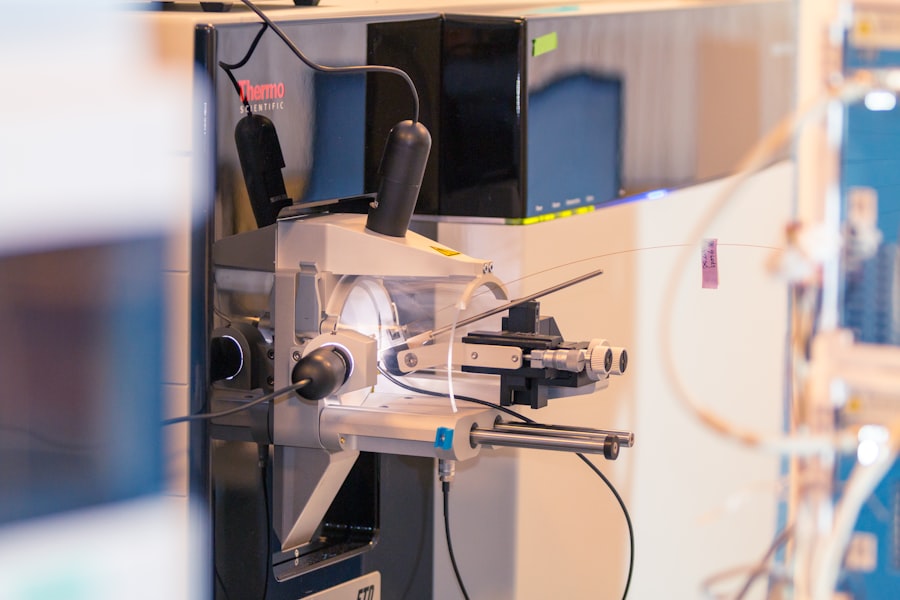
To capture and analyze these spectral signatures, scientists employ sophisticated instruments. Telescopes gather the faint light from distant comets, and spectrographs, attached to these telescopes, are responsible for breaking down that light into its constituent wavelengths.
Ground-Based vs. Space-Based Observations
Both ground-based and space-based telescopes are vital for cometary spectroscopy. Ground-based observatories offer the advantage of easier access and larger apertures, allowing for detailed observations of brighter comets. However, Earth’s atmosphere can distort and absorb certain wavelengths of light, necessitating corrections or limiting observations. Space-based telescopes, like the Hubble Space Telescope or the James Webb Space Telescope, are free from atmospheric interference, enabling the detection of fainter signals and a wider range of wavelengths, particularly in the ultraviolet and infrared.
Different Types of Spectrographs
Various types of spectrographs exist, each optimized for different observational goals. Dispersive spectrographs use prisms or diffraction gratings to spread light by wavelength. Fourier Transform Spectrometers (FTS) are highly sensitive and can capture a broad range of wavelengths simultaneously, making them excellent for studying the complex chemical composition of comets.
Recent advancements in the spectroscopy of comets have provided valuable insights into their composition and behavior, shedding light on the origins of these celestial bodies. For a deeper understanding of the methodologies and findings in this field, you can explore a related article that discusses the latest research and discoveries. To read more, visit this article on spectroscopy of comets.
Decoding the Comet’s Tale: Identifying Cometary Components
The spectral signatures emitted and absorbed by comets provide a direct window into their chemical makeup. By comparing the observed spectra with known laboratory spectra of various elements and molecules, scientists can identify the building blocks of these celestial visitors.
Volatile Ices: The Primordial Ingredients
Comets are often described as “dirty snowballs,” and their volatile ices are key to their activity. When a comet approaches the Sun, these ices sublimate (transition directly from solid to gas), releasing gases and dust that form the coma and tail. Spectroscopy allows us to identify these ices, which typically include water (H₂O), carbon dioxide (CO₂), carbon monoxide (CO), methane (CH₄), and ammonia (NH₃).
Water Ice: The Dominant Player
Water ice is the most abundant volatile in comets, and its spectral signature is readily detectable. The presence and abundance of water ice are crucial for understanding a comet’s thermal evolution and its potential role in delivering water to nascent planets.
Other Volatiles and Their Significance
The identification of other volatile molecules, such as methane and ammonia, provides insights into the chemical conditions under which the comet formed in the outer solar system. These molecules can also undergo photochemical reactions in the coma, leading to the formation of more complex compounds.
Dust Grains: The Rocky Remnants
Interspersed within the icy matrix of a comet are solid dust grains, composed of silicates, carbonaceous materials, and possibly even metallic elements. Spectroscopy of the reflected sunlight from these dust grains, as well as the emission from heated dust particles, reveals their composition.
Silicate Structures: Building Blocks of Planets
The detection of silicate minerals in cometary dust is significant because these are the same materials that form the rocky planets in our solar system. Studying their composition and structure in comets can provide clues about the early processes of planet formation.
Carbonaceous Compounds: Organic Signatures
The presence of carbonaceous compounds, including organic molecules, in cometary dust is particularly exciting. These molecules are the precursors to life as we know it, and their discovery in comets suggests that these icy bodies may have played a role in seeding early Earth with the raw ingredients for life.
Gas Species and Molecules: The Active Atmosphere
As comets approach the Sun, the sublimating ices release a variety of gas species and molecules into the coma. Spectroscopy is instrumental in identifying these gases, which can be stable molecules or fragments of larger molecules that have been broken down by solar radiation.
Atomic Emission Lines: The Simplest Signatures
The simplest spectral signatures often come from individual atoms that have been ionized or excited. For example, the emission lines of hydrogen (H), oxygen (O), and carbon (C) are frequently observed in cometary spectra, providing direct evidence of the presence of these elements.
Molecular Band Spectra: Complex Signatures
More complex molecules, like diatomic carbon (C₂) or cyanide (CN), produce spectral bands rather than discrete lines. These bands arise from the vibration and rotation of the molecules, and their analysis can reveal information about the temperature and density of the cometary coma.
Unraveling Cometary Origins: Clues from the Kuiper Belt and Oort Cloud
The chemical composition of a comet, as revealed by spectroscopy, is a direct reflection of the conditions in the part of the solar nebula where it formed. This allows scientists to infer the origin of different types of comets.
The Kuiper Belt: A Reservoir of Icy Bodies
The Kuiper Belt, a region beyond Neptune, is home to a vast population of icy bodies, including many short-period comets. Spectroscopic studies of Kuiper Belt objects have revealed that they are generally rich in volatile ices, particularly water ice, and have compositions consistent with formation in the outer solar system.
Compositional Diversity within the Kuiper Belt
While generally rich in volatiles, spectroscopic analysis has also revealed a surprising diversity in the composition of Kuiper Belt objects. This suggests that different regions within the Kuiper Belt may have experienced different formation conditions or undergone subsequent evolutionary processes.
Spectroscopic Signatures of Different Formation Temperatures
The relative abundance of certain volatile molecules can act as a thermometer, indicating the temperature at which the ice condensed during the formation of the solar system. For example, the presence of carbon monoxide and nitrogen suggests formation at very low temperatures.
The Oort Cloud: The Distant Frontier
The Oort Cloud, a hypothetical spherical shell of icy bodies located at the very edge of the solar system, is thought to be the source of long-period comets. These comets, with their highly elliptical orbits, are believed to be pristine remnants from the early solar nebula, having been gravitationally scattered to their distant orbits by the giant planets.
Pristine Compositions: A Glimpse into the Early Solar System
Long-period comets are often considered to be the most pristine objects in the solar system, having been preserved in the frigid conditions of the Oort Cloud for billions of years. Spectroscopy of these comets offers an unparalleled opportunity to study the composition of the primordial solar nebula.
Unexpected Volatiles: Puzzles in Oort Cloud Comets
Spectroscopic observations of some Oort Cloud comets have revealed unexpected abundances of certain volatiles, leading to revised models of their formation and evolution. These findings highlight the complexity of the early solar system and the ongoing process of scientific discovery.
Comets as Messengers of the Early Solar System

The composition of comets provides invaluable insights into the conditions that prevailed during the formation of our solar system approximately 4.6 billion years ago. Their frozen nature means they have acted as time capsules, preserving materials from a time when planets were just beginning to form.
The Interplay of Elements and Molecules in the Solar Nebula
Spectroscopy allows scientists to determine the relative abundances of different elements and molecules in comets, offering a direct measure of the elemental and isotopic composition of the solar nebula at the time of their formation. This data can be compared with the composition of the Sun and other solar system objects to understand the overall chemical inventory of the early solar system.
Isotopic Ratios: Tracing Origins and Processes
The isotopic ratios of elements like hydrogen, carbon, and nitrogen found in comets are particularly informative. Different isotopes can be produced through different physical and chemical processes, and their relative abundances can help scientists trace the origins of cometary materials and understand the processes of differentiation and mixing that occurred in the early solar nebula.
The Link to Terrestrial Planets
The composition of comets, particularly the presence of water and organic molecules, has led to theories that they may have delivered essential ingredients to the early Earth, contributing to the formation of its oceans and the origin of life. Spectroscopic data plays a crucial role in evaluating the plausibility of these theories.
Understanding Planetary Formation Through Cometary Analogs
By studying the materials found in comets, scientists can gain a better understanding of the processes that led to the formation of planets. The dust grains found in comets are similar in composition to the building blocks of planets, and the volatile ices provide insights into the conditions under which protoplanetary disks evolved.
The Role of Volatile Delivery in Planetary Evolution
The delivery of volatiles by comets and asteroids is thought to have played a significant role in the early evolution of planetary atmospheres and the habitability of planets. Spectroscopic studies help quantify the amount and type of volatiles delivered by these bodies.
Investigating the Formation of the Asteroid Belt and Beyond
The compositional differences observed between comets originating from different regions of the solar system can help scientists understand the processes of radial mixing and migration of materials within the protoplanetary disk, which influenced the formation of the asteroid belt and the outer planets.
Recent advancements in the spectroscopy of comets have provided valuable insights into their composition and behavior. Researchers have utilized various spectroscopic techniques to analyze the light emitted or absorbed by these celestial bodies, revealing the presence of organic compounds and water ice. For a deeper understanding of the implications of these findings, you can explore a related article that discusses the significance of such studies in the broader context of planetary science. This informative piece can be found at this link.
Future Frontiers: Advanced Spectroscopic Techniques and Missions
| Comet | Spectroscopy Data | Observatory |
|---|---|---|
| Comet Hale-Bopp | Emission lines of diatomic carbon and cyanogen | Hubble Space Telescope |
| Comet 67P/Churyumov-Gerasimenko | Organic molecules such as formaldehyde and hydrogen cyanide | Rosetta spacecraft |
| Comet 46P/Wirtanen | Presence of water and carbon dioxide | Various ground-based observatories |
The quest to understand comets is far from over. Ongoing and future missions, equipped with increasingly sophisticated spectroscopic instruments, promise to unlock even deeper secrets about these fascinating celestial bodies.
High-Resolution Spectroscopy: Unveiling Subtle Details
Future missions will likely employ high-resolution spectrometers capable of distinguishing between very similar spectral features. This will allow for a more precise identification of complex organic molecules and subtle variations in isotopic ratios, providing a more detailed chemical inventory of comets.
Detection of Trace Elements and Isotopes
High-resolution spectroscopy can detect trace amounts of elements and isotopes that may be missed by current instruments. This can reveal the presence of rare or short-lived species that were present in the early solar system, offering unique insights into its formation.
Understanding Isotopic Fractionation Processes
By measuring high-precision isotopic ratios, scientists can investigate subtle isotopic fractionation processes that occur during the formation and evolution of comets. These processes can provide clues about the physical and chemical conditions in the solar nebula.
Remote Sensing and In-Situ Analysis: A Complementary Approach
Future cometary missions may combine advanced remote sensing techniques with in-situ analysis. Sending probes to land on or fly through comets will allow for direct sampling and analysis of cometary materials, complementing the information obtained from spectroscopy.
Direct Sampling and Laboratory Analysis on Spacecraft
Spacecraft equipped with laboratories capable of performing complex chemical analyses can provide definitive identification of cometary components. This can include techniques like gas chromatography-mass spectrometry (GC-MS) and X-ray diffraction (XRD).
Ground Truth for Spectroscopic Data
In-situ analysis can provide “ground truth” for remote spectroscopic observations, helping to calibrate instruments and validate interpretations of spectral data. This synergy between remote sensing and in-situ analysis will be crucial for advancing our understanding of comets.
The Search for Life’s Origins in Cometary Materials
Perhaps the most profound aspect of cometary research is the potential to find clues about the origin of life. The discovery of complex organic molecules in comets has fueled speculation that these icy bodies may have played a role in seeding early Earth with the building blocks of life.
Astrobiological Implications of Cometary Organic Chemistry
Spectroscopic studies are crucial for identifying and characterizing the organic molecules present in comets. This includes searching for chiral molecules, which are essential for life as we know it, and other prebiotic compounds.
Designing Future Missions with Astrobiology in Mind
Future cometary missions will increasingly be designed with astrobiological goals in mind, focusing on instruments that can detect biosignatures and prebiotic molecules with high sensitivity and specificity. The insights gained from spectroscopy will be vital in guiding these mission designs.
In conclusion, spectroscopy has transformed our understanding of comets from mysterious celestial apparitions to invaluable scientific laboratories. By meticulously analyzing the light they emit and reflect, scientists are piecing together the intricate story of their formation, evolution, and their fundamental role in the grand narrative of our solar system’s birth. As technology advances and our observational capabilities expand, the spectroscopic investigation of comets will undoubtedly continue to unveil their deepest secrets, offering profound insights into the origins of our celestial home and, perhaps, even the origins of life itself.

The New Interstellar Object That’s Dividing Scientists
FAQs
What is spectroscopy of comets?
Spectroscopy of comets is the study of the light emitted or absorbed by comets, which can provide valuable information about their composition, temperature, and physical properties.
How does spectroscopy of comets work?
Spectroscopy of comets involves analyzing the spectrum of light emitted or absorbed by comets. This can be done using instruments such as spectrometers, which break down the light into its component wavelengths to reveal the unique spectral lines associated with different chemical elements and compounds.
What can spectroscopy tell us about comets?
Spectroscopy can provide information about the chemical composition of comets, including the presence of water, carbon compounds, and other organic molecules. It can also reveal details about the temperature and physical conditions within the comet, as well as any changes that occur as the comet approaches the Sun.
Why is spectroscopy of comets important?
Studying the spectroscopy of comets can help scientists better understand the origins of the solar system and the processes that led to the formation of comets. It can also provide insights into the potential role of comets in delivering water and organic molecules to Earth, which may have contributed to the development of life.
What are some key findings from spectroscopy of comets?
Spectroscopy of comets has revealed the presence of complex organic molecules, such as amino acids and sugars, as well as isotopic signatures that provide clues about the conditions in the early solar system. It has also shown variations in the composition and activity of comets as they approach the Sun, shedding light on their dynamic nature.