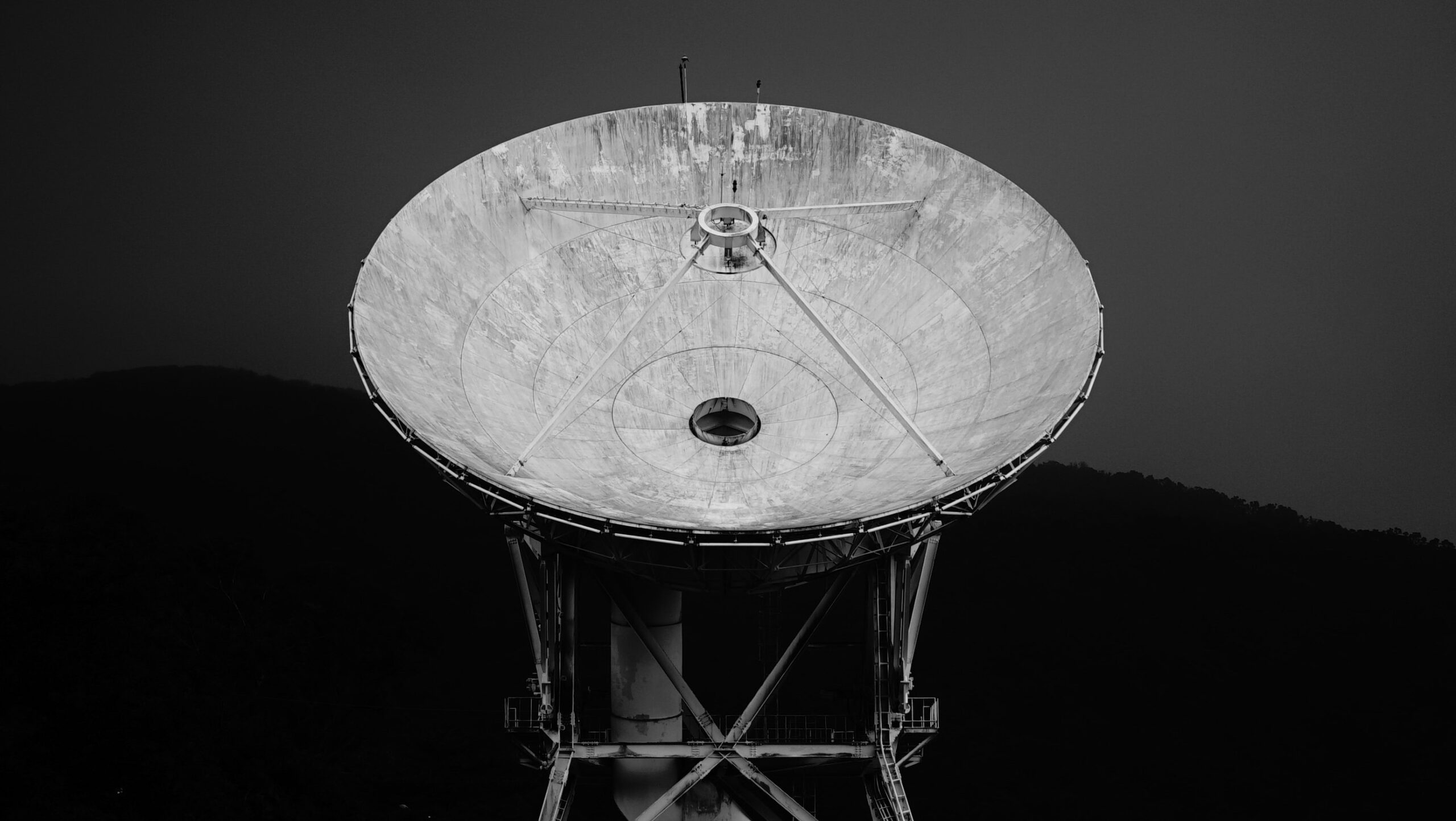
The universe, a vast and enigmatic expanse, has long captivated human curiosity. For millennia, we have gazed at the stars, yearning to understand our place within this cosmic tapestry. While visible light has offered glimpses into distant celestial bodies, a deeper and more profound understanding has been unlocked through a different medium: radio waves. The advent of radio telescopes in the 20th century revolutionized astronomy, opening a new window onto phenomena previously invisible to us. The re-examination and analysis of historic radio telescope data, preserved through decades of meticulous record-keeping, continues to yield groundbreaking discoveries, proving that the universe still holds many secrets waiting to be unveiled.
The journey into radio astronomy began not with a bang, but with a hum. In the early 1930s, a young engineer named Karl Jansky, working for Bell Telephone Laboratories, was tasked with investigating sources of static interference that plagued trans-Atlantic radio communications. His ingenious approach involved building a directional antenna, a rudimentary radio telescope, that could rotate and pinpoint the origin of these mysterious signals. What Jansky discovered, however, was far more significant than mere terrestrial interference. He detected faint radio waves originating from the center of our own Milky Way galaxy. This serendipitous discovery marked the birth of radio astronomy, a field that would fundamentally alter our perception of the cosmos.
Jansky’s Groundbreaking Observations
The Cosmic Hum: A Galactic Message
Jansky’s initial findings were met with a mixture of skepticism and fascination. His meticulously recorded data, charting the intensity and direction of radio signals, provided the first tangible evidence that celestial objects, beyond the visible stars, were emitting radio waves. He identified a consistent signal that appeared to shift in intensity over a 24-hour period, correlating with the Earth’s rotation. This led him to correctly deduce that the source was extra-terrestrial. Further analysis revealed that the strongest signals emanated from the direction of the galactic center, a region teeming with stars and interstellar gas, but largely obscured from optical telescopes by dust. This “cosmic hum,” as it became known, was the universe speaking in a language we were only just beginning to decipher.
Early Instrumentations and Technological Hurdles
The technology available to Jansky was primitive by today’s standards. His antenna, affectionately nicknamed “Jansky’s magic hat,” was a complex arrangement of metal elements and a rotating platform, requiring manual adjustment and careful observation. The signal-to-noise ratio was incredibly challenging, meaning that distinguishing genuine cosmic signals from terrestrial and atmospheric interference was a constant battle. Despite these limitations, Jansky’s persistence and meticulous data collection laid the bedrock for all future radio astronomy endeavors. His work demonstrated the potential of radio waves as a tool for astronomical exploration and inspired a new generation of scientists to develop more sophisticated instruments.
Recent advancements in the analysis of historic radio telescope data have opened new avenues for understanding cosmic phenomena. A related article that delves deeper into this topic can be found at XFile Findings, where researchers explore the implications of archived data from various radio telescopes and how it contributes to our knowledge of the universe. This exploration not only highlights the importance of preserving such data but also emphasizes the potential discoveries that await in the vast archives of astronomical observations.
The Maturation of Radio Telescopes: Expanding Our Cosmic Reach
Following Jansky’s pioneering work, the field of radio astronomy began to grow, albeit slowly at first. The outbreak of World War II, however, inadvertently accelerated technological advancements in radar and radio communication, many of which proved directly applicable to radio telescope development. Post-war, scientists around the world began constructing larger and more sensitive radio telescopes, each iteration pushing the boundaries of what could be observed and understood. These instruments moved beyond simple directional antennas to dish-shaped reflectors, designed to gather and focus faint radio signals with much greater precision.
The Grote Reber Era: Charting the Radio Sky
Grote Reber, an amateur radio enthusiast, is often considered the father of modern radio astronomy. Inspired by Jansky’s findings, Reber built his own large parabolic dish antenna in his backyard in Illinois in the late 1930s. Unlike Jansky, who focused on the galactic center, Reber systematically surveyed the entire sky at a specific radio wavelength. His detailed maps of the radio sky were revolutionary, revealing that radio emission was not confined to the Milky Way’s center but was widespread across the galaxy, and even extended to other galaxies. Reber’s work established that radio astronomy was a legitimate scientific discipline and provided the first comprehensive radio maps of the universe.
The Rise of Interferometry: Sharpening the Cosmic Vision
A significant leap in radio telescope technology came with the development of interferometry. This technique involves combining the signals from multiple, widely separated radio telescopes to achieve a resolution equivalent to that of a single telescope with a diameter equal to the distance between the individual telescopes. This dramatically improved the ability to discern fine details in celestial objects and to pinpoint the exact locations of radio sources. Historic data from the early interferometers, though less detailed than modern observations, are now being re-analyzed with advanced processing techniques, revealing subtle features that were previously missed.
Unearthing Hidden Galaxies and Cosmic Structures: Decoding Ancient Signals

Historic radio telescope data has proven invaluable in uncovering phenomena that are otherwise invisible. The radio sky is a dynamic place, filled with emissions from energetic processes occurring in objects like quasars, pulsars, and supernova remnants. By studying these emissions, astronomers can probe the physical conditions of these objects, their evolution, and their role in the universe. The sheer volume of data collected over the decades, often stored on aging magnetic tapes and punch cards, represents a treasure trove of information that is only now being fully exploited.
The Discovery of Quasars: Cosmic Lighthouses
One of the most profound rediscoveries from historic radio data has been the confirmation and detailed study of quasars. These extremely luminous and distant objects were first hinted at by radio telescope surveys in the 1950s. Their identification and characterization were significantly aided by correlating radio sources with optical counterparts. Historic observations provided the initial spectral data and flux measurements that allowed astronomers to classify these objects and understand their immense power. The long-term monitoring of quasars through archival data has also provided crucial insights into their variability and the processes occurring in their active galactic nuclei.
Pulsars: Celestial Clocks and Gravitational Detectors
Pulsars, rapidly rotating neutron stars that emit beams of radio waves, were another monumental discovery facilitated by radio astronomy. The first pulsar was discovered in 1967 by Jocelyn Bell Burnell and Antony Hewish, using data from the Cambridge Radio Telescope. The regular pulses of radio waves emitted by pulsars were initially so unexpected that they were humorously referred to as “LGMs” (Little Green Men). The detailed timing data from these early pulsar observations, preserved in archives, has been instrumental in understanding their physics, including their magnetic fields and rotation rates. More recently, historic data is being revisited to search for subtle timing variations that could be indicative of passing gravitational waves.
Re-examining the Past, Rewriting Cosmic History: The Power of Modern Analysis

The technological advancements in data processing and computational power have transformed the way astronomers approach historic radio telescope data. What was once painstakingly cataloged and analyzed by hand can now be processed by sophisticated algorithms, revealing patterns and insights that were previously inaccessible. This “digital archaeology” of astronomical data is leading to a re-evaluation of past discoveries and the identification of new phenomena.
The Significance of Archival Data
Archival data from early radio telescopes, despite their limitations in terms of resolution and sensitivity, holds immense scientific value. These historical records provide a baseline against which modern observations can be compared, allowing for the study of long-term changes in celestial objects. For example, tracking the subtle shifts in radio emission from galaxies over decades can reveal clues about their evolution, the activity of their central black holes, and the dynamics of star formation. The sheer volume of stored data means that every observation, no matter how distant in time, has the potential to contribute to new discoveries.
Advanced Signal Processing Techniques
Modern computer algorithms are capable of extracting faint signals from noisy data, a crucial advantage when dealing with older, less sensitive observations. Techniques like image stacking, aperture synthesis applied to historical data, and machine learning are allowing astronomers to “see” faint structures and subtle variations that were invisible to the original observers. This re-analysis effort is not just about finding new objects; it’s about extracting more information from existing observations, refining our understanding of known phenomena, and potentially correcting previous interpretations. For instance, signals that were once dismissed as noise might now be recognized as faint echoes of distant cosmic events.
Recent advancements in the analysis of historic radio telescope data have opened new avenues for understanding the universe. Researchers have been able to revisit old observations, uncovering new insights into cosmic phenomena. For those interested in exploring this topic further, a related article discusses the implications of these findings and their potential impact on future astronomical research. You can read more about it in this informative piece here.
Unveiling the Cosmic Microwave Background and the Early Universe: Echoes of the Big Bang
“`html
| Year | Telescope Location | Data Collected |
|---|---|---|
| 1963 | Arecibo Observatory, Puerto Rico | Pulsars discovered |
| 1967 | Cambridge, England | First pulsar catalog published |
| 1974 | Arecibo Observatory, Puerto Rico | First binary pulsar discovered |
| 1992 | Parkes Observatory, Australia | Discovery of exoplanets using pulsar timing |
“`
Perhaps one of the most significant contributions of radio astronomy to our understanding of the universe has been its role in detecting and studying the Cosmic Microwave Background (CMB). This faint, uniform glow of microwave radiation pervades the entire sky, an afterglow from the Big Bang itself. Historic radio telescope data played a pivotal role in its discovery and continues to be re-examined to glean further insights into the early universe.
The Accidental Discovery of the CMB
The CMB was serendipitously discovered in 1964 by Arno Penzias and Robert Wilson while they were working with a horn antenna at Bell Laboratories, ironically the same institution where Jansky had made his groundbreaking discovery decades earlier. They were trying to eliminate a persistent background noise that plagued their measurements, an enigmatic hiss that seemed to come from all directions. This mysterious noise, they unknowingly detected, was the primordial radiation left over from the Big Bang. Their Nobel Prize-winning discovery provided irrefutable evidence for the Big Bang theory.
Legacy Data and CMB Anisotropies
While Penzias and Wilson made the initial detection, subsequent radio telescope observations, including archival data from earlier sky surveys, have been crucial in mapping the subtle variations, or anisotropies, in the CMB. These minute temperature fluctuations, measured in parts per million, are the imprints of density variations in the very early universe that eventually grew into the galaxies and cosmic structures we see today. Re-analyzing historic CMB data with modern techniques allows for a more precise understanding of these anisotropies, providing critical parameters for cosmological models, such as the age, composition, and geometry of the universe. The painstaking work of astronomers processing early datasets has provided irreplaceable foundations for later, more sophisticated missions.
The continuous exploration of historic radio telescope data reinforces a fundamental truth in science: the universe is a dynamic and evolving entity, and our understanding is always a work in progress. The whispers from the cosmos, captured by instruments of the past, continue to resonate, offering new clues and challenging our established paradigms. As technology advances and our analytical capabilities grow, the re-examination of these invaluable archives promises to unlock further mysteries, reminding us that even with our most powerful modern telescopes, the universe holds secrets as vast and profound as its own boundless expanse. The journey of cosmic discovery, powered by the faint radio whispers of celestial bodies, is far from over.

They Reopened the Wow! Signal After 48 Years—Here’s What Changed
FAQs
What is historic radio telescope data?
Historic radio telescope data refers to the information collected by radio telescopes in the past, which can include observations of celestial objects, radio emissions, and other astronomical phenomena. This data is valuable for scientific research and can provide insights into the history of the universe.
Why is historic radio telescope data important?
Historic radio telescope data is important because it allows scientists to study the evolution of celestial objects and phenomena over time. By analyzing data collected from radio telescopes in the past, researchers can gain a better understanding of the universe and its history.
How is historic radio telescope data used in scientific research?
Historic radio telescope data is used in scientific research to study the behavior of celestial objects, track changes in radio emissions, and investigate various astronomical phenomena. Researchers can compare historic data with current observations to identify patterns and trends, and to test theories about the nature of the universe.
Where can historic radio telescope data be accessed?
Historic radio telescope data is often archived and made available to the scientific community through databases and repositories maintained by research institutions and observatories. Some data may also be accessible through online platforms and archives dedicated to astronomical research.
What are some examples of discoveries made using historic radio telescope data?
Historic radio telescope data has been used to make significant discoveries in astronomy, such as the identification of new celestial objects, the study of pulsars and quasars, and the detection of cosmic microwave background radiation. This data has also contributed to our understanding of the structure and evolution of the universe.