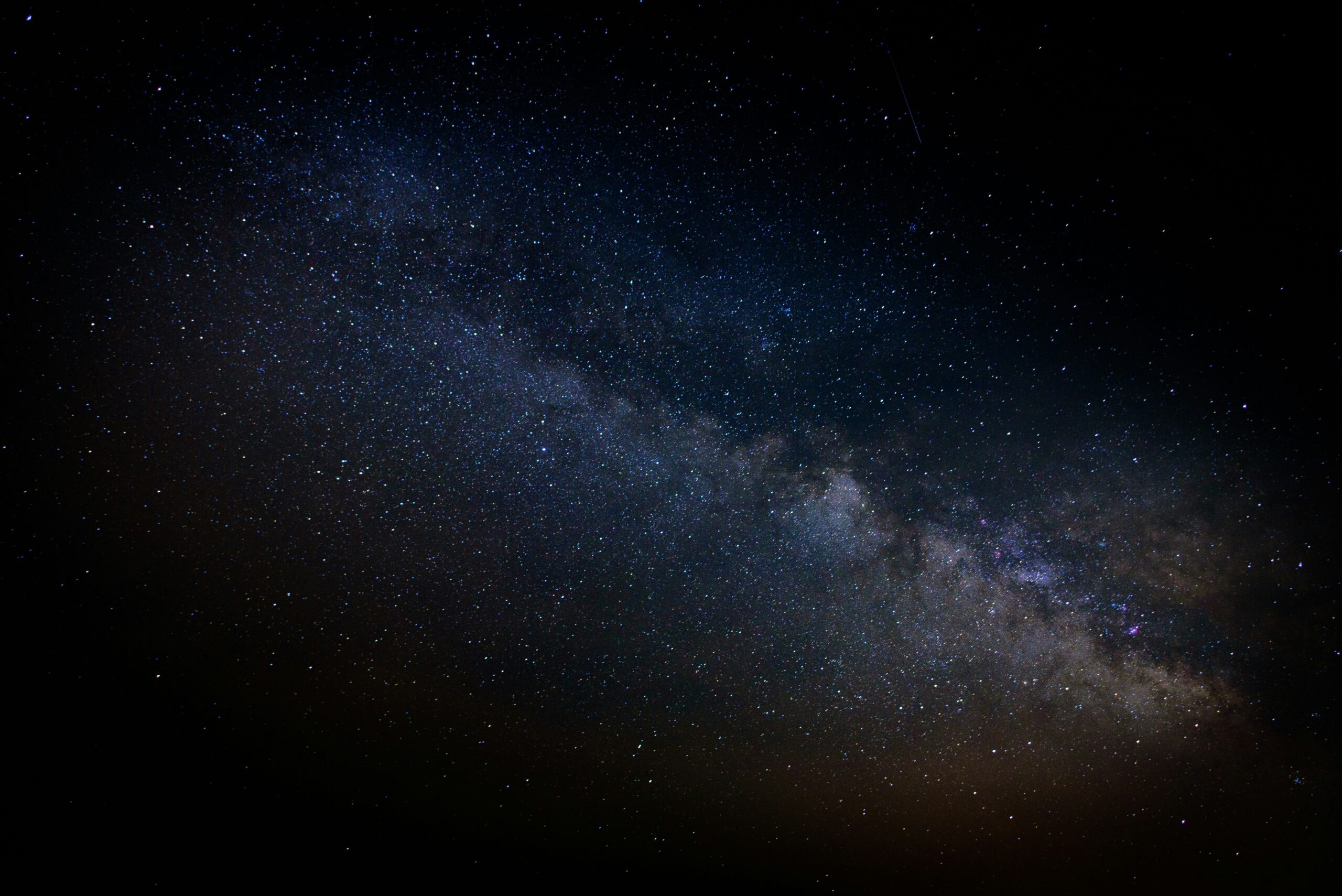
The cosmos, vast and enigmatic, has long captivated humanity’s imagination. For millennia, our understanding of the universe was limited to what our eyes could perceive – the twinkling lights of stars and the ethereal glow of nebulae within the visible spectrum of light. However, the dawn of the 20th century ushered in a new era of cosmic exploration, one that would reveal celestial phenomena previously hidden from view and provide unprecedented insights into the workings of the universe. This revolution was driven by the nascent field of radio astronomy, a discipline that allowed scientists to “hear” the universe, not with their ears, but with sophisticated antennas and receivers tuned to the invisible radio waves emitted by celestial objects.
The story of radio astronomy is not one of meticulous scientific planning, but rather a tale of serendipity and persistent curiosity. While the theoretical understanding of electromagnetic waves, including radio waves, had been developed by physicists like James Clerk Maxwell in the late 19th century and experimentally confirmed by Heinrich Hertz, their astronomical significance remained undiscovered for decades.
A Fortuitous Find in a Bell Labs Laboratory
The true genesis of radio astronomy is widely attributed to Karl Jansky, a Polish-American engineer working at Bell Telephone Laboratories in the early 1930s. Jansky was tasked with investigating the sources of static that interfered with transatlantic radio communications. He built a large, steerable directional antenna, affectionately nicknamed “Jansky’s Christmas Tree,” designed to pinpoint the location of radio noise.
The Mystery of the Persistent Hiss
Jansky meticulously tracked the sources of these mysterious radio signals. While he successfully identified some terrestrial and atmospheric interference, a persistent hiss remained that defied easy explanation. It wasn’t coming from thunderstorms or any known terrestrial source. This signal exhibited a peculiar behavior: it appeared to rise and set with the stars, migrating across the night sky at a predictable rate.
Pinpointing the Galactic Center
Through careful observation and correlation with astronomical charts, Jansky eventually concluded that the source of this persistent radio noise was not terrestrial at all, but rather emanating from the very center of our own Milky Way galaxy. In 1933, he published his groundbreaking findings, presenting the first evidence that the universe, beyond the realm of visible light, was also teeming with radio emissions. His discovery, though monumental, was not immediately met with widespread enthusiasm. The astronomical community, largely focused on optical telescopes, was slow to grasp the potential of this new window into the cosmos.
Grote Reber: The Pioneer of Radio Astronomy
While Jansky laid the foundation, it was Grote Reber, an amateur radio enthusiast and engineer, who truly embraced and advanced the nascent field. Inspired by Jansky’s work, Reber independently constructed his own radio telescope in his backyard in Wheaton, Illinois, during the late 1930s.
Building a Dish in the Backyard
Reber’s antenna was a parabolic dish, approximately 31 feet (9.6 meters) in diameter, capable of collecting and focusing faint radio waves from the sky. Unlike Jansky’s experimental setup, Reber’s goal was to systematically map the intensity of radio waves coming from different directions in the sky.
The First Radio Maps of the Sky
Working under the conceit of secrecy to avoid attracting attention, Reber spent years observing the night sky with his homemade telescope. He meticulously recorded the strength of radio signals from various celestial objects. In 1944, he published his seminal paper, “Cosmic Static,” which presented the first-ever radio maps of the Milky Way. These maps revealed that the galactic center was a particularly strong source of radio emission. Reber’s work provided further compelling evidence for the existence of cosmic radio sources and demonstrated the feasibility of using radio waves for astronomical observations. His dedication and pioneering spirit solidified radio astronomy as a legitimate scientific pursuit, albeit one still in its infancy.
Radio astronomy has a rich history that has significantly advanced our understanding of the universe. A fascinating article that delves into this topic is available at XFile Findings, where you can explore the milestones and key figures in the development of radio astronomy, from the discovery of cosmic radio waves to the establishment of major observatories. This resource provides valuable insights into how radio astronomy has evolved and its impact on modern astrophysics.
The Post-War Boom and the Rise of Dedicated Instruments
The end of World War II marked a turning point for many scientific fields, and radio astronomy was no exception. The technological advancements and increased scientific interest spurred by the war led to a rapid expansion of the field, characterized by the development of larger and more sophisticated radio telescopes.
Military Innovations Fueling Astronomical Research
The war effort had driven significant progress in radar technology, which relied heavily on the understanding and manipulation of radio waves. Techniques developed for detecting enemy aircraft and ships could be adapted and refined for astronomical purposes. Furthermore, a generation of scientists and engineers, trained in radio technologies during the war, became available to pursue research in this exciting new area.
The Birth of the Interferometer
One of the most significant technological breakthroughs that emerged from this period was the development of radio interferometry. The resolution of a single radio telescope is limited by the wavelength of the radio waves it observes and the physical size of its aperture (the collecting area). To overcome this limitation, astronomers began to connect multiple smaller antennas together, effectively creating a much larger virtual aperture. This technique, known as interferometry, allowed for significantly higher angular resolution, enabling astronomers to distinguish finer details in distant celestial objects.
Early Interferometric Observations
Early interferometric experiments, often using simple setups, began to demonstrate the power of this technique. These early efforts, while rudimentary by today’s standards, paved the way for the more complex and powerful interferometers that would revolutionize radio astronomy in the decades to come.
The Era of Giant Radio Telescopes
The post-war era saw the construction of increasingly larger single-dish radio telescopes. These massive instruments, with their enormous collecting areas, were capable of detecting fainter radio signals and providing more detailed information about celestial radio sources.
The Jodrell Bank Observatory: A British Icon
The Jodrell Bank Observatory in Cheshire, England, became a leading center for radio astronomy. Its centerpiece, the Lovell Telescope, completed in 1957, was for many years the world’s largest fully steerable radio telescope with a dish diameter of 250 feet (76 meters). The Lovell Telescope played a crucial role in many early radio astronomy discoveries, including the study of pulsars.
The Parkes Observatory: A Southern Hemisphere Giant
In the Southern Hemisphere, the Parkes Observatory in Australia, with its iconic 210-foot (64-meter) dish, also emerged as a major hub for radio astronomical research. It has been instrumental in a wide range of discoveries, from mapping the distribution of hydrogen in galaxies to studying the properties of distant quasars.
The Green Bank Telescope: A US Contributor
The National Radio Astronomy Observatory (NRAO) in Green Bank, West Virginia, also contributed significantly with its early large radio telescopes, including the fully steerable 140-foot (43-meter) telescope.
Unveiling Cosmic Mysteries: Key Discoveries
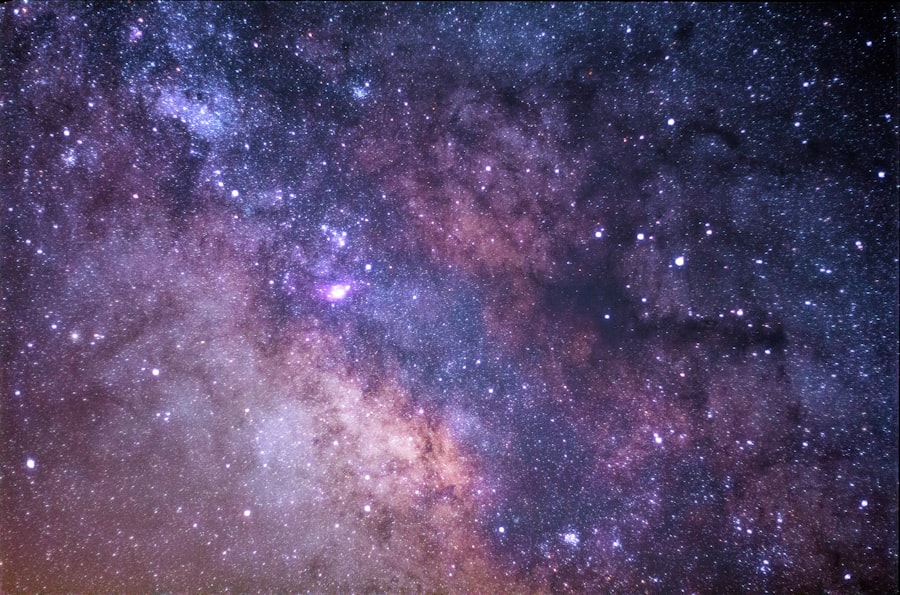
The proliferation of radio telescopes and the development of new observational techniques led to a cascade of groundbreaking discoveries that fundamentally altered our understanding of the universe. Radio astronomy provided direct evidence for phenomena that were either unknown or poorly understood through optical observations alone.
The Detection of Cosmic Microwave Background Radiation (CMB)
Perhaps the most profound discovery in radio astronomy, and indeed in all of cosmology, was the detection of the Cosmic Microwave Background radiation. This faint, pervasive glow of radio waves permeating the entire universe is considered the afterglow of the Big Bang.
The Accidental Confirmation
In 1964, Arno Penzias and Robert Wilson, two engineers at Bell Labs, were working on improving satellite communication technology. They detected a persistent, uniform background noise that seemed to come from all directions in the sky, regardless of where they pointed their antenna. They tried to eliminate this noise, attributing it to various sources, but to no avail.
A Nobel Prize-Winning Eureka Moment
Meanwhile, at nearby Princeton University, a team of physicists led by Robert Dicke was theoretically predicting the existence of such a background radiation, a remnant from the early, hot universe. When Dicke’s team heard about Penzias and Wilson’s “noise,” they realized they had stumbled upon the predicted CMB. This discovery provided strong observational evidence for the Big Bang theory and earned Penzias and Wilson the Nobel Prize in Physics in 1978.
The Astonishing Nature of Pulsars
Radio astronomy was also responsible for the discovery of pulsars, highly magnetized rotating neutron stars that emit beams of radio waves.
A Surprise Signal in Cambridge
In 1967, Jocelyn Bell Burnell, a graduate student at the University of Cambridge, along with her supervisor Antony Hewish, observed a series of extremely regular, short pulses of radio waves. These pulses were so precise that they were initially jokingly referred to as “Little Green Men” – suggesting an artificial origin.
Understanding the Celestial Lighthouse
However, further investigation revealed that these pulses were originating from a rapidly rotating neutron star. Neutron stars are the collapsed cores of massive stars that have exploded as supernovae. The rapid rotation and strong magnetic fields of these compact objects create beams of radiation that sweep across space like a lighthouse. As these beams cross Earth, they are detected as regular pulses by radio telescopes, leading to their name: pulsars. The study of pulsars has provided invaluable insights into the physics of extreme matter and gravity.
Mapping the Structure of Our Galaxy
Radio waves, particularly those emitted by neutral hydrogen (HI), can penetrate the dense dust clouds that obscure the visible light from the Milky Way. This ability has allowed radio astronomers to create detailed maps of the structure and distribution of gas within our galaxy.
The 21-cm Line: A Window into the ISM
Neutral hydrogen emits radio waves at a specific wavelength of 21 centimeters (approximately 1.42 GHz). This “21-cm line” is a crucial tool for radio astronomers. By observing the Doppler shift of this emission, scientists can determine the motion of hydrogen clouds, revealing the rotation of the galaxy and the intricate spiral arms that characterize its structure.
Understanding Galactic Dynamics
These radio maps have been instrumental in understanding the dynamics of our galaxy, including the distribution of mass, the locations of star-forming regions, and the presence of unseen dark matter.
The Energetic World of Quasars and Active Galactic Nuclei (AGN)
Radio observations were also pivotal in revealing the existence of extremely luminous and distant objects known as quasars (quasi-stellar radio sources) and Active Galactic Nuclei (AGN).
Mysterious Radio Sources in the Sky
In the early days of radio astronomy, astronomers identified several strong, compact radio sources in the sky that appeared to be associated with faint or indistinguishable optical counterparts. These were perplexing objects, as their radio emission was far more intense than expected from stars.
Unveiling Distant Powerhouses
Subsequent optical and radio observations revealed that these “quasi-stellar” objects were not stars but rather extremely distant galaxies with incredibly luminous cores powered by supermassive black holes actively accreting matter. Quasars are among the most energetic phenomena in the universe, and their radio emission provides a vital means of studying their properties and their evolution across cosmic time.
The Evolution of Technology: Bigger, Better, and Smarter Telescopes

The relentless pursuit of understanding the universe has driven continuous innovation in radio telescope technology. From humble beginnings, radio telescopes have evolved into colossal instruments capable of unprecedented sensitivity and resolution.
The Drive for Increased Sensitivity
Detecting the faint whispers of radio waves from distant cosmic sources requires incredibly sensitive instruments. Advancements in receiver technology, including the development of low-noise amplifiers and sophisticated digital signal processing, have dramatically increased the ability of radio telescopes to pick up even the weakest signals.
Superconducting Detectors and Advanced Electronics
Modern radio telescopes often employ superconducting detectors that operate at extremely low temperatures to minimize electronic noise. The development of advanced digital correlators allows for the processing of immense amounts of data required for interferometry and the detection of subtle signals.
The Power of Interferometry and VLBI
Interferometry, as mentioned earlier, has been a transformative technique. The development of more sophisticated interferometric arrays and the technique of Very Long Baseline Interferometry (VLBI) have pushed the boundaries of angular resolution far beyond what was previously thought possible.
Extending the Baseline: VLBI
VLBI involves connecting telescopes that are separated by thousands of kilometers, sometimes even on different continents. By correlating the data from these widely separated telescopes, astronomers can achieve resolution equivalent to a telescope the size of the Earth. This allows them to image extremely fine details in quasars, black hole event horizons, and the centers of galaxies.
The Square Kilometre Array (SKA): The Future Frontier
The next generation of radio telescope projects, such as the Square Kilometre Array (SKA), represent a monumental leap forward. The SKA, currently under construction in Australia and South Africa, will eventually comprise thousands of antennas, making it the largest and most sensitive radio telescope ever built. It is designed to probe the “cosmic dawn,” the era when the first stars and galaxies formed, and to investigate fundamental questions about dark matter, dark energy, and the origins of the universe.
Multi-Wavelength Astronomy: A Holistic Approach
While radio astronomy has opened up a new window to the universe, it is increasingly recognized that to gain a comprehensive understanding of celestial objects and phenomena, observations across the entire electromagnetic spectrum are essential.
Combining Radio with Optical, X-ray, and Gamma-Ray Observations
By combining radio data with observations from optical telescopes, X-ray satellites, and gamma-ray observatories, astronomers can synthesize a more complete picture of cosmic processes. For instance, radio observations might reveal the large-scale structure of a galaxy, while X-ray observations can pinpoint the location of hot gas or accreting black holes within that galaxy. This multi-wavelength approach is crucial for understanding the complex interplay of physics that governs the universe.
Radio astronomy has a rich history that dates back to the mid-20th century, when scientists began to explore the universe using radio waves instead of visible light. This innovative approach allowed astronomers to discover celestial phenomena that were previously hidden from view. For those interested in delving deeper into the evolution of this fascinating field, a related article can be found at this link, which provides insights into the key developments and breakthroughs that have shaped radio astronomy over the years.
The Enduring Legacy and Future Prospects
| Year | Event |
|---|---|
| 1932 | Karl Jansky detects radio waves from the Milky Way |
| 1945 | Grote Reber builds the first radio telescope |
| 1965 | Arno Penzias and Robert Wilson discover cosmic microwave background radiation |
| 1974 | First detection of a pulsar by Jocelyn Bell Burnell |
| 1992 | Discovery of the first exoplanets using radio astronomy techniques |
The history of radio astronomy is a testament to human ingenuity and the unyielding desire to explore the unknown. From its accidental beginnings to the development of colossal, technologically advanced instruments, radio astronomy has consistently pushed the frontiers of our cosmic knowledge.
A Paradigm Shift in Our Cosmic View
Radio astronomy has fundamentally shifted our perception of the universe. It revealed that a significant portion of cosmic emissions occurs outside the visible spectrum, and that many of the most energetic and fundamental processes in the universe are best observed at radio wavelengths. It provided the observational cornerstone for the Big Bang theory and unveiled exotic objects like pulsars and quasars that challenged existing astrophysical models.
Ongoing Mysteries and New Frontiers
Despite its remarkable achievements, radio astronomy continues to present new mysteries and open up exciting avenues for future research. The nature of dark matter and dark energy, the formation of the first stars and galaxies, the search for extraterrestrial intelligence (SETI), and the detailed study of exoplanets are all areas where radio astronomy plays, and will continue to play, a vital role.
The Ever-Expanding Universe of Radio Waves
As technology advances and new instruments come online, astronomers will be able to probe deeper into the universe’s past and explore its most extreme environments with even greater clarity. The legacy of Karl Jansky and Grote Reber lives on in the ongoing endeavor to unveil the universe, ensuring that the silent, invisible radio waves from the cosmos will continue to tell us their extraordinary stories for generations to come.

They Reopened the Wow! Signal After 48 Years—Here’s What Changed
FAQs
What is radio astronomy?
Radio astronomy is a subfield of astronomy that studies celestial objects at radio frequencies. It involves the use of radio telescopes to detect and analyze radio waves emitted by astronomical objects such as stars, galaxies, and other celestial bodies.
When did radio astronomy begin?
Radio astronomy began in the 1930s when Karl Jansky, an engineer at Bell Telephone Laboratories, discovered radio waves coming from the Milky Way. This discovery marked the beginning of the field of radio astronomy.
What are some key milestones in the history of radio astronomy?
Some key milestones in the history of radio astronomy include the development of the first radio telescope by Grote Reber in 1937, the discovery of the first radio galaxy Cygnus A in 1946, and the detection of the cosmic microwave background radiation in 1965.
How has radio astronomy contributed to our understanding of the universe?
Radio astronomy has contributed significantly to our understanding of the universe by providing insights into the structure and dynamics of galaxies, the presence of cosmic magnetic fields, the study of pulsars and quasars, and the detection of molecules in space.
What are some current developments in radio astronomy?
Some current developments in radio astronomy include the construction of new radio telescopes such as the Square Kilometre Array (SKA), the use of interferometry techniques to improve resolution and sensitivity, and the exploration of the radio sky at higher frequencies using advanced technology.