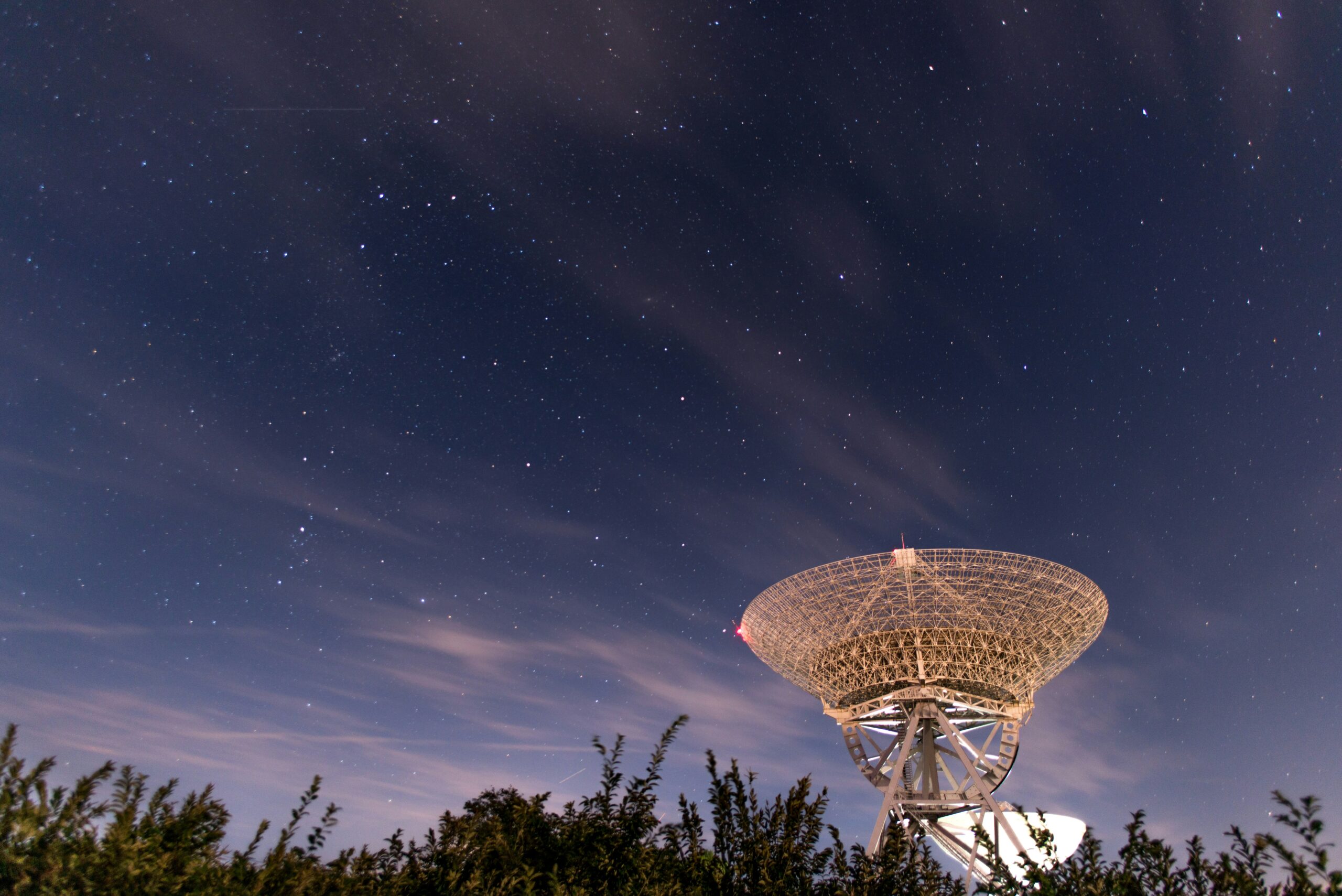
The inky blackness of space, once perceived as an impenetrable veil, is slowly, meticulously, being peeled back. Not with the glint of optical lenses gathering starlight, but with the silent, unseen symphony of radio waves. This profound exploration, the charting of cosmic whispers and roars, is the subject of the captivating documentary, “Unveiling the Universe: A Radio Telescope Documentary.” Through a masterful blend of cutting-edge visuals and the insightful explanations of leading astrophysicists, the film invites audiences on a journey to understand how these colossal instruments have revolutionized our perception of the cosmos.
For centuries, humanity’s understanding of the universe was confined to what the naked eye, and later, optical telescopes, could perceive. The visible light spectrum, a colorful arc of electromagnetic radiation, offered glimpses of stars, nebulae, and galaxies. However, this was akin to listening to a symphony with only one instrument playing. The vast expanse of the universe emits radiation across a much broader spectrum, a tapestry of unseen energies that carry information about phenomena invisible to optical instruments. “Unveiling the Universe” masterfully illuminates this critical concept, revealing that the universe is far more rich and complex than what meets the eye.
The Electromagnetic Spectrum: A Comprehensive Overview
The documentary dedicates significant time to explaining the electromagnetic spectrum, from the energetic gamma rays and X-rays to the more familiar infrared and ultraviolet, and finally, to radio waves. It emphasizes that each portion of the spectrum is a window into different cosmic processes. Gamma rays, for instance, are associated with immense explosions like supernovae and the enigmatic jets emanating from black holes. X-rays reveal the intensely hot gas surrounding galaxy clusters and neutron stars. Infrared light, often associated with heat, allows us to peer through dusty clouds that obscure visible light, revealing nascent star formation. Ultraviolet radiation, while present in visible light, can also be studied to understand energetic processes in young stars and active galactic nuclei.
Different Wavelengths, Different Secrets
The film uses compelling analogies to illustrate the vast differences in wavelengths across the spectrum. A gamma ray might be compared to a fleeting, intense whisper, while a radio wave is a long, resonant hum. This difference in wavelength dictates the type of cosmic phenomena that emit these radiations and the instruments required to detect them. It’s not just about seeing; it’s about listening to the universe in its entirety. The documentary highlights how different wavelengths are produced by distinct physical mechanisms. For example, the synchrotron radiation observed in radio waves is characteristic of high-energy electrons spiraling around magnetic fields, a process common in active galaxies and supernova remnants.
Why Radio Waves? The Unique Advantages
“Unveiling the Universe” then logically segues into the specific advantages of radio astronomy. The film underscores that radio waves are not significantly absorbed or scattered by interstellar dust and gas, which are opaque to visible light. This allows radio telescopes to penetrate regions of the universe that are hidden from optical view, revealing previously unseen structures and phenomena. Furthermore, radio waves are emitted by a wide range of cosmic sources, from the faint afterglow of the Big Bang to the powerful jets of matter ejected by supermassive black holes.
Penetrating the Cosmic Veil of Dust
The documentary employs stunning visualisations to depict how dust clouds, which appear as dark patches in optical images, are transparent to radio waves. This transparency is crucial for understanding star-forming regions, where dense molecular clouds collapse under their own gravity to ignite new stars. Without radio telescopes, these stellar nurseries would remain hidden, their birth processes a mystery. The film showcases observations of the galactic center, a region heavily obscured by dust, where radio telescopes reveal intricate magnetic field structures and the complex dynamics of gas and stars.
The Echo of Creation: The Cosmic Microwave Background
Perhaps the most profound discovery attributed to radio astronomy, and a significant focus of the documentary, is the Cosmic Microwave Background (CMB). The film vividly describes how these faint radio waves, permeating the entire universe, are the residual heat from the Big Bang – an echo of creation itself. This discovery provided crucial evidence for the Big Bang theory and has become an indispensable tool for cosmologists studying the early universe.
In the fascinating world of astronomy, radio telescopes play a crucial role in unraveling the mysteries of the universe. For those interested in learning more about the impact of these remarkable instruments, a related article can be found at this link. This article delves into the advancements in radio telescope technology and highlights significant discoveries that have reshaped our understanding of cosmic phenomena.
The Giants of Observation: Radio Telescopes in Action
The documentary’s title, “Unveiling the Universe,” is intrinsically linked to the monumental instruments that make such exploration possible. It introduces the audience to the awe-inspiring scale and ingenuity of radio telescopes, presenting them not just as scientific tools, but as architectural marvels pushing the boundaries of human engineering. The film showcases a variety of these colossal structures, from single dishes to intricate arrays, highlighting their design and the scientific principles that govern their operation.
Single Dish Telescopes: Iconic and Powerful
The film begins with the iconic single-dish radio telescopes, such as the Arecibo Observatory (prior to its collapse) and the Five-hundred-meter Aperture Spherical Telescope (FAST). It explains how these enormous parabolic dishes collect and focus faint radio waves onto sensitive receivers. The documentary emphasizes the immense engineering challenges involved in constructing and maintaining these structures, often built in remote locations to minimize radio interference. The sheer scale is conveyed through visual comparisons and drone footage that capture the breathtaking grandeur of these instruments against natural landscapes.
The Art of Signal Detection
The process of detecting radio waves is explained in accessible terms, demystifying the sophisticated electronics and signal processing involved. The documentary illustrates how astronomers filter out terrestrial radio interference and amplify the incredibly weak cosmic signals. It addresses the concept of antenna temperature and how it relates to the intensity of the incoming radio waves, providing a quantitative understanding of cosmic brightness.
From Parabolic Dishes to Superconductors: The Evolution of Receivers
The film delves into the evolution of radio receivers, from early, less sensitive technologies to the cutting-edge cryogenic receivers that are now capable of detecting the faintest signals. The use of superconducting materials, which exhibit zero electrical resistance at extremely low temperatures, is highlighted as a critical advancement, enabling unprecedented sensitivity in signal detection. This exploration of technological innovation underscores the constant drive to improve our ability to observe the universe.
Interferometry: Building Virtual Telescopes
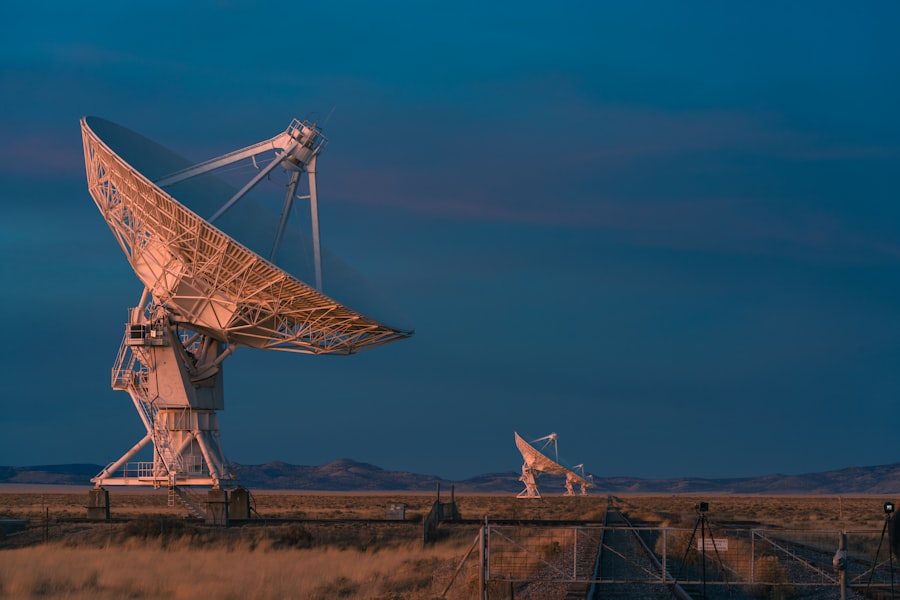
A significant portion of “Unveiling the Universe” is dedicated to the revolutionary technique of radio interferometry. The documentary explains how arrays of smaller radio telescopes, spread across vast distances, can be linked together electronically to create a virtual telescope with the resolving power of a single dish as large as the distance separating the individual telescopes. This concept of achieving incredible resolution by combining data from multiple, geographically dispersed antennas is presented as a key breakthrough in modern radio astronomy.
The Very Long Baseline Interferometry (VLBI)
The film vividly illustrates the principles of Very Long Baseline Interferometry (VLBI), where telescopes separated by thousands of kilometers synchronize their observations, allowing for the creation of incredibly detailed images of distant cosmic objects. The documentary showcases breathtaking VLBI images of quasars and the event horizon of a black hole, demonstrating the power of this technique. The challenges of synchronizing these telescopes with atomic clocks and the complex data processing required are explained, highlighting the collaborative nature of this scientific endeavor.
Linking the Globe for Unprecedented Detail
The documentary emphasizes that VLBI is often a global effort, connecting observatories from different continents. This international collaboration is essential for achieving the highest resolution possible. The film uses animations to show how the signals from individual telescopes are correlated to create a composite image, effectively simulating a telescope the size of the Earth. This global network allows astronomers to resolve details that would be impossible to achieve with any single instrument.
Decoding the Cosmic Language: What Radio Telescopes Reveal
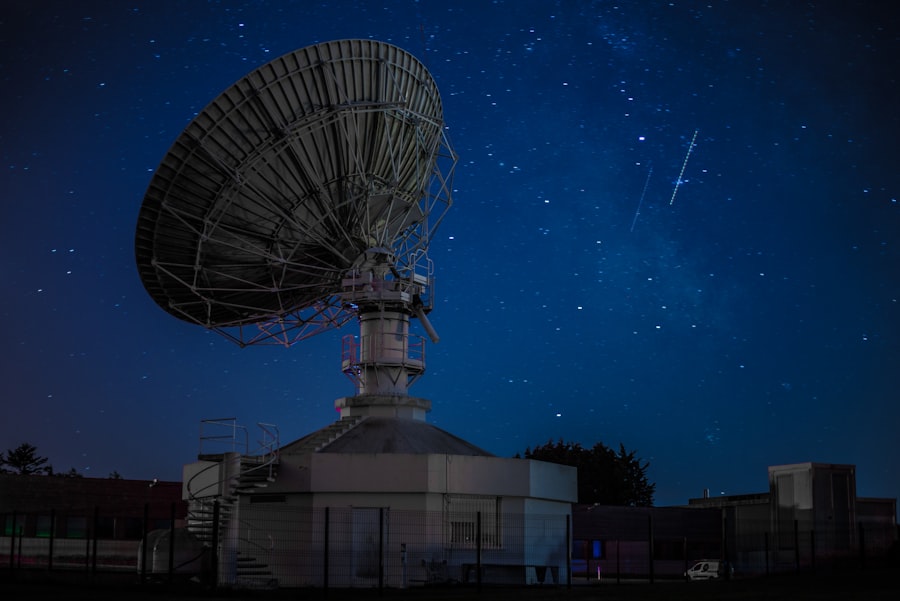
With the foundational concepts of radio waves and telescopes established, “Unveiling the Universe” shifts its focus to the profound scientific discoveries made possible by this observational window. The film presents compelling evidence and illustrative examples of how radio telescopes have reshaped our understanding of cosmic phenomena, from the birth and death of stars to the structure and evolution of galaxies.
In the fascinating realm of astronomical exploration, a recent documentary on radio telescopes sheds light on their pivotal role in unraveling the mysteries of the universe. For those interested in delving deeper into the subject, an insightful article can be found at XFile Findings, which discusses the advancements in radio astronomy and the groundbreaking discoveries made possible by these powerful instruments. This documentary not only highlights the technology behind radio telescopes but also emphasizes their significance in enhancing our understanding of cosmic phenomena.
Mapping the Invisible Threads: Magnetic Fields
One of the key revelations highlighted is the ability of radio telescopes to map magnetic fields in space. The documentary explains how the polarization of radio waves can reveal the direction of these invisible forces. This information is crucial for understanding a wide range of cosmic processes, including the formation of stars and galaxies, and the behavior of matter around black holes. The film showcases images of filamentary structures in galaxy clusters, revealing the complex magnetic field lines that channel hot gas.
The Influence of Magnetic Fields on Stellar Nurseries
The documentary illustrates how magnetic fields play a vital role in the formation of stars within molecular clouds. These fields can regulate the collapse of gas and dust, influencing the rate of star formation and the distribution of stellar masses. The film presents observations of protostars and their surrounding disks, where magnetic fields are believed to play a significant role in channeling material and launching outflows.
The Heart of Galaxies: Supermassive Black Holes
“Unveiling the Universe” dedicates a significant segment to the study of supermassive black holes residing at the centers of most galaxies. Radio telescopes have been instrumental in revealing the energetic outflows, or jets, of plasma that are ejected from these objects. The documentary explains how these jets can have a profound impact on their host galaxies and the intergalactic medium. The stunning imagery of jets emanating from active galactic nuclei, such as M87, is presented as a testament to the power of radio observations.
Witnessing the Unseen: The Event Horizon Telescope
The film prominently features the groundbreaking work of the Event Horizon Telescope (EHT), a global network of radio telescopes that achieved the first-ever image of a black hole’s event horizon. The documentary explains the immense technical challenges involved in this endeavor and showcases the iconic image of M87*, emphasizing its significance as direct visual evidence of these enigmatic celestial objects. The process of imaging the shadow of the black hole against the bright emission from its accretion disk is described, bringing this complex science to life.
From Theory to Image: The Black Hole’s Silhouette
The EHT’s success is presented as a triumph of scientific collaboration and technological innovation. The documentary highlights how decades of theoretical work predicted the appearance of a black hole’s shadow, and how the EHT’s observations have now confirmed these predictions. The film explains the concept of gravitational lensing and how it distorts the light from the accretion disk around the black hole, creating the observed silhouette.
The Dawn of the Universe: Cosmology and the CMB
As mentioned earlier, the Cosmic Microwave Background (CMB) is a cornerstone of modern cosmology, and “Unveiling the Universe” effectively conveys its importance. The film explains how variations in the CMB temperature, detected by radio telescopes like the Planck satellite, provide crucial information about the composition and evolution of the universe. These subtle fluctuations represent the seeds of the large-scale structures we observe today, such as galaxies and galaxy clusters.
Unraveling the Mysteries of Dark Matter and Dark Energy
The documentary explores how radio observations contribute to our understanding of dark matter and dark energy, the enigmatic components that make up the vast majority of the universe’s mass and energy. By studying the gravitational lensing effects that radio waves undergo as they pass through massive structures, astronomers can indirectly probe the distribution of dark matter. Furthermore, the study of the large-scale distribution of galaxies, observed through radio emissions, provides insights into the influence of dark energy.
The Universe’s Expansion: From Redshift to Accelerating Growth
The film explains how radio astronomy contributes to measuring the universe’s expansion rate. By observing the redshift of radio emission from distant galaxies, astronomers can determine their velocity and thus their distances. This data has been crucial in understanding the history of cosmic expansion, including the recent discovery of its acceleration, attributed to dark energy. The documentary carefully navigates these complex cosmological concepts, making them accessible to a general audience.
Beyond Our Galaxy: Exploring the Cosmic Web
The universe is not a uniform expanse but a vast, interconnected network known as the cosmic web, a sprawling structure of galaxies and intergalactic gas. Radio telescopes have played a pivotal role in mapping this intricate architecture, revealing the large-scale distribution of matter and the forces that shape it. “Unveiling the Universe” takes viewers on a journey beyond the confines of our own galaxy, illustrating the immense scale and complexity of the cosmos.
Mapping the Intergalactic Medium
The documentary highlights how radio telescopes can detect and map the intergalactic medium (IGM), the tenuous plasma that fills the space between galaxies. This gas, often invisible to optical telescopes, contains a significant portion of the universe’s baryonic (normal) matter and plays a crucial role in galaxy evolution. By observing 21-cm hydrogen line emission, astronomers can map the distribution of this diffuse gas throughout the cosmic web.
The Ghostly Glow of Hydrogen
The 21-cm line of neutral hydrogen is a significant emission line in the radio spectrum, originating from the spin-flip transition of the hydrogen atom. The documentary explains how this unique spectral signature allows astronomers to trace the distribution of neutral hydrogen on vast cosmological scales, providing a detailed map of the IGM. This “ghostly glow” of hydrogen is a key tracer of the cosmic web.
Proto-Galactic Clouds and the Formation of Structures
The film showcases how observations of the 21-cm line in the early universe have revealed the existence of large, diffuse clouds of neutral hydrogen that eventually collapsed to form the first galaxies. These proto-galactic clouds are the building blocks of the cosmic web, and their study through radio astronomy allows us to understand the initial conditions that led to the formation of the structures we see today.
Galaxies in Collision and Mergers
Radio observations are essential for understanding the dynamic processes of galactic interactions, including collisions and mergers. The documentary illustrates how these events can trigger bursts of star formation, fuel supermassive black holes, and reshape the morphology of galaxies. The energetic radio emissions from these violent cosmic encounters provide valuable insights into their evolutionary pathways.
The Fuel of Cosmic Evolution
The film presents examples of interacting galaxies, such as the Antennae Galaxies, where radio observations reveal intense starburst activity and powerful outflows of gas. These interactions are not just spectacular events but are fundamental drivers of cosmic evolution, shaping the properties and evolution of galaxies over billions of years. The radio emission traces the distribution of gas and the sites of newly formed stars, providing a comprehensive view of these cosmic dramas.
The Future of Radio Astronomy: Next-Generation Observatories
“Unveiling the Universe” concludes by looking towards the future, highlighting the ambitious projects and next-generation observatories that are poised to push the boundaries of radio astronomy even further. The documentary introduces concepts like the Square Kilometre Array (SKA), a colossal project that will have an unprecedented collecting area and sensitivity, promising to unlock even deeper mysteries of the cosmos.
Pushing the Limits of Sensitivity and Resolution
The film emphasizes how future observatories will offer orders-of-magnitude improvements in sensitivity and resolution, enabling astronomers to detect fainter signals and resolve finer details. This will allow for a more comprehensive understanding of the early universe, the nature of dark matter and dark energy, and the search for extraterrestrial intelligence. The SKA, with its thousands of antennas spread across multiple continents, is presented as the ultimate tool for this endeavor.
Searching for Extraterrestrial Intelligence (SETI) with Radio Waves
The documentary touches upon the role of radio telescopes in the Search for Extraterrestrial Intelligence (SETI). While not the primary focus, it acknowledges the ongoing efforts to detect potential technosignatures – signals that may indicate the presence of advanced civilizations. The vastness of the radio spectrum and the possibility of alien communication through radio waves make this a compelling area of research, and future radio telescopes will significantly enhance our capabilities in this quest.
“Unveiling the Universe: A Radio Telescope Documentary” is more than just a film; it is an invitation to perceive the cosmos with new senses. It demystifies complex scientific concepts, celebrates human ingenuity, and leaves the audience with a profound sense of wonder at the universe’s hidden symphony, patiently waiting to be heard by the giants listening in the silence. The unseen spectrum, once a mystery, is now being meticulously charted, revealing a universe far more dynamic, complex, and awe-inspiring than ever imagined.

They Reopened the Wow! Signal After 48 Years—Here’s What Changed
FAQs
What is a radio telescope?
A radio telescope is a specialized antenna and receiver system designed to detect radio waves from astronomical sources. It is used to study celestial objects and phenomena that emit radio waves, such as pulsars, quasars, and galaxies.
How does a radio telescope work?
Radio telescopes work by collecting and amplifying radio waves from space using a large dish or array of dishes. The collected radio waves are then converted into electrical signals, which are processed and analyzed to create images and data about the radio sources.
What are some famous radio telescopes around the world?
Some famous radio telescopes around the world include the Arecibo Observatory in Puerto Rico, the Green Bank Telescope in West Virginia, the Parkes Observatory in Australia, and the Very Large Array in New Mexico.
What can we learn from radio telescope observations?
Radio telescope observations can provide valuable information about the composition, structure, and behavior of celestial objects and phenomena. They can also help scientists study the formation and evolution of galaxies, the nature of black holes, and the origins of the universe.
Are there any documentaries about radio telescopes?
Yes, there are several documentaries about radio telescopes that explore their history, technology, and the groundbreaking discoveries they have made. These documentaries often feature interviews with astronomers, engineers, and other experts in the field.