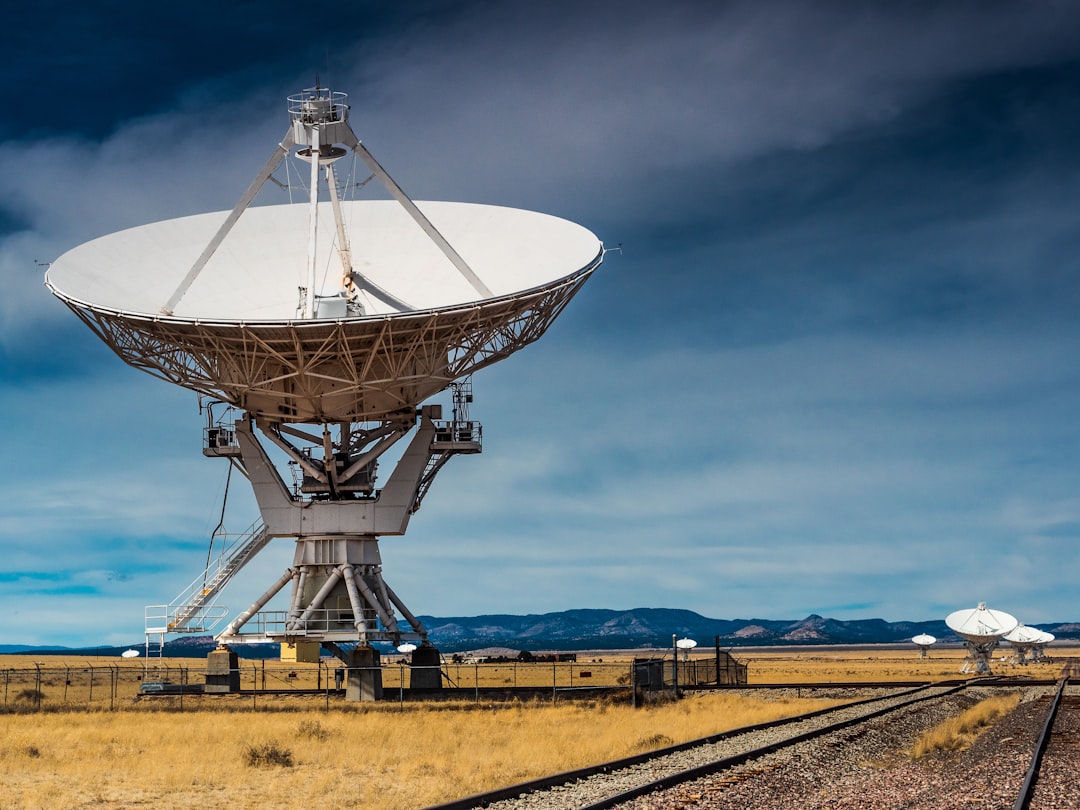
The cosmos, a vast and enigmatic expanse, whispers its secrets not just in light, but in a symphony of invisible waves. For centuries, humanity’s gaze was limited to the visible spectrum, a mere sliver of the universe’s true nature. The advent of radio telescopes revolutionized our understanding, allowing us to “hear” the universe in a way previously unimagined. These colossal instruments, often out in remote, quiet locations, are not merely visual observers; they are sophisticated ears, tuned to the faint radio emissions that permeate interstellar space. This article will delve into the fascinating world of radio astronomy, uncovering how these remarkable devices capture and interpret the universe’s radio whispers.
The electromagnetic spectrum, a continuum of all electromagnetic radiation, encompasses a mind-boggling range of wavelengths and frequencies. From the high-energy gamma rays and X-rays to the more familiar visible light and the low-energy radio waves, each part of this spectrum carries information about cosmic phenomena. While optical telescopes feast on visible light, offering glimpses of stars, galaxies, and nebulae as we perceive them, a significant portion of the universe’s most crucial events occur in wavelengths our eyes cannot detect. Radio waves, with their long wavelengths, are particularly adept at penetrating the cosmic dust and gas clouds that often obscure visible light. This allows radio telescopes to peer into regions of star formation, the hearts of distant galaxies, and the remnants of exploding stars that would otherwise remain hidden.
Radio Waves: Humble Beginnings, Profound Discoveries
The journey of radio astronomy began with a serendipitous discovery. In the early 20th century, Karl Jansky, a scientist at Bell Telephone Laboratories, detected faint radio signals emanating from the direction of the Milky Way. Initially, he believed these signals were from a nearby source, but meticulous observation revealed their celestial origin. This groundbreaking observation, published in 1933, marked the birth of radio astronomy and opened a new window onto the universe. Jansky’s pioneering work laid the foundation for the development of increasingly sophisticated radio telescopes, each step revealing more about the universe’s hidden radio emissions.
Penetrating the Veil: The Advantages of Radio Astronomy
- Overcoming Obstructions: Unlike visible light, which is easily scattered or absorbed by interstellar dust and gas, radio waves can travel unimpeded through these cosmic veils. This allows radio telescopes to observe regions rich in star formation or the cores of galaxies where dust is abundant.
- Detecting Non-Thermal Emission: Many celestial objects emit radio waves through non-thermal processes, such as synchrotron radiation produced by charged particles moving in magnetic fields. These emissions are often invisible in optical light but are readily detectable by radio telescopes, providing insights into energetic phenomena like pulsars and active galactic nuclei.
- Exploring the Cold Universe: The universe is not just filled with hot, luminous objects. Much of the matter, particularly in the form of cold atomic and molecular hydrogen gas, exists at very low temperatures. This cold gas is a major component of galaxies and is crucial for star formation, but it emits primarily in the radio spectrum, making radio telescopes essential for studying these fundamental constituents.
Radio telescopes are fascinating instruments that allow astronomers to study celestial objects by detecting radio waves emitted from them. These telescopes work by using large parabolic dishes to collect and focus radio waves onto a receiver, which then converts the signals into data that can be analyzed. For a deeper understanding of the principles behind radio telescopes and their applications in modern astronomy, you can read the related article at XFile Findings.
The Anatomy of a Radio Telescope: Ears of the Cosmos
At its core, a radio telescope is designed to capture faint radio waves from space and convert them into analyzable data. The most iconic feature is its dish, a large, parabolic reflector that collects and focuses incoming radio waves onto a central receiver. However, the “ear” extends far beyond the dish itself, encompassing a sophisticated array of components working in concert to amplify, process, and record these ethereal signals.
The Parabolic Reflector: The Cosmic Funnel
The parabolic shape of the dish is critical. It functions like a giant lens or mirror, gathering radio waves from a wide area of the sky and concentrating them onto a single focal point. The larger the diameter of the dish, the more radio waves it can collect, and therefore, the fainter the signals it can detect. This is why many radio telescopes are enormous, spanning hundreds of meters in diameter. The surface of the dish must be incredibly smooth to accurately reflect the long wavelengths of radio waves. Even minor imperfections can distort the incoming signals. While for optical telescopes, smoothness on the order of nanometers is required, for radio telescopes, the tolerance is much more relaxed, typically on the order of millimeters or centimeters, depending on the wavelength being observed. This allows for the construction of much larger dishes, made from materials like metal mesh rather than solid surfaces, significantly reducing cost and weight.
Types of Dishes:
- Solid Dishes: Used for shorter radio wavelengths, these dishes have a continuous, solid surface, constructed from materials like aluminum or composite structures. Examples include the Green Bank Telescope and the Effelsberg 100-meter Telescope.
- Mesh Dishes: For longer radio wavelengths, where the wavelength is larger than the holes in the mesh, precise surface accuracy is less critical. These dishes are made of wire mesh, allowing wind to pass through, reducing structural stress and cost. The Lovell Telescope and the Arecibo Observatory (before its collapse) utilized mesh designs.
The Receiver and Feed Horn: Capturing the Whispers
At the focal point of the parabolic dish sits the receiver, often housed in a “feed horn.” This component is analogous to the eardrum and auditory nerve in a biological ear. It is designed to capture the focused radio waves and convert them into an electrical signal. The receiver’s sensitivity is paramount, as cosmic radio signals are incredibly weak, often millions or billions of times fainter than the signal from a local radio station. Modern receivers employ sophisticated low-noise amplifiers to boost these faint signals without adding significant noise of their own. The type of receiver used depends on the specific radio frequencies being observed.
Specialized Receivers for Different Frequencies:
- Superconducting Receivers: For the faint signals in the millimeter and submillimeter range, superconducting receivers, cooled to near absolute zero, offer unparalleled sensitivity.
- Masers: Microwave Amplification by Stimulated Emission of Radiation (MASER) amplifiers are used to boost very weak microwave signals.
- Cryogenic Amplifiers: Cooling receivers to very low temperatures significantly reduces thermal noise, improving their sensitivity. Many modern radio telescopes employ liquid helium or nitrogen cooling systems for their receivers.
The Control and Data Acquisition System: Translating the Signals
Once the radio waves are converted into an electronic signal, they are fed into a complex system of amplifiers, filters, and digital converters. This system amplifies the signal further, isolates specific frequencies of interest, and converts the analog electrical signal into digital data that computers can process. The data acquisition system is responsible for recording this digital information, along with precise timing and positional information, allowing astronomers to reconstruct where in the sky the signal originated and when. The sheer volume of data generated by radio telescopes is immense, requiring sophisticated data processing techniques and vast storage capabilities.
The Role of Computing:
- Signal Processing: Powerful computers are used to filter out terrestrial interference, such as television and mobile phone signals, which can easily overwhelm faint cosmic signals.
- Data Archiving and Analysis: The raw data is archived for future study, and sophisticated software is used by astronomers to analyze the signals, extract scientific information, and create images of the radio sky.
- Interferometry Control: For arrays of telescopes, computers orchestrate the precise timing and phase of the signals from each individual telescope.
Locating the Ears: Why are Radio Telescopes in Remote Places?

The universe may be vast, but the Earth is a noisy planet. Terrestrial radio transmissions – from television, radio broadcasts, mobile phones, Wi-Fi, and even microwave ovens – create a cacophony of radio waves that can easily drown out the faint whispers from distant celestial objects. To achieve the necessary sensitivity and clarity, radio telescopes are strategically located in radio quiet zones, far from major population centers and sources of human-generated radio interference.
Minimizing Terrestrial Interference:
- Geographical Isolation: Large deserts, mountaintops, or valleys are often chosen for their natural shielding from radio “noise.” The Atacama Desert in Chile, for example, boasts extremely low radio interference due to its arid climate and remote location.
- Radio Silence Regulations: Many radio telescope sites are designated as “radio quiet zones” by government regulations. This restricts or prohibits certain types of radio transmissions within a specified radius of the telescope, creating a sanctuary for astronomical observation.
- Shielding and Filtering: Even in remote locations, the telescope itself and its surrounding infrastructure may incorporate shielding to further minimize any residual terrestrial interference. Advanced digital filtering techniques are also employed during data processing to remove known interference patterns.
Atmospheric Considerations:
- Dry Climates: Water vapor in the atmosphere strongly absorbs certain radio wavelengths, particularly in the millimeter and submillimeter range. Therefore, locations with dry climates, like high-altitude deserts, are preferred for observatories targeting these frequencies.
- Stable Atmospheric Conditions: While less critical than for optical telescopes, stable atmospheric conditions are still beneficial for radio observations, as they minimize fluctuations that can affect signal reception.
Listening to the Cosmos: Techniques and Discoveries

Radio telescopes are not just passive listeners; they are active explorers, employing various techniques to probe the universe and unveil its hidden wonders. From single, giant dishes to vast arrays of interconnected telescopes, each method offers unique capabilities for deciphering the cosmic radio landscape. The discoveries made have reshaped our understanding of cosmic evolution, from the birth of stars to the enigmatic nature of dark matter.
Single Dish Telescopes: The Pioneers
The earliest radio telescopes were single-dish instruments. These are still vital for certain types of observations, particularly those requiring high sensitivity to faint, extended sources or for tracking transient phenomena. Their simplicity of operation and calibration makes them reliable workhorses in the radio astronomy arsenal.
Strengths and Limitations:
- High Sensitivity: A large single dish can collect a significant amount of radio waves, making it ideal for detecting very faint sources.
- Wide Field of View (relatively): Compared to interferometers with limited baselines, single dishes can survey larger areas of the sky more efficiently for certain tasks.
- Limited Resolution: The resolving power of a telescope – its ability to distinguish fine details – is fundamentally limited by its diameter and the wavelength of observation. For a single dish, achieving high resolution requires an impractically massive diameter.
Radio Interferometry: The Power of Collaboration
To overcome the resolution limitations of single dishes, astronomers developed radio interferometry. This technique involves using multiple radio telescopes, spread out over a significant distance, to observe the same celestial object simultaneously. The data from each telescope is then combined and processed using sophisticated algorithms, effectively creating a single, virtual telescope with a diameter equivalent to the largest separation between any two dishes in the array. This allows for incredibly high angular resolution, enabling astronomers to see finer details than even a single, impossibly large dish could achieve.
The Magic of Combining Signals:
- Long Baselines, High Resolution: The greater the distance between the individual telescopes (the “baseline”), the higher the resolution that can be achieved. This is why interferometers are often spread across continents or even the globe.
- Phase Synthesis: The core principle of interferometry is to combine the radio waves received by each telescope. By precisely measuring and accounting for the slight differences in arrival time and phase of the signals at each dish, astronomers can reconstruct a detailed image of the radio source.
- Examples of Interferometers: The Very Large Array (VLA) in New Mexico, the Atacama Large Millimeter/submillimeter Array (ALMA) in Chile, and the global Event Horizon Telescope (EHT) are prime examples of sophisticated radio interferometers that have made groundbreaking discoveries.
Spectral Line Observations: Fingerprints of the Universe
Just as elements in chemistry emit and absorb light at specific wavelengths, atoms and molecules in space emit and absorb radio waves at characteristic frequencies. These specific frequencies are known as “spectral lines.” By observing these spectral lines, radio astronomers can identify the chemical composition of celestial objects, their temperature, density, and even their velocity through space. This technique is crucial for studying the composition of interstellar gas clouds, the atmospheres of planets, and the dynamics of galaxies.
Decoding the Cosmic Chemical Language:
- Hydrogen: The Universe’s Most Abundant Element: The 21-centimeter line of neutral hydrogen, a faint but ubiquitous radio emission, is a cornerstone of radio astronomy. It allows astronomers to map the distribution of hydrogen gas throughout galaxies and the intergalactic medium, providing insights into the large-scale structure of the universe and galaxy evolution.
- Molecular Clouds and Star Formation: Radio astronomers can detect spectral lines from various molecules, such as carbon monoxide (CO), which are abundant in cold, dense molecular clouds. These are the birthplaces of stars, and studying their molecular composition and dynamics helps us understand the process of star formation.
- Doppler Shift for Velocity: The Doppler effect causes spectral lines to shift in frequency if the source is moving towards or away from us. By measuring this shift, astronomers can determine the radial velocity of celestial objects, revealing their motion through the cosmos.
Radio telescopes are fascinating instruments that allow astronomers to observe celestial objects by detecting radio waves emitted from them. These telescopes work by using large parabolic dishes to collect and focus radio signals onto a receiver, which then converts the signals into data that can be analyzed. For a deeper understanding of the principles behind radio telescopes and their applications in modern astronomy, you can explore this related article on the topic. If you’re interested in learning more, check out this informative resource.
Unveiling Cosmic Mysteries: What Radio Telescopes Show Us
| Component | Function |
|---|---|
| Antenna | Receives radio waves from space |
| Receiver | Converts radio waves into electrical signals |
| Amplifier | Increases the strength of the electrical signals |
| Detector | Converts the electrical signals into data |
| Computer | Processes and analyzes the data |
The contributions of radio astronomy to our understanding of the universe are immeasurable. From mapping the faintest structures to studying the most energetic events, radio telescopes have provided critical evidence and insights that have revolutionized astrophysics. Their ability to probe previously hidden aspects of the cosmos has unveiled phenomena that challenge our preconceptions and deepen our awe.
The Galactic Center: A Black Hole’s Realm
The center of our Milky Way galaxy is a profoundly active and mysterious region, obscured from visible light by vast clouds of dust and gas. Radio telescopes, however, can penetrate this veil, revealing the supermassive black hole at the galaxy’s core, known as Sagittarius A*. Radio observations have mapped the orbits of stars around this black hole, providing compelling evidence for its existence and mass. They have also detected powerful radio jets emanating from the vicinity of the black hole, indicating the ongoing accretion of matter.
Pulsars: Cosmic Lighthouses with Extreme Properties
Pulsars are rapidly rotating neutron stars that emit beams of radio waves. As these beams sweep across Earth, they are detected as regular pulses, much like a lighthouse beam. Radio telescopes were instrumental in their discovery and continue to study them. Observations of pulsars have provided crucial tests for Einstein’s theory of general relativity, allowed for the precise measurement of fundamental constants, and even contributed to the search for gravitational waves. The extreme density and magnetic fields within neutron stars make them laboratories for physics under conditions not reproducible on Earth.
The Cosmic Microwave Background: Echoes of the Big Bang
The Cosmic Microwave Background (CMB) is a faint, uniform glow of microwave radiation that permeates the entire universe. It is considered the afterglow of the Big Bang, the residual heat from the universe’s earliest moments. Radio telescopes, particularly those sensitive to microwave frequencies, have played a pivotal role in mapping the CMB with exquisite detail. These maps reveal tiny temperature fluctuations that represent the seeds from which all the structure in the universe, including galaxies and galaxy clusters, eventually grew. Studying the CMB has provided strong support for the Big Bang model and has allowed scientists to determine fundamental cosmological parameters such as the age, composition, and geometry of the universe.
Distant Galaxies and Cosmic Evolution: A Radio Snapshot
Radio observations allow astronomers to study the formation and evolution of galaxies across cosmic time. Many distant galaxies, particularly those in the early universe, are shrouded in dust. Radio waves can pierce this veil, revealing star formation rates, the presence of active supermassive black holes at their centers, and their overall structure. Understanding the radio emission from these ancient galaxies helps us piece together the complex history of cosmic structure formation and evolution, from the first stars and galaxies to the vast cosmic web we observe today.
In conclusion, radio telescopes are not just scientific instruments; they are invaluable tools that have expanded our perception of the universe. They have allowed us to listen to the whispers of creation, the echoes of ancient events, and the ongoing symphony of cosmic activity. As technology continues to advance, future generations of radio telescopes, with even greater sensitivity and resolution, will undoubtedly unveil even more profound secrets of the cosmos, further illuminating our place within its grand and awe-inspiring tapestry.

They Reopened the Wow! Signal After 48 Years—Here’s What Changed
FAQs
What is a radio telescope?
A radio telescope is a specialized antenna and receiver system designed to detect radio waves from astronomical sources in space. It is used to study celestial objects and phenomena such as pulsars, quasars, galaxies, and the cosmic microwave background.
How do radio telescopes work?
Radio telescopes work by collecting and amplifying radio waves from space using a large dish or array of dishes. The collected radio waves are then converted into electrical signals, which are processed and analyzed to create images and data about the celestial objects being observed.
What are the key components of a radio telescope?
The key components of a radio telescope include the dish or array of dishes, a receiver to detect and amplify the radio waves, a computer system for data processing and analysis, and a control system to point and track celestial objects.
What are the advantages of using radio telescopes in astronomy?
Radio telescopes have several advantages in astronomy, including the ability to observe celestial objects and phenomena that emit radio waves, such as pulsars and quasars. They can also penetrate through dust and gas in space, allowing astronomers to study regions that are not visible in optical light.
Where are some of the largest radio telescopes located?
Some of the largest radio telescopes in the world are located at observatories such as the Arecibo Observatory in Puerto Rico, the Green Bank Observatory in West Virginia, and the Very Large Array in New Mexico. Additionally, there are radio telescopes located in other countries, such as the Parkes Observatory in Australia and the Effelsberg 100-m Radio Telescope in Germany.