The vast expanse of the cosmos, a tapestry woven with countless stars, galaxies, and nebulae, has long captivated the human imagination. For millennia, our understanding of this celestial realm was limited to what the naked eye or the early, rudimentary telescopes could reveal: the positions and apparent brightness of distant objects. However, a revolutionary tool emerged, unlocking an unprecedented depth of knowledge and transforming astronomy from a descriptive science into a powerful analytical one. This tool is spectroscopy, the science of analyzing light to understand its constituent wavelengths. Through the meticulous dissection of starlight, astronomers have been able to unveil the universe in ways previously unimaginable, revealing its composition, temperature, motion, and even its very origins.
At its core, spectroscopy relies on the fundamental properties of light. Light, as we perceive it, is a form of electromagnetic radiation, characterized by its wavelength. Visible light, the portion our eyes can detect, ranges from the deep reds with longer wavelengths to the vibrant violets with shorter wavelengths. However, the electromagnetic spectrum extends far beyond what is visible, encompassing radio waves, microwaves, infrared radiation, ultraviolet light, X-rays, and gamma rays, each with its unique wavelength and energy.
The Birth of Spectroscopy: Newton’s Prism
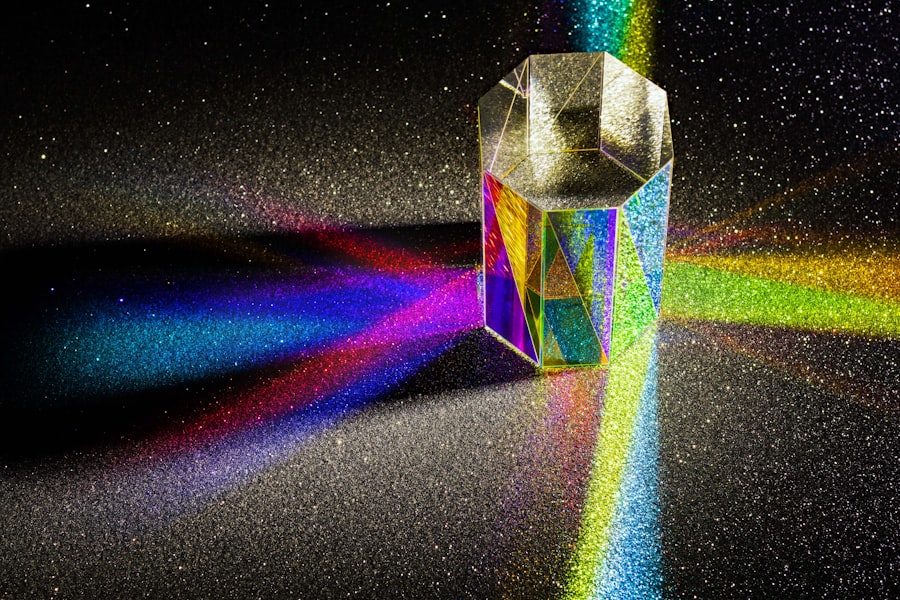
The foundational principles of spectroscopy were first demonstrated by Sir Isaac Newton in the 17th century. Through a series of elegant experiments, Newton showed that white light, when passed through a prism, is dispersed into its constituent colors, forming a continuous band of hues known as a spectrum. This initial observation, while seemingly simple, revealed that white light is not a pure entity but rather a composite of different colors, each corresponding to a specific wavelength.
Beyond the Visible: The Electromagnetic Spectrum
While Newton’s experiments focused on visible light, the understanding of the electromagnetic spectrum broadened considerably in the 19th century with the work of scientists like James Clerk Maxwell, who formulated the theory of electromagnetism, and Heinrich Hertz, who experimentally proved the existence of electromagnetic waves. This expanded understanding revealed that celestial objects emit radiation across the entire electromagnetic spectrum, not just in the visible wavelengths. Consequently, telescopes designed to detect these different forms of radiation, from radio telescopes to X-ray observatories, have become indispensable tools for modern astronomy, each providing a unique perspective on the universe.
The Interaction of Light and Matter: Absorption and Emission
The key to unlocking the secrets held within light lies in how matter interacts with it. When light passes through a gas, certain wavelengths can be absorbed by the atoms and molecules within that gas. This absorption creates dark lines within the continuous spectrum, known as absorption lines. Conversely, when atoms or molecules are excited, they can emit light at specific wavelengths, producing bright lines in the spectrum, called emission lines. These absorption and emission lines are unique fingerprints for each element and molecule, acting as cosmic bar codes that reveal the chemical composition of celestial objects.
In the fascinating realm of astronomy, spectroscopy plays a crucial role in understanding the composition and behavior of celestial bodies. For those interested in delving deeper into this topic, a related article can be found at this link, which explains how spectroscopy is utilized to analyze the light emitted or absorbed by stars and galaxies. This technique not only reveals the chemical makeup of these astronomical entities but also provides insights into their temperatures, densities, and motion through space.
Decoding the Cosmic Fingerprints: Types of Spectra
The patterns of these absorption and emission lines are not random; they are intrinsically linked to the physical conditions of the source of the light and the intervening material. By carefully analyzing these spectral patterns, astronomers can deduce a wealth of information about the universe.
Continuous Spectra: The Background Glow
A continuous spectrum is a spectrum that contains all wavelengths of light within a given range, appearing as a smooth, unbroken band of colors. Hot, dense objects, such as the interiors of stars or incandescent solids, emit continuous spectra. The peak wavelength of this continuous spectrum is directly related to the object’s temperature, a principle known as Wien’s Displacement Law. A hotter object will emit light with a shorter peak wavelength, shifting towards the blue end of the visible spectrum and even into ultraviolet. Conversely, cooler objects will have a peak wavelength further into the red or infrared.
Emission Spectra: The Signature of Excited Gas
An emission spectrum is characterized by a series of discrete, bright lines at specific wavelengths, against a dark background. This occurs when a gas is heated or energized, causing its atoms to emit photons at characteristic wavelengths as their electrons transition from higher to lower energy levels. Emission nebulae, the birthplace of stars, are excellent examples of objects that display emission spectra. The vibrant colors seen in images of these nebulae are precisely the emitted light from various ionized elements, each contributing its unique spectral signature.
Absorption Spectra: The Shadows of Elements
An absorption spectrum, as mentioned earlier, is a continuous spectrum with dark lines superimposed at specific wavelengths. These dark lines arise when light from a continuous source, such as a star’s core, passes through a cooler gas. The atoms in the cooler gas absorb photons at their characteristic wavelengths, effectively removing those colors from the light. This creates the dark absorption lines. The Sun’s spectrum, for instance, is an absorption spectrum, revealing the presence of hydrogen, helium, and various other elements in its cooler outer atmosphere.
Unveiling Stellar Secrets: Spectroscopy’s Role in Stellar Astronomy
Stars, the most fundamental building blocks of galaxies, have been a primary focus of spectroscopic analysis since the inception of the field. The light emanating from these distant furnaces carries a wealth of information about their nature, evolution, and the processes occurring within them.
Determining Stellar Composition: The Periodic Table in the Sky
The presence and relative abundance of absorption lines in a star’s spectrum provide a direct measure of its chemical composition. By comparing the observed spectral lines to known spectral lines of elements on Earth, astronomers can identify which elements are present in a star and in what quantities. This has revealed that stars are primarily composed of hydrogen and helium, with trace amounts of heavier elements, often referred to as “metals” by astronomers, regardless of their location in the universe.
Measuring Stellar Temperature: The Color of Heat
The peak wavelength of a star’s continuous spectrum, as dictated by Wien’s Law, is a powerful indicator of its surface temperature. Hotter stars emit more blue light and are therefore perceived as bluish-white, while cooler stars emit more red light and appear reddish. Spectroscopy provides a precise, quantitative measure of this temperature, allowing astronomers to classify stars into spectral types (O, B, A, F, G, K, M) which are ordered by decreasing temperature. Our Sun, for example, is a G-type star with a surface temperature of around 5,778 Kelvin.
Stellar Motion: The Doppler Effect in Action
One of the most profound applications of spectroscopy is the measurement of stellar motion through space. This is achieved by observing the Doppler effect, a phenomenon where the wavelength of light from an object changes depending on its motion relative to the observer. If a star is moving towards Earth, its spectral lines will be shifted towards shorter wavelengths (blueshift). If it is moving away, its spectral lines will be shifted towards longer wavelengths (redshift). The magnitude of this shift directly indicates the star’s radial velocity – its speed towards or away from us. This discovery, initially made by Christian Doppler, revolutionized our understanding of galactic dynamics and the expansion of the universe.
Redshift and Blueshift: Cosmic Velocity Indicators
The redshift observed in the spectra of distant galaxies is a cornerstone of the Big Bang theory. It indicates that these galaxies are moving away from us, and the farther away they are, the faster they are receding. This observation, made by Edwin Hubble, provided the first strong evidence for the expansion of the universe. Conversely, blueshifted objects are moving towards us. Analyzing these shifts allows astronomers to map the intricate movements of stars within galaxies and the motions of galaxies within galaxy clusters.
Stellar Rotation: The Smearing of Spectral Lines
The rotation of a star can also be detected spectroscopically. As a star rotates, one side is moving towards us, and the other side is moving away. This causes the light emitted from the rotating star to be Doppler-shifted on either side. The light from the approaching side is blueshifted, and the light from the receding side is redshifted. When these shifted wavelengths are superimposed on the overall spectrum, it results in a broadening or smearing of the spectral lines. The faster the star rotates, the more pronounced this broadening becomes.
Beyond Stars: Spectroscopy’s Reach Across the Cosmos
The utility of spectroscopy extends far beyond individual stars. It has become an indispensable tool for studying a vast array of celestial objects, from the nebulae where stars are born to the supermassive black holes that power quasars.
Nebulae and Interstellar Medium: The Cradle of Stars
Spectroscopy plays a crucial role in understanding the composition, temperature, and density of nebulae and the interstellar medium – the gas and dust that fills the space between stars. Emission nebulae, rich in ionized gases, exhibit distinct emission lines that reveal the presence of elements like hydrogen, oxygen, and nitrogen, and provide clues about the energy sources heating these gases, often young, hot stars embedded within them. Analyzing the absorption lines in the light from background stars passing through the interstellar medium allows astronomers to probe its composition and structure.
Galaxies: The Grand Assemblages of Stars
When applied to entire galaxies, spectroscopy allows astronomers to determine their overall composition, their dominant stellar populations, and their internal motions. By observing the integrated light from a galaxy, astronomers can deduce the average properties of its stars. Furthermore, by analyzing the Doppler shifts of spectral lines from different parts of a galaxy, they can map its rotation curve, revealing the distribution of mass within it, and providing evidence for the existence of dark matter.
Exoplanets: Searching for Habitable Worlds
In recent decades, spectroscopy has become a vital tool in the search for exoplanets – planets orbiting stars beyond our solar system. While directly imaging exoplanets is challenging, their presence can often be inferred through their gravitational influence on their host star, causing the star to “wobble.” This wobble can be detected by observing the Doppler shift in the star’s spectrum. Even more excitingly, as an exoplanet passes in front of its star (a transit), some of the starlight filters through the planet’s atmosphere. By analyzing the absorption lines in this filtered light, astronomers can probe the composition of the exoplanet’s atmosphere, searching for biomarkers like oxygen or methane, potential indicators of life.
Cosmology: The Big Picture of the Universe
Spectroscopy is fundamental to our understanding of cosmology, the study of the origin and evolution of the universe. The redshift of distant galaxies, as discussed earlier, is the primary evidence for the expansion of the universe and the Big Bang. By studying the spectra of the earliest and most distant objects, astronomers can probe the conditions of the early universe, the formation of the first stars and galaxies, and the evolution of cosmic structures over billions of years. The cosmic microwave background radiation, the afterglow of the Big Bang, also exhibits a near-perfect blackbody spectrum, a crucial piece of evidence supporting the Big Bang model.
In the fascinating realm of astronomy, spectroscopy plays a crucial role in understanding the composition and behavior of celestial bodies. By analyzing the light emitted or absorbed by stars and galaxies, astronomers can decipher their chemical makeup and physical properties. For those interested in delving deeper into this topic, a related article can be found at XFile Findings, which explores the various applications of spectroscopy in modern astronomical research. This resource provides valuable insights into how light serves as a powerful tool for unlocking the mysteries of the universe.
The Technology Behind the Cosmic Gaze: Spectrographs and Telescopes
| Concept | Definition |
|---|---|
| Spectroscopy | The study of the interaction between matter and electromagnetic radiation, used in astronomy to analyze the light emitted or absorbed by celestial objects. |
| Spectral Lines | Specific wavelengths of light that are emitted or absorbed by atoms and molecules, providing information about the composition and physical properties of celestial objects. |
| Redshift | The displacement of spectral lines towards longer wavelengths, indicating that an object is moving away from the observer, commonly used to measure the expansion of the universe. |
| Stellar Classification | The categorization of stars based on their spectral characteristics, providing insights into their temperature, luminosity, and evolutionary stage. |
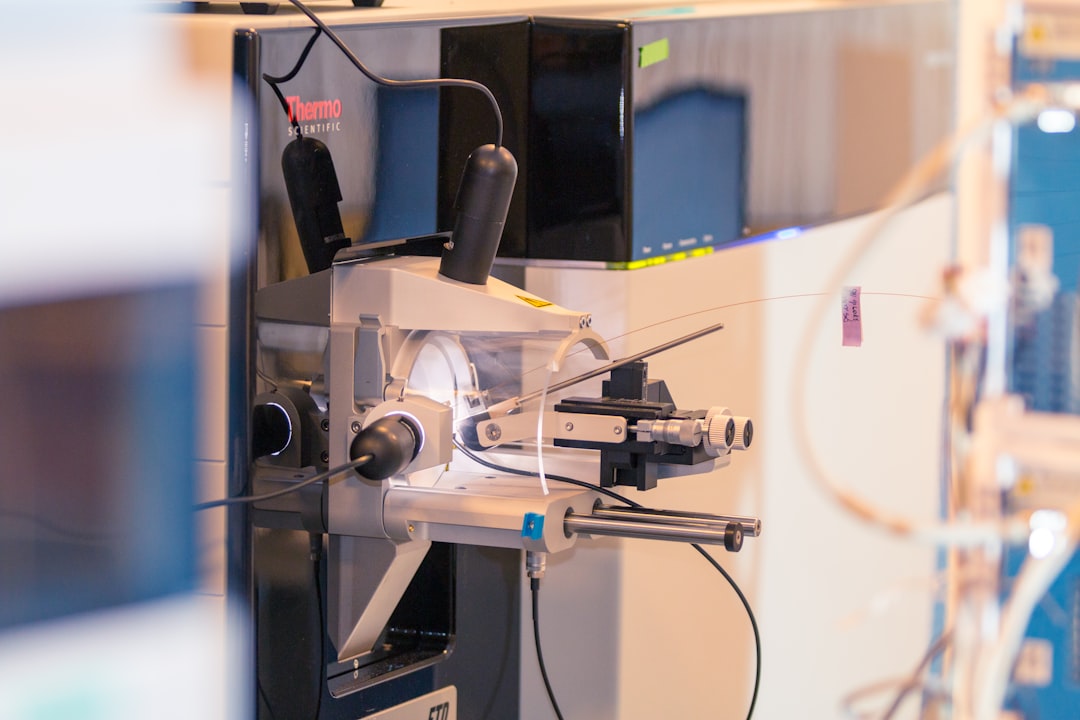
The ability to perform detailed spectroscopic analysis relies on sophisticated instrumentation. The heart of spectroscopic observation is the spectrograph, an instrument that disperses light into its constituent wavelengths.
The Spectrograph: Dissecting Starlight
A spectrograph typically employs a dispersive element, such as a prism or a diffraction grating, to separate light into its component wavelengths. A prism bends light based on its wavelength, with shorter wavelengths being bent more than longer ones. A diffraction grating, on the other hand, consists of a surface with a large number of finely spaced parallel lines. When light strikes the grating, it is diffracted at different angles depending on its wavelength, effectively spreading the light into a spectrum. The dispersed light is then captured by detectors, such as charge-coupled devices (CCDs), which record the intensity of light at each wavelength.
The Telescope: The Cosmic Light Collector
Telescopes play a crucial role in spectroscopy by gathering the faint light from distant celestial objects. The larger the aperture of a telescope, the more light it can collect, enabling the observation of fainter and more distant objects, and the detection of weaker spectral features. Modern astronomical observatories utilize a range of telescopes, from ground-based optical telescopes equipped with advanced spectrographs to space-based observatories that can observe in wavelengths that are absorbed by Earth’s atmosphere, such as ultraviolet, X-ray, and gamma-ray telescopes.
Adaptive Optics and Space Telescopes: Sharpening the View
Ground-based telescopes can be limited by the blurring effects of Earth’s atmosphere, which can degrade the quality of spectral data. Adaptive optics systems are employed to counteract these atmospheric distortions by using deformable mirrors to rapidly adjust the telescope’s optics in real time, producing sharper images and clearer spectra. Space telescopes, such as the Hubble Space Telescope and the James Webb Space Telescope, are above the atmosphere entirely, providing an unobstructed view of the universe and enabling unprecedented spectroscopic observations across a wide range of wavelengths.
The Future of Cosmic Revelation: Advancements and Discoveries
Spectroscopy remains a vibrant and evolving field in astronomy, with ongoing advancements in instrumentation and analytical techniques promising even deeper insights into the universe.
Next-Generation Spectrographs: Pushing the Boundaries of Discovery
The development of next-generation spectrographs is focused on increasing sensitivity, spectral resolution, and the ability to observe simultaneously across multiple wavelengths. These instruments will allow astronomers to detect fainter spectral lines, resolve finer details in spectral features, and study the chemical and physical conditions of the most distant and faint objects with unprecedented precision. Missions like the Extremely Large Telescope (ELT) on the ground and future space-based observatories are poised to revolutionize our understanding of the cosmos through their advanced spectroscopic capabilities.
Exoplanet Atmospheres and Biosignatures: The Search for Life
The study of exoplanet atmospheres is a rapidly expanding frontier, with spectroscopy playing a central role in the search for biosignatures – chemical indicators that could suggest the presence of life. Future observations will aim to detect molecules like oxygen, methane, and water in exoplanet atmospheres, and to look for combinations of these molecules that are unlikely to exist without biological processes. This quest for extraterrestrial life represents one of the most profound scientific endeavors of our time.
Understanding Dark Matter and Dark Energy: The Universe’s Hidden Components
While spectroscopy has revealed much about the visible components of the universe, it is also providing crucial clues about the enigmatic dark matter and dark energy that constitute the vast majority of its mass-energy content. By studying the gravitational effects of dark matter on the motion of stars and galaxies, and by analyzing the expansion rate of the universe through the redshift of distant supernovae, spectroscopic observations are helping to constrain the properties of these mysterious entities and to develop theoretical models to explain their nature.
The Dawn of Multi-Messenger Astronomy: Complementary Cosmic Messengers
The future of astronomy lies in the synergy of different observational techniques. Multi-messenger astronomy, which combines information from electromagnetic radiation (light), gravitational waves, and neutrinos, offers a more complete picture of cosmic phenomena. Spectroscopy, as the cornerstone of electromagnetic astronomy, will continue to play a vital role in interpreting and contextualizing the data from these other cosmic messengers, allowing us to unravel the most extreme and energetic events in the universe.
In conclusion, spectroscopy has been a transformative force in astronomy, turning the enigmatic glow of distant celestial bodies into a rich source of scientific information. From the simple prism that revealed the rainbow in white light, to the sophisticated spectrographs attached to the world’s most powerful telescopes, this field has enabled humanity to decipher the chemical composition, temperature, motion, and even the history of the universe. As technology continues to advance, spectroscopy will undoubtedly remain at the forefront of our exploration, unveiling new wonders and pushing the boundaries of our cosmic understanding ever further. The universe, in its dazzling complexity, continues to speak to us through the language of light, and spectroscopy is our most eloquent translator.
The New Interstellar Object That’s Dividing Scientists
FAQs
What is spectroscopy in astronomy?
Spectroscopy in astronomy is the study of the interaction between matter and electromagnetic radiation. It involves analyzing the light emitted, absorbed, or scattered by objects in space to determine their composition, temperature, density, and motion.
How is spectroscopy used in astronomy?
Spectroscopy is used in astronomy to study the chemical composition, temperature, and motion of celestial objects such as stars, galaxies, and planets. By analyzing the light spectra emitted by these objects, astronomers can gain valuable insights into their properties and behavior.
What are the different types of spectroscopy used in astronomy?
There are several types of spectroscopy used in astronomy, including optical spectroscopy, infrared spectroscopy, ultraviolet spectroscopy, and radio spectroscopy. Each type of spectroscopy focuses on a specific range of the electromagnetic spectrum and provides unique information about celestial objects.
What can astronomers learn from spectroscopy?
Astronomers can learn a wide range of information from spectroscopy, including the chemical composition of celestial objects, their temperature, density, motion, and even the presence of magnetic fields. Spectroscopy also helps astronomers identify the presence of specific elements and molecules in space.
Why is spectroscopy important in astronomy?
Spectroscopy is important in astronomy because it allows astronomers to study the properties and behavior of celestial objects in great detail. By analyzing the light spectra emitted by these objects, astronomers can gain a deeper understanding of the universe and its constituents.