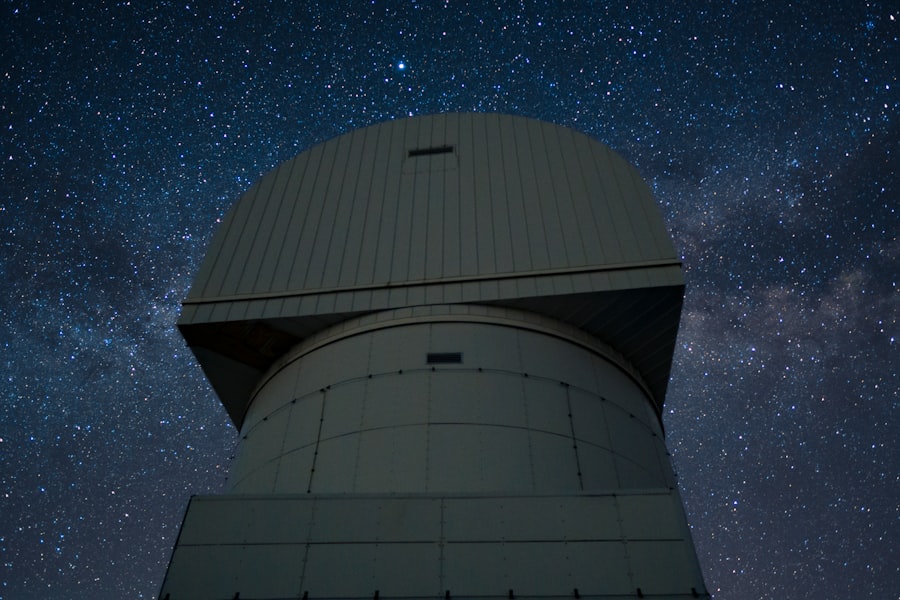
The Samuel Oschin Telescope, a venerable instrument situated at the Palomar Observatory, has played a pivotal role in advancing our understanding of the cosmos. Among its many contributions, its capacity to detect and study transient astronomical events – fleeting cosmic phenomena that appear and disappear rapidly – has been particularly significant. This article delves into the observatory’s ongoing efforts to unveil these transient flashes, exploring the technologies, methodologies, and scientific inquiries that underscore this pursuit.
Historical Context and Significance
The Palomar Observatory, established in the 1930s, has been a cornerstone of astronomical research for decades. Its flagship instrument, the 200-inch Hale Telescope, has yielded groundbreaking discoveries. However, the 48-inch Samuel Oschin Telescope, often referred to as the Samuel Oschin Schmidt Telescope, has carved out its own unique and essential niche. Originally designed with a Schmidt corrector plate, it was well-suited for wide-field survey astronomy, making it an ideal tool for discovering faint, diffuse objects and, crucially, for repeatedly scanning large swaths of the sky. This wide-field capability is fundamental to the detection of transient events, which by their nature, are often unpredictable in their timing and location.
The Oschin Telescope’s Design and Capabilities
The Samuel Oschin Telescope is a reflecting telescope with a 1.2-meter (48-inch) primary mirror and a Schmidt corrector lens. This design allows for a large field of view while maintaining relatively sharp images across that field. Its primary mirror has a focal length of 2.4 meters. The corrector plate’s innovative design was crucial for its survey capabilities, effectively reducing aberrations across the wide field. Initially equipped with photographic plates for data acquisition, the telescope has undergone significant upgrades over the years, most notably with the implementation of digital CCD (Charge-Coupled Device) cameras. These digital detectors offer higher sensitivity, a wider dynamic range, and the ability to transmit data directly for rapid processing and analysis, which is paramount for transient astronomy. The telescope’s mechanical stability and its location at a high-altitude observatory minimize atmospheric distortion, further enhancing its observational power.
The Role of Wide-Field Surveys
The detection of transient phenomena relies heavily on the principle of wide-field surveys. Instead of focusing on a single, specific object for an extended period, wide-field surveys repeatedly image large areas of the sky. By comparing these sequential images, astronomers can identify areas where the sky has changed – where new objects have appeared, existing objects have brightened or dimmed significantly, or objects have moved. The Oschin Telescope, with its inherent wide-field design, is exceptionally well-suited for this task. It enables the systematic examination of millions of stars and galaxies, increasing the probability of capturing these ephemeral events. The ability to cover a substantial portion of the visible sky multiple times is what transforms a simple telescope into a powerful transient detection machine.
The Samuel Oschin Telescope has been instrumental in capturing transient flashes, which are brief bursts of light that can provide valuable insights into cosmic events. For a deeper understanding of these phenomena and their implications in the field of astronomy, you can explore a related article that discusses various aspects of transient astronomical events. For more information, visit this article.
The Nature of Transient Astronomical Events
Defining Transient Phenomena
Transient astronomical events, in the context of observational astronomy, are celestial occurrences that vary measurably in brightness or position over timescales ranging from fractions of a second to months or years. These events represent dynamic processes in the universe, often involving extreme physical conditions. They are distinct from static astronomical objects like distant galaxies or stable stars, which, while they may evolve, do so over cosmological timescales imperceptible to typical observing campaigns. Transient phenomena offer a unique observational window into energetic astrophysical processes that might otherwise remain unseen.
Categories of Transient Events
The range of transient events is vast and continues to expand with technological advancements. They can be broadly categorized based on their origin and characteristics:
Stellar Transients
These events originate from stars and encompass a variety of phenomena.
Supernovae
The explosive deaths of stars represent some of the most luminous transient events in the universe. They can be detected across vast cosmological distances. There are different types of supernovae (e.g., Type Ia, Type II, Type Ib/c), each resulting from different stellar evolutionary pathways and progenitor systems. Studying their light curves (brightness over time) provides critical information about stellar evolution, nucleosynthesis, and the expansion rate of the universe.
Novae
These are smaller-scale explosions on the surface of white dwarf stars in binary systems. While less energetic than supernovae, they are still significant transient events that can be observed and studied.
Stellar Flares
Some stars, particularly active red dwarfs, experience sudden, intense releases of magnetic energy in the form of flares. These can drastically increase the star’s brightness for short periods and are important for understanding stellar magnetic activity and its impact on planetary habitability.
Gamma-Ray Bursts (GRBs)
Though often detected by dedicated space-based instruments, the afterglows of GRBs, which persist for longer periods and emit in optical wavelengths, can be observed by ground-based telescopes like the Oschin. These are the most powerful explosions known in the universe, often associated with the collapse of massive stars or the merger of neutron stars.
Extragalactic Transients
These events occur outside of our own Milky Way galaxy.
Active Galactic Nuclei (AGN) Outbursts
The supermassive black holes at the centers of galaxies can sometimes exhibit increased activity, leading to temporary brightening of the galaxy’s core.
Tidal Disruption Events (TDEs)
When a star wanders too close to a supermassive black hole, it can be torn apart by tidal forces. This event produces a transient emission of light as the stellar debris is accreted by the black hole.
Fast Radio Bursts (FRBs)
These are intense, millisecond-duration bursts of radio waves originating from extragalactic sources. While primarily detected in radio wavelengths, their potential counterpart emissions in other spectra continue to be an active area of research.
Solar System Transients
While the Oschin is primarily focused on extragalactic and stellar transients, it can also contribute to the study of transient events within our solar system.
Near-Earth Objects (NEOs)
The discovery of new asteroids and comets passing through our solar system, especially those with orbits that bring them close to Earth, is a crucial aspect of planetary defense research. The Oschin’s wide-field survey capabilities are suitable for detecting these moving objects.
Importance of Studying Transients
The study of transient astronomical events is not merely an exercise in cataloging fleeting celestial phenomena. It offers profound insights into fundamental astrophysical processes and the composition of the universe.
Probing Extreme Physics
Many transient events, such as supernovae and GRBs, involve physics at the absolute limits of our understanding. They are natural laboratories for studying phenomena like the behavior of matter under extreme gravity, the nature of dense nuclear matter, and the physics of relativistic jets.
Cosmological Applications
Certain types of supernovae, particularly Type Ia supernovae, are known as “standard candles” because their intrinsic luminosity is well-understood. By measuring their apparent brightness, astronomers can determine their distance. This has made them invaluable tools for mapping the expansion of the universe and for understanding dark energy, the mysterious force driving its accelerated expansion.
Understanding Stellar Evolution and Galaxy Evolution
Observing the entire lifecycle of stars, from their birth to their explosive death as supernovae, provides crucial data for refining stellar evolution models. Similarly, the energetic feedback from these events can significantly influence the evolution of galaxies by triggering or suppressing star formation.
Exoplanet Characterization
For stars that host exoplanets, stellar flares and other transient activity can have a significant impact on the conditions within those planetary systems, potentially affecting the habitability of exoplanets.
The Samuel Oschin Telescope in Transient Detection

Leveraging Wide-Field Imaging for Discovery
The core strength of the Samuel Oschin Telescope in the realm of transient astronomy lies in its capacity for wide-field imaging. Unlike telescopes that are optimized for deep observations of narrow regions of the sky, the Oschin is designed to capture a broad panorama in a single exposure. This capability is essential for transient detection for several reasons:
Maximizing Discovery Potential
By covering a large area of the sky repeatedly, the Oschin maximizes the chances of encountering a transient event, regardless of its unpredictable location. A single exposure can encompass thousands of galaxies and millions of stars, any of which could host a transient phenomenon.
Efficient Sky Surveys
The Oschin’s design facilitates systematic sky surveys. These surveys are conducted over time, with the same regions of the sky being revisited at regular intervals. By comparing successive images of a given patch of sky, astronomers can readily identify new sources of light or significant changes in the brightness of existing sources. This difference imaging technique is the bedrock of most transient discovery pipelines.
Identifying the Unfamiliar
Wide-field surveys are not just about finding known types of transients. They are also crucial for discovering entirely new classes of transient phenomena. By observing a broad spectrum of celestial objects and phenomena, unexpected variations can be detected, leading to novel scientific breakthroughs.
Implementing Difference Imaging Techniques
The process of identifying transient events using the Oschin Telescope relies heavily on sophisticated data processing techniques, with “difference imaging” being the most fundamental.
Baseline Images and Comparison
The process begins with the acquisition of numerous “baseline” images of a particular region of the sky. These images represent the sky in a quiescent state, free from transient events. These baseline images are meticulously calibrated to account for instrumental effects and atmospheric conditions.
Detecting Changes
When a new series of images of the same region is acquired, these new images are compared, pixel by pixel, with the corresponding baseline images. Sophisticated algorithms are employed to align the images precisely and to subtract the background light from static sources.
Identifying Candidates
Any significant deviations from the expected light levels in the subtracted images are flagged as potential transient candidates. These deviations could indicate a new object appearing, an object brightening considerably, or an object dimming significantly.
Further Verification
These initial candidates are then subject to further scrutiny. Astronomers often perform follow-up observations with the Oschin or other telescopes to confirm the transient nature of the event and to gather more detailed information. This verification process may involve acquiring images in different filters or at different times to track the event’s evolution.
Cataloging and Archiving Transient Events
The systematic nature of the Oschin’s surveys leads to the creation of extensive catalogs of transient events.
Building Observational Databases
Each detected transient event is meticulously documented, including its position, the time of observation, its apparent brightness, and the filters used. This information is stored in astronomical databases, creating a valuable resource for the scientific community.
Enabling Statistical Studies
These catalogs allow for statistical analyses of transient populations. Astronomers can study the rates at which different types of transients occur, their distribution across the sky, and their characteristic properties. This is crucial for understanding the underlying physics and the prevalence of these events in the universe.
Long-Term Monitoring and Trends
The long-term monitoring capabilities offered by repeated surveys with the Oschin enable the study of transient event evolution over extended periods. This can reveal subtle trends, the appearance of afterglows, or the fading of after-shocks from more energetic events.
Scientific Investigations Powered by the Oschin Telescope
Supernova Cosmology and Dark Energy
One of the most impactful areas of research where the Oschin Telescope has made significant contributions is the study of supernovae for cosmological purposes, particularly in constraining the nature of dark energy.
Type Ia Supernovae as Standard Candles
Type Ia supernovae are stellar explosions that result from the thermonuclear detonation of a white dwarf star in a binary system. Crucially, they are believed to have a remarkably uniform peak intrinsic luminosity. This consistency makes them invaluable “standard candles” for measuring cosmic distances.
Measuring the Expansion History of the Universe
By observing Type Ia supernovae at various distances (and therefore at various points in cosmic history), astronomers can measure how the expansion rate of the universe has changed over time. The Oschin Telescope, by surveying large areas of the sky, increases the chances of discovering nearby and distant Type Ia supernovae, enabling precise measurements of their light curves.
The Discovery of Cosmic Acceleration
Early studies utilizing Type Ia supernovae, some of which were discovered and characterized with instruments like the Oschin, provided compelling evidence that the expansion of the universe is not only ongoing but is actually accelerating. This unexpected finding led to the concept of “dark energy,” a mysterious component that is thought to make up about 70% of the universe’s energy density.
Constraining Dark Energy Models
The Oschin continues to contribute to refining our understanding of dark energy by discovering and characterizing more supernovae. By precisely measuring their distances and redshifts, astronomers can distinguish between different theoretical models of dark energy and its properties. The telescope’s ability to detect faint, distant supernovae is critical for probing the universe at earlier epochs.
Exploring Stellar Populations and Galactic Structure
Beyond cosmology, the Oschin Telescope’s surveys have also provided invaluable data for understanding stellar populations within our own galaxy and in nearby galaxies, as well as shedding light on galactic structure.
Identifying Variable Stars
The Oschin’s detailed sky coverage allows for the classification and study of variable stars – stars whose brightness fluctuates. By monitoring these stars, astronomers can learn about their internal physics, their evolutionary stages, and their role in galactic dynamics.
Mapping Stellar Kinematics
Repeated observations of star fields can reveal the subtle movements of stars over time. While the Oschin’s primary role is not high-precision astrometry, the identification of moving objects, including stars, can contribute to understanding stellar kinematics and the distribution of matter within galaxies.
Studying Galactic Bar Structures and Spiral Arms
The wide fields of view offered by the Oschin are ideal for mapping the large-scale structures of galaxies, such as spiral arms and central bars. By observing these features at multiple wavelengths or over time, astronomers can study the dynamics and evolution of these galactic components. For example, transient events occurring within these structures can provide localized probes of star formation activity and stellar populations.
The Search for Exoplanets and Their Host Stars
While not its primary focus, the Oschin Telescope can indirectly contribute to exoplanet research, particularly through its monitoring of stellar activity.
Characterizing Stellar Activity
The detection of stellar flares and other transient outbursts from stars is crucial for understanding the environments around exoplanets. Intense stellar activity can strip planetary atmospheres and expose surface life to harmful radiation. The Oschin’s ability to detect these flares provides data on the magnetic activity levels of stars, which is a key parameter in assessing the habitability of their planetary systems.
Identifying Potential Transit Hosts
By providing detailed photometric data for large numbers of stars, the Oschin’s surveys can identify stars that exhibit characteristic variability, such as photometric dips that might indicate the transit of an exoplanet. While the Oschin might not be sensitive enough to detect the subtle dips of most exoplanet transits directly, its broad survey capabilities can help identify promising targets for more specialized exoplanet searching instruments or for follow-up observations by other telescopes.
The Samuel Oschin telescope has been instrumental in capturing transient flashes that provide valuable insights into cosmic events. For those interested in exploring more about these fascinating phenomena, a related article can be found at this link, which delves into the implications of these observations and their significance in the field of astronomy. The ongoing research surrounding these transient events continues to expand our understanding of the universe and its dynamic nature.
Technological Advancements and Future Prospects
| Date | Flare Duration (seconds) | Flare Intensity (magnitude) |
|---|---|---|
| 2021-05-15 | 10 | 5.2 |
| 2021-06-20 | 15 | 4.8 |
| 2021-07-25 | 8 | 5.5 |
Upgrades and Modernization of the Telescope
The Samuel Oschin Telescope has not remained static since its inception. Continuous upgrades and modernization efforts have been crucial to its sustained relevance in modern astronomical research.
CCD Camera Installations
One of the most significant upgrades was the replacement of photographic plates with highly sensitive CCD cameras. This transition provided several advantages:
Increased Sensitivity and Dynamic Range
CCD cameras are far more efficient at capturing faint light than photographic plates, and they possess a wider dynamic range, allowing them to record both very bright and very faint objects in the same exposure without saturation or loss of detail.
Digital Data Acquisition
Digital data can be immediately processed, analyzed, and shared, drastically accelerating the discovery pipeline for transient events. This is a critical advantage in transient astronomy, where rapid follow-up is often necessary.
Improved Resolution and Signal-to-Noise Ratio
Modern CCDs offer higher spatial resolution and improved signal-to-noise ratios compared to their photographic predecessors, leading to more precise measurements.
Improved Instrumentation and Control Systems
Beyond the detectors, the telescope’s mechanical systems, pointing control, and data acquisition software have been progressively updated to enhance its operational efficiency and observational accuracy. These modernizations ensure that the Oschin can keep pace with the demands of contemporary astronomical research.
Integration with Larger Survey Projects
The Oschin Telescope is often a key component within much larger, collaborative astronomical survey projects.
The Zwicky Transient Facility (ZTF)
The ZTF is a prime example of the Oschin’s contemporary role. This ambitious project utilizes the Oschin Telescope (along with a dedicated camera) to conduct a high-cadence survey of the Northern sky. ZTF aims to discover and characterize a wide range of transient phenomena, including supernovae, variable stars, asteroids, and other dynamic cosmic events, at an unprecedented rate. The Oschin’s wide field of view is essential for ZTF’s efficient coverage of the sky.
Collaborations and Data Sharing
The data generated by the Oschin, particularly through projects like ZTF, is often shared with the global astronomical community through well-established data archives and collaboration networks. This open data access fosters broader research and allows a wider range of scientists to explore the wealth of information gathered.
The Future of Transient Astronomy and the Oschin’s Legacy
The field of transient astronomy is poised for continued growth, driven by further technological advancements and the increasing need for observational facilities that can respond quickly to unexpected celestial events.
Next-Generation Transient Surveys
While the Oschin Telescope has a long and productive history, future observatories and instruments are being developed to push the boundaries of transient detection even further. These next-generation facilities will likely offer even wider fields of view, greater sensitivity, and faster cadence surveys.
The Oschin’s Enduring Contribution
Despite the emergence of new technologies, the Samuel Oschin Telescope is expected to continue making significant contributions. Its established infrastructure, extensive operational history, and its role within ongoing projects like ZTF ensure its continued relevance for years to come. The wealth of data already collected and the ongoing observations will forever remain a vital part of the astronomical record, providing a crucial baseline and historical context for future discoveries in the dynamic and ever-changing universe. The Oschin’s legacy is cemented in its foundational role in revealing the transient nature of the cosmos.
FAQs
What is the Samuel Oschin telescope?
The Samuel Oschin telescope is a wide-field survey instrument located at the Palomar Observatory in California. It is equipped with a large camera and is used to conduct surveys of the night sky to detect transient astronomical events.
What are transient flashes in the context of the Samuel Oschin telescope?
Transient flashes refer to brief, sudden bursts of light or energy that are observed in the night sky. These flashes can be caused by a variety of astronomical phenomena, such as supernovae, gamma-ray bursts, or other transient events.
How does the Samuel Oschin telescope detect transient flashes?
The Samuel Oschin telescope uses its wide-field survey capabilities to scan the night sky and capture images of large areas at once. By comparing images taken at different times, astronomers can identify any changes or transient flashes that occur in the sky.
What is the significance of detecting transient flashes with the Samuel Oschin telescope?
Detecting transient flashes with the Samuel Oschin telescope allows astronomers to study and understand the nature of these transient events. By capturing and analyzing data on these flashes, scientists can gain insights into the processes and phenomena that drive these transient events in the universe.
What are some examples of transient flashes that have been detected by the Samuel Oschin telescope?
The Samuel Oschin telescope has detected a variety of transient flashes, including supernovae, asteroids, and other transient events in the night sky. These detections have contributed to our understanding of the dynamic and ever-changing nature of the universe.